Giant's Causeway — Where Legends Are Easy to Believe
One of these shots is this month's featured photo on the bCLPhoto homepage.
We drove straight through Belfast and about an hour later arrived at the Giant's Causeway Visitor Centre. It was still raining. As we walked down towards the coast, the sky opened up completely — a torrential downpour that pelted us with sharp, stinging drops. We almost turned back. But we hadn't come this far to give up, so we pressed on, hooded jackets our only defence against the relentless Atlantic weather.

Stormy skies over the coastal path leading to Giant's Causeway, County Antrim, Northern Ireland – bCLPhoto
And then, almost without realising it, there it was.
Rising from the ground before us: over 40,000 interlocking basalt columns — most of them hexagonal, though some have four, five, seven, even eight sides — packed together like nature's own jigsaw puzzle, some reaching up to 12 metres in height.
The result of volcanic eruptions roughly 60 million years ago, when lava slowly cooled and contracted, cracking into these impossibly geometric forms. Simply breathtaking.
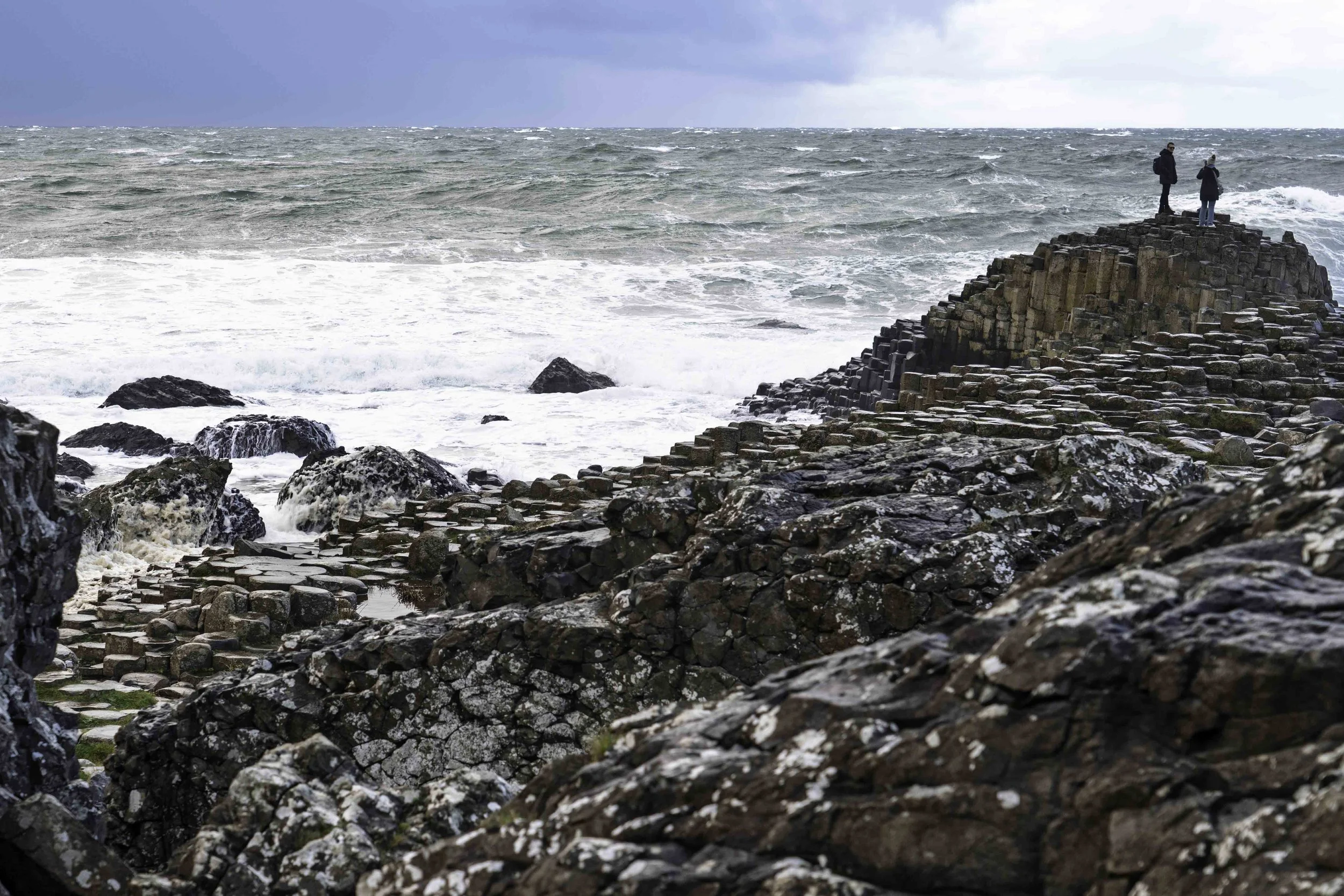
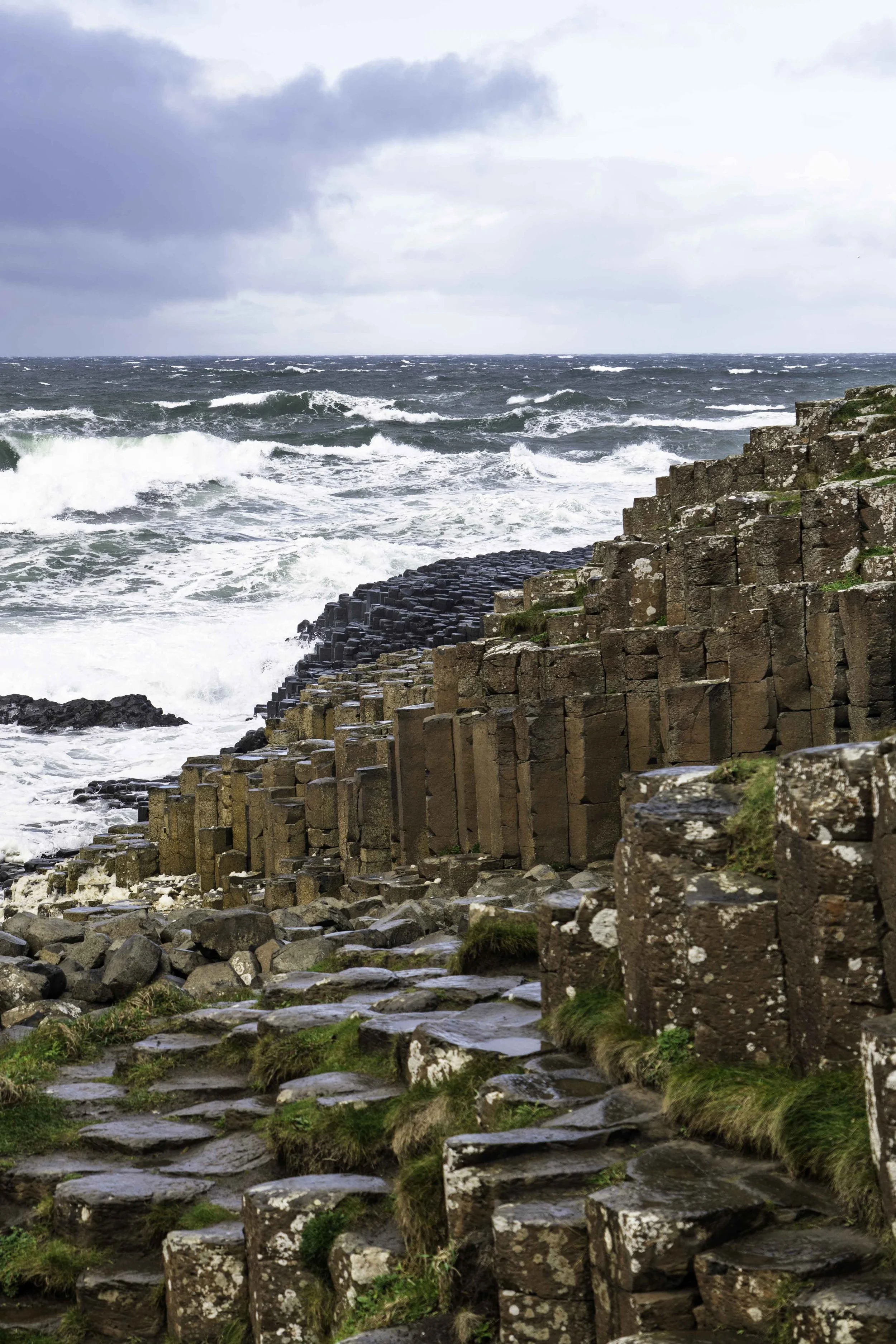
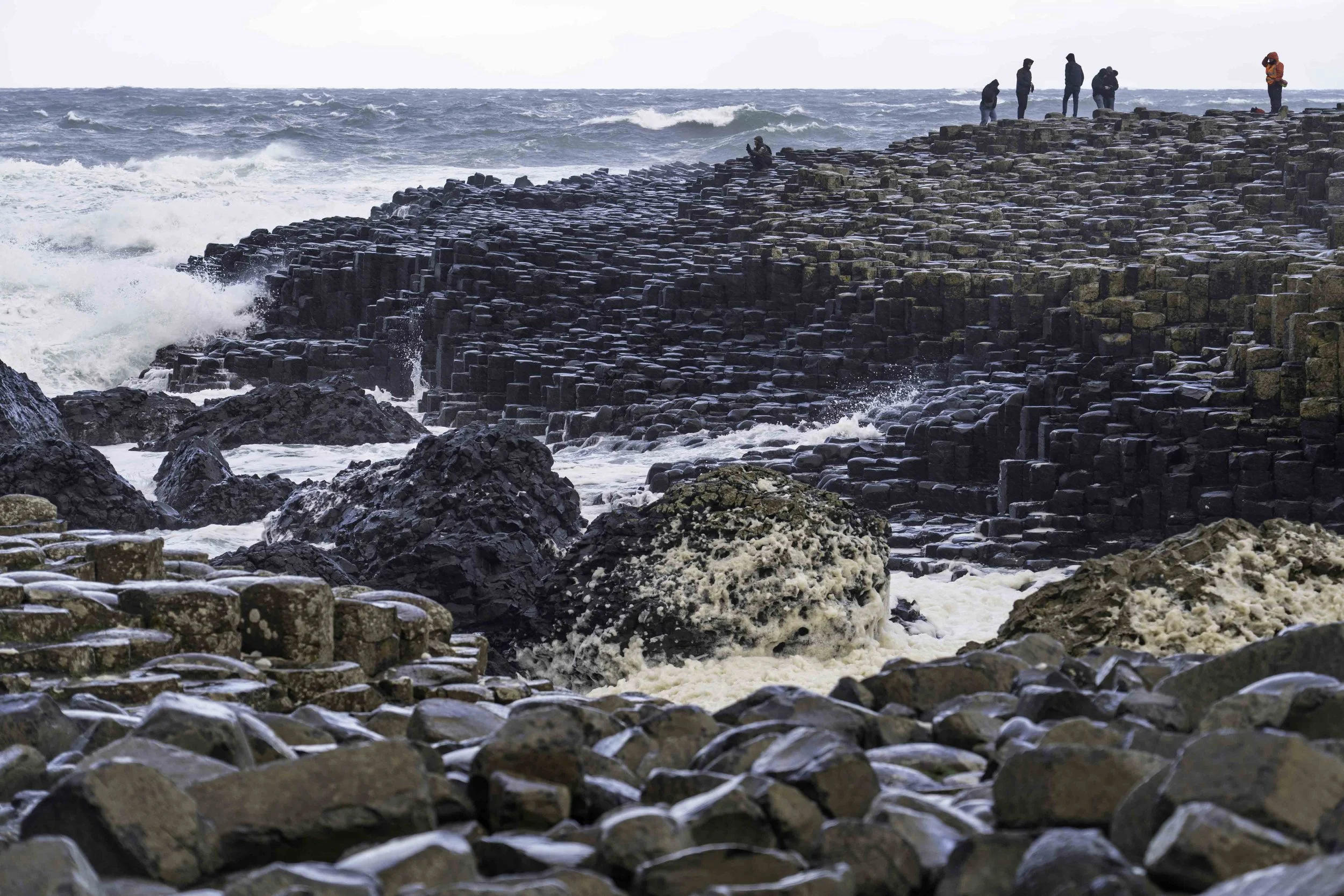
The Atlantic waves crashed fiercely against the stones with a powerful roar, then receded back into the sea. The rain eventually stopped, and we finally got our cameras out.

Basalt columns stacked in natural terraces at Giant's Causeway, County Antrim, Northern Ireland – bCLPhoto
Alongside the geological explanation, there's a legend — and one doesn't fully appreciate it until standing there on a stormy day exactly like ours. That's when you start to entertain the idea that these stones weren't shaped by lava at all, but by the hands of giants.
The story goes that Irish giant Finn MacCool (Fionn mac Cumhaill in Gaelic) was challenged to battle by Benandonner, his Scottish rival who lived across the Irish Sea. Finn tore chunks from the Antrim coastline and hurled them into the sea, building a causeway to confront his enemy. But when he got close enough to see Benandonner properly, he realised the Scottish giant was enormous — far larger than he'd imagined. Finn fled back to Ireland, losing a boot along the way (still visible on the causeway today, if you know where to look).


Back home, his wife Oonagh — quick-thinking and resourceful — disguised Finn as a baby and tucked him into a cot. When Benandonner arrived and saw the "infant," he was struck with terror: if the child was that size, what on earth must the father look like? He turned and ran, frantically tearing up the causeway behind him so Finn could never follow.
What remains is what we see today — and, according to legend, the same volcanic columns reappear on the other side of the Irish Sea at Fingal's Cave on the Scottish Isle of Staffa, the point where Benandonner made his escape.
The Giant's Causeway was declared a UNESCO World Heritage Site in 1986, and it meets not one but two of the organisation's strict criteria: for its exceptional natural beauty, and as an outstanding record of Earth's geological history.
The site is protected not only for its beauty but also because its cliffs, seashores, and grasslands are home to some 50 species of birds and more than 200 species of plants.
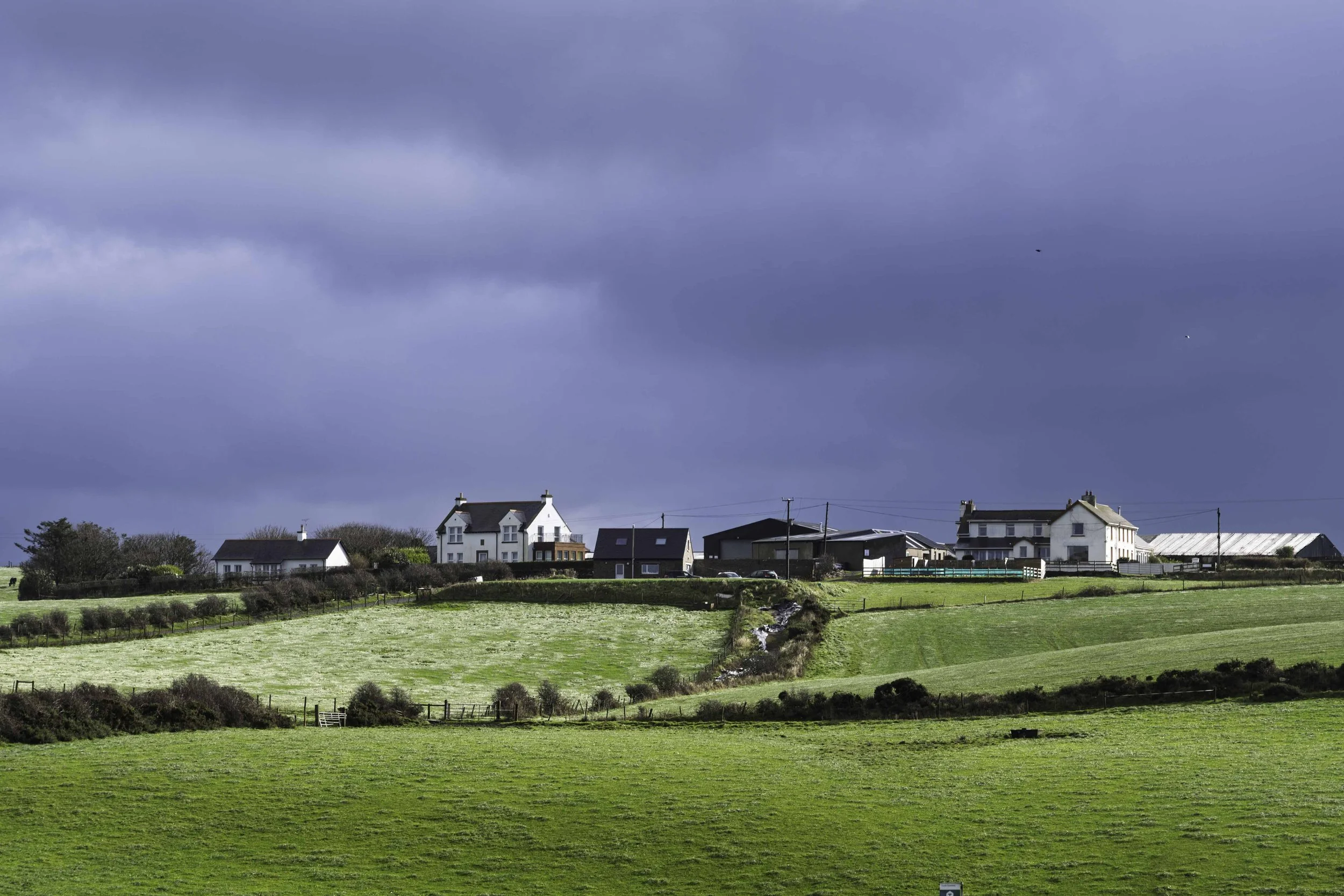
Traditional houses on the Causeway Coast near Giant's Causeway, County Antrim – bCLPhoto
Whether you believe the legend or the geology — or both — the Giant's Causeway is one of those places that genuinely earns the word unmissable. If you're in Ireland, go. And if the forecast looks grim, don't let it stop you. Sometimes the stormy days are the best ones.
Photos taken with a Sony a7R IV and a 24–105mm zoom lens. Settings: ISO 100–200, 24–50mm, f/5.6–11, 1/250s.
The Causeway Coast rewards a full day — arrive early and stay for the light. For more coastal photography from Ireland, Howth offers a quieter, harbour-side counterpart just outside Dublin. For more landscape and nature photography, Puigcerdà Lake captures a very different kind of stillness in the Catalan Pyrenees.
Giant's Causeway Bushmills, Co. Antrim BT57 8SU, Northern Ireland
Car from Belfast: 1h 15min · Nearest town: Bushmills
See more travel photography in the portfolio.
Want one of these on your wall?
Every photo on this site can be printed — archival paper, signed and numbered. Browse prints →
Cosme Lapena is a Barcelona-based street and urban photographer and founder of bCLPhoto. Browse the portfolio or read more on the blog