Hamburg: A City Built on Bridges
How many bridges does Hamburg have? About 2,500. The city's roads and waterways department counted 2,496, more than any other city in Europe and, by most estimates, more than Venice, Amsterdam and London put together. Hamburg needs them because it is built on water: the Elbe, the Alster and its lakes, and a dense web of canals and harbour basins.
Hamburg surprised us from the very first walk. We had expected a port city, industrial and grey, with the kind of northern light that flatters nothing. What we found instead was water — everywhere, threading through every neighbourhood, under every street — and, crossing all of it, around 2,500 bridges. Hamburg bridges photography turns out to be a subject that could fill weeks, not days.
How Many Bridges Does Hamburg Have, and Why So Many?
Around 2,500 — a number so unlikely it takes a while to settle. Guinness World Records estimates between 2,300 and 2,500 within the city limits, more than Venice, Amsterdam and London combined; a 2004 count by the city's roads department put the figure at 2,496. The reason is simple and old: trade. For centuries the city's circulatory system was its Fleete — the narrow canals connecting the Elbe to the warehouses of the merchant districts. Every new block of commerce needed a new crossing, and the bridges just kept coming.
Our guide on a free walking tour put the number at 2,502 — close enough to the official count of 2,496 that I wasn't going to argue.
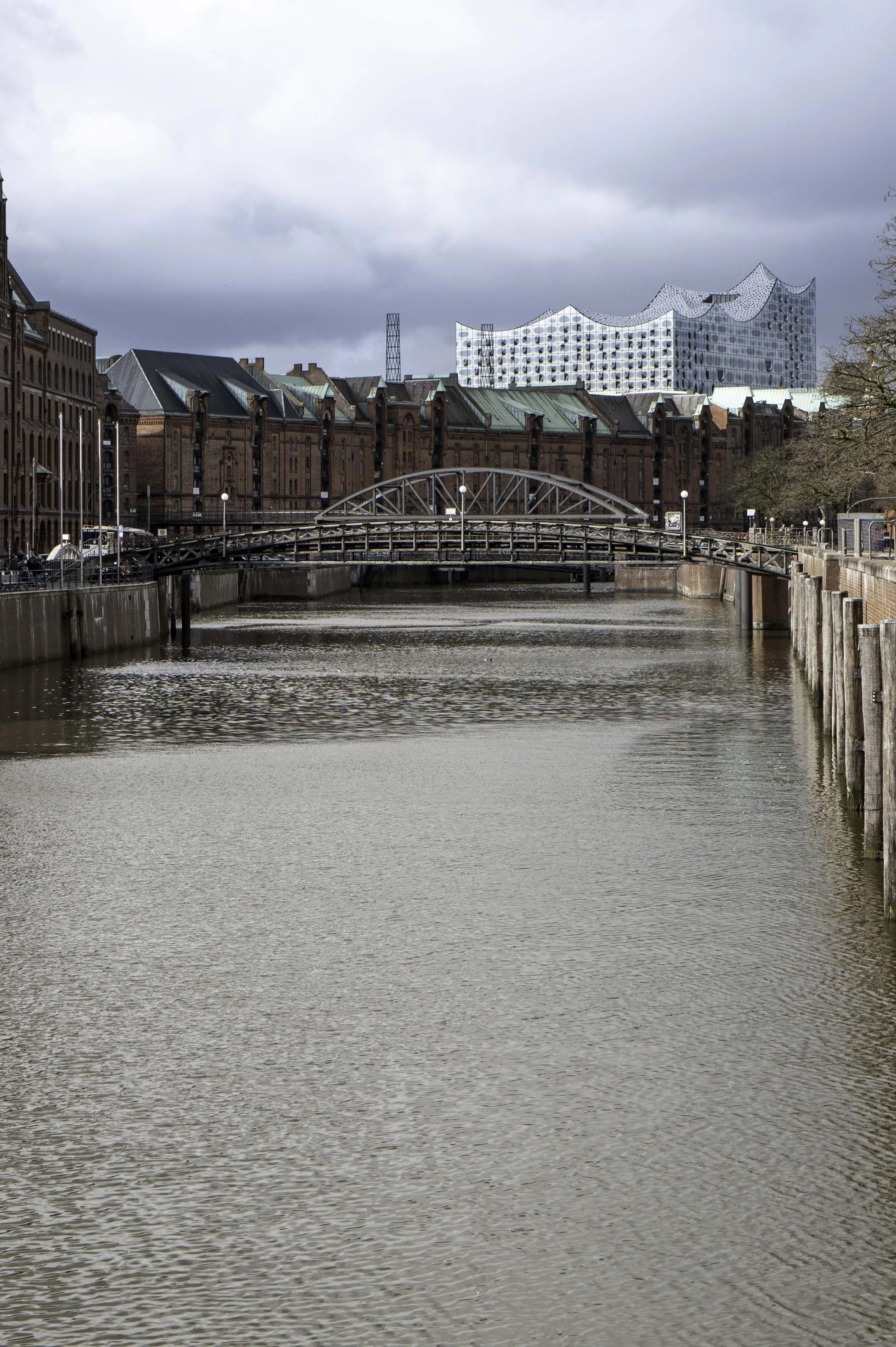
Speicherstadt canal, Hamburg — Leica Q3
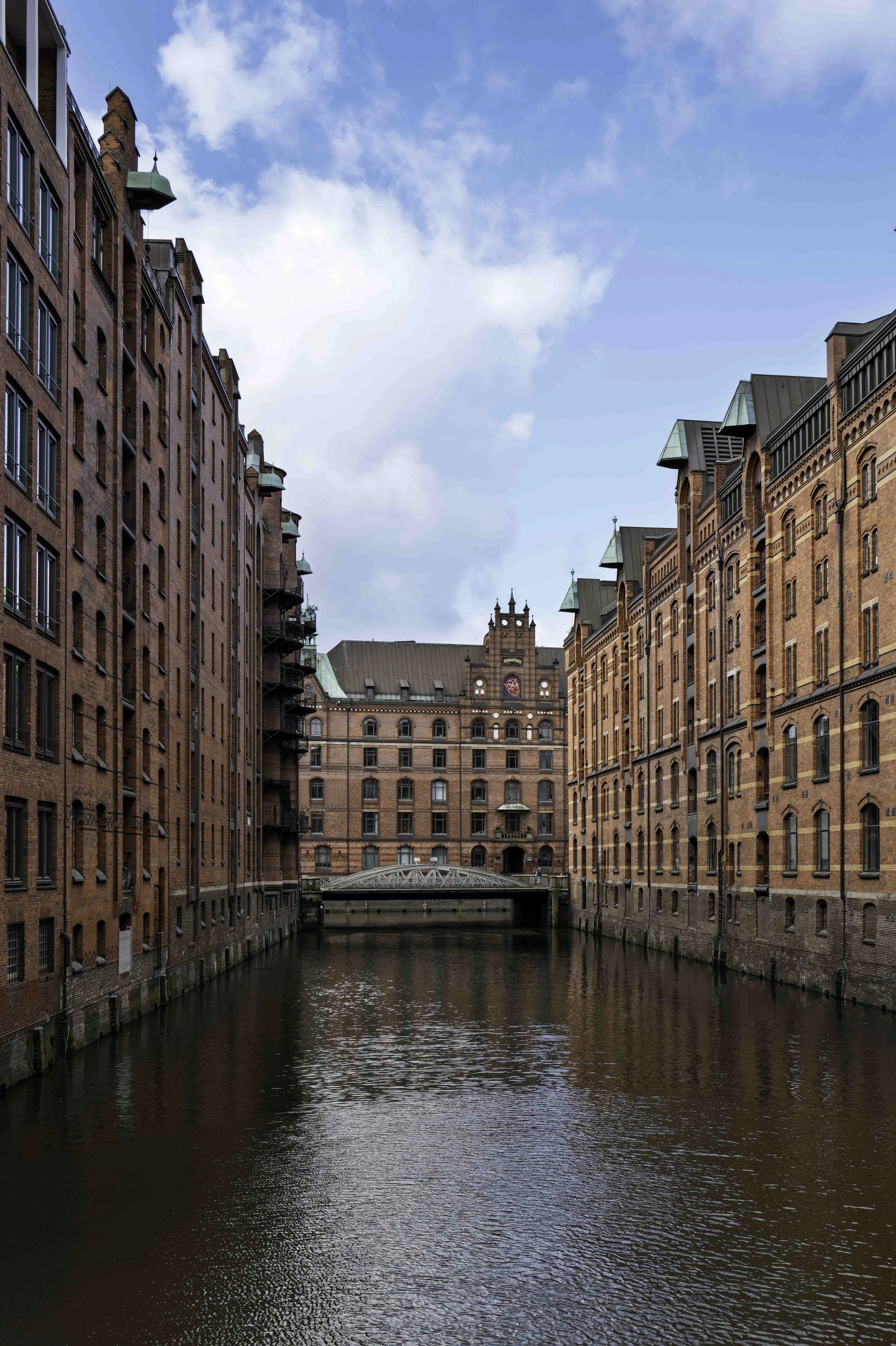
Fleet canal, Speicherstadt — Leica Q3
Speicherstadt: The Heart of Hamburg's Bridge Landscape
The place to start is the Speicherstadt, the UNESCO-listed warehouse district that stretches for nearly a kilometre along the old free port. Walking here is disorienting in the best way: the canals are narrow and dark, the brick buildings rise six or seven storeys on either side, and the bridges arrive every fifty metres, each one slightly different from the last. Cast iron lacework on one, riveted steel arches on the next, a sleek modern footbridge beyond. The district smells of damp stone and canal water and, in the cold months we visited, something faintly metallic carried on the wind off the Elbe.
What strikes you as a photographer is the compression. The buildings force your eye down the canal and the bridge frames whatever lies beyond it — another bridge, a clock tower, the white geometric face of the Elbphilharmonie concert hall suspended above the red brick. The light is rarely warm in Hamburg but it is often dramatic: wide skies that shift between blue and iron grey within the same hour, casting sharp shadows across the latticework of the bridges one minute and washing everything flat the next.
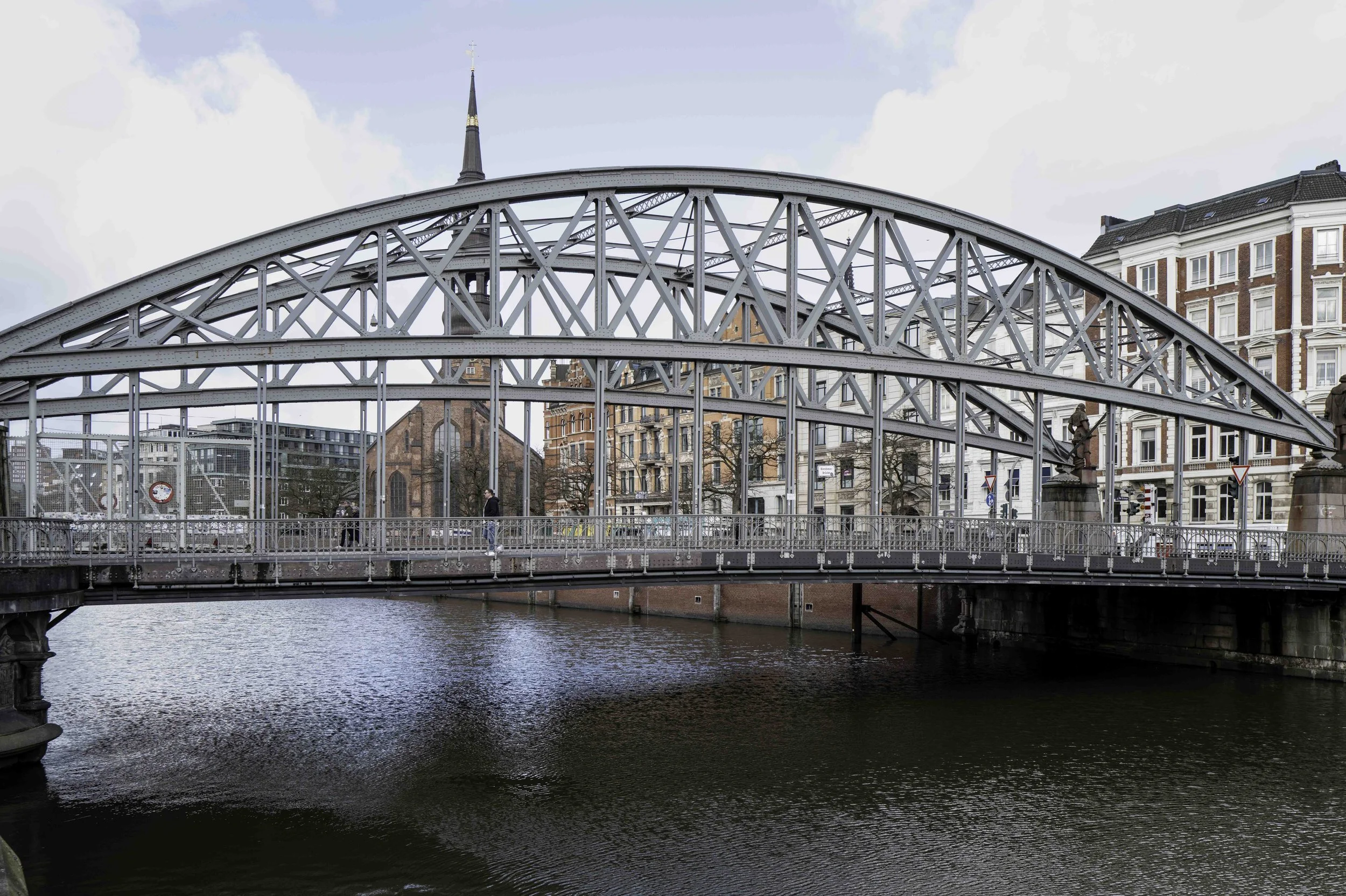
Steel arch bridge, Hamburg — Leica Q3
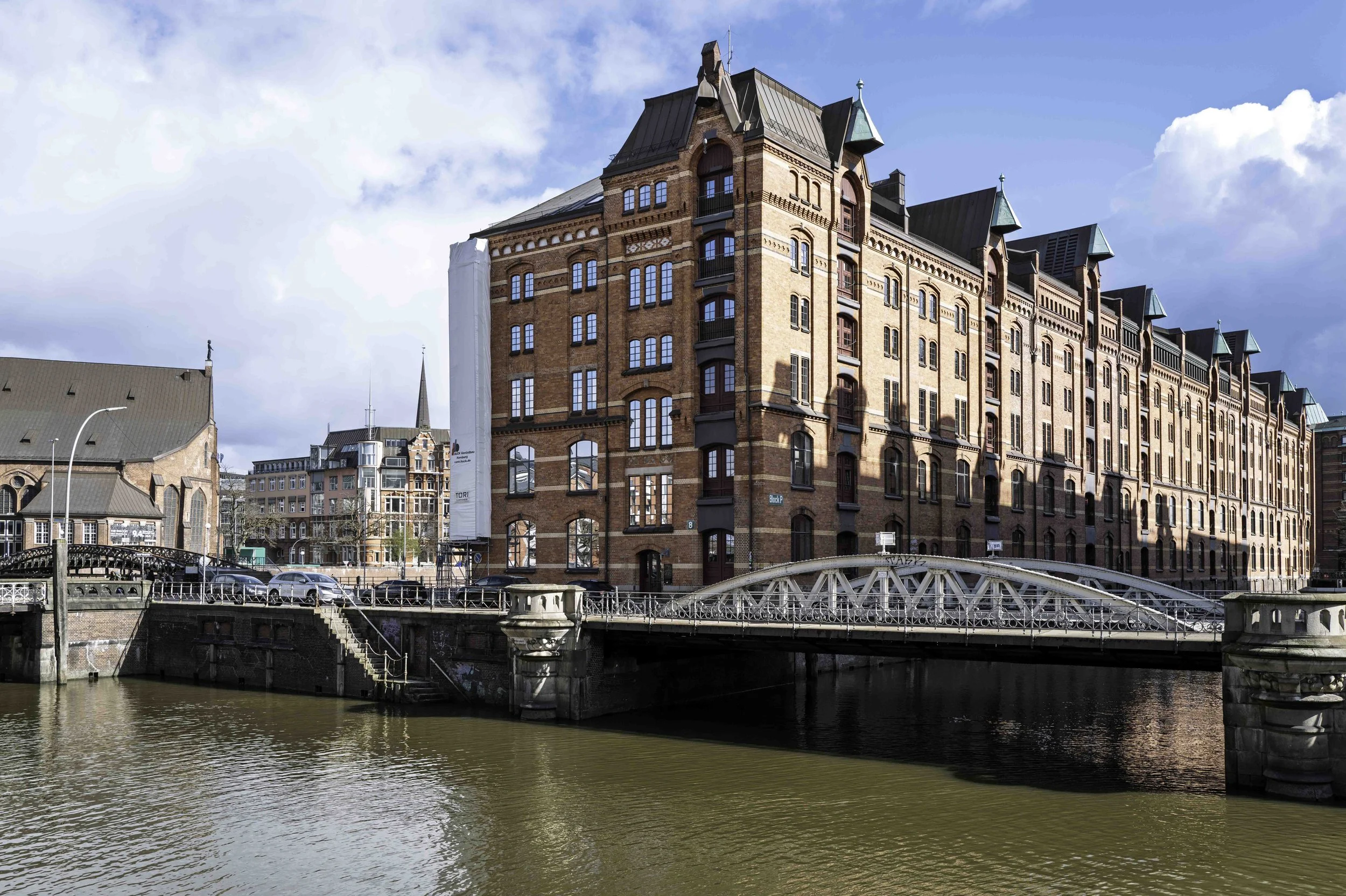
Speicherstadt warehouses and bridge — Leica Q3
Bridges as a Window into Hamburg's Layers
Beyond the Speicherstadt, the bridge landscape changes character entirely. Moving toward the Hafencity waterfront, the crossings become wider, their arches more generous, their stone balustrades worn smooth. A little further and you reach the inner city canals, where solid masonry bridges carry six lanes of traffic over water that reflects the glass facades of modern office blocks. The variety in a single afternoon's walk is startling — it spans seven hundred years of engineering without announcing itself.
In Hamburg, bridges are meeting points as much as crossings. We watched cyclists pile up at a signal on a steel truss bridge, patient in the way only very regular commuters are. We stood at the edge of a canal lock while a harbour ferry manoeuvred through the gates below a pedestrian walkway. The city's relationship with its waterways is entirely practical and entirely unselfconscious — these aren't tourist attractions, they are the infrastructure of daily life, and the bridges are just part of how it all connects.
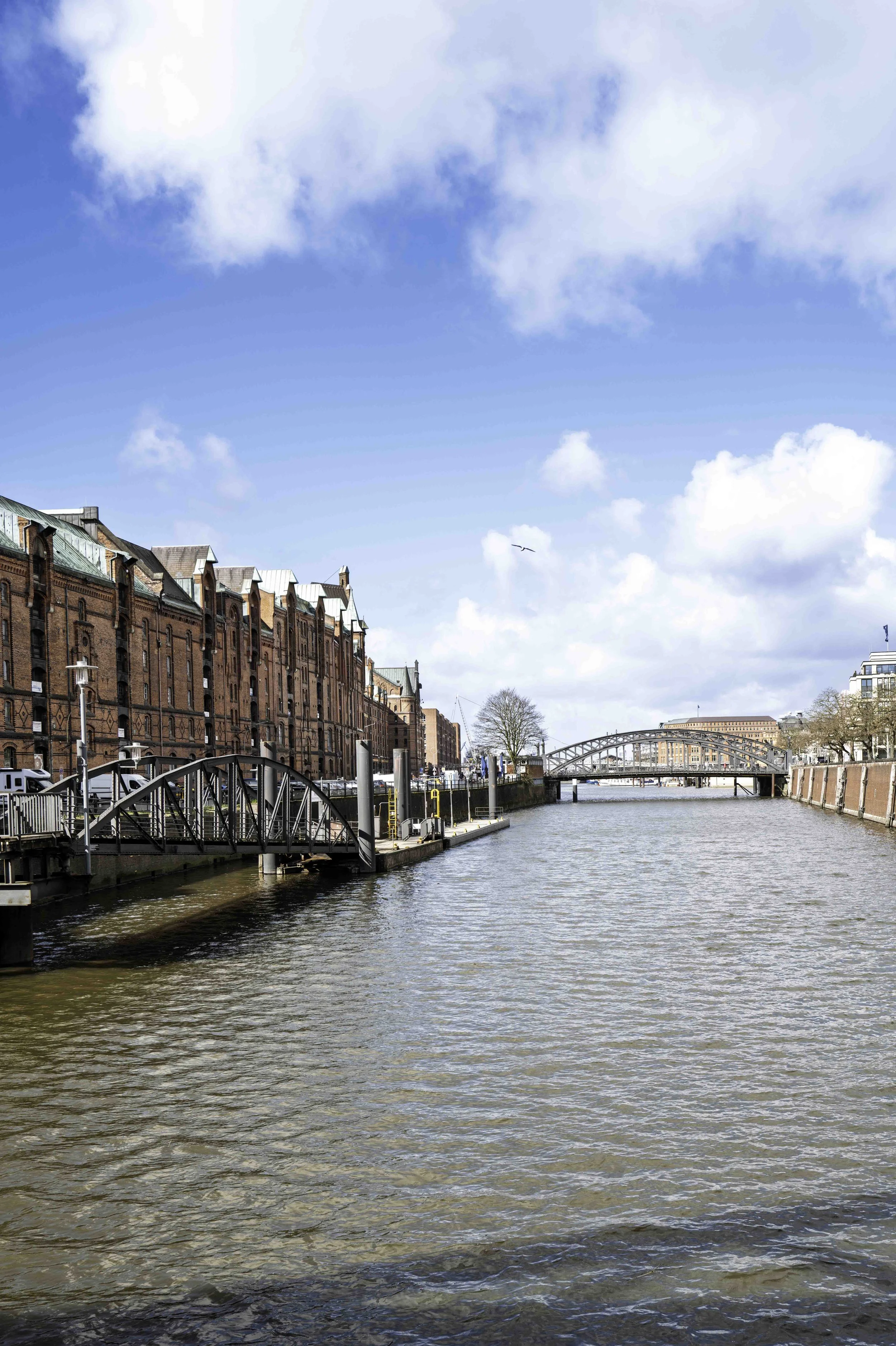
Canal perspective, Speicherstadt — Leica Q3
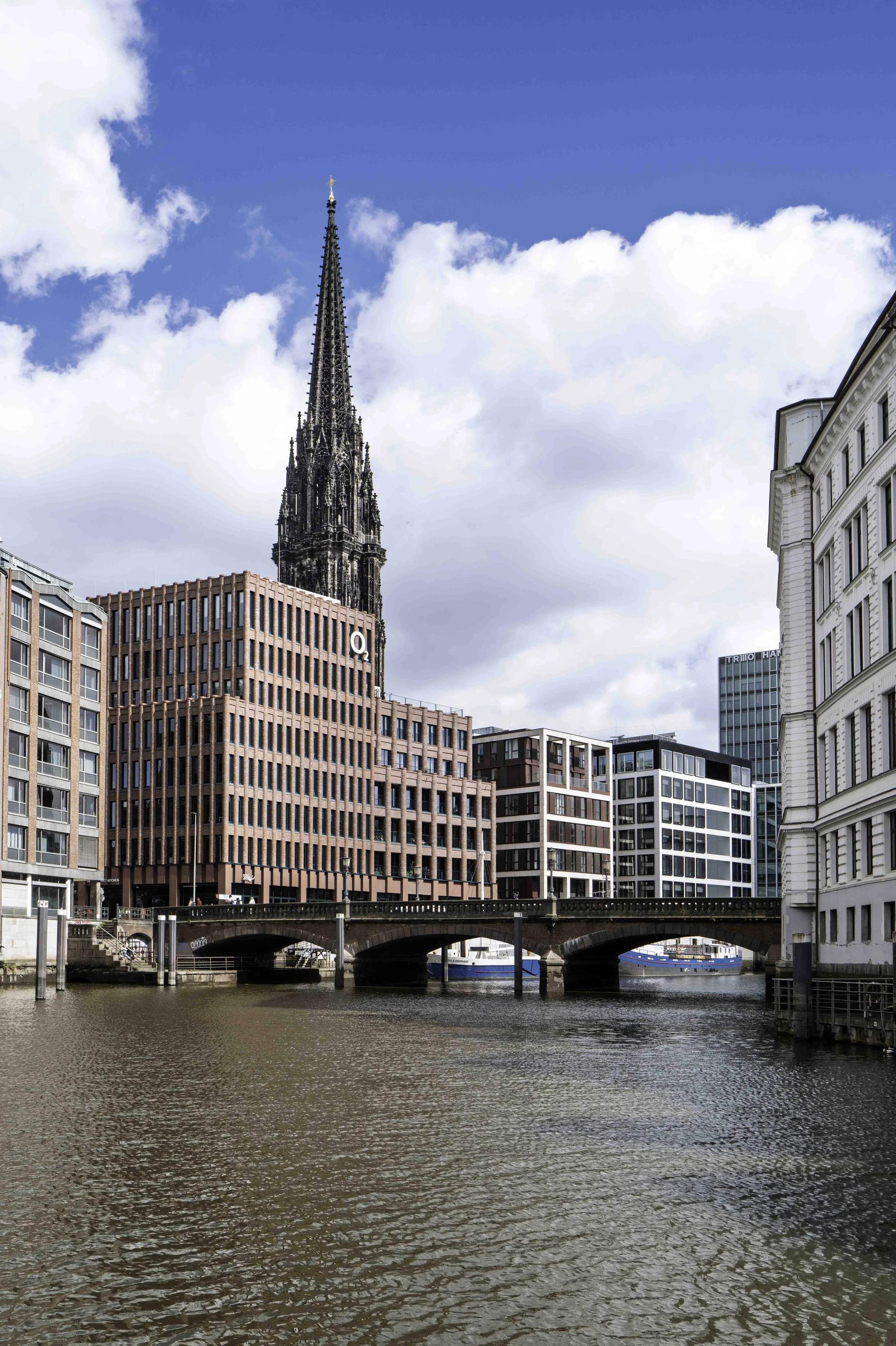
Bridge and St Nikolai spire, Hamburg — Leica Q3
Hamburg Bridges Photography: Finding the Frame
Leica Q3 travel photography suits Hamburg well. The fixed 28mm lens pushes you close to things, which is exactly what the Speicherstadt demands — wide enough to hold the canal and both banks, close enough to catch the texture of iron and wet stone. We shot mostly between f/5.6 and f/9, keeping everything sharp from the foreground water to the buildings receding into the background. The overcast days were often better than the sunny ones: the flat, diffused light revealed the surface detail of the brickwork that direct sun would have bleached out.
The best Hamburg bridges photography happens at the intersections where the city layers itself — old warehouse behind modern arch behind glass tower — and in the unexpected human moments that bridges generate. A pair of cyclists moving under the lattice of a steel arch, the Speicherstadt warehouses framing them from behind, is the kind of photograph that a city with around 2,500 bridges keeps offering if you slow down enough to wait for it. If you enjoy cities shaped by water, our Prague reflections walk follows the same idea along the Vltava, from shop windows to the old timbers below Charles Bridge.
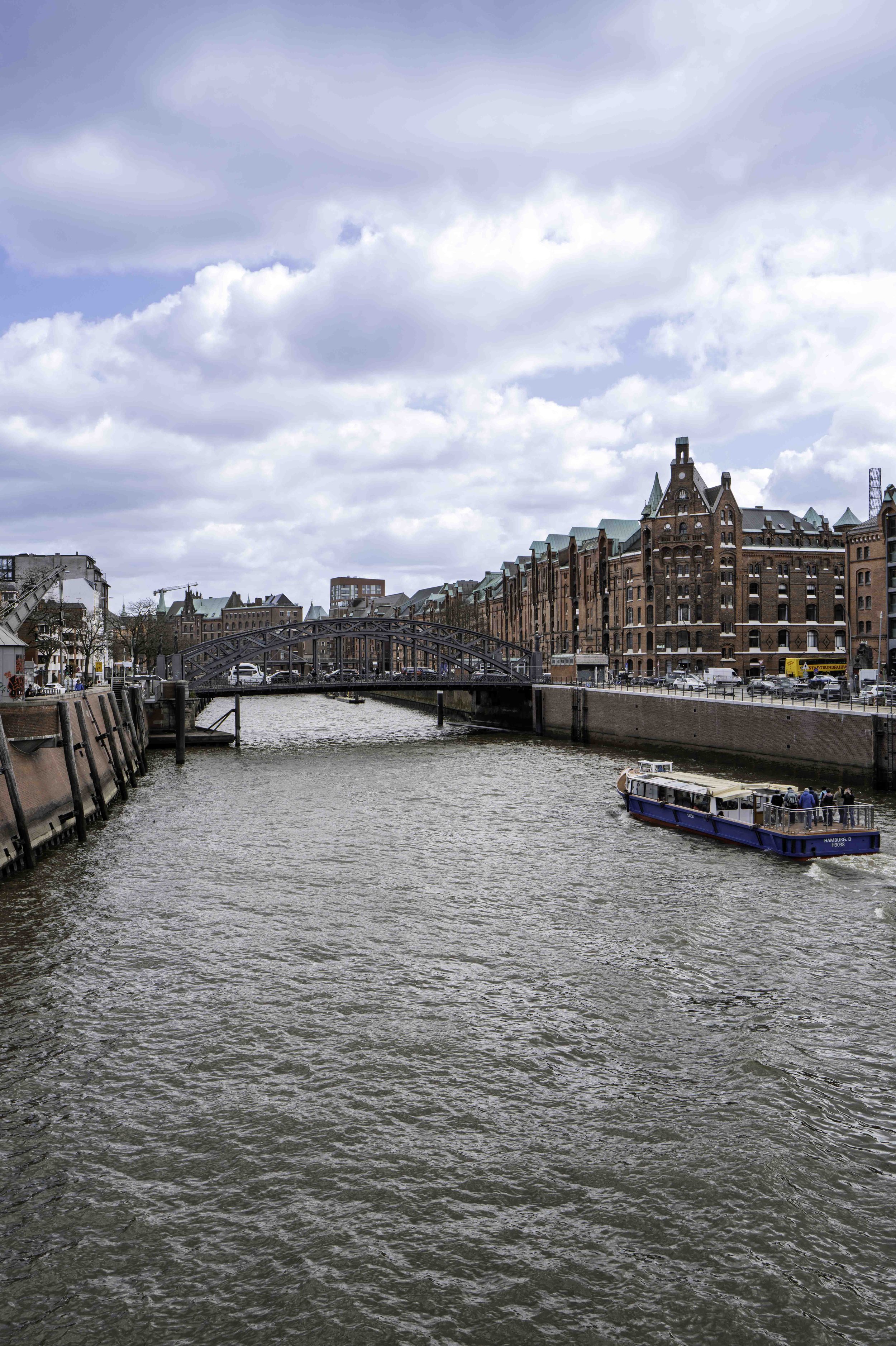
Harbour ferry under canal bridge, Hamburg — Leica Q3
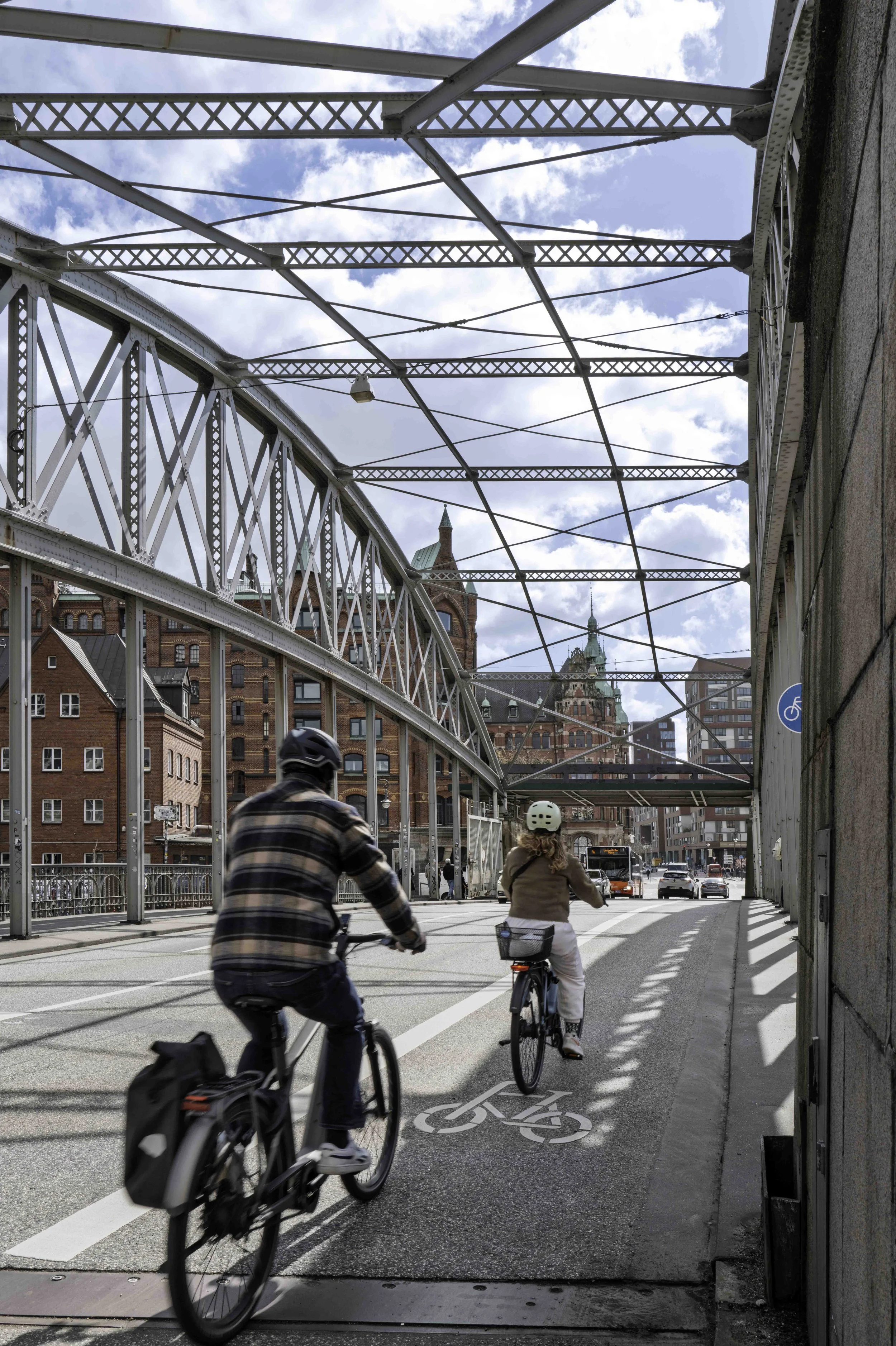
Cyclists on the bridge, Speicherstadt — Leica Q3
Cycling and the Bridges
One detail about Hamburg that our photographs kept returning to was bicycles. The city has invested heavily in cycling infrastructure, and many of its bridges carry dedicated cycling lanes that feel genuinely separated from traffic — not painted lines, but physical barriers. Crossing the same steel arch bridge we had admired from below, we found ourselves inside the truss, riding through a geometric tunnel of riveted metal with the warehouses ahead and the canal behind. The bridge that had looked ornate from a distance was, from within, completely functional.
It says something about Hamburg that you can spend five days photographing its bridges and still feel like you have barely started. The around 2,500 is not a record that the city advertises — it surfaced for us in a conversation, casually, the way locals mention things they have always taken for granted.
If you are planning a visit, allow at least half a day to walk the Speicherstadt canals properly — and a full day if you are carrying a camera.
Photos: Leica Q3 · ISO 100 · 28mm · f/5.6–9 · 1/125–1/250s
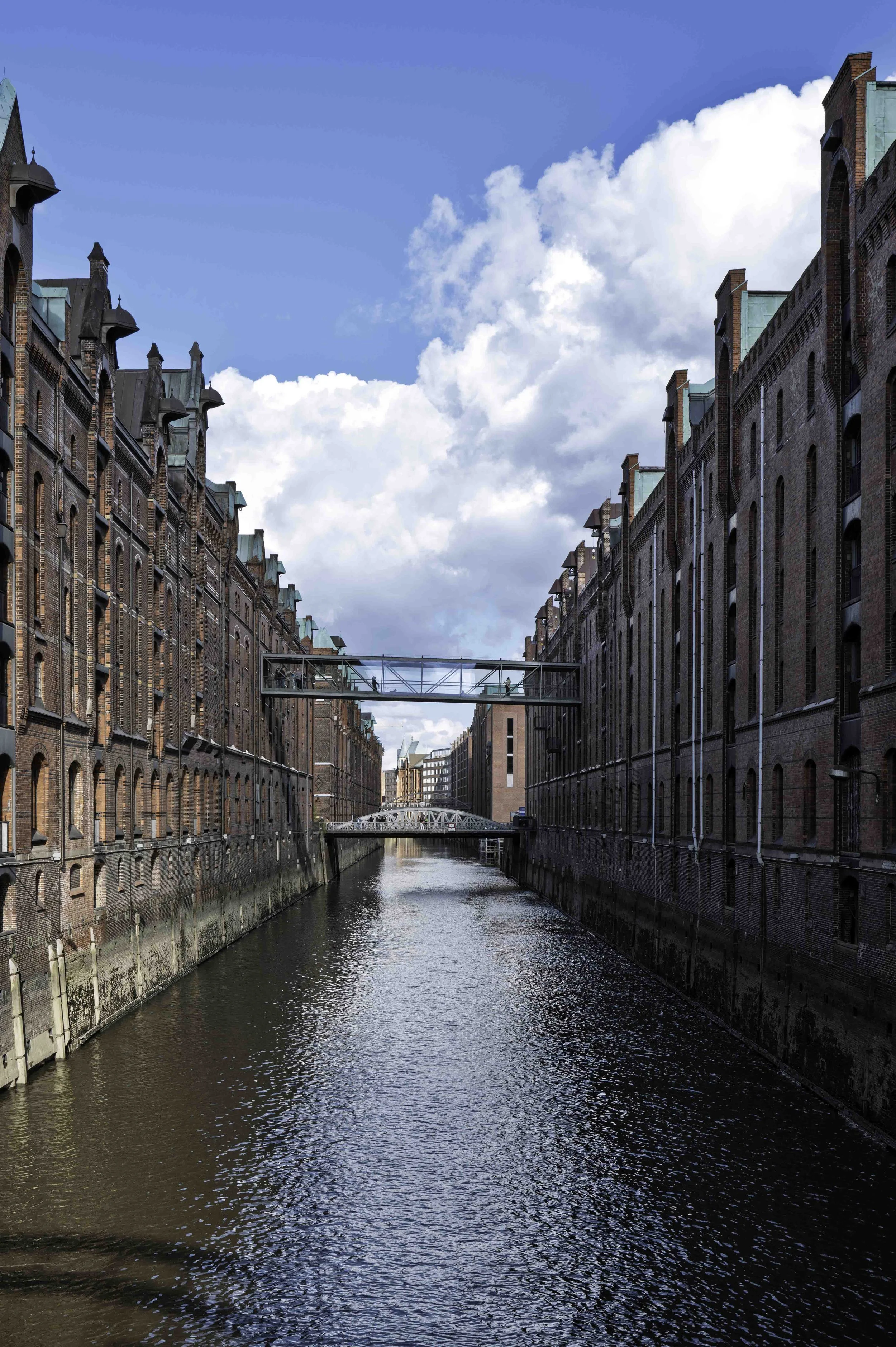
Hafencity canal, Hamburg — Leica Q3
Speicherstadt — Hamburg's warehouse district Am Sandtorkai, 20457 Hamburg
U-Bahn: U3 Baumwall or U4 Überseequartier
Hamburg's waterways invite slow walking and patient framing. For more European urban architecture photography, Battersea Power Station in London offers a different kind of industrial grandeur. For a city where water defines the mood in a completely different way, Snapshots of Lisbon captures the light on the Tagus.
Like these images?
These photographs are available as signed, numbered fine art prints on archival paper. See sizes and order →
See more urban architecture photography in the portfolio.
Cosme Lapena is a Barcelona-based street and urban photographer and founder of bCLPhoto. Browse the portfolio or read more on the blog