Temps de Flors — Girona in Full Bloom | bCLPhoto
The drive from Barcelona to Girona took longer than expected that morning. Traffic, the usual delays, the small uncertainties that come with any road trip. But none of that mattered once we finally crossed into the city. Some journeys are defined not by how you travel, but by what awaits you at the other end — and this one delivered far beyond what we had imagined.
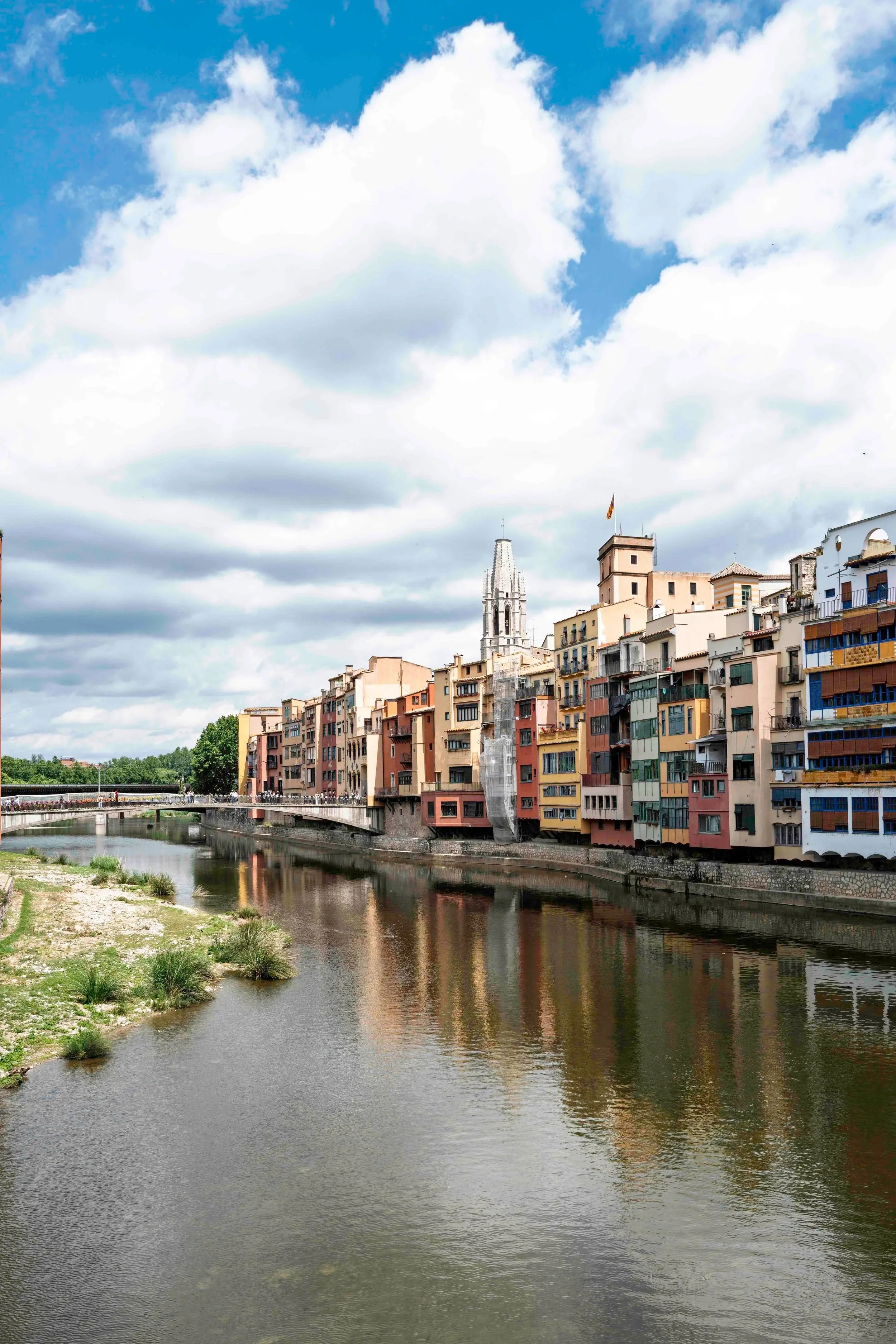
The Onyar River and Girona's colourful old town — Leica Q3
Every spring, Girona transforms. For one week each year, the city surrenders itself entirely to flowers. The Temps de Flors — the Flower Festival — is not merely a decoration event; it is a living, breathing reimagining of one of Catalonia's most beautiful medieval cities. And when you experience it for the first time, the impact is immediate and overwhelming.
The sky had threatened rain all morning. Dark clouds had gathered over the hills on the drive up, and we had half-resigned ourselves to a grey, damp afternoon navigating cobblestones under umbrellas. What we got instead was a gift: a bright, warm, gloriously sunny day that flooded every courtyard, staircase, and archway with golden light — light that made every petal glow and every colour sing. It felt almost too good to be true.
Crossing one of the bridges over the Onyar River is, in itself, a moment of transition. On one side, the modern city; on the other, the old town — and between them, the river reflects those iconic, candy-coloured facades that have made Girona one of the most photographed cities in Spain. That crossing felt particularly symbolic on this day: one step over the bridge, and you are no longer in the ordinary world. You are inside the festival.

The bridge over the Onyar — where the city becomes the festival — Leica Q3
From that point on, flowers were everywhere.

The old town fills with visitors during festival week — Leica Q3
Not just in neat arrangements or tidy window boxes — but everywhere, in an abundance that bordered on the surreal. Cascading down ancient stone walls, framing Gothic doorways, spilling from cloister gardens, climbing baroque staircases. Flowers we knew well: roses of every possible shade, hydrangeas in dusty blues and soft pinks, cheerful daisies catching the morning sun. And then flowers we had never seen before — orchids in colours that seemed almost invented, rare varieties whose names we didn't know but whose presence stopped us in our tracks. The organisers had clearly worked to push boundaries, to surprise and challenge, not merely to please.

An explosion of colour — the organisers push every boundary — Leica Q3
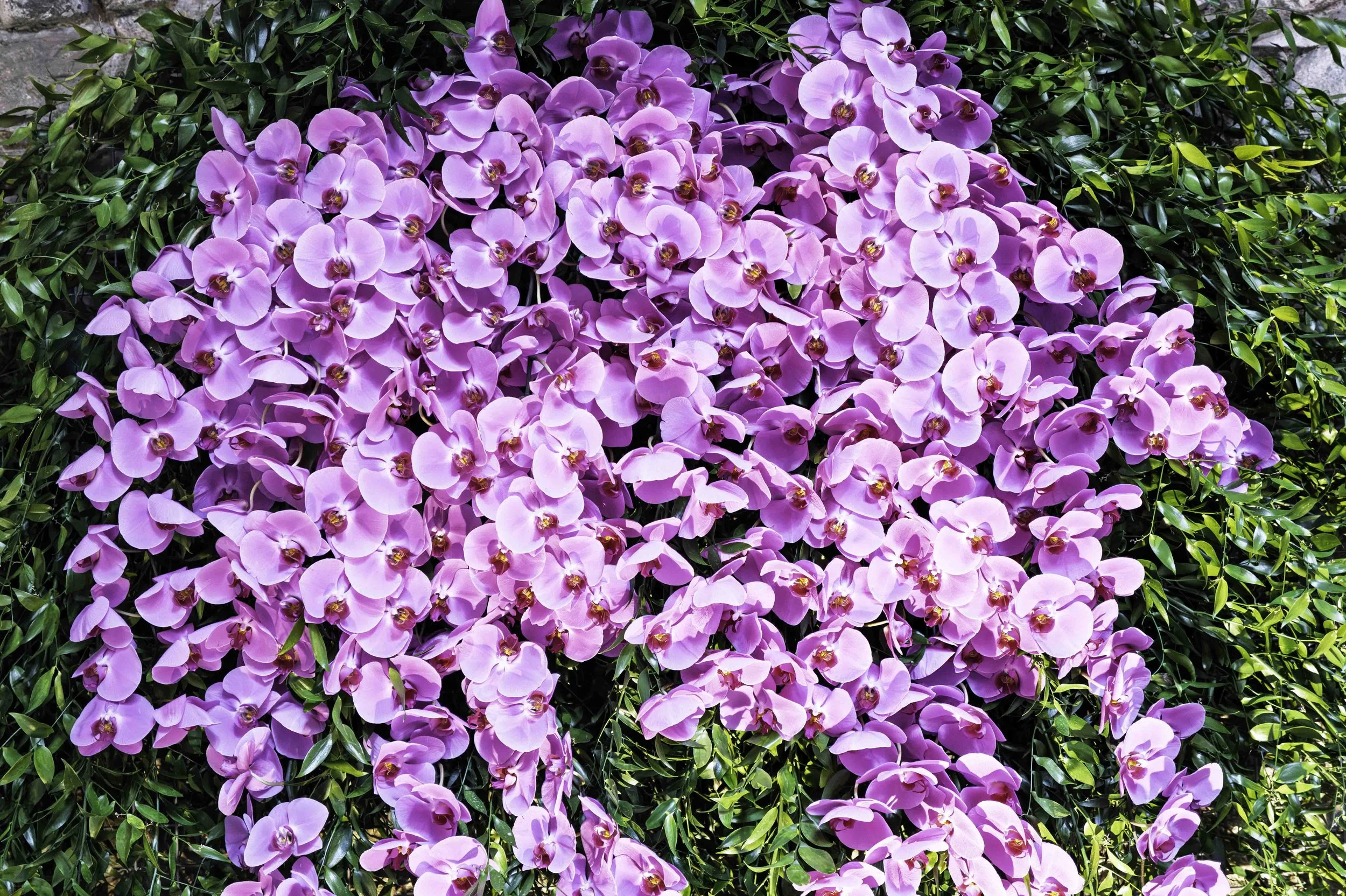
A carpet of purple phalaenopsis orchids — Leica Q3
As a photographer, moments like this are profoundly rare. You find yourself surrounded by a limitless archive of colour, form, texture, and light — natural beauty arranged with an artist's intentionality, yet retaining all the organic unpredictability of living things. Every corner turned revealed a new composition. Every shaft of sunlight through an archway created a different quality of shadow on a petal.

Girona Cathedral — floral installations of theatrical scale — Leica Q3
The Cathedral steps were draped in floral installations of theatrical scale. The Arab Baths offered intimate, reflective moments where delicate blooms floated against centuries-old stone. The Archaeological Promenade stretched out as a long, unhurried gallery of colour high above the rooftops. And the German Gardens — those formal terraces with their sweeping views — were nothing short of spectacular.
The Jewish Quarter, one of the best-preserved medieval Jewish neighbourhoods in Europe, added yet another layer of beauty: its narrow, labyrinthine lanes, already so full of history and atmosphere, were now threaded through with flowers at every level, turning what is already a remarkable place into something almost otherworldly.

White hydrangeas and lanterns drifting above the old town lanes — Leica Q3
The camera barely left my hands.

An exotic Vanda orchid — colours that seemed almost invented — Leica Q3
After several hours of walking, photographing, and simply absorbing everything around us, hunger — and the honest need to sit down — led us to Taverna del Foment, a welcoming restaurant tucked into the old town. The food was exactly what you want after a long morning on your feet: honest, generous, traditional Catalan cooking. A proper meal, eaten slowly, with the easy conversation of people who have shared something genuinely beautiful.

Carnation spheres climbing stone steps in the old town — Leica Q3
Rested and fed, we went out for a final, shorter walk through a few corners we hadn't managed to reach in the morning. A last look. A few more photographs. That particular feeling — somewhere between satisfaction and reluctance to leave — that settles over you at the end of a really good day.

Purple alliums and white peonies inside a cloister — Leica Q3

A golden faucet pouring flowers into the courtyard — one of the festival's most inventive installations — Leica Q3
The drive back to Barcelona was quiet and content. We had all felt it: that rare, uncomplicated sense of having spent a day exactly as a day should be spent. In a city that, year after year, reminds us of something important — that beauty, in its most generous and unassuming form, is always worth travelling for.
My backpack came home considerably heavier than it left, in the best possible sense. The Leica Q3 had worked hard all day, and the results speak for themselves. A selection of photographs from the day is gathered in this post. I hope they carry at least a trace of what it felt like to be there.
If you haven't been to Girona's Temps de Flors, put it on your list. Go once, and you'll understand immediately why people go back every year.
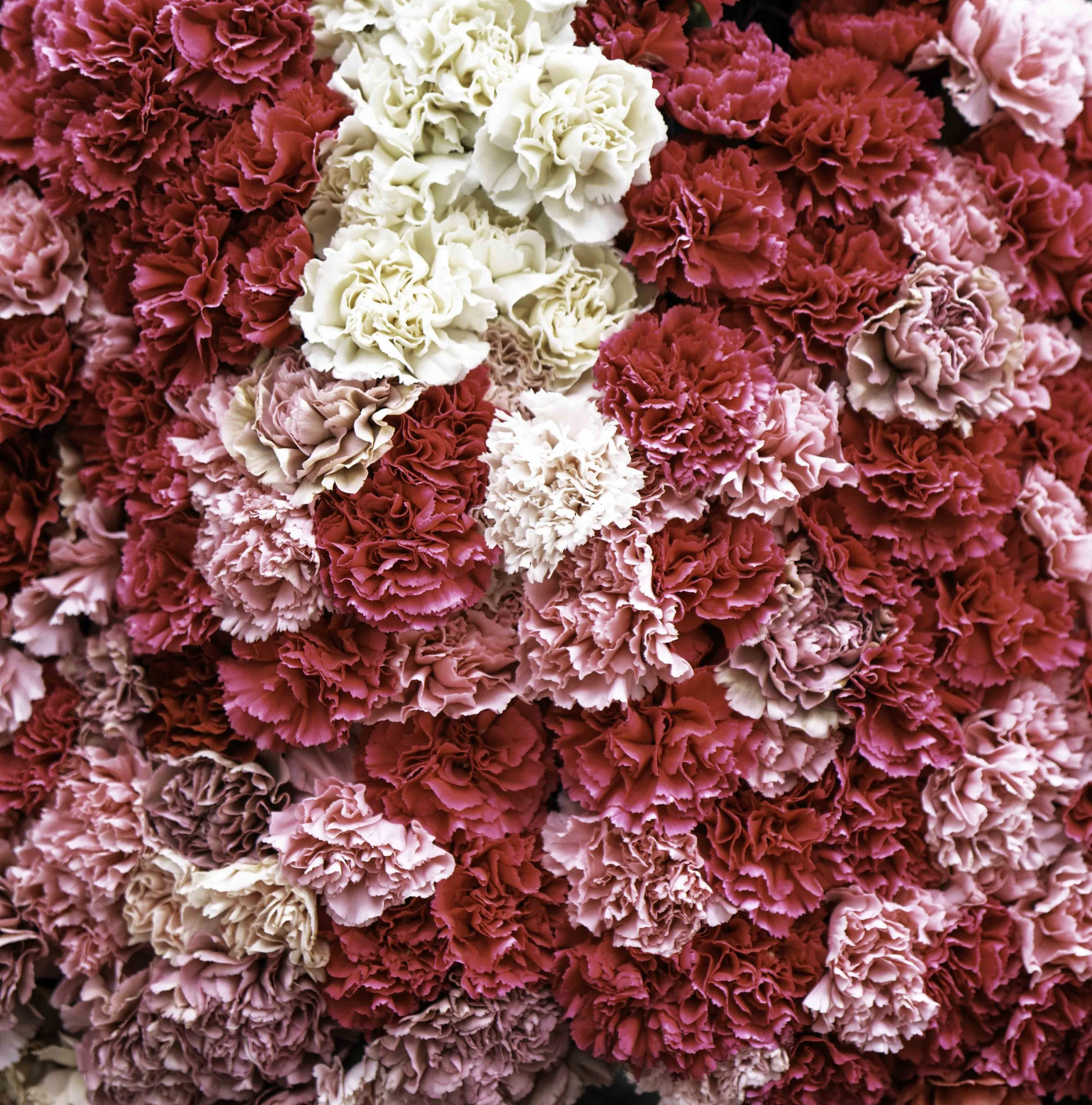
A wall of carnations — Leica Q3