El Born Street Photography: Faces of Barcelona's Old Quarter
El Born street photography rewards patience more than any other neighbourhood in Barcelona's old town. Walk slowly enough through its tangle of narrow streets and something happens on nearly every block: a family walks three huskies past a shuttered pharmacy, a woman feeds a stray pigeon by hand outside a fry shop, a man in a flowing djellaba crosses a beam of afternoon light. None of it is staged. El Born doesn't perform for cameras the way some tourist corridors do — it simply goes about its day, and that's exactly what makes it worth photographing.
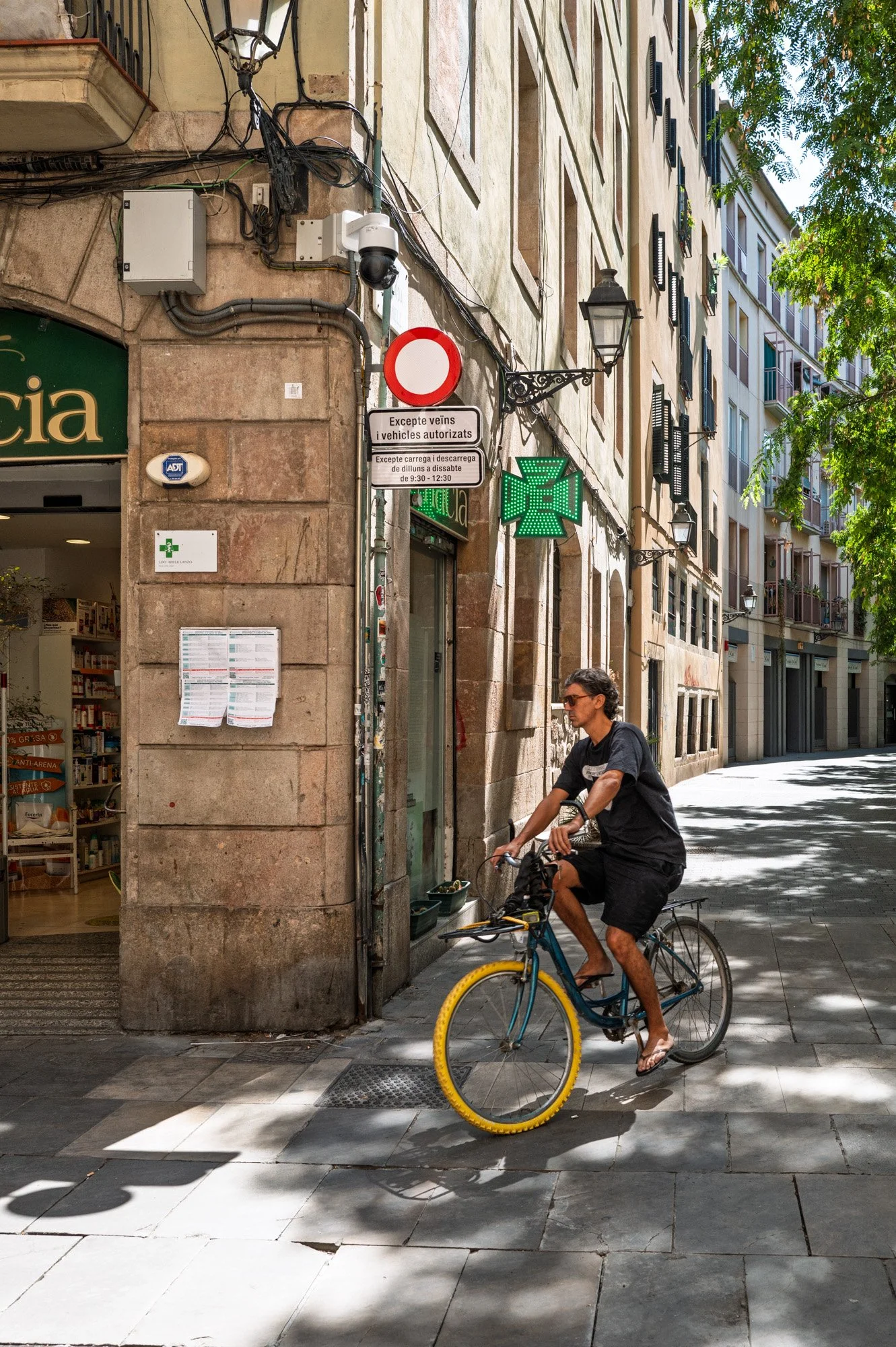
Rolling through El Born — Leica Q3
El Born Street Photography: A Neighbourhood in Motion
El Born has always carried more people than its streets seem built for. Balconies lean into each other overhead, laundry lines cross from window to window, and the pavement narrows to barely a metre in places — yet somehow locals doing their Tuesday errands, delivery riders, and visitors with guidebooks all share the same few paces of stone without much friction.
That density is what gives El Born street photography its particular texture. You're rarely shooting an empty frame; you're shooting overlap — old Barcelona and new Barcelona occupying the same six square metres at the same moment.
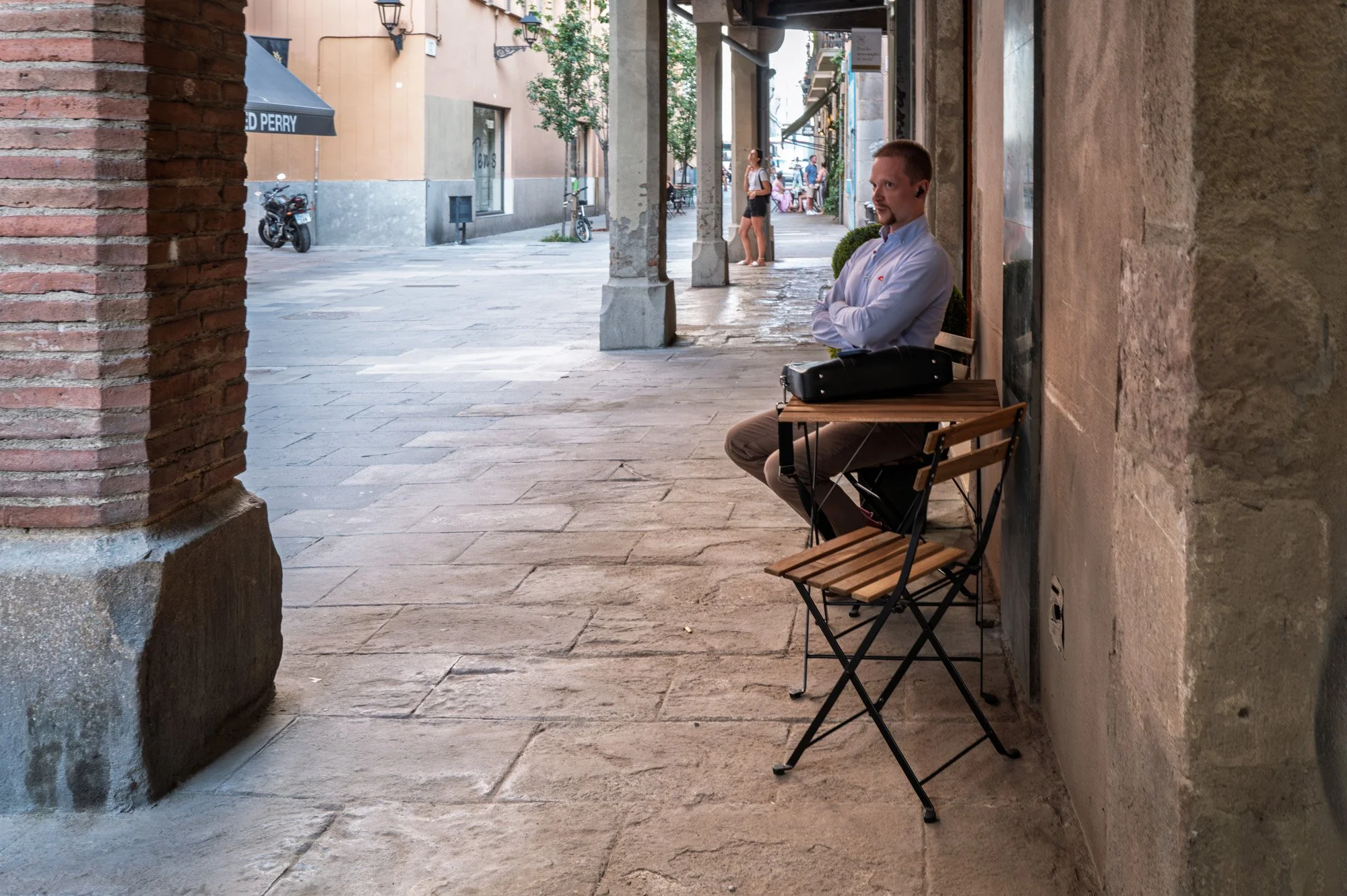
A quiet pause, violin in hand — Leica Q3
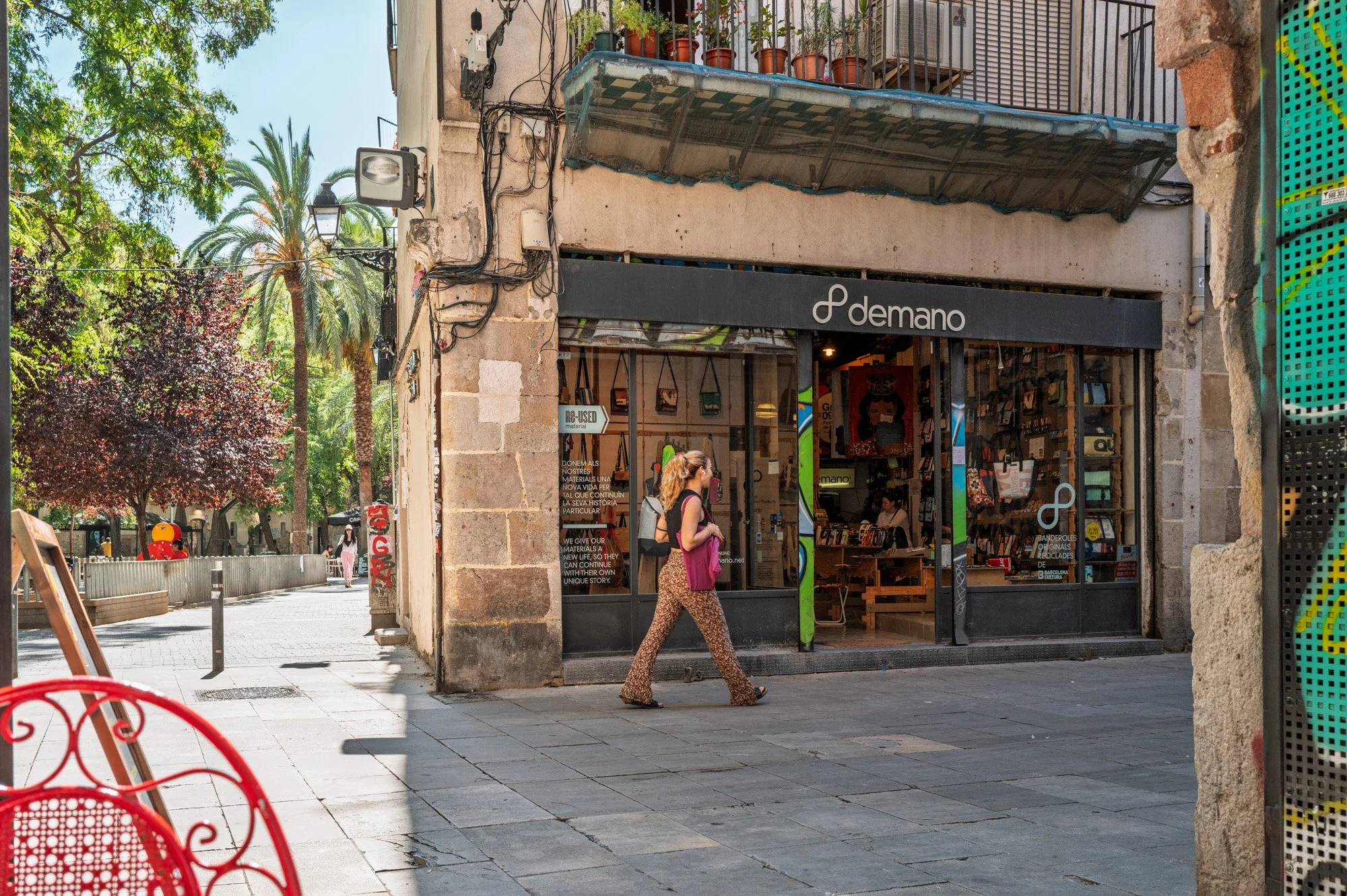
Passing by demano — Leica Q3
Locals, Visitors, and the Space Between
Some of the strongest frames from this walk came from moments where that overlap became visible. A mother and her son cross beneath the stone porticoes of Passeig del Born, strings of decorative lights hanging overhead, while behind them a shop window advertises a January sale — two rhythms of the same street, tourist season and ordinary life, running in parallel.
A few streets over, two men rest in the shade of the Atelier Cuir leather workshop's arcade, one glancing toward the camera with the unhurried attention of someone who's sat in that exact spot before.
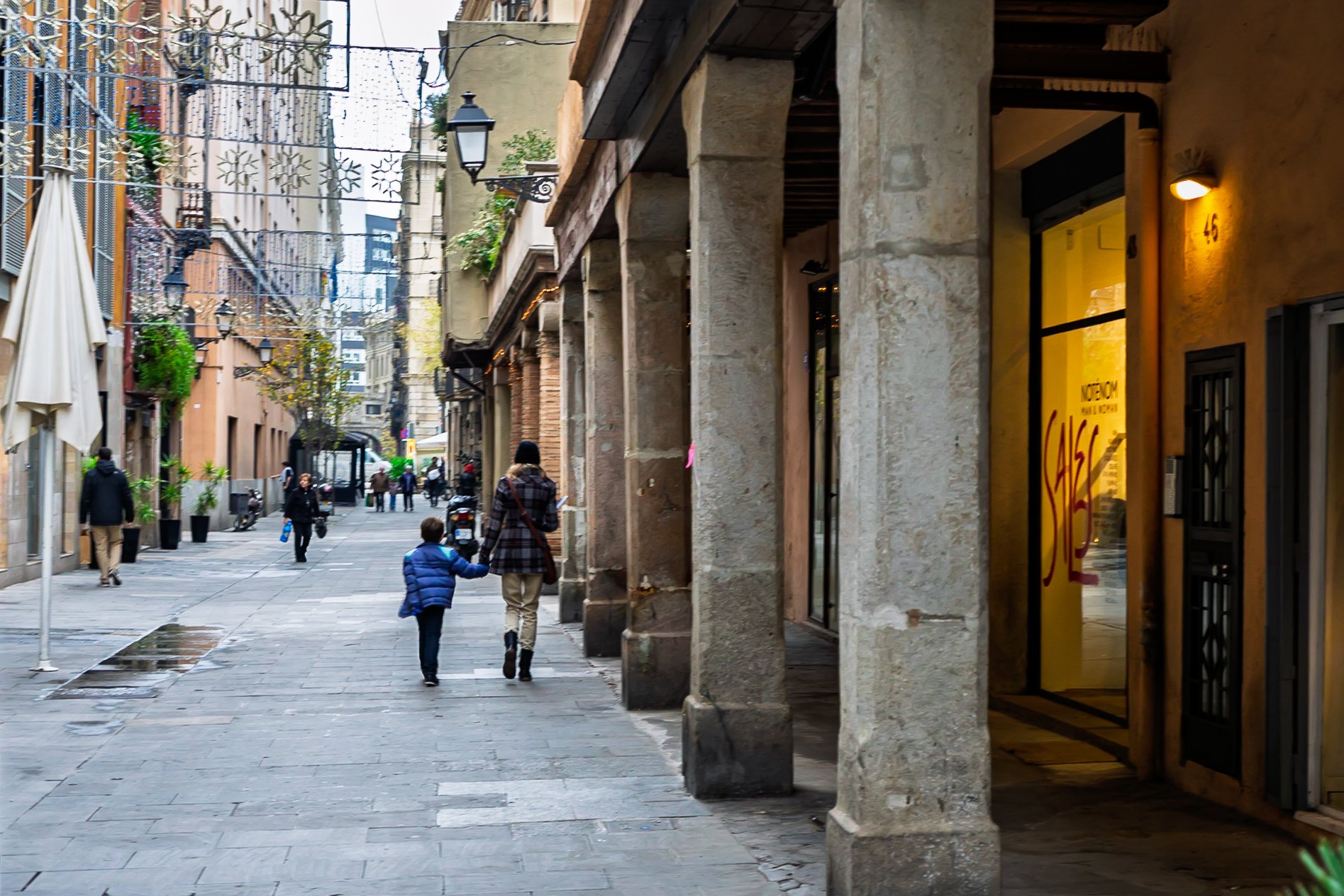
Under the porticoes — Leica Q3
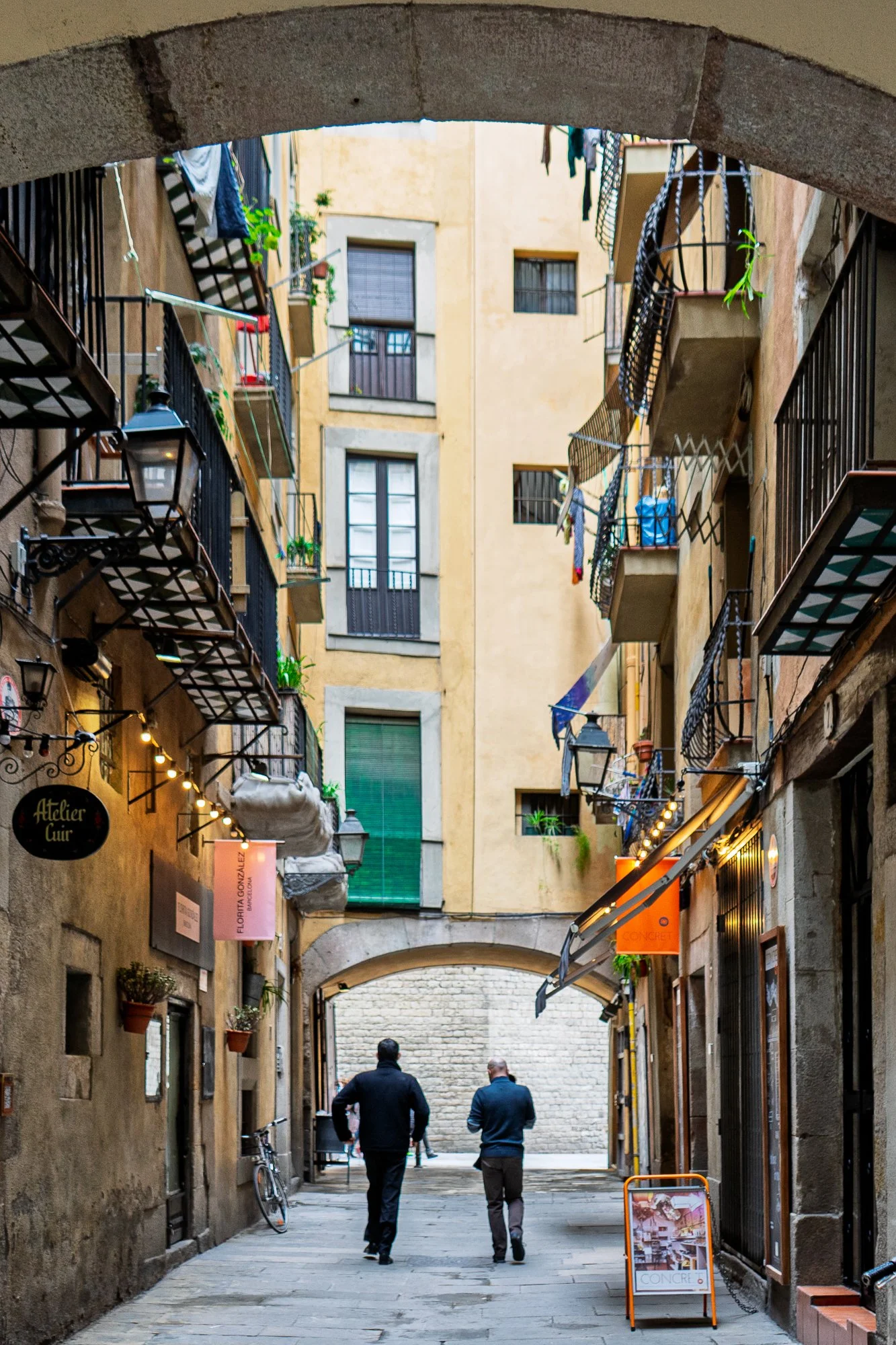
Afternoon shade at Atelier Cuir — Leica Q3
Elsewhere, three women pause by a hand-painted menu board — Plats i Racions, broken eggs and patates braves chalked up in yellow — while a man checks his phone in the doorway behind them. A pair of cyclists in matching yellow shirts, clearly on a guided tour, thread past pedestrians outside Bubó pastry shop, brakes half-squeezed, uncertain of the right of way. It's a different kind of street theatre than you'd find in the Gothic Quarter a few minutes' walk away — less monumental, more domestic, closer to eavesdropping than sightseeing.
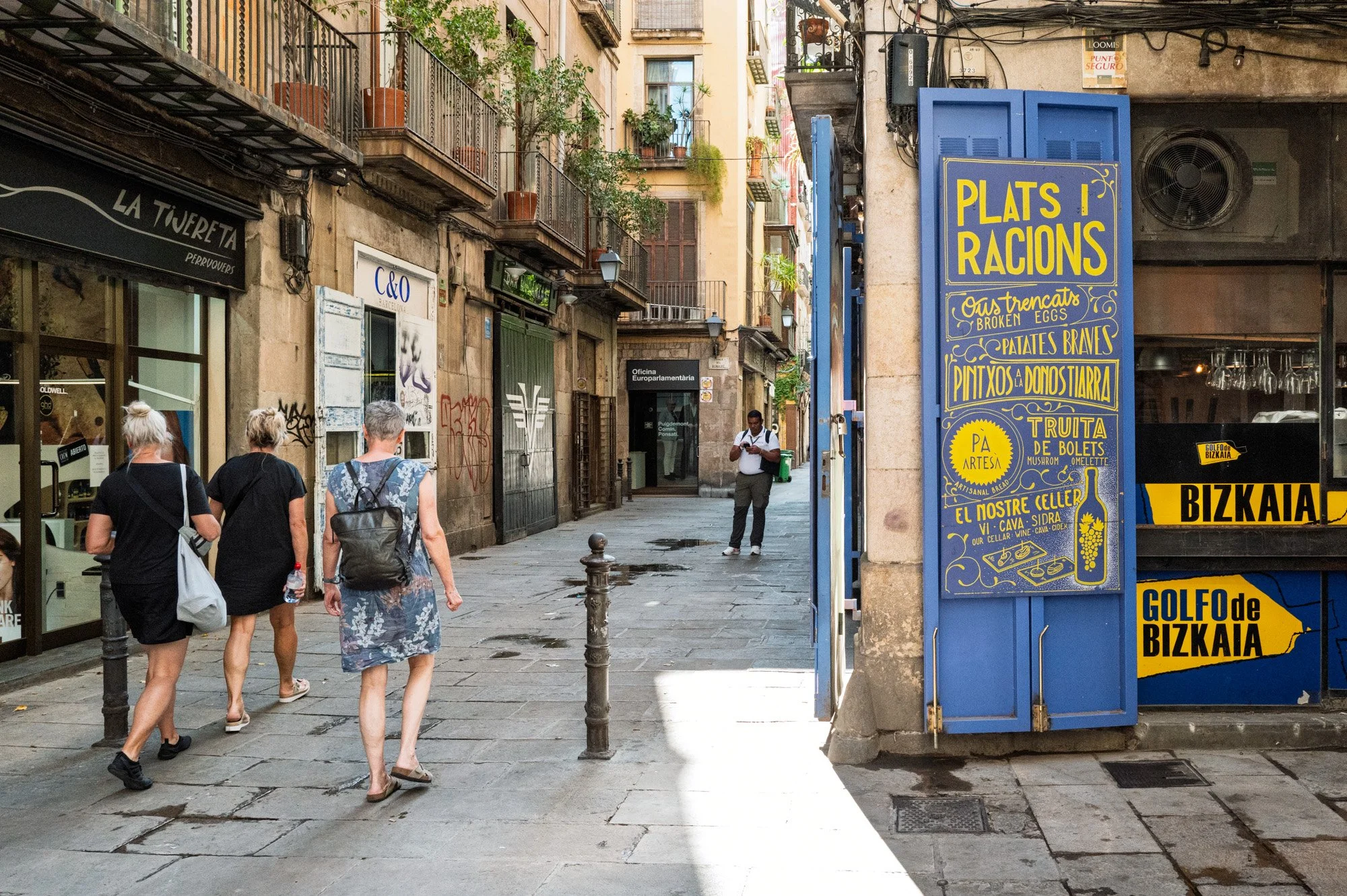
Reading the menu board — Leica Q3
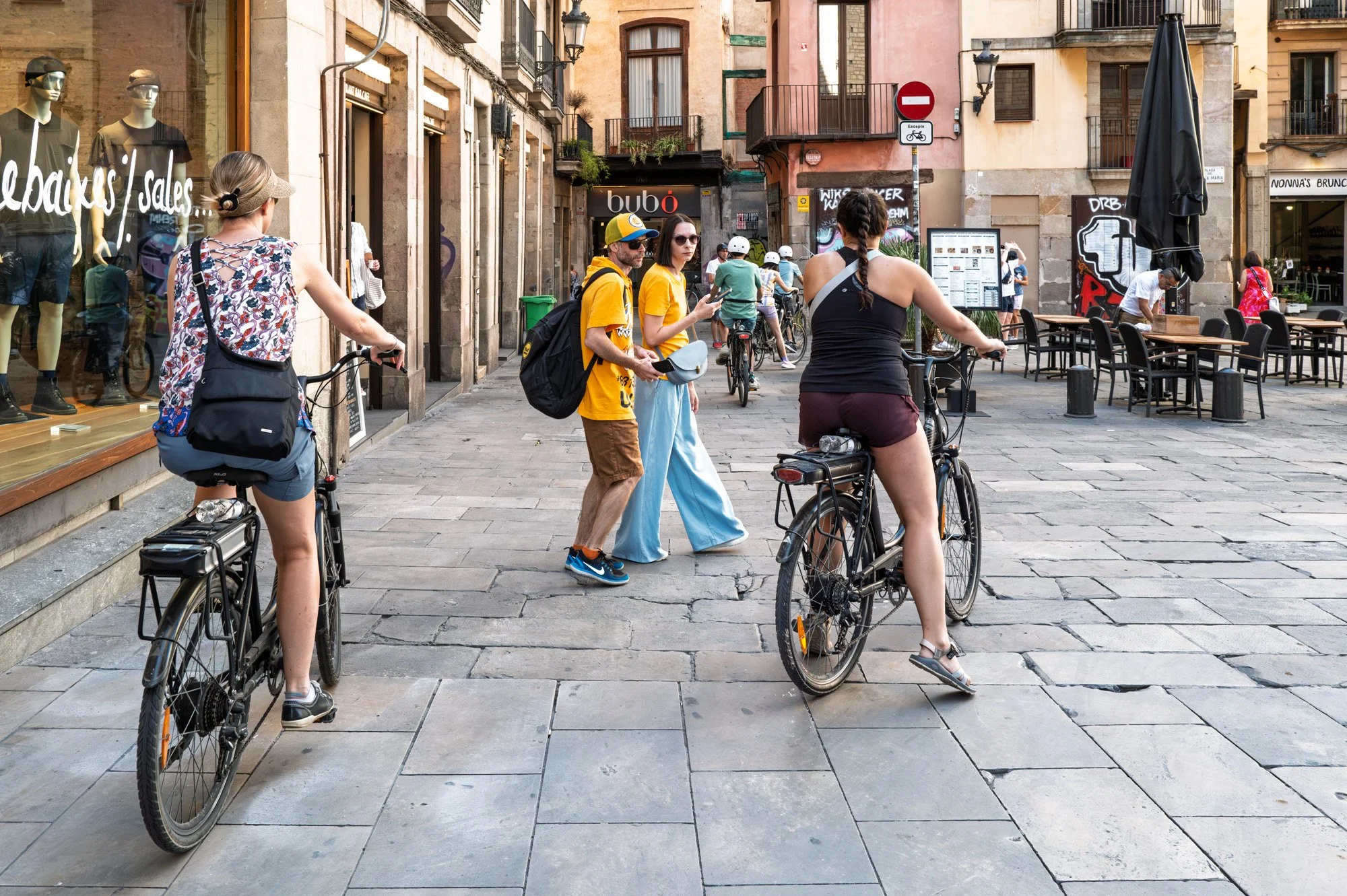
Guided tour through El Born — Leica Q3
Light, Distance, and the 28mm Discipline
Shooting El Born with a 28mm lens means giving up the option to stay back and wait for something to happen at a comfortable distance. The streets are too narrow and too busy for that; you end up a few steps from your subject, sometimes closer than feels entirely polite, which is part of what makes this kind of work honest rather than voyeuristic. The Leica Q3's quiet shutter and fast autofocus matter enormously here — most of these frames existed for under two seconds before the moment reorganised itself.
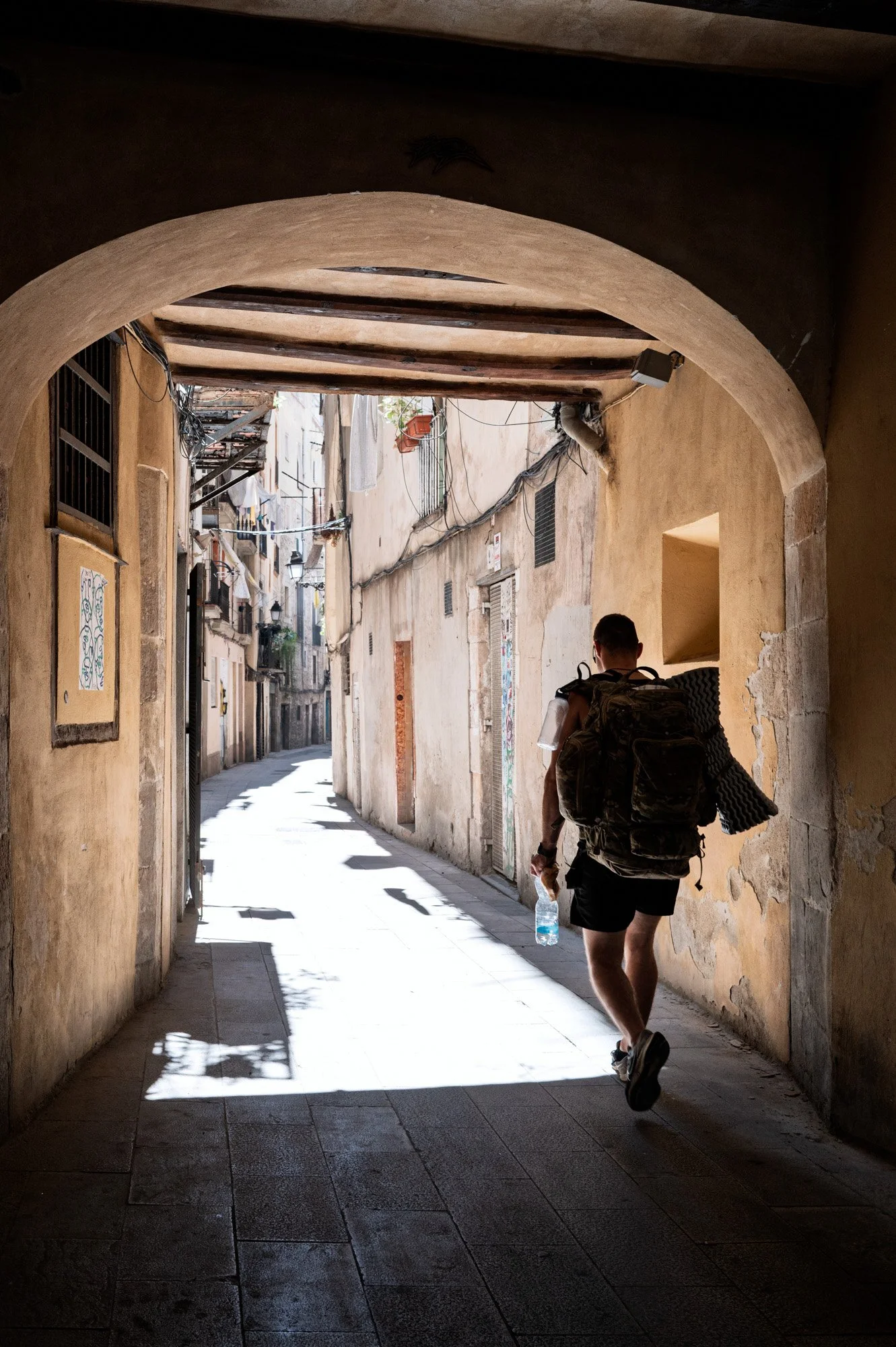
Light through the arch — Leica Q3
The light does half the work. Overcast mornings turn the ochre stone of buildings that once stood inside La Ribera — El Born's older, official name — into a flat, even grey that's forgiving on skin tones and lets colour details (a red dog collar, a green shop awning, a rainbow flag on a balcony) carry the frame.
On brighter days, the arcades and archways throw hard bands of shadow across the pavement, and those become natural framing devices — a backpacker walking from dark into a rectangle of white sunlight under a stone arch does more compositional work than any deliberate setup could.
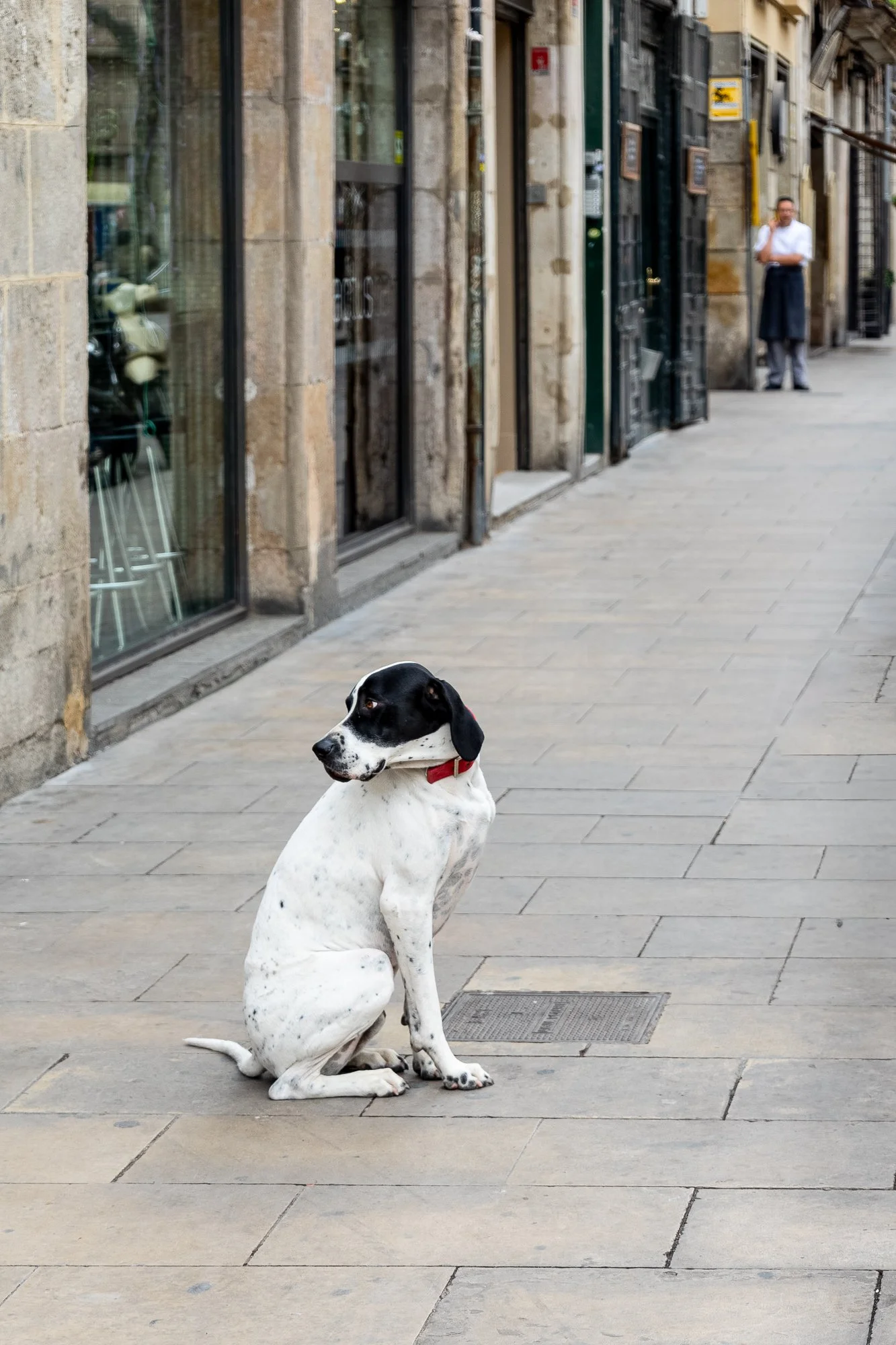
A dog waits patiently — Leica Q3
Small Dramas: Huskies, Pigeons, and a Man in a Doorway
A handful of frames from this walk had nothing planned about them and everything to do with being in the right alley at the right second. A family of four walks three huskies in a tight diagonal formation down a street barely wide enough for them, tongues out, clearly midway through a longer route than the neighbourhood's tourists usually manage. Outside a small fries counter, a woman holds a pigeon in both hands while the man behind the bar feeds it something off a fork — an odd, tender moment that had nothing to do with either of them noticing a camera. And near Carrer dels Miralleres, a man dressed in a brown djellaba walks with unhurried steps past a shop's rolled-down grille, the sunlight catching the fabric's sheen in a way that made the whole frame feel closer to a painting than a snapshot.
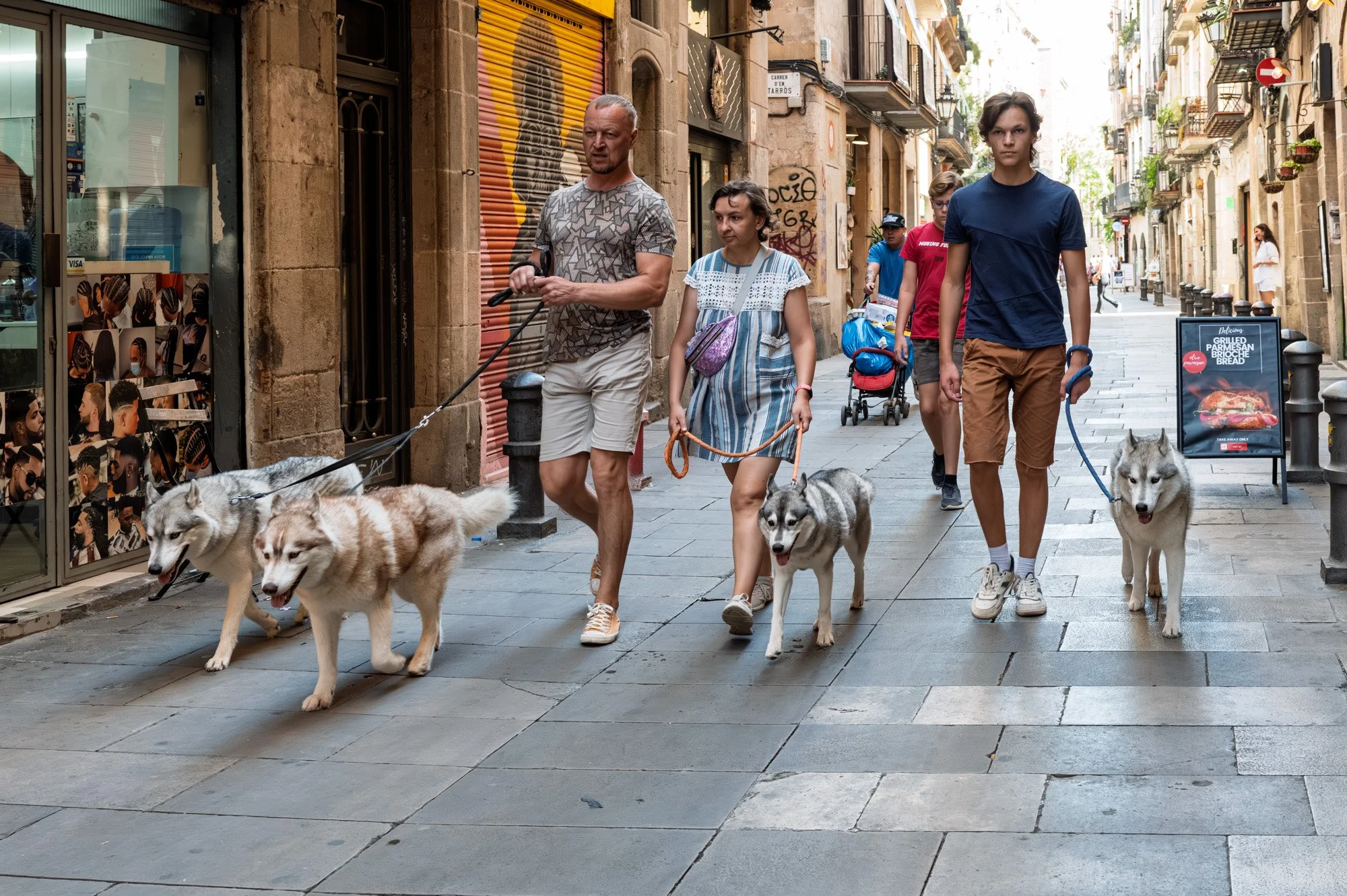
Four huskies and their family — Leica Q3
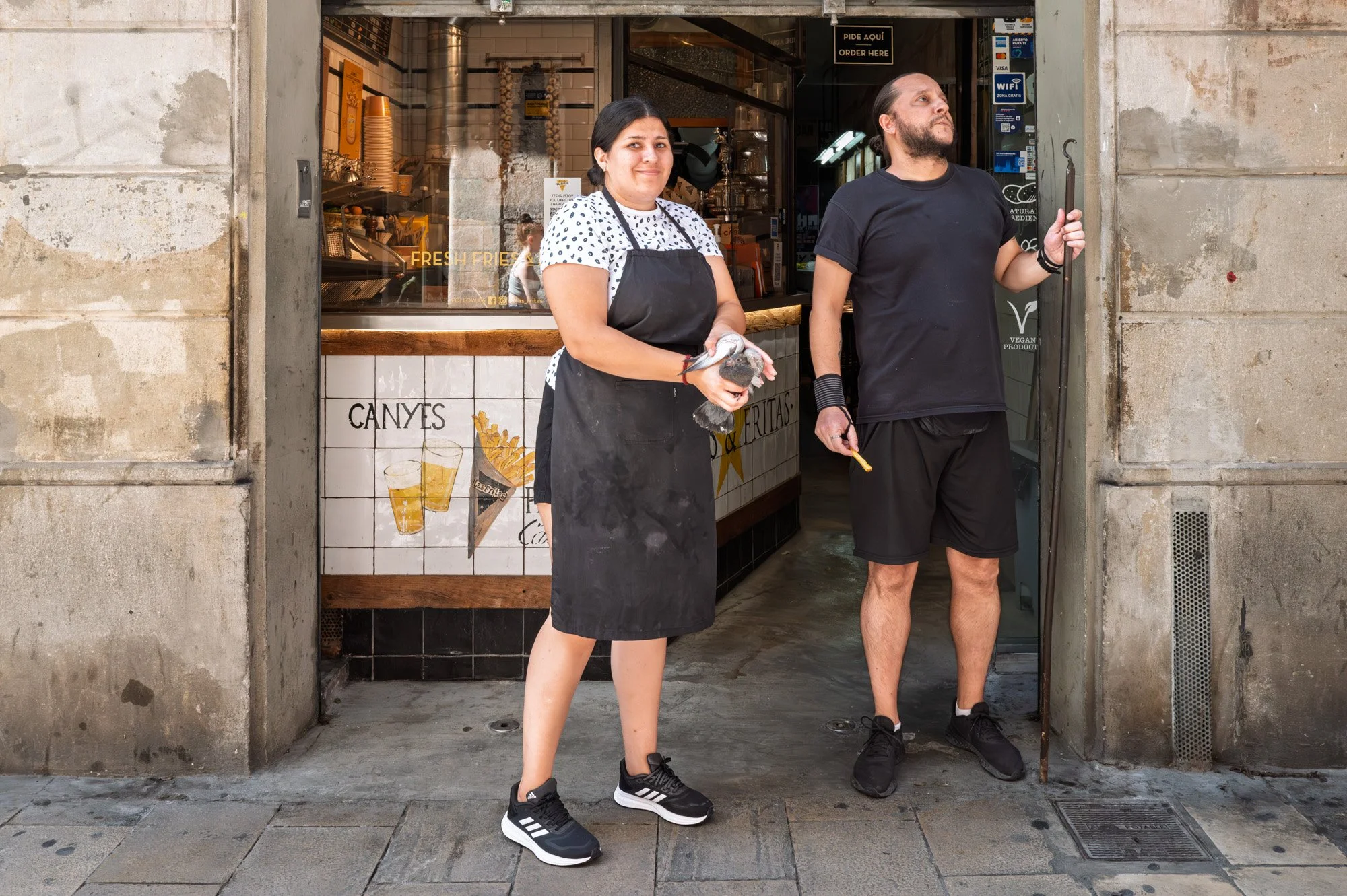
An unexpected visitor — Leica Q3
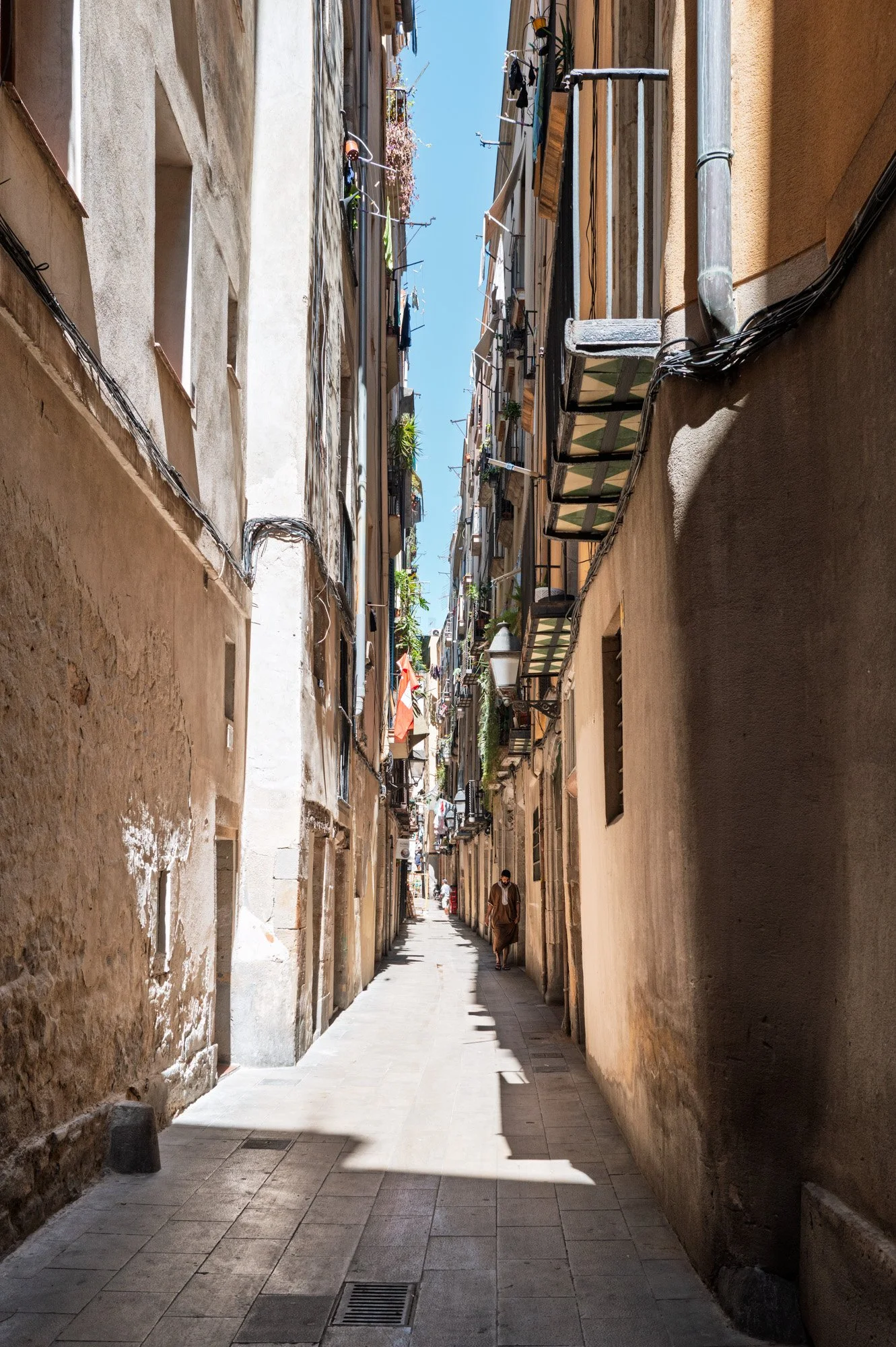
Unhurried, mid-afternoon — Leica Q3
The last image worth mentioning is quieter: a woman walking through a pair of graffiti-covered doors into a sunlit courtyard beyond, the doors themselves acting almost like a proscenium. It's a small, unremarkable act — someone heading home, or to work, or to meet a friend — but it captures something true about El Born: everyday life continuing, unbothered, in a neighbourhood most people photograph for its history rather than its present.
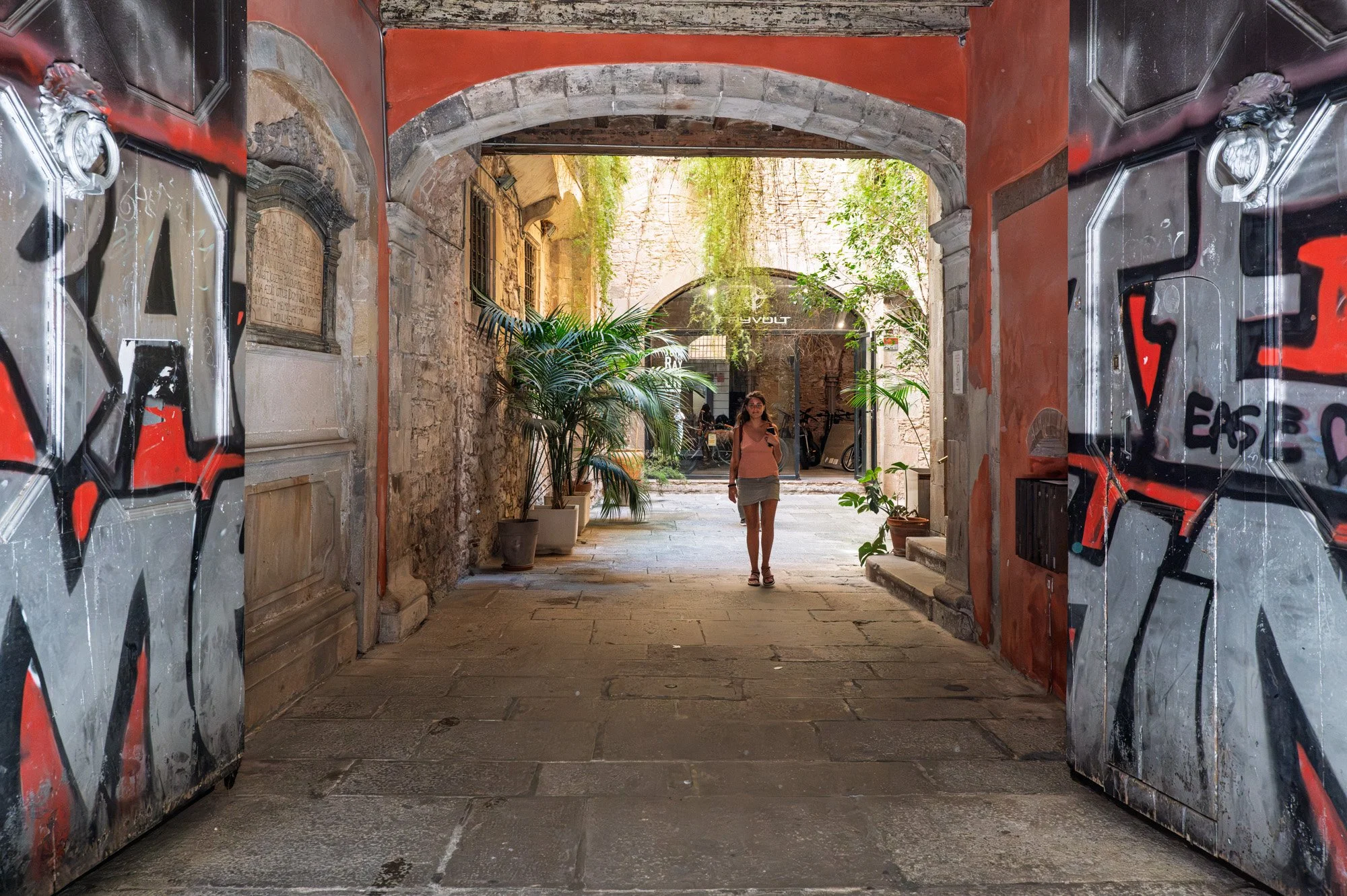
Through the painted doors — Leica Q3
A later walk stayed at street level with the terraces and the walls — the neighbourhood's bars, artisans and street art rather than its faces.
If you want the other side of the neighbourhood — the iron and the archaeology rather than the faces — we later spent a morning inside the Mercat del Born and what lies under it.
For the rest of the city, see my guide to the best street photography spots in Barcelona, neighbourhood by neighbourhood.
Spend an early morning walking El Born with no destination in mind — the neighbourhood does the rest of the work.
Photos: Leica Q3 · ISO 250 · 28mm · f/2.8–8 · 1/250s
See more street photography from Barcelona in the portfolio.
Like these images?
These photographs are available as signed, numbered fine art prints on archival paper. See sizes and order →
Cosme Lapena is a Barcelona-based street and urban photographer and founder of bCLPhoto.
Exhibited at espai [b] since 2010 · Published in The Eye of Photography and 35mmc. Browse the portfolio or read more on the blog.