Louise Nevelson — Big Black (1963)
ORIGINALLY PUBLISHED SEP 2023 — UPDATED MAY 2026
There are moments in a museum when you turn a corner and something stops you completely. Not because you were looking for it — you weren't — but because it's simply there, filling the wall in front of you, demanding your full attention before you've had time to decide whether to give it.
That's how I found Big Black at MoMA. I hadn't heard of Louise Nevelson before that afternoon. I was moving through the galleries with my camera, the usual flow of people around me, half-distracted by everything competing for attention. And then I turned, and there it was.

"Big Black 1963" sculpture by Louise Nevelson, MoMA New York – bCLPhoto
The Work
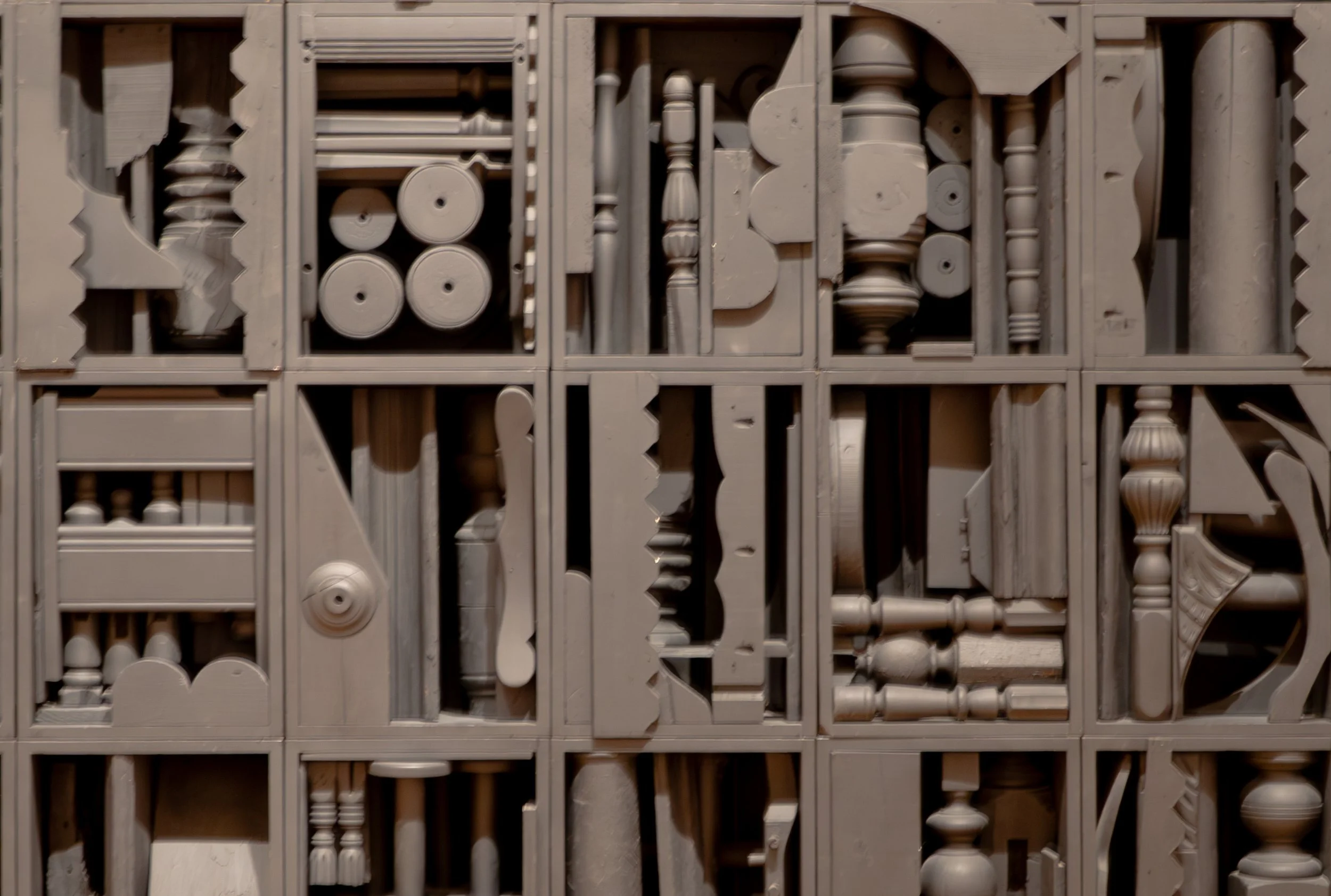
Big Black is enormous. Nearly three metres tall and over three metres wide, it occupies an entire wall — not hangs on it, occupies it, in the way that a presence occupies a room. Up close, what first reads as a single dark mass resolves into something far more complex: a grid of wooden boxes, each one filled with fragments — scraps of moulding, spindles, furniture parts, dowels, pieces of wood that were once something else entirely. Every compartment is its own small world. Together they become something monumental.
Nevelson covered the entire assemblage in black paint — not to hide the objects, but to unify them. To make the whole greater than the sum of its parts. She was clear about what black meant to her: not negation, not absence, but acceptance — a colour that contains all others. Standing in front of the work, that claim stops sounding like an artist's statement and starts sounding like the truth.
The texture is what stays with you. In photographs, Big Black can look flat, almost graphic. In person it has depth — real, physical depth — shadows within shadows, surfaces catching the gallery light at different angles, the geometry constantly shifting as you move. I spent a long time photographing it, trying to find the frame that captured both the scale and the detail. I'm not sure any single frame does. Some works resist reduction.
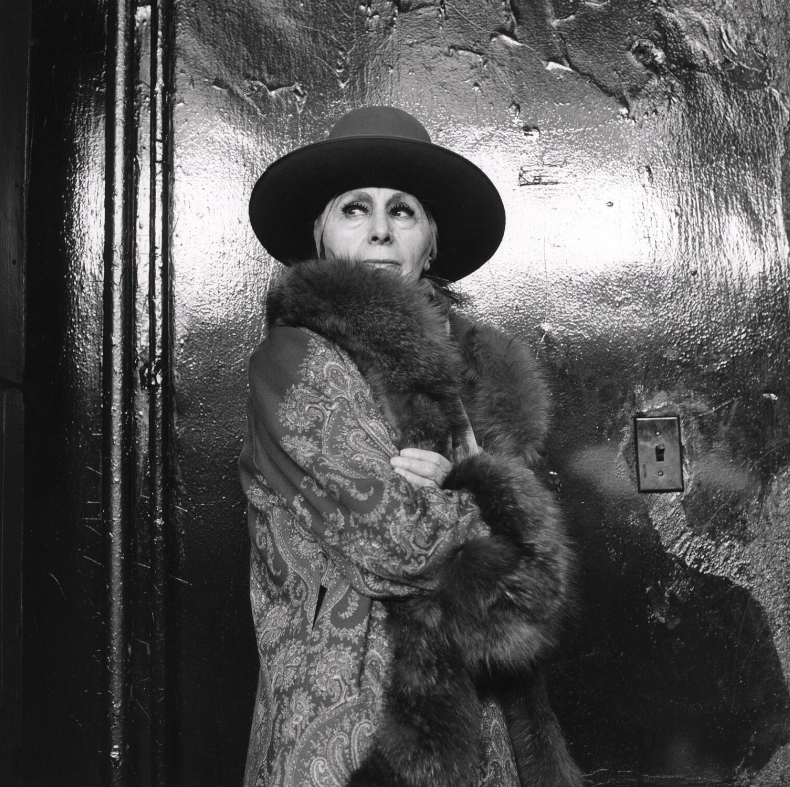
Louise Nevelson
Louise Nevelson was born in 1899 in what is now Ukraine, emigrated to the United States as a child, and spent decades working in obscurity before the art world caught up with her. By the time Big Black was created in 1963, she was already in her sixties — proof, if any were needed, that some artists arrive on their own schedule.
She worked almost exclusively in wood, assembling found objects and discarded fragments into sculptures that sit somewhere between architecture and painting, between order and accumulation. Her work is in museums and corporate collections across Europe and North America. She remains one of the most significant figures in 20th-century American sculpture — and one of the least famous outside the circles that follow these things closely.
I walked past her work by accident. I suspect that's how a lot of people first encounter her.
Practical details
Big Black, 1963.
Painted wood, 274.9 × 319.5 × 30.5 cm.
MoMA, New York — Painting and Sculpture collection. Gift of Vera G. List. Object number: 229.1991.a-nn
Close-up detail of "Big Black 1963" by Louise Nevelson, MoMA – bCLPhoto
Big Black belongs to a thread of photography that runs through the blog — encounters with sculpture and public art that stop you mid-stride. See The Girl of Peace for a very different work with an equally powerful presence, or The Soul of the Ebro by Jaume Plensa for another monumental sculpture photographed up close.
See more street photography in the portfolio.
Cosme Lapena is a Barcelona-based street and urban photographer and founder of bCLPhoto.
Exhibited at espai [b] since 2010 · Published in The Eye of Photography and 35mmc. Browse the portfolio or read more on the blog.