Puigcerdà Lake — Winter Photography in the Pyrenees
ORIGINALLY PUBLISHED MAR 2019 — UPDATED MAY 2026
Puigcerdà — Blue Water and Winter Light in the Cerdanya
There are places close to home that somehow feel further away than they are. Puigcerdà is one of those. Barely two hours from Barcelona, up in the Cerdanya valley at over a thousand metres, it exists in its own rhythm — quieter, colder, and lit with a quality of light that the coast never quite manages.
I went in winter. The cold was real — the kind that gets into your hands and makes you question your aperture ring — but the sky was clear and blue, and the light was the flat, clean light of a high-altitude winter morning that photographers chase without always finding. When I saw the lake, I understood immediately why I'd come.

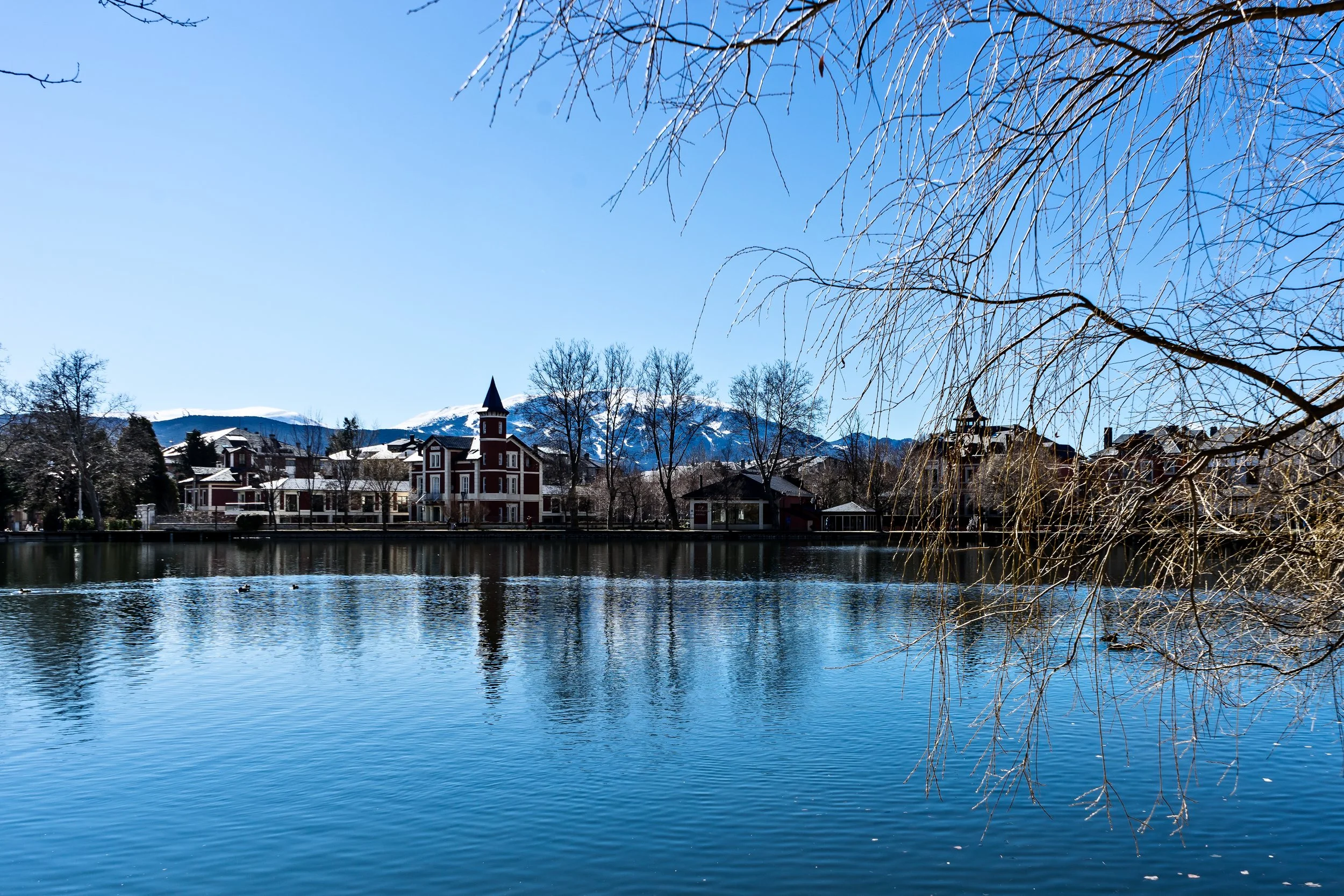
Puigcerdà Lake in winter, Cerdanya, Catalonia – bCLPhoto
The Lake
The Puigcerdà lake stops you. It's not large — more a generous pond than a proper lake — but on a winter day with no wind and a blue sky overhead, the water holds the colour of the sky so completely that the two become difficult to separate. The reflections were perfect: the treeline, the surrounding villas, the occasional duck moving slowly through the frame. Everything still. Everything quiet.
I shot at ISO 100 throughout — the winter sun gave me enough light to keep the sensor clean and the images sharp. Most frames at 50mm and 28mm, f/9, 1/250 sec. I wanted everything in focus, the full depth of the scene: the foreground water, the reflections, the buildings and trees behind, and the mountains further back. At f/9 you get all of it. The discipline in this kind of light is not to rush — to wait for the reflections to settle, for the surface to smooth, for the frame to become what you want it to be.
The blue was the thing. That particular blue — deep, almost saturated, somewhere between the sky and the lake — is what made me keep shooting long after I had what I'd come for.
Puigcerdà Lake and surrounding landscape, Catalonia – bCLPhoto
A Lake With 760 Years of History
The lake of Puigcerdà has been documented since 1260, built originally as a water reservoir for the town. Over the centuries it served as a fishery, an ice source — blocks were cut from the lake in winter and stored in an ice house to keep food fresh through spring and summer — and eventually, as the town grew and its walls came down in the 19th century, as a leisure space for the prosperous Barcelona bourgeoisie who discovered Puigcerdà as a summer destination. The park surrounding the lake was inaugurated in 1925.
The lake also has its own legend. When the lake was created in the 13th century, the land that was flooded had been home to families who lived there for generations. One old woman, forced from her home to make way for the water, made a vow before she left: she would return every year to the place where her house had stood, for as long as she lived. And she did. Every August, without fail, she made her way back to the edge of the lake and stood there — looking out over the water that had swallowed her home.
The story doesn't end with her death. According to local tradition, the old woman kept her promise from beyond the grave. Each year, during the Festa de l'Estany — the Festival of the Lake — the figure of a bent old woman in a bonnet and bodice is said to emerge from the water, walk the streets of Puigcerdà one last time, and then return quietly to the depths.
Whether you take it as myth or memory, it's the kind of story that changes how you look at a lake. Standing at the edge with my camera, watching the reflections settle on that blue winter water, it wasn't hard to imagine something — or someone — down there looking back.
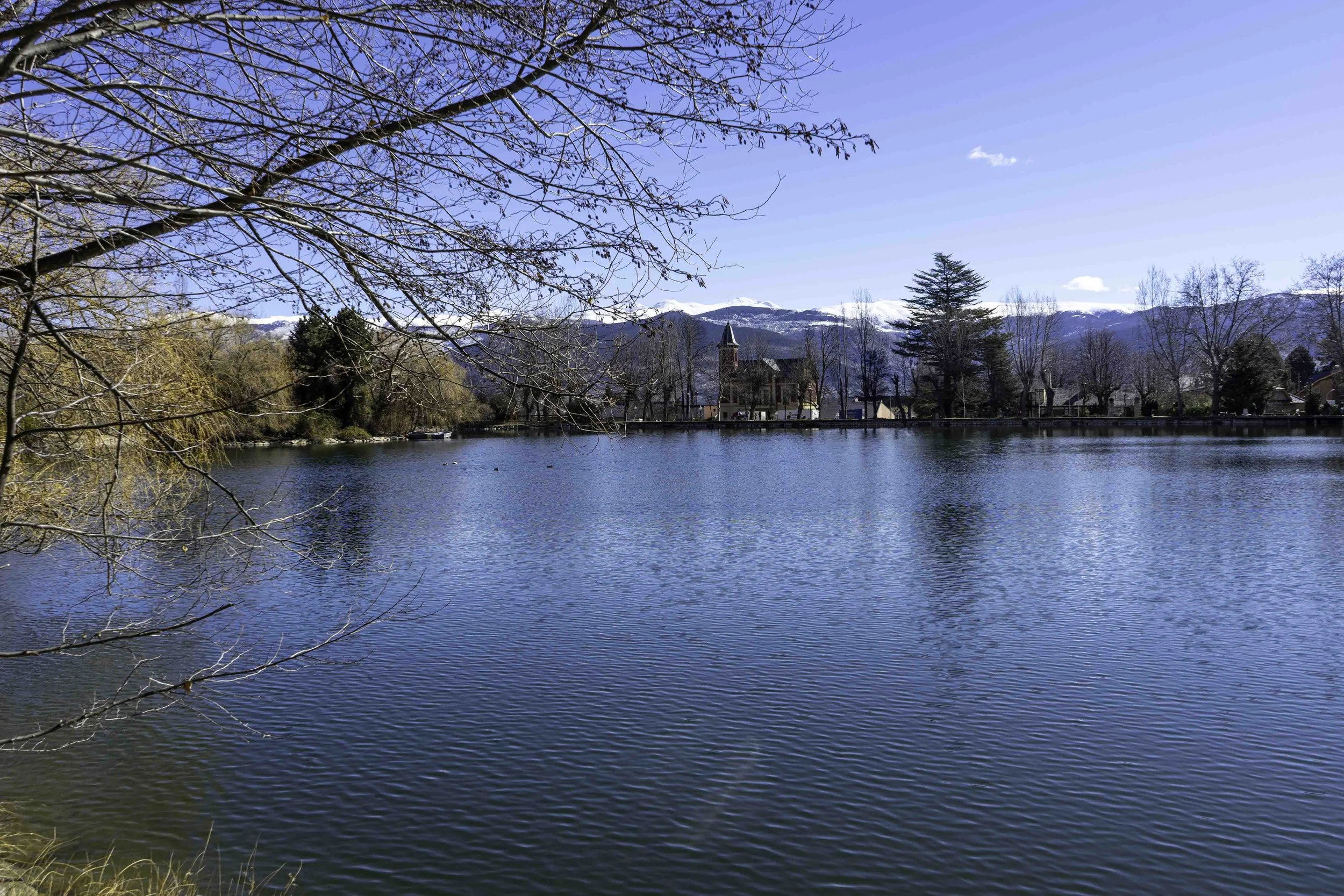
Puigcerdà Lake and landscape, Catalonia – bCLPhoto.jpg
Notes on the photographs:
All three images shot on a clear winter day, Puigcerdà.
Image 1: 50mm · f/9 · 1/250s · ISO 100
Images 2 & 3: 28mm · f/9 · 1/250s · ISO 100
Getting There
Puigcerdà is reachable by train from Barcelona Sants — the R3 line runs directly to Puigcerdà in around two hours. The lake is a short walk from the station, right in the centre of town. If you go in winter, bring gloves. And a wide-angle lens.
Puigcerdà sits in the Catalan Pyrenees, just over an hour from Barcelona. For more Catalonia photography, see Temps de Flors — Girona in Full Bloom, where another side of the region comes to life each spring. For more nature and landscape photography, Giant's Causeway shows what happens when geology becomes spectacle.
See more nature photography in the portfolio.
Cosme Lapena is a Barcelona-based street and urban photographer and founder of bCLPhoto.
Exhibited at espai [b] since 2010 · Published in The Eye of Photography and 35mmc. Browse the portfolio or read more on the blog.