Lisbon Street Photography: Trams, Tiles and Rain
Lisbon street photography starts before you even raise the camera. The city does the work for you — steep cobbled streets that frame the light, Tram 28 that appears from nowhere on a wet cobblestone bend, and a low winter sun that turns every wet pavement into a mirror. We had wanted to visit Lisbon for years, drawn in by the same clichés everyone mentions and half suspicious they would disappoint. They did not.
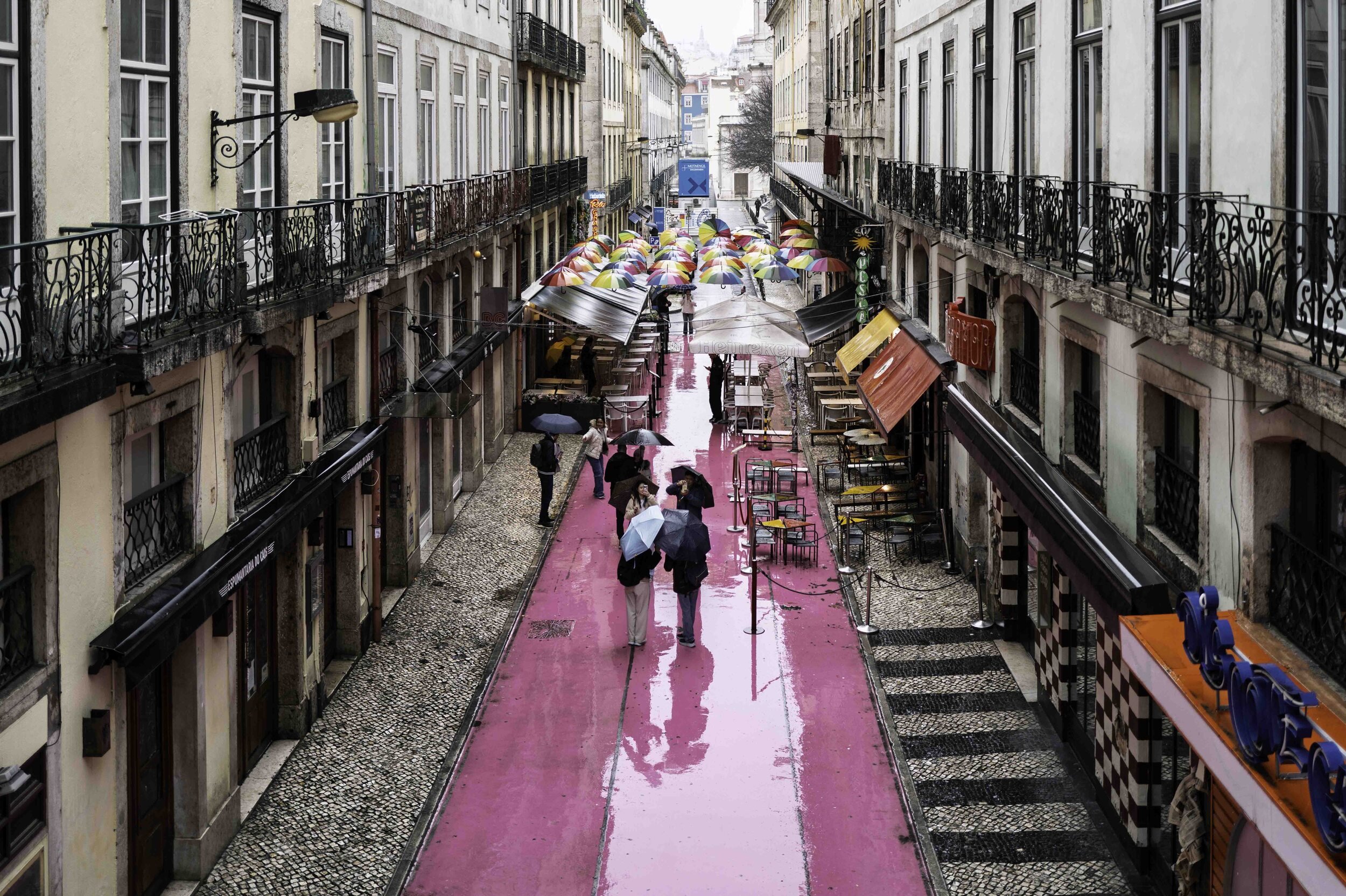
Pink Street in the rain — Leica Q3
PHOTO OF THE MONTH: June 2026
A City That Wears Its Clichés Well
There is a particular kind of city that knows exactly what it is and makes no apology for it. Lisbon is one of those. Tram 28 still grinds through Alfama on the same route it has run for decades, slow enough on the steepest bends that you can almost step on as it rounds a corner.
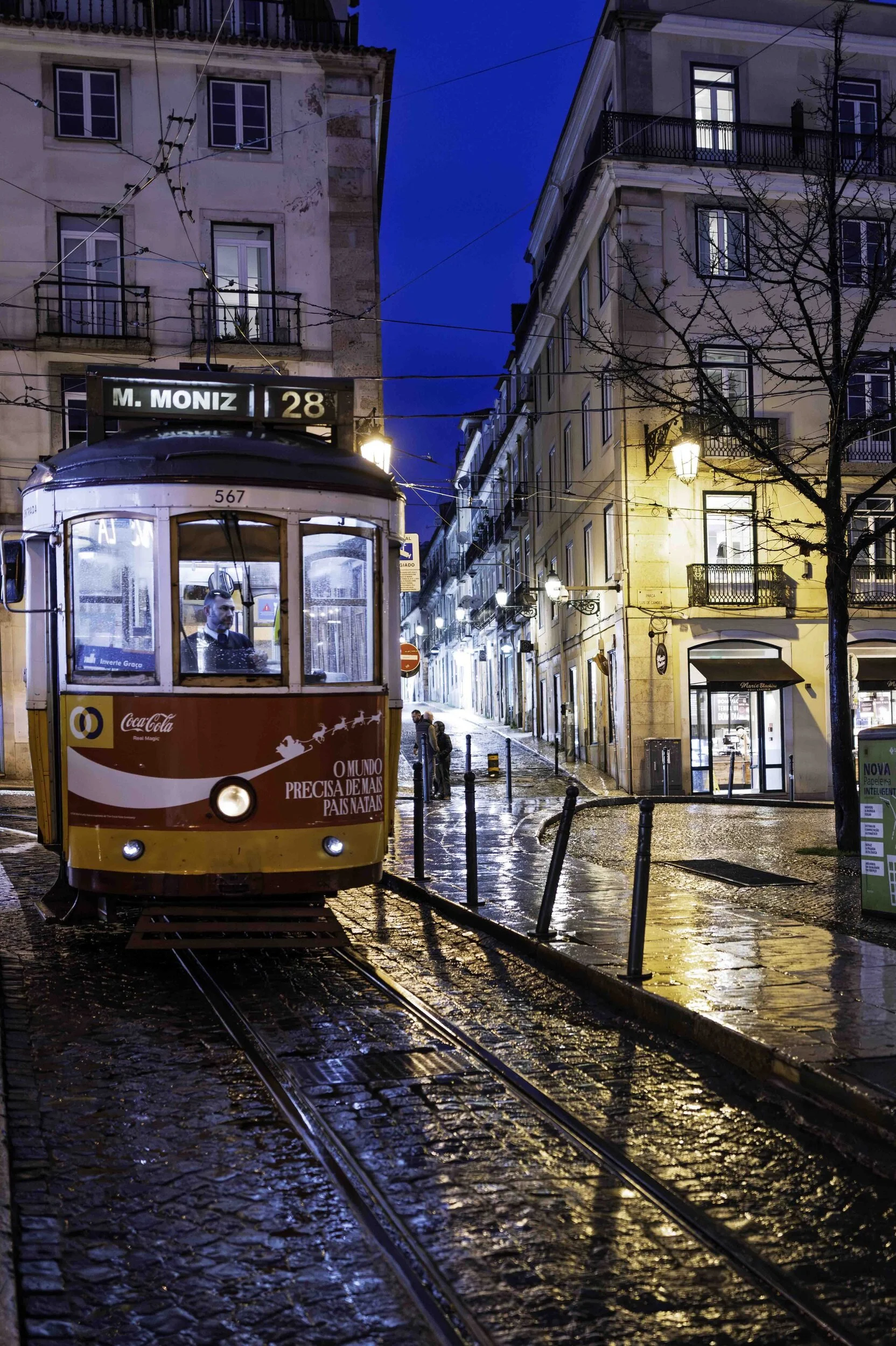
Tram 28, blue hour — Leica Q3
The elevadores still creak uphill. The bacalhau still appears on every menu in a hundred different forms. What surprised us was not that the clichés were real — it was that they were earned. Each one has survived because it belongs here, not because someone preserved it for tourists. We photographed them all and felt no guilt about it.
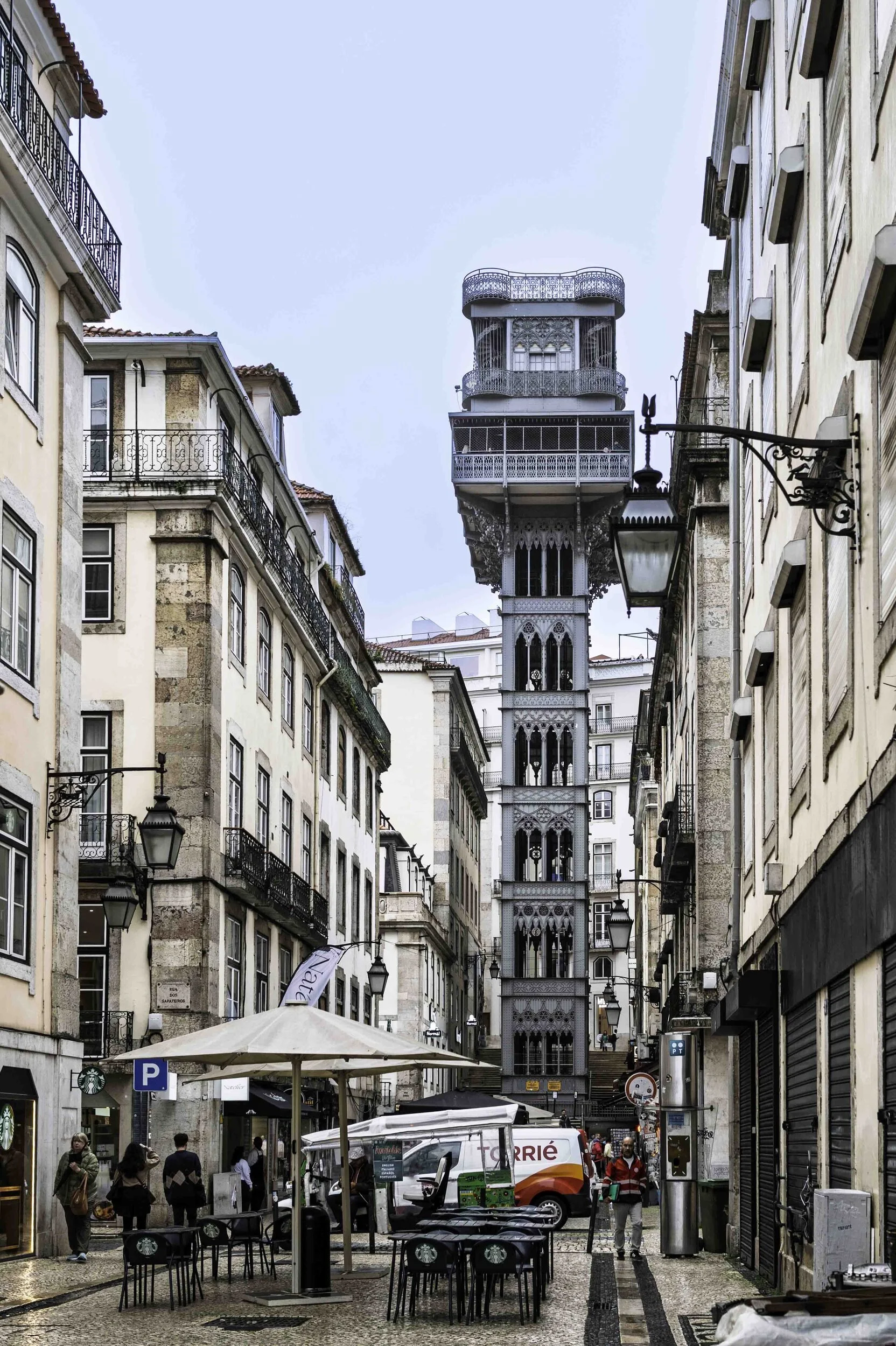
Elevador de Santa Justa — Leica Q3
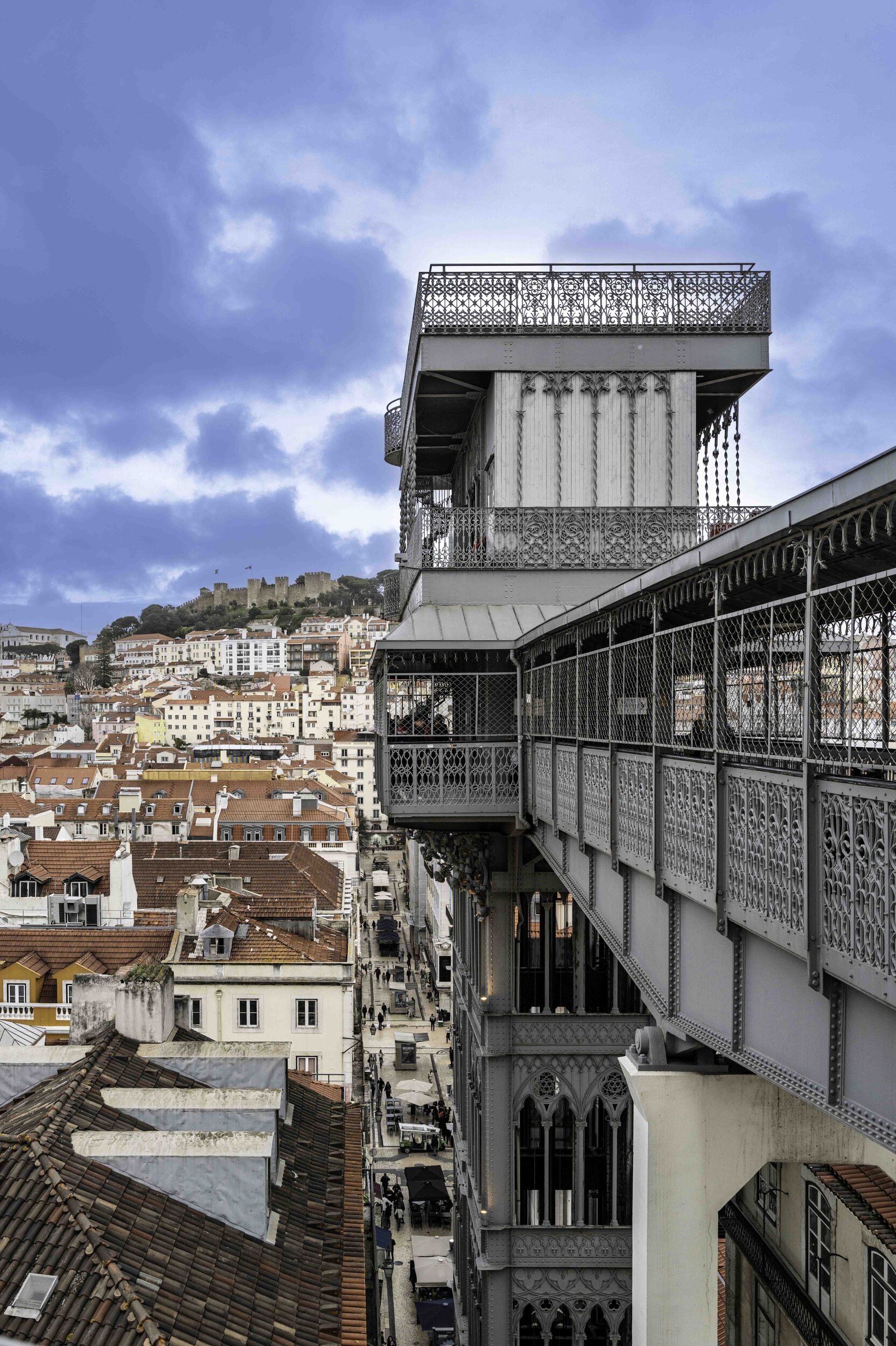
The city below — Leica Q3
The weather worked against us on most days. Rain, low cloud, cold. But Lisbon in the rain has a quality that clear-sky Lisbon probably does not — the streets empty slightly, the reflections multiply, and the colour palette shifts toward grey and silver with sudden bursts of yellow tile and terracotta. We kept shooting. Rua Nova do Carvalho — the Pink Street — was particularly good in the rain: a hundred metres of wet pink asphalt, restaurant awnings folded under the weight of the water, and people moving quickly under umbrellas, the whole street reflected back from the ground.
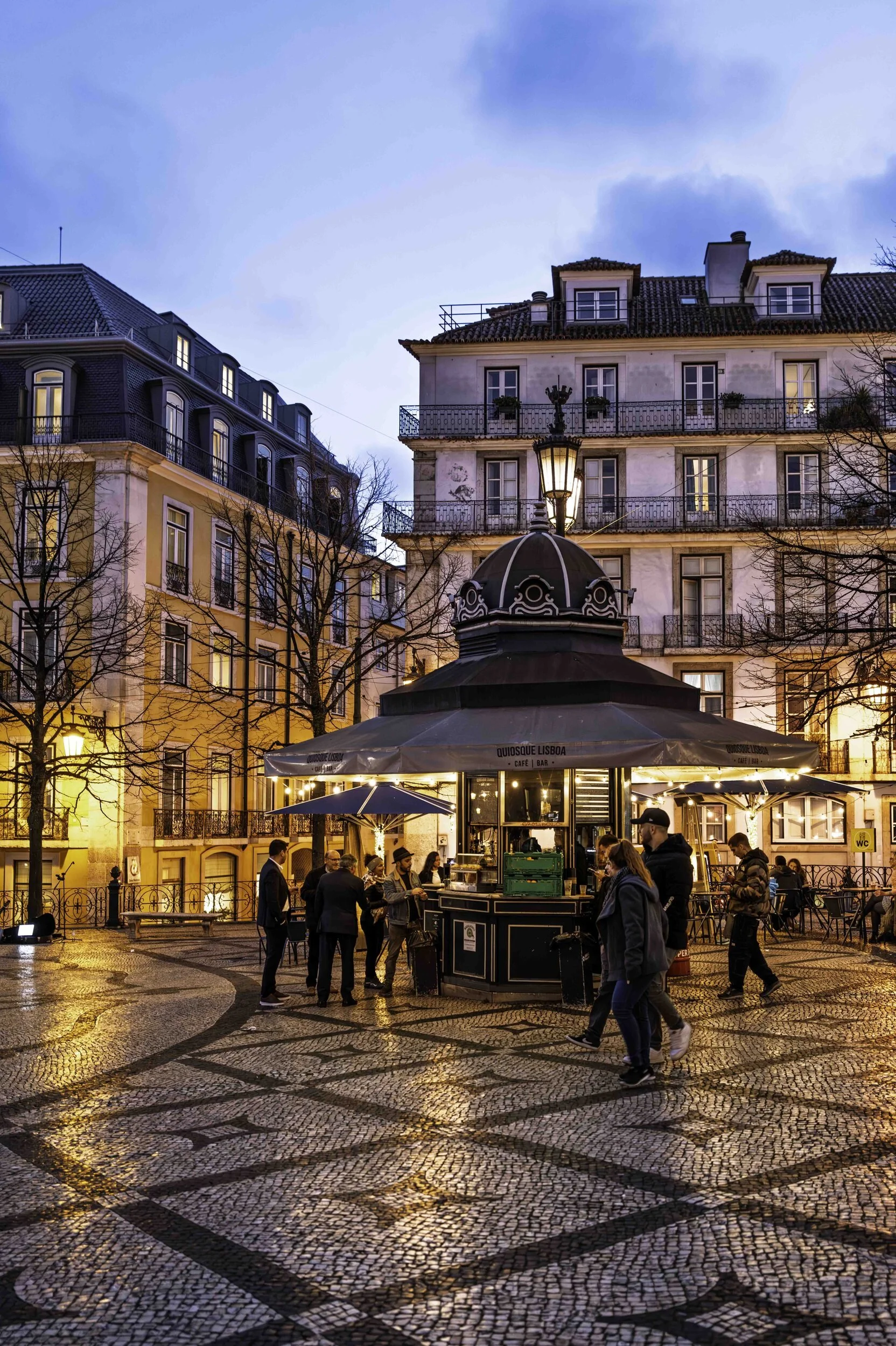
Chiado at dusk — Leica Q3
We spent one afternoon in Belém, which has its own relationship with the cliché. The Torre de Belém has been photographed ten million times and appears entirely comfortable with this. What it gave us, from the inside, was something less expected — a gothic window split into two arches, the Tagus framed within them, and the 25 de Abril Bridge disappearing into grey to the right. Sometimes the classic building offers the least obvious frame.
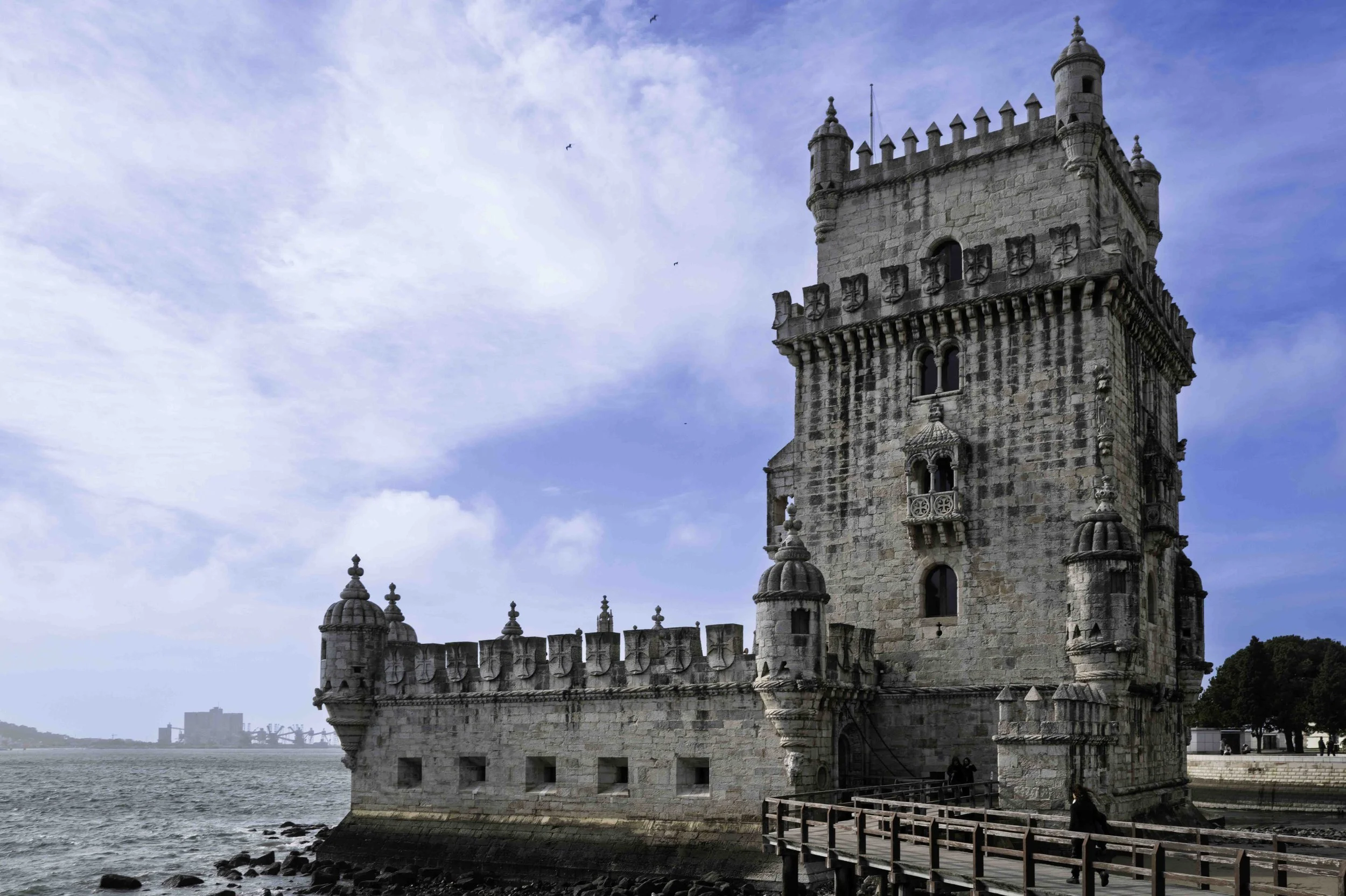
Belém Tower and the Tagus River in the background, Lisbon — Leica Q3
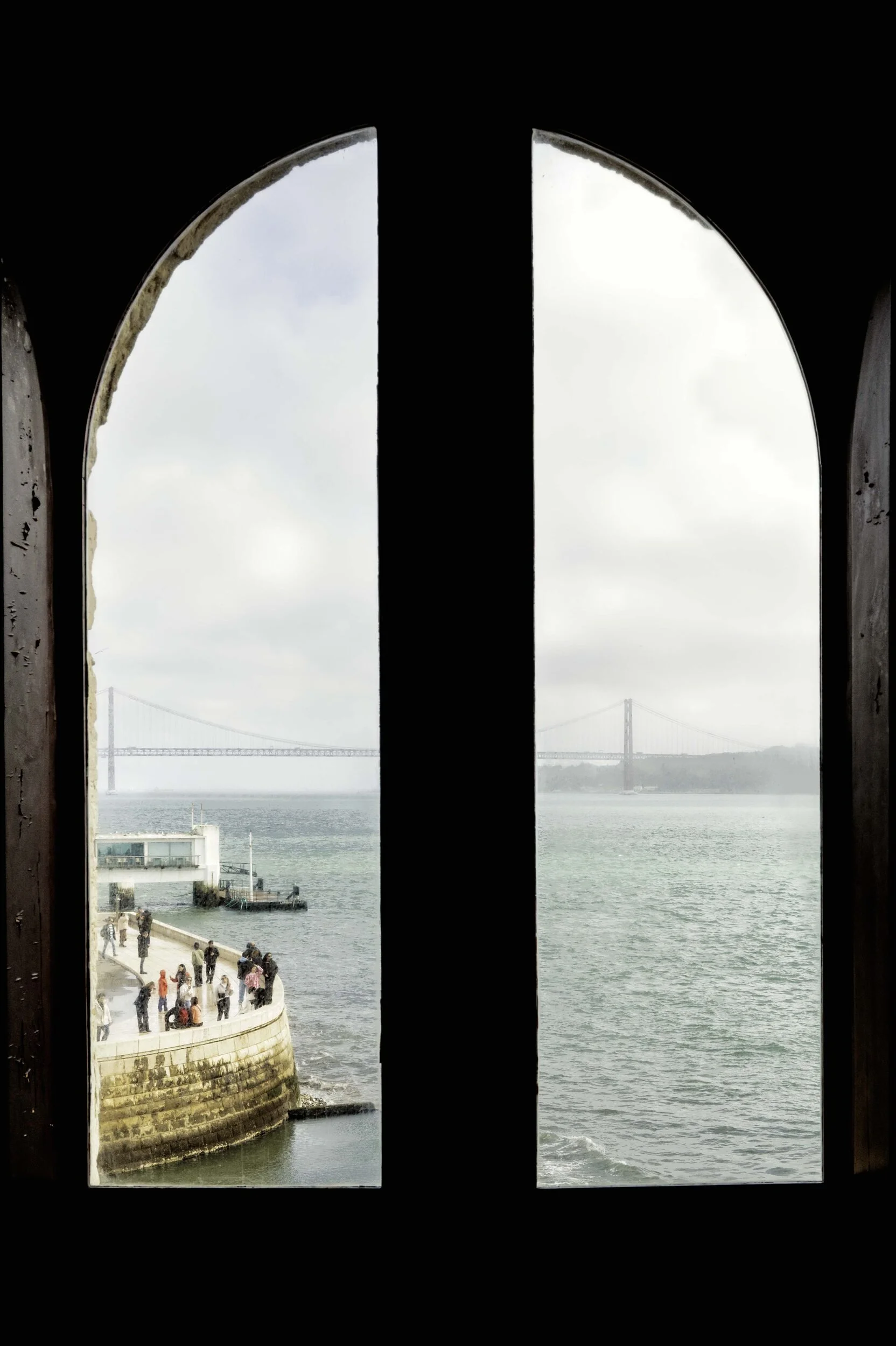
Torre de Belém, through the window — Leica Q3
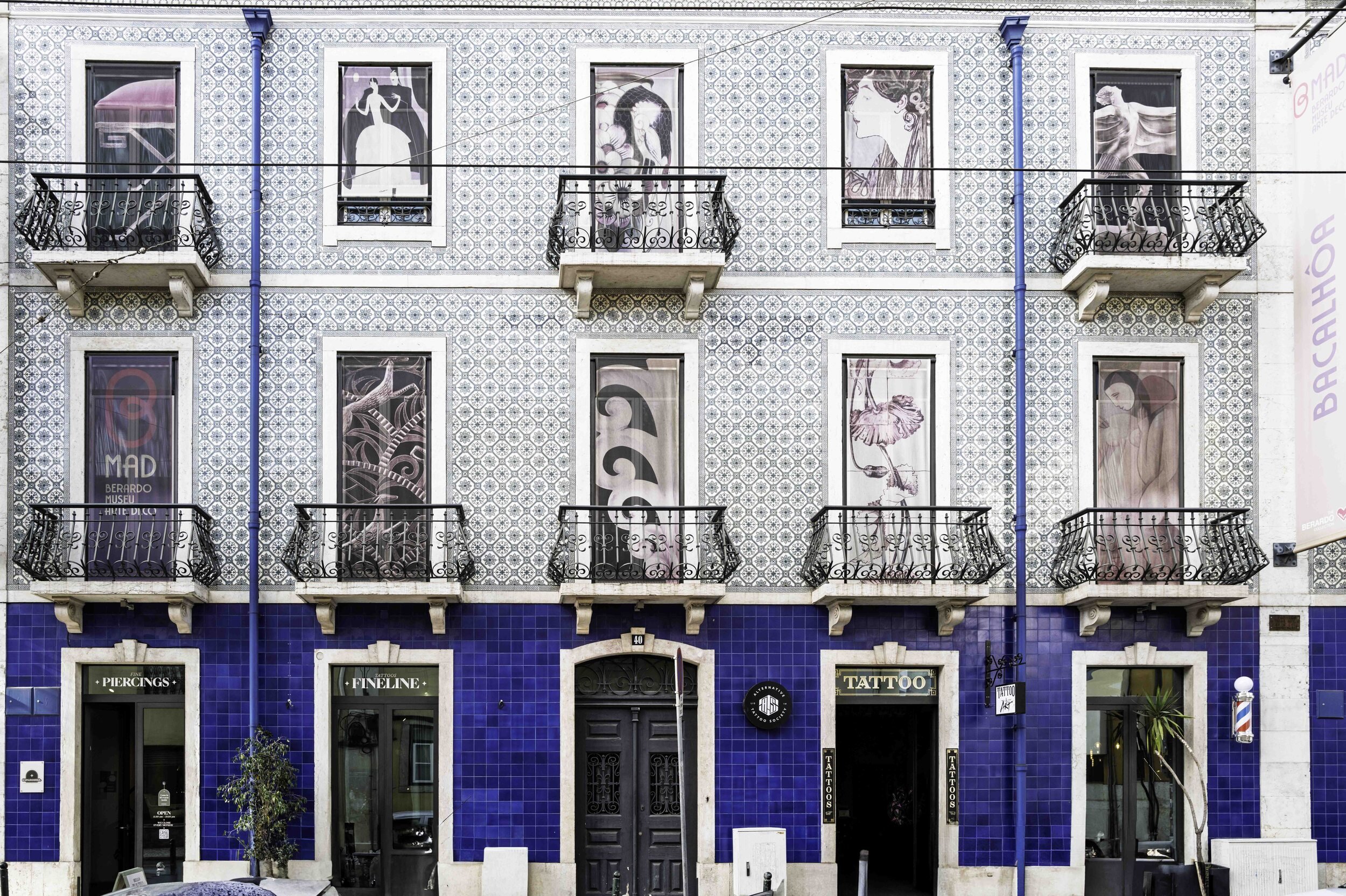
Azulejos and the present — Leica Q3
The Oldest Bookshop in the World
On the second day we found Livraria Bertrand, on Rua Garrett in Chiado — reportedly the oldest operating bookshop in the world, open since 1732. Stepping inside is a genuine displacement in time. The rooms are small and slightly dark, the shelves dense, and the atmosphere entirely removed from the street outside. We spent longer there than intended and left with books we could not read and no regret about it. It is one of those places that earns a frame simply by existing — the kind of subject that a Leica Q3 was made for. A Brasileira, a few doors along on the same street, has been serving coffee since 1905 beneath a ceiling that deserves more attention than most people give it. We stopped in. It was busy, it was loud, and the waiter moved with the particular authority of someone who has been doing this longer than the tourists have been alive.
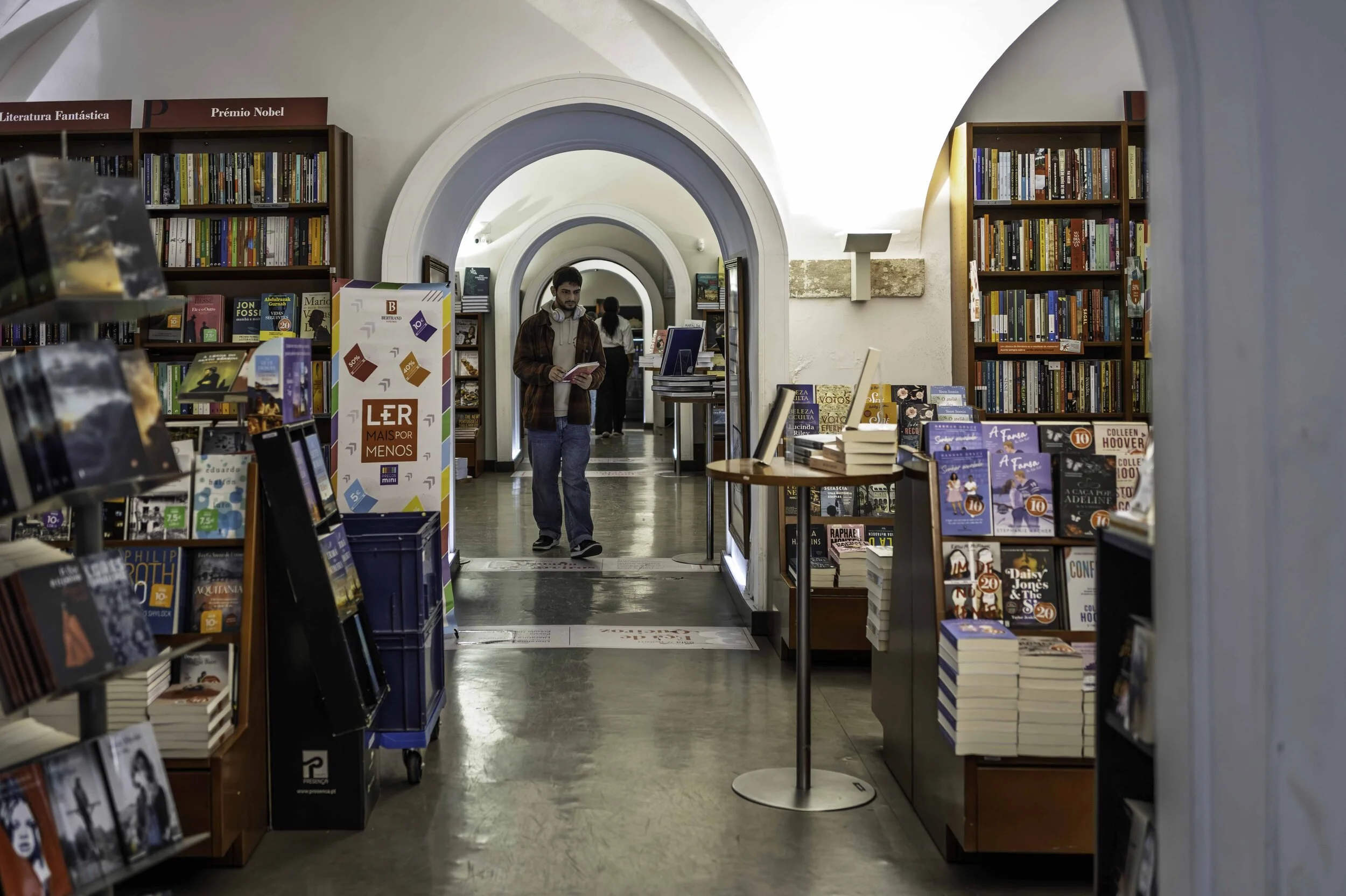
Livraria Bertrand, 1732 — Leica Q3
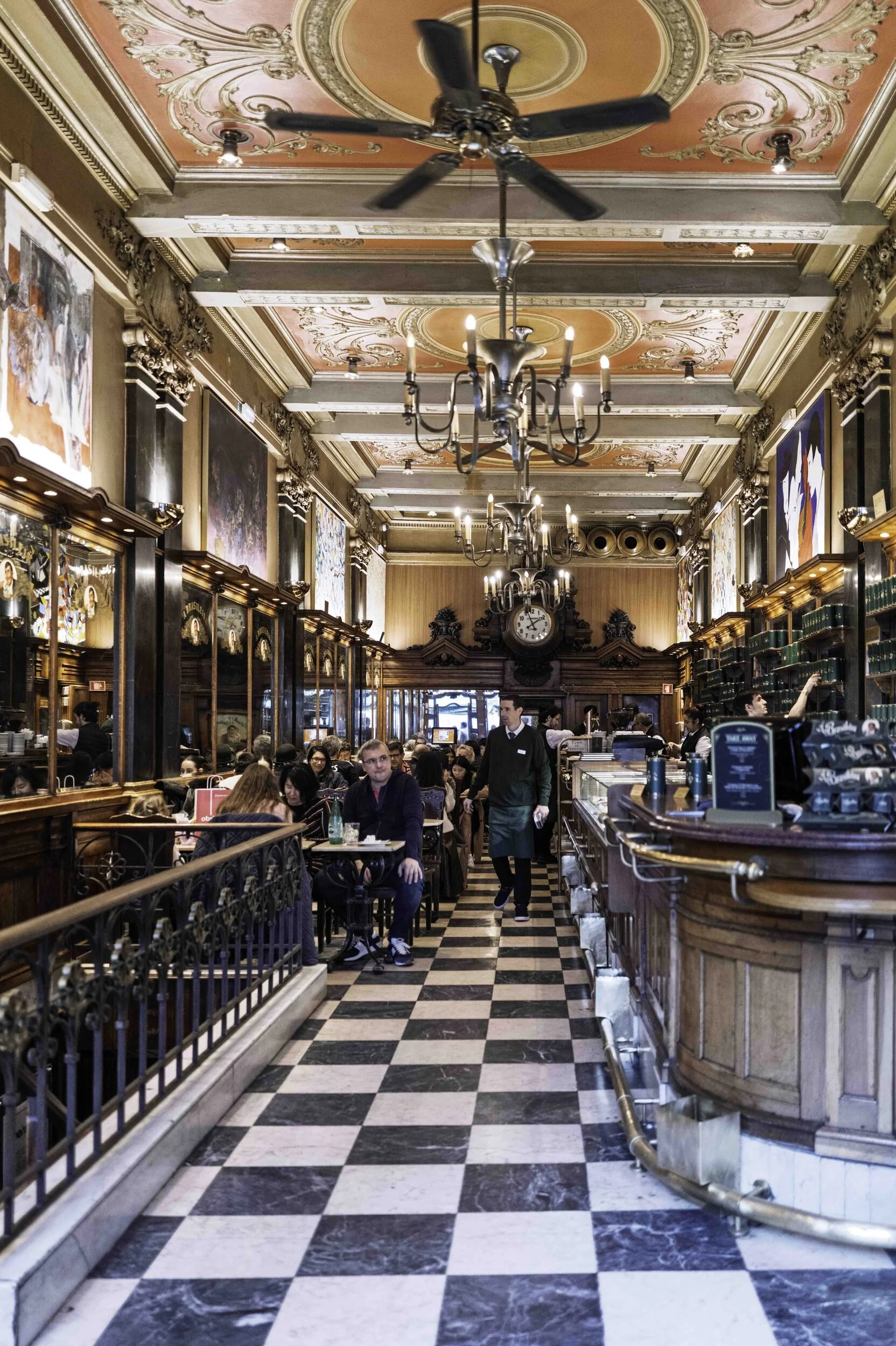
Café culture — Leica Q3
Shooting Lisbon Street Photography with the Leica Q3
Four days in Lisbon with the Leica Q3 at 28mm is close to ideal. The fixed wide lens forces you to move into the scene rather than pull it toward you, which suits this city — to photograph a tram properly you need to be almost in its path. The compact body attracts no attention, which matters on the narrow streets of Alfama where a larger camera would feel intrusive. Most of the frames here were shot between f/4 and f/8 at ISO 400 to 800, pushing the sensor in the low grey light. The results held well.
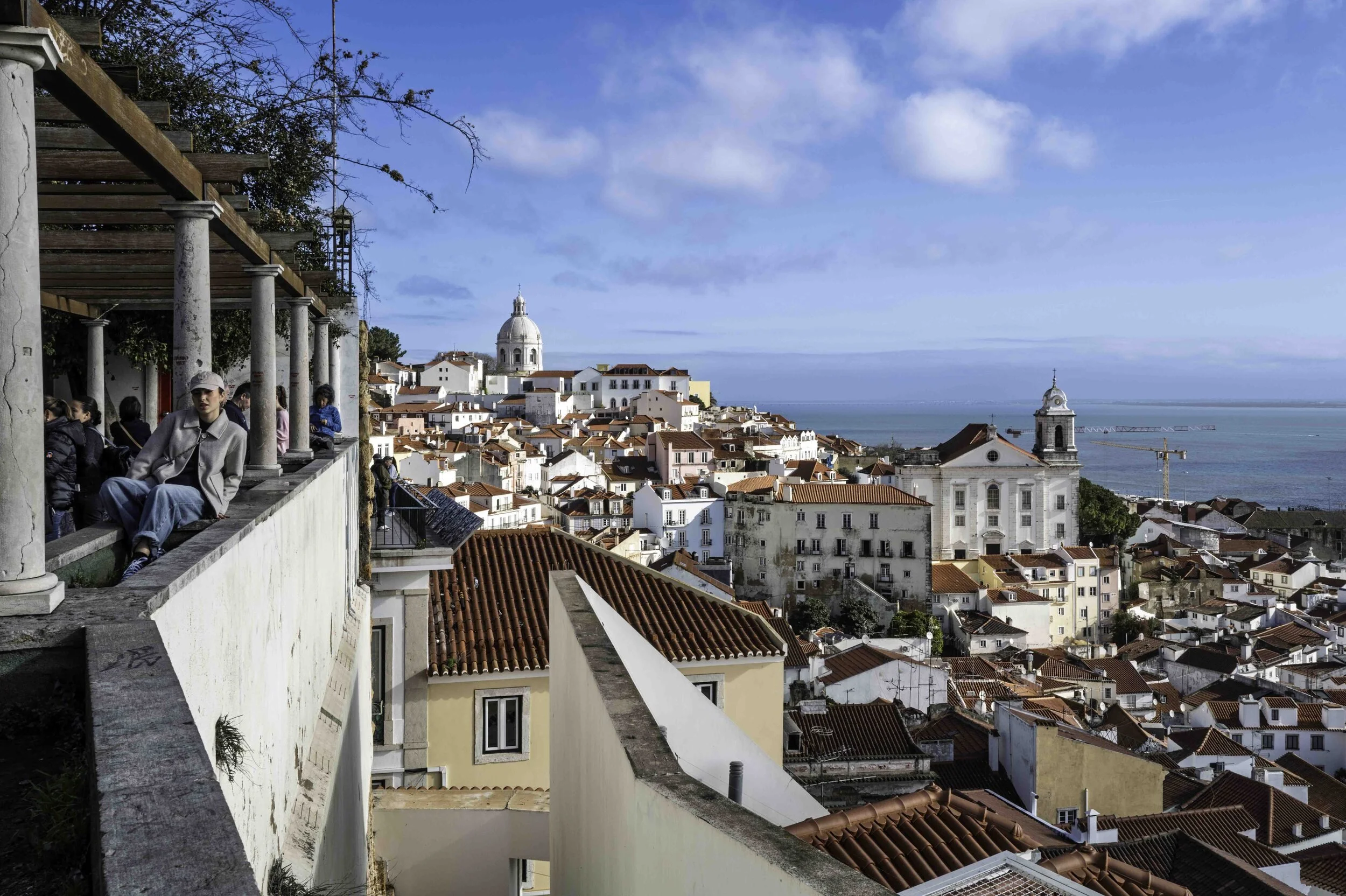
Alfama from above — Leica Q3
We have photographed other European cities with the Q3 and Lisbon sits among the strongest for street work — the density of visual material per square metre is remarkable. Every corner offers something: a figure against a tiled façade, a tram disappearing into shadow, a market stall in the rain.
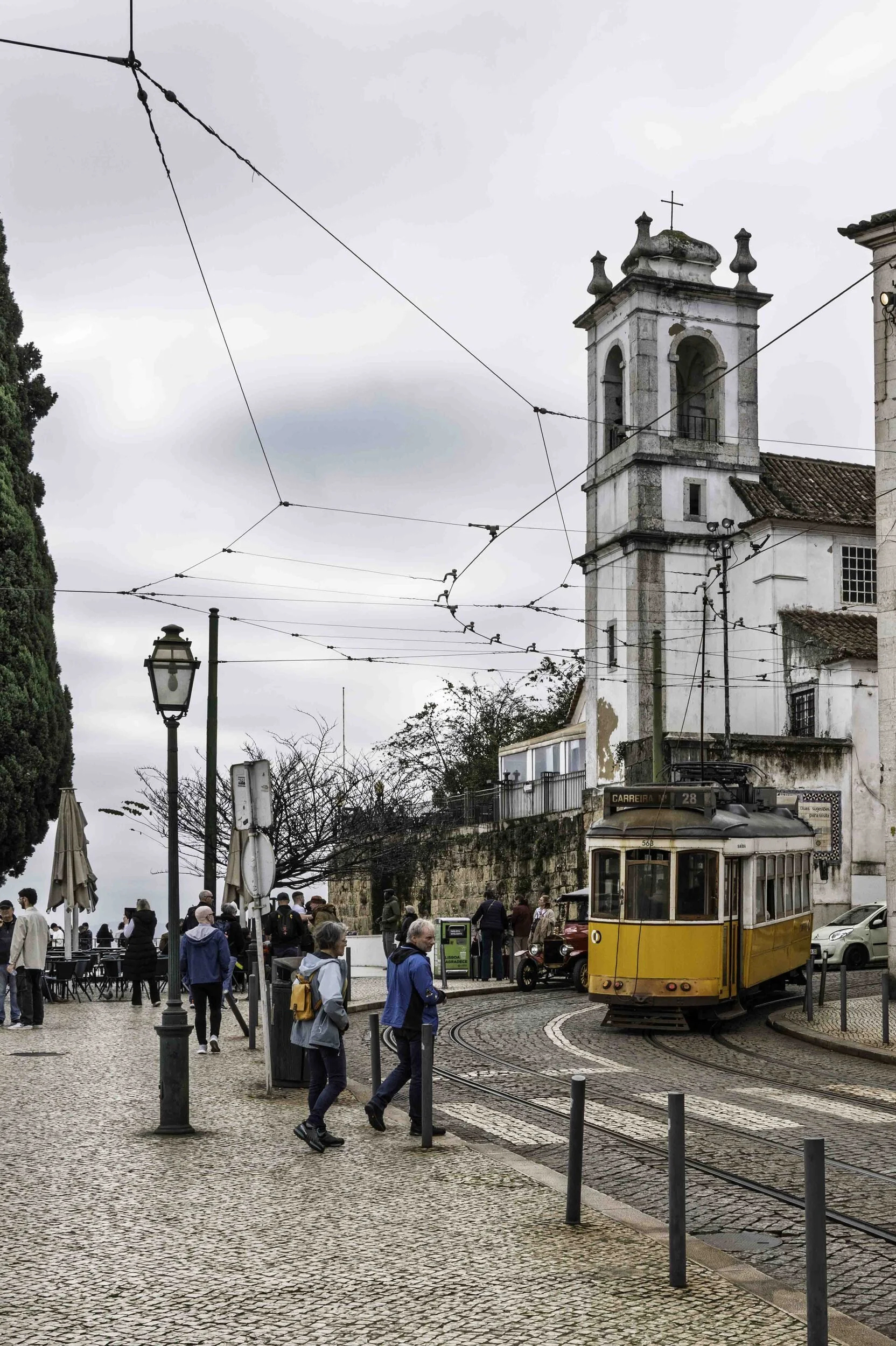
Tram 28, Alfama — Leica Q3
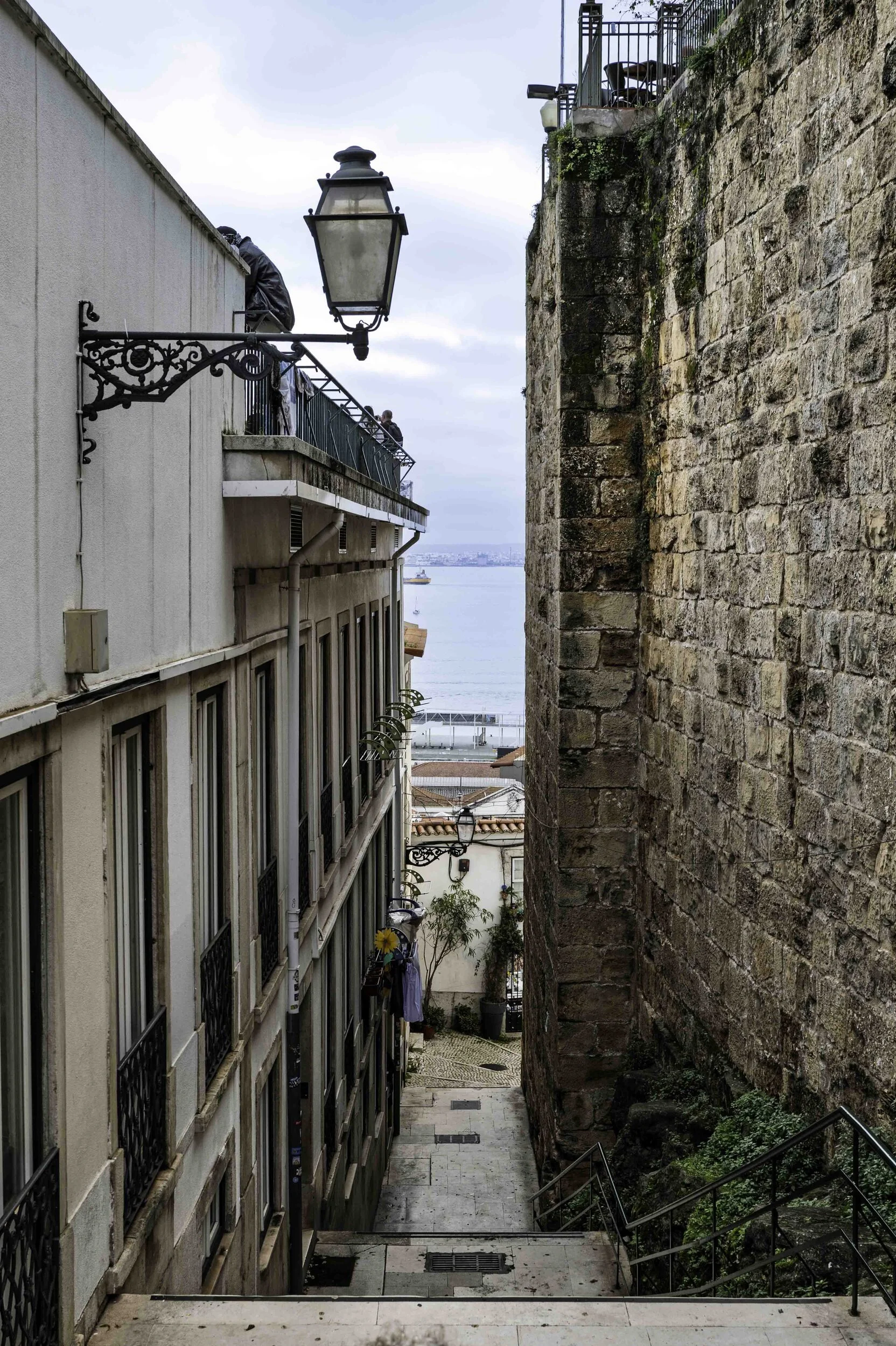
Down to the river — Leica Q3
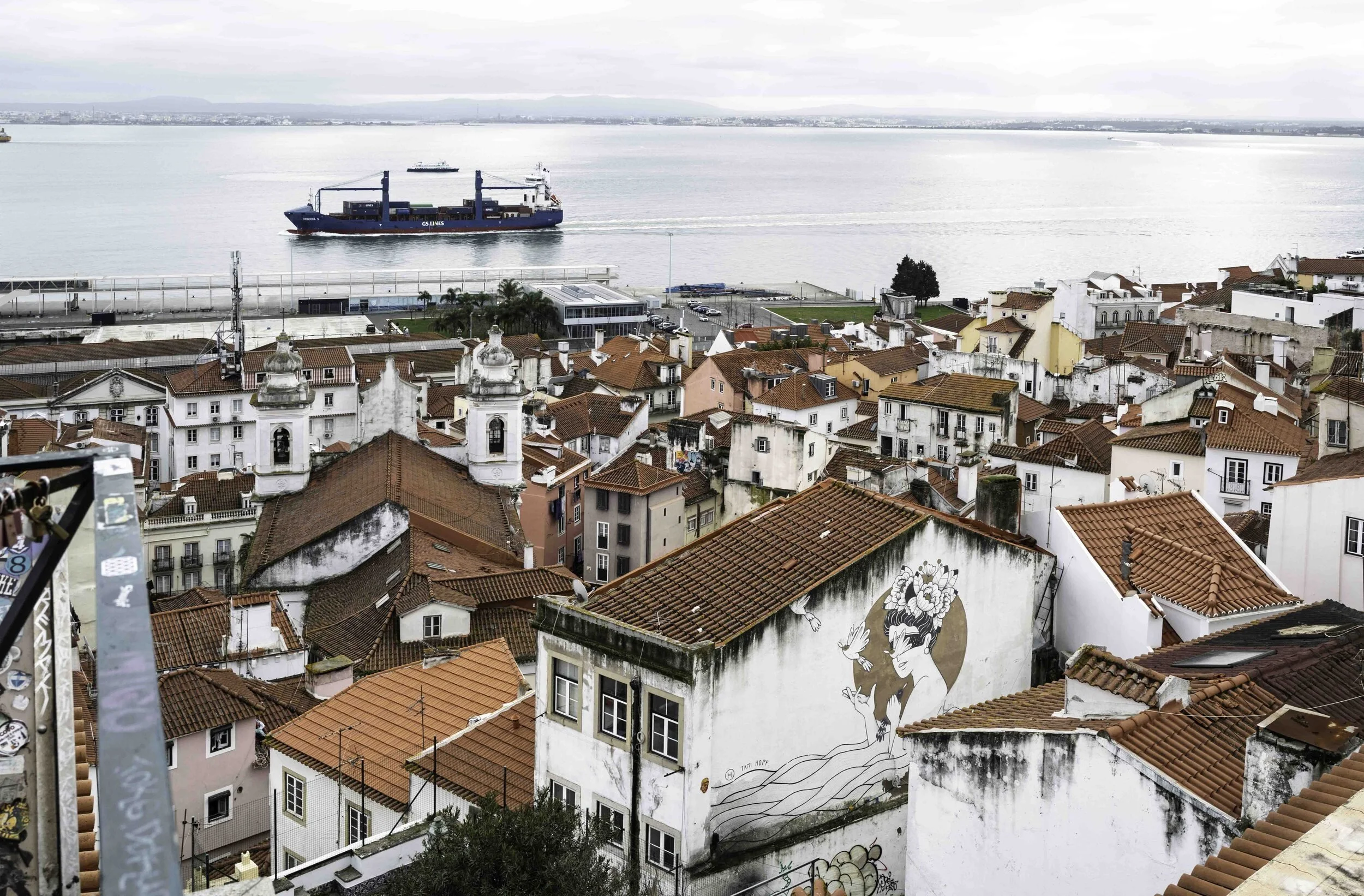
Alfama rooftops — Leica Q3
If you go to Lisbon expecting the clichés, you will find them — and then, if you stay long enough and walk far enough, you will find the city underneath them. Bring a camera and comfortable shoes.
Photos: Leica Q3 · ISO 400–800 · 28mm · f/4–8 · 1/250s
Alfama — Lisbon's oldest neighbourhood Lisbon, Portugal
Tram 28 from Martim Moniz · or walk from Baixa/Chiado
Lisbon is a city that reveals itself slowly — the best light comes late. For more street photography in European capitals, Istanbul: Yerebatan Caddesi captures a similar feeling of ancient layers just beneath the surface. For the architectural side of Portugal's Atlantic neighbours, Hamburg: A City Built on Bridges makes for a natural companion.
Want one of these on your wall?
Every photo on this site can be printed — archival paper, signed and numbered. Browse prints →
See more street photography in the portfolio.
Cosme Lapena is a Barcelona-based street and urban photographer and founder of bCLPhoto.
Exhibited at espai [b] since 2010 · Contributor at 35mmc. Browse the portfolio or read more on the blog.