Lee Avenue: Street Photography in South Williamsburg
The walk north from Carroll Gardens didn't end at the Williamsburg Bridge.
It ended here — on Lee Avenue, in a Brooklyn that most visitors never see.
Lee Avenue, South Williamsburg, is one of those streets that stops you in your tracks — not because of a mural or a landmark, but because of the unmistakable sense of having stepped into a completely different city. The street photography I'd been doing all morning — murals, elevated stations, the geometry of the bridge — suddenly felt beside the point. This is South Williamsburg street photography at its most disorienting and most human.
The neighbourhood belongs to the Satmar Hasidic community, one of the largest and most insular Orthodox Jewish communities in the world. Lee Avenue is its commercial spine: shops with signs in Yiddish and Hebrew, children in long skirts and tzitzit, women pushing double strollers, men in black coats and wide-brimmed hats moving through the summer heat with a purposefulness that makes the rest of the city feel improvised by comparison.
Lee Avenue: A Street Photographer in Someone Else's World
The first instinct, walking into Lee Avenue with a camera, is to hesitate. This is not a neighbourhood built for outsiders, and the camera around your neck marks you immediately. What I found, after the initial awkwardness, was something more interesting than hostility — a kind of complete indifference. The street moves at its own rhythm. You are welcome to watch, but the neighbourhood is not performing for you.
That indifference is photographically generous. A man in a tallit makes a phone call on a corner while traffic moves around him. Two boys in matching green striped shirts cross the street without looking up. A young couple pushes twins in a pram across a construction zone, the light bouncing off the stroller chrome and the yellow traffic cones. These aren't decisive moments in the Cartier-Bresson sense — they're just life, unhurried and uncurated, happening in plain sight.
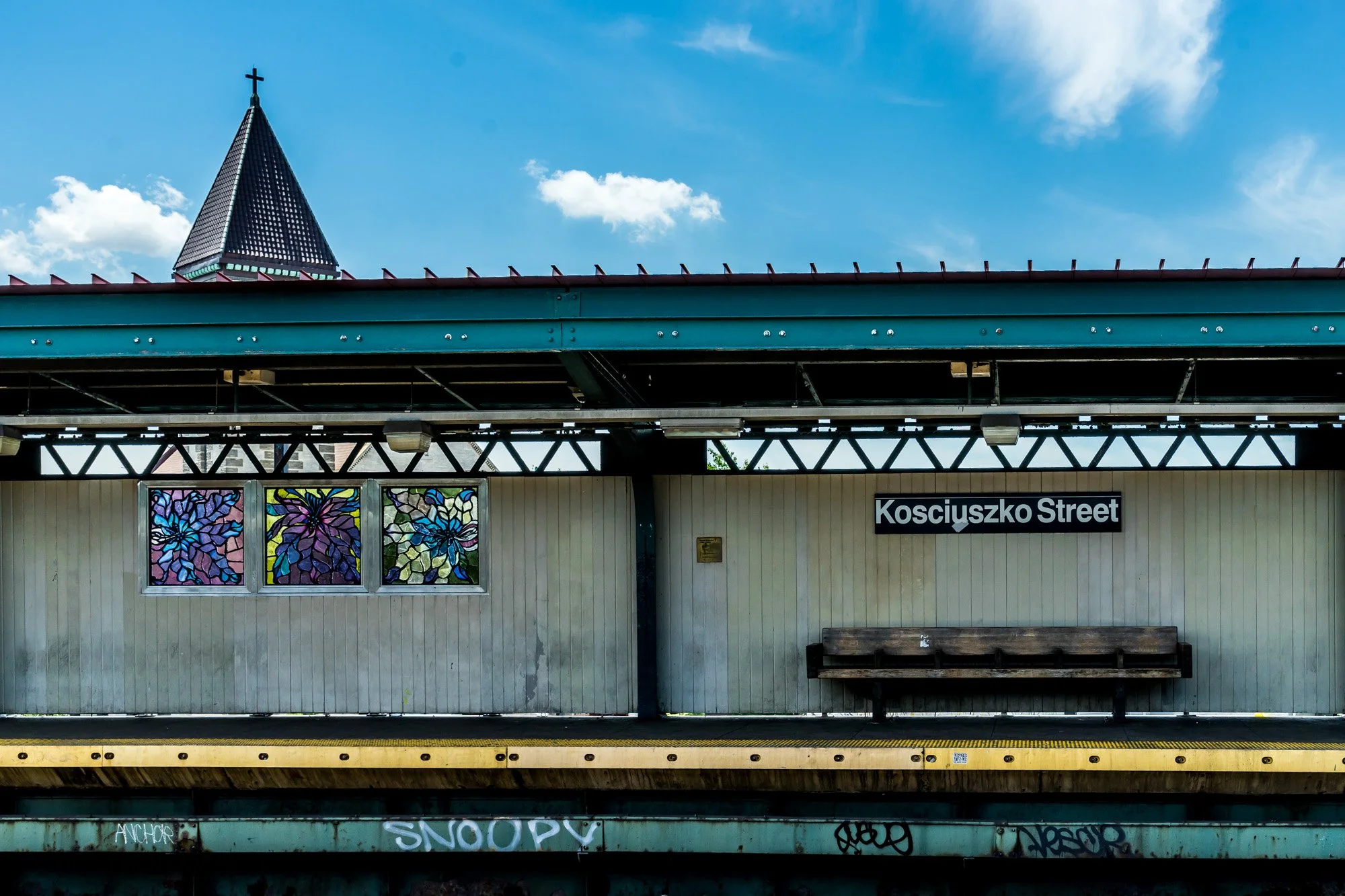
Kosciuszko Street station — Sony a7II
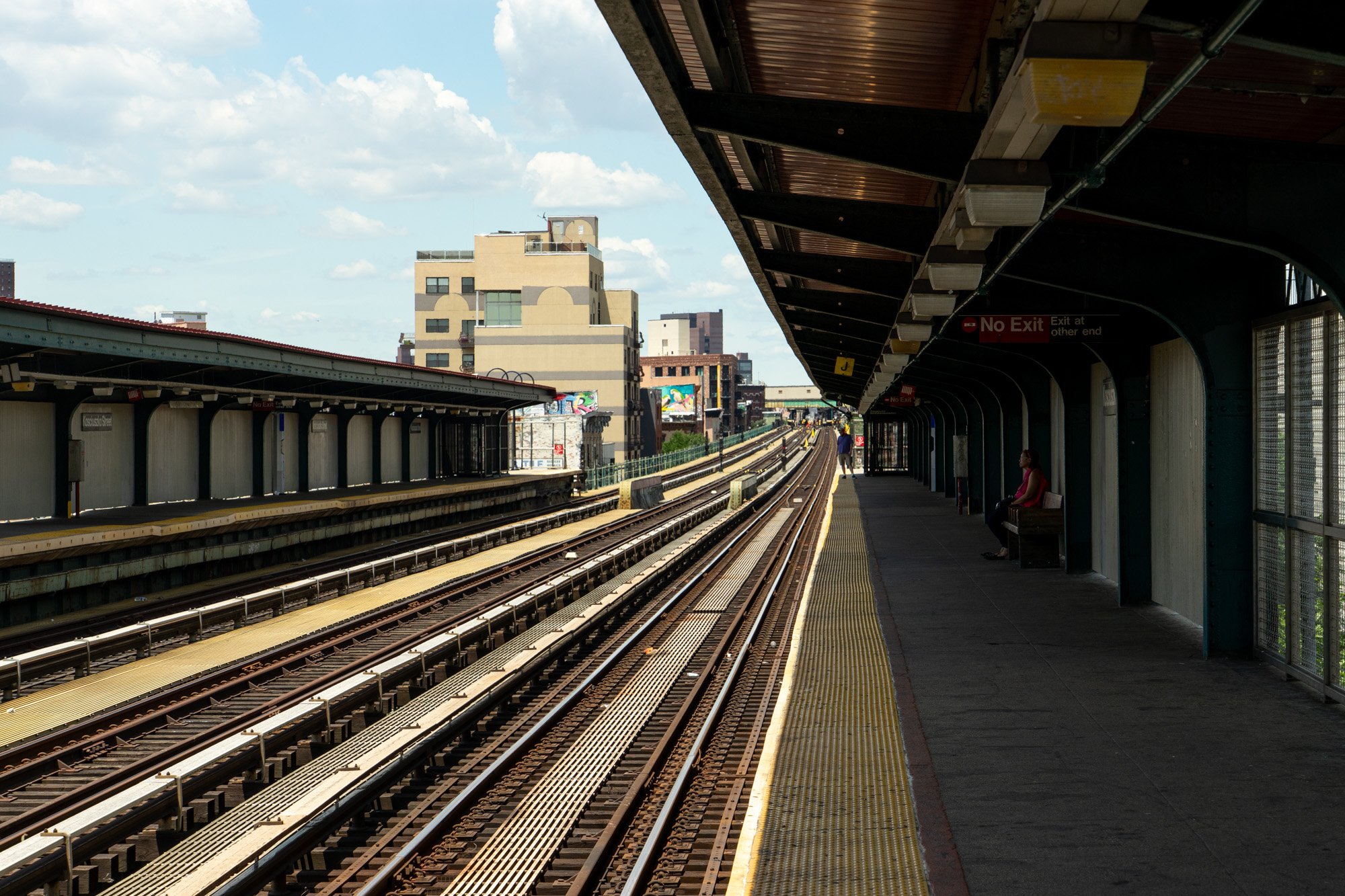
J line platform, Williamsburg — Sony a7II
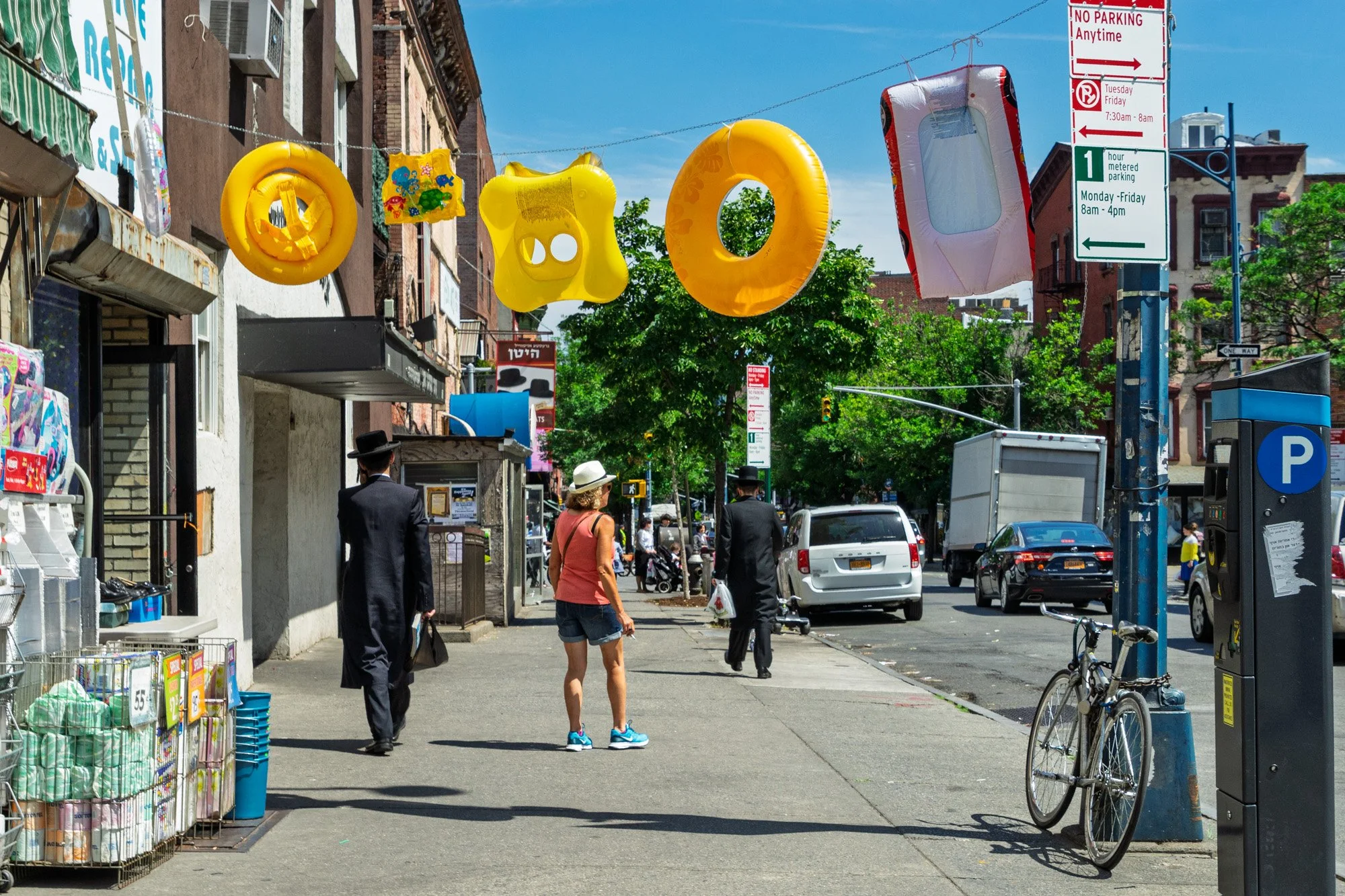
Lee Avenue, inflatable rings — Sony a7II
The Street as Living Document
What makes Lee Avenue so compelling as a subject is the layering. The brownstones are the same late-19th-century Brooklyn brick as everywhere else in the neighbourhood, but the ground floors have been transformed: toy shops with inflatable pool rings hanging above the entrance, wig salons, Judaica stores, bakeries with challah in the window. Hebrew lettering on shop signs sits alongside American parking regulations. An armoured IBI security van idles at the kerb while families cross the zebra at Wallabout Street — a scene that could be anywhere and nowhere else simultaneously.
The elevated J line runs directly above part of the neighbourhood, and the station at Kosciuszko Street — with its stained-glass panel inserts and the church spire visible above the platform roof — feels like a threshold between worlds. On one side of the tracks, the Williamsburg of galleries and coffee bars. On the other, Lee Avenue, where the 21st century has arrived selectively and on its own terms.
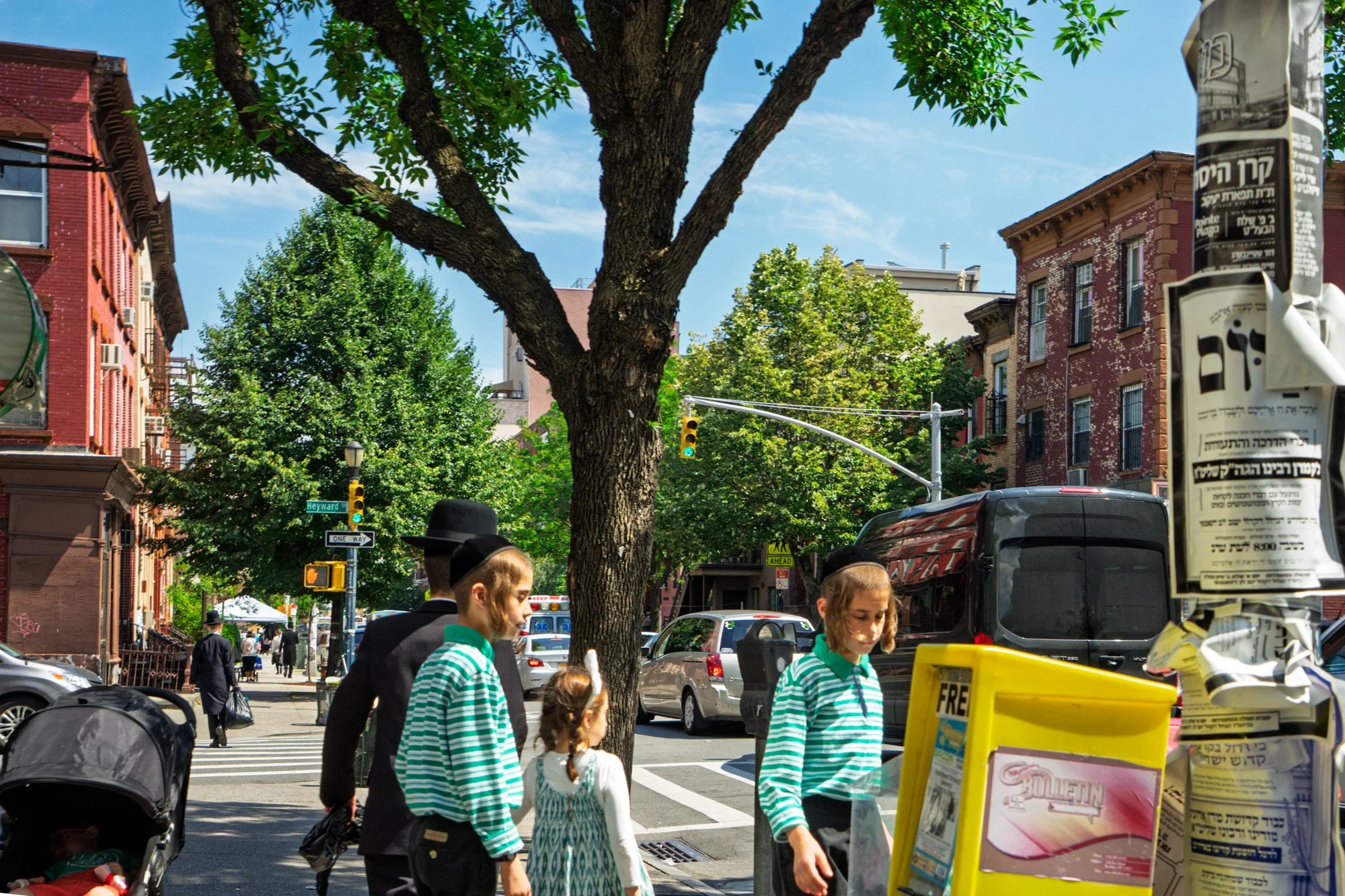
Hayward Street, South Williamsburg — Sony a7II
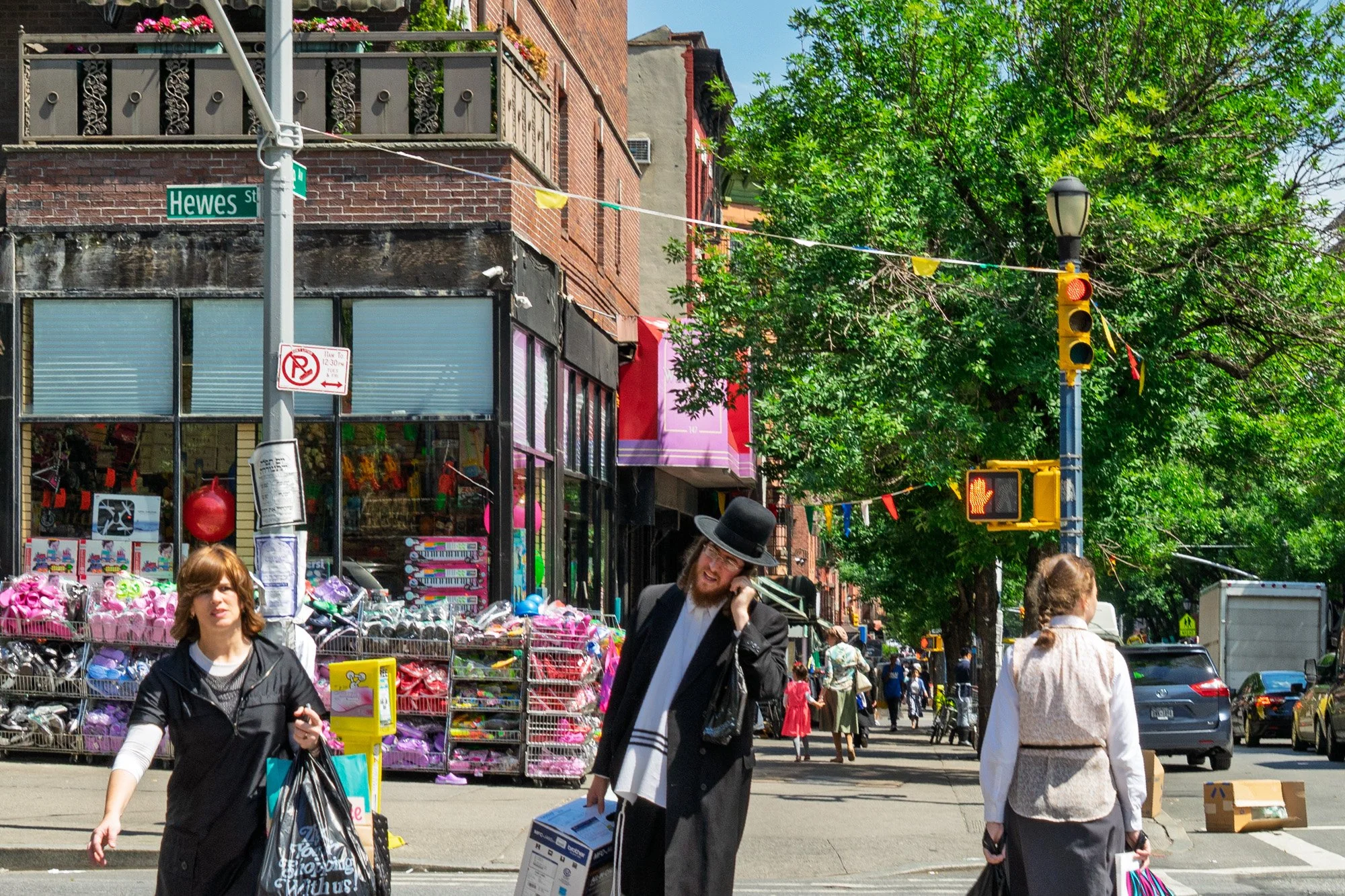
Hewes Street, South Williamsburg — Sony a7II
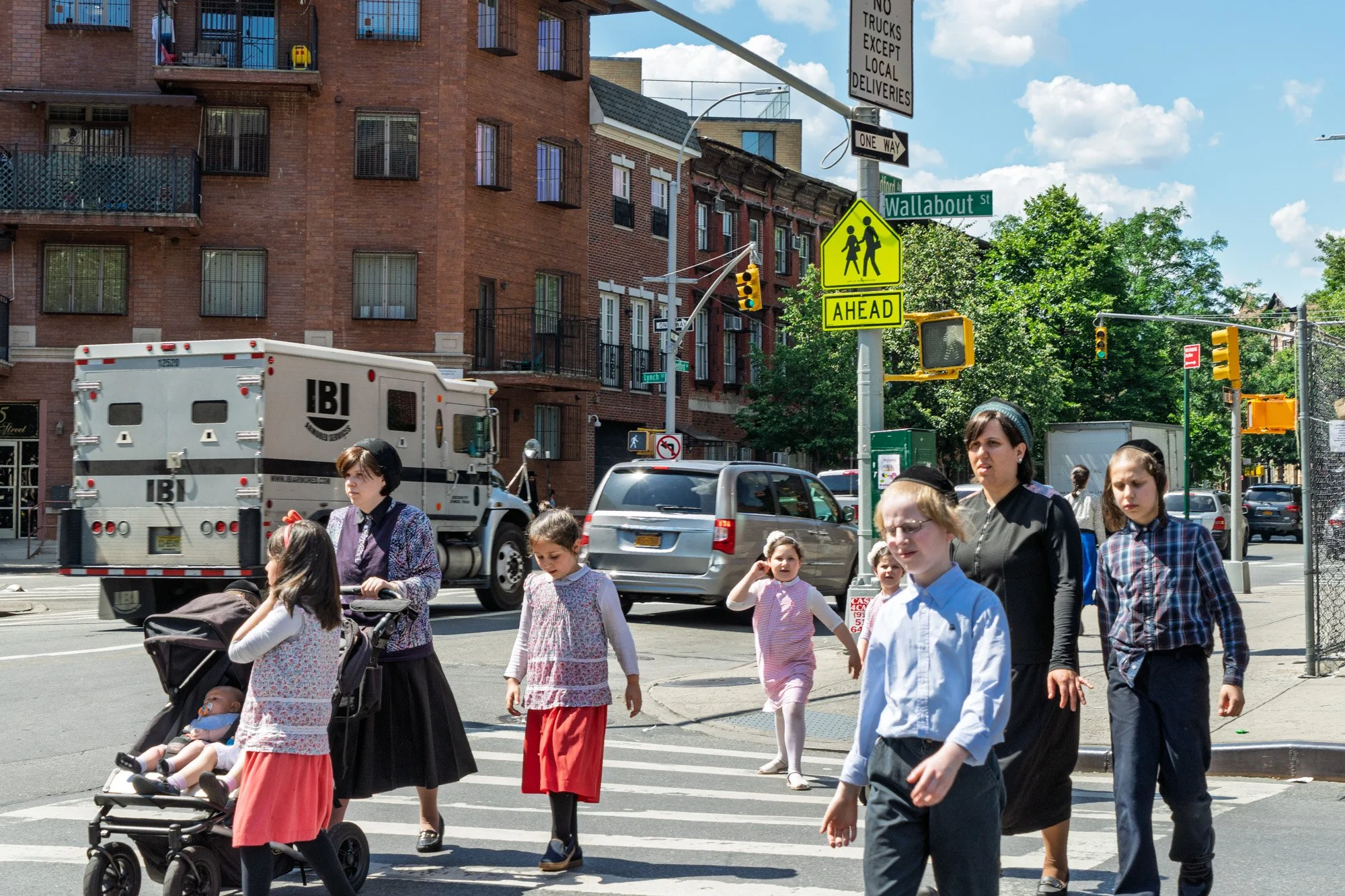
Wallabout Street, South Williamsburg — Sony a7II
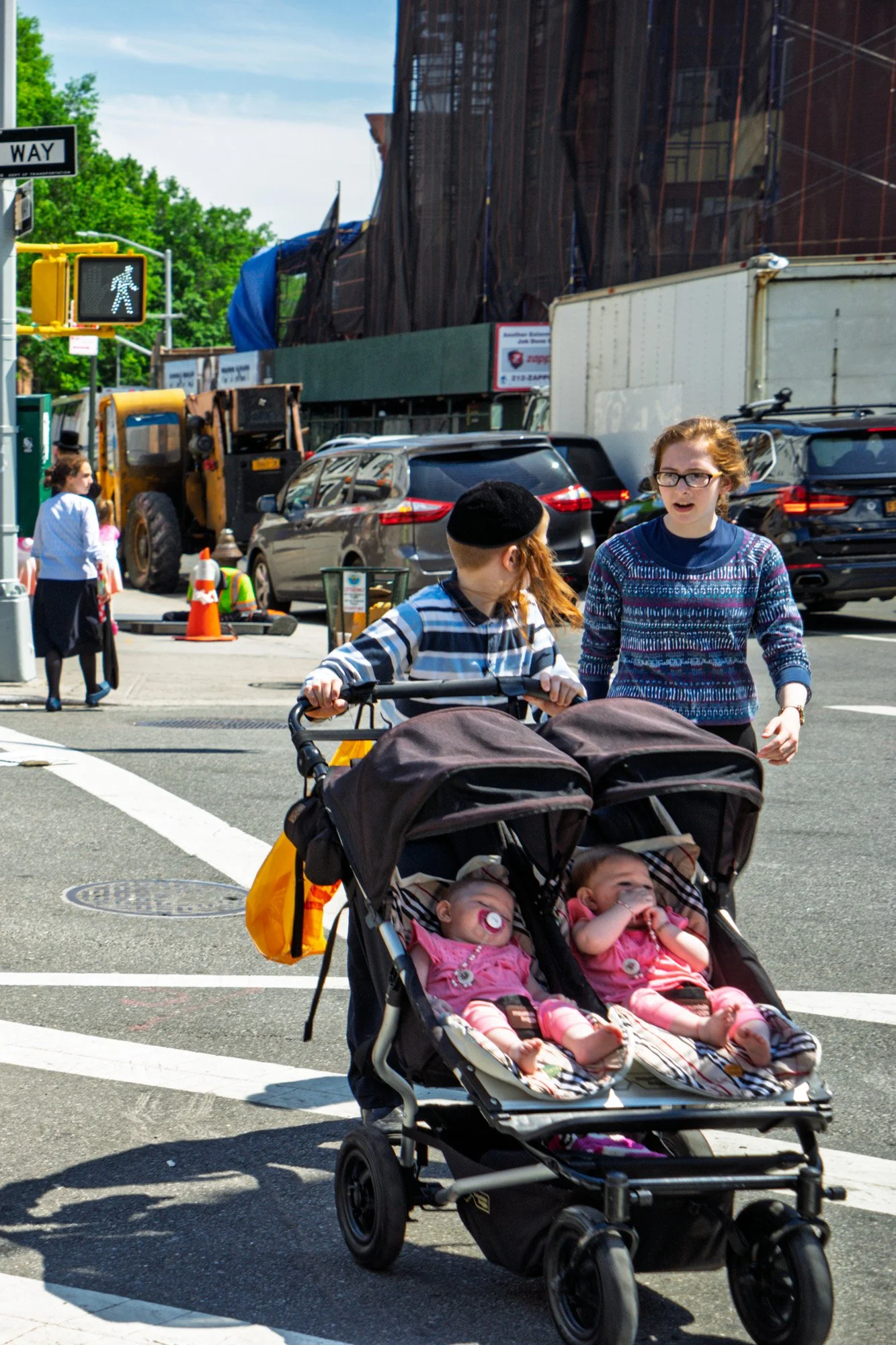
South Williamsburg street scene — Sony a7II
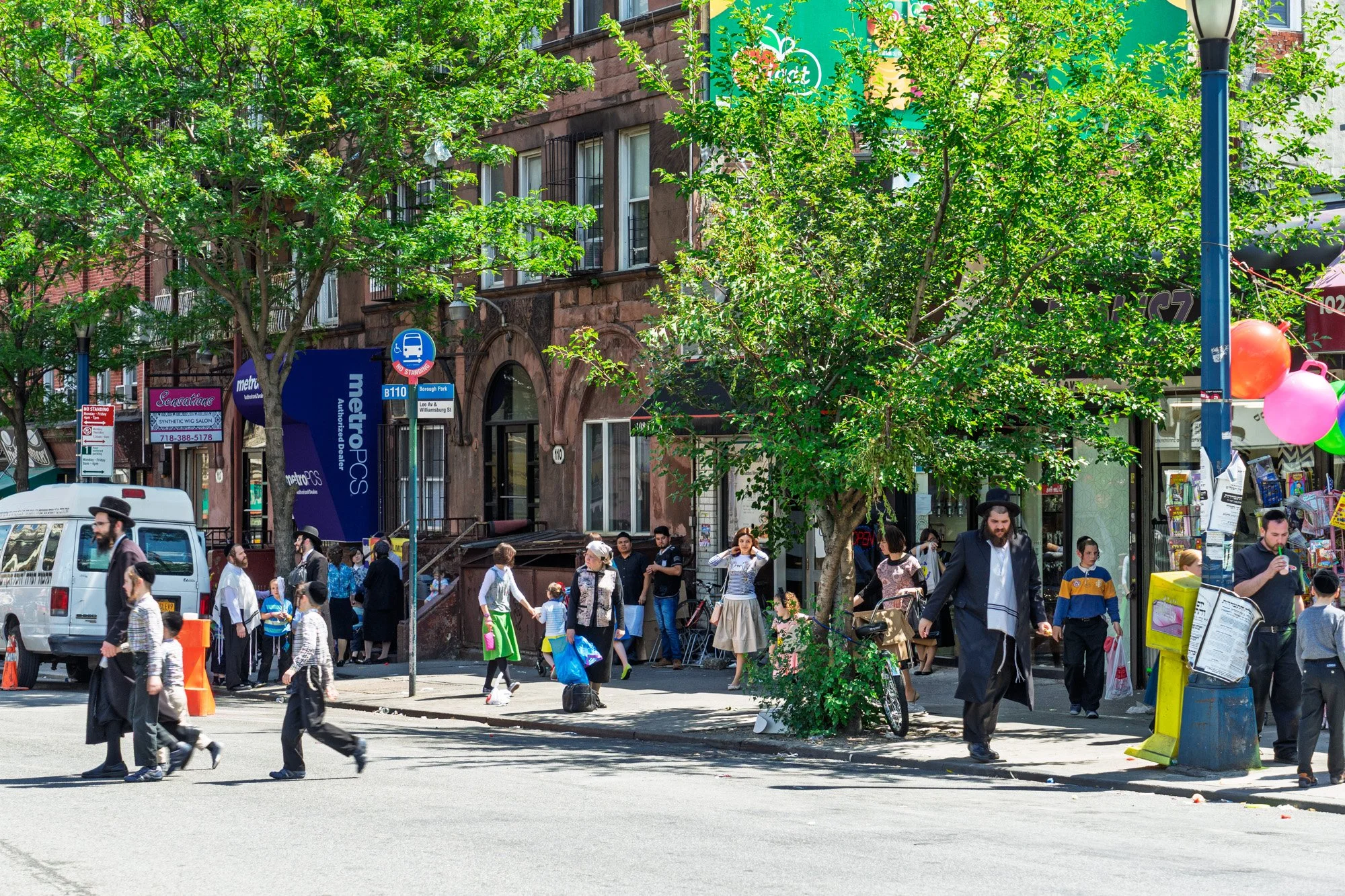
Lee Avenue street life — Sony a7II
What the Camera Finds
Street photography in a neighbourhood like this asks different questions than shooting murals or infrastructure. The subject is not a wall or a bridge — it's people, their movement, their daily life. The ethical lines are real: I shot from a distance, from the hip where appropriate, and with the understanding that I was a guest. The Sony a7 II is quiet enough to avoid drawing attention; a longer focal length let me work without intruding.
What came back on the memory card was not what I expected. The most affecting images are the quietest ones — the three children walking away down Lee Avenue, the father holding his daughter's hand, the woman at the crossing surrounded by kids with the armoured van behind her. The colour is vivid — the sky was intensely blue that day — but the energy is calm. This is a neighbourhood at peace with itself, moving at its own frequency, entirely unconcerned with how it appears from the outside.
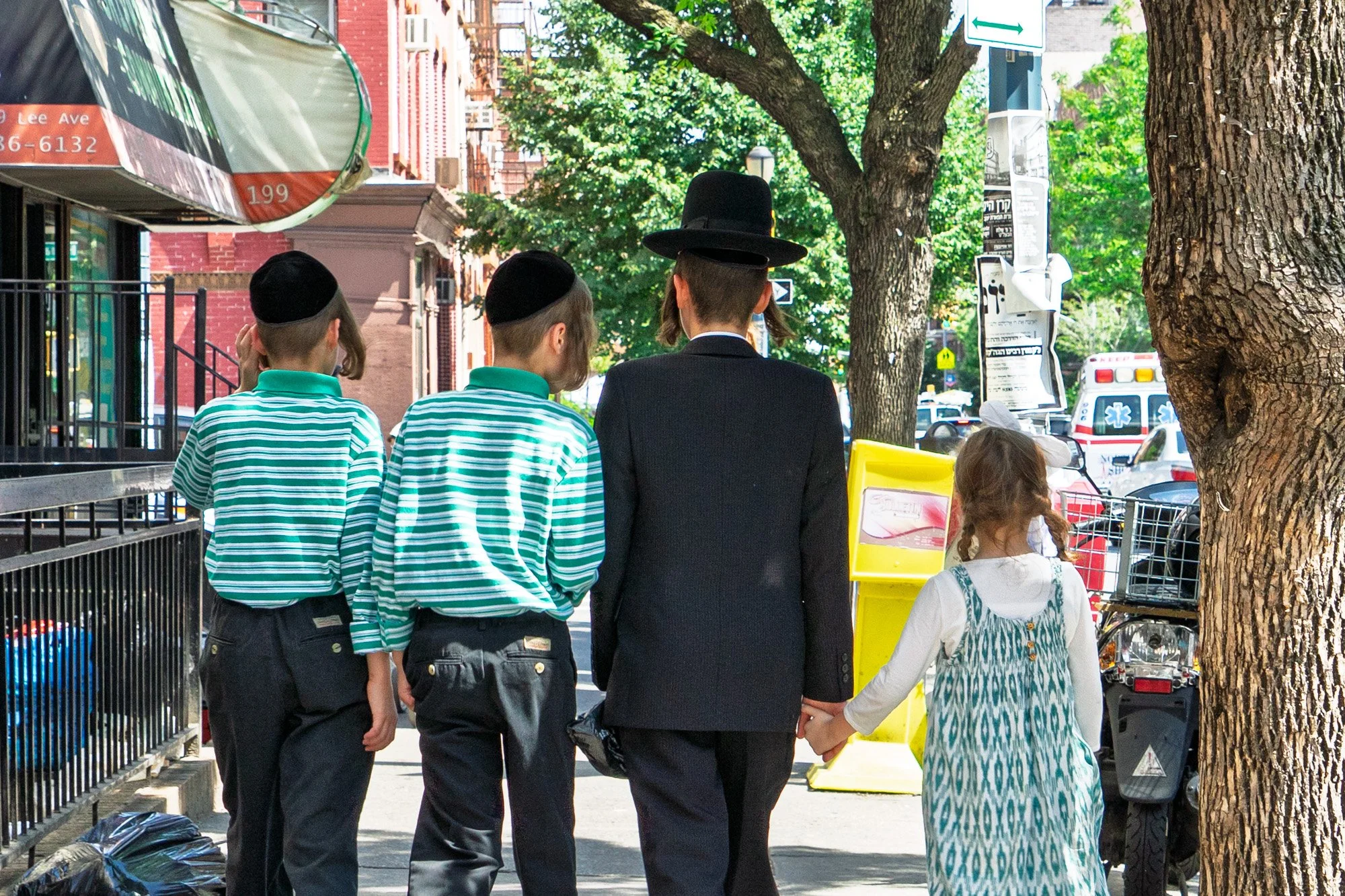
Lee Avenue, South Williamsburg — Sony a7II
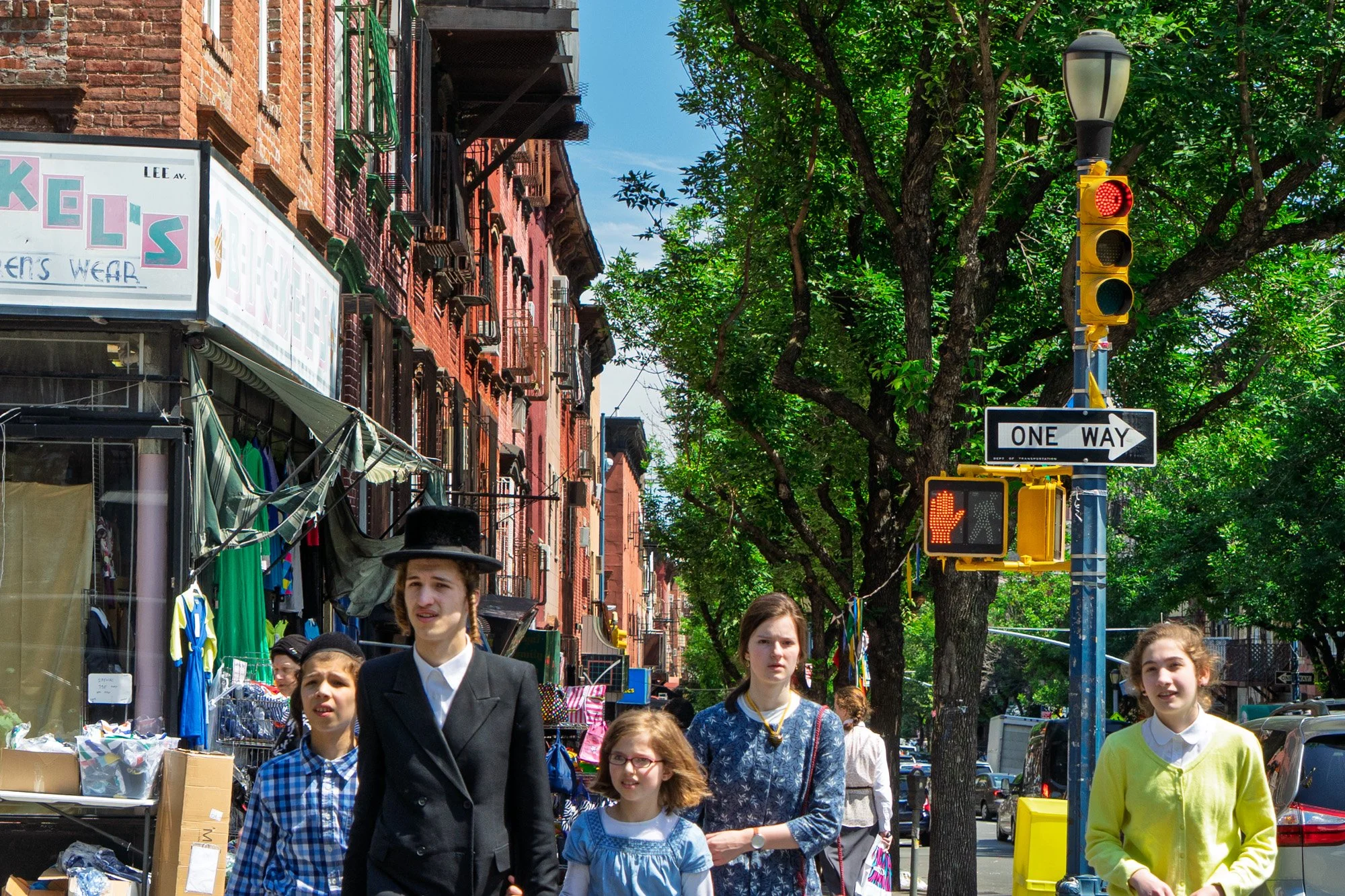
Lee Avenue, Brooklyn — Sony a7II
Photos: Sony a7 II · various focal lengths · ISO 100–400
The walk that started at Douglass Street in Carroll Gardens ends here, a few blocks from the East River, in a neighbourhood that feels further from the Brooklyn of the guidebooks than the miles would suggest. If you want to follow the full route, start with Brooklyn Unfiltered: A Street Photography Walk. And for more street art and graffiti from New York and beyond, the Graffiti & Street Art gallery has you covered.
Like these images?
These photographs are available as signed, numbered fine art prints on archival paper. See sizes and order →
See more street photography in the portfolio.
Cosme Lapena is a Barcelona-based street and urban photographer and founder of bCLPhoto. Browse the portfolio or read more on the blog