Brooklyn Unfiltered: A Street Photography Walk
Originally shot on a summer morning with no fixed plan — just a camera,
a starting point on Douglass Street, and Brooklyn stretching north.
The best way to understand a city is to walk it without a destination. That's how this started: Douglass Street, Carroll Gardens, early enough that the heat hadn't settled yet, heading north with the Sony a7 II and no particular plan.
What followed was several kilometres of Brooklyn at its most unfiltered — murals, elevated trains, industrial shadows, and two completely different worlds separated by less than a mile.
Brooklyn Street Photography Starts Where the Tourists Don't
Douglass Street opens north toward the Williamsburgh Savings Bank Tower, its Art Deco crown visible from blocks away, rising above a neighbourhood still very much in the middle of figuring out what it wants to be. New construction sits next to century-old brownstones. The street feels transitional — which, in Brooklyn, usually means interesting.
The first real stop was unexpected. A cluster of metal figures assembled from exhaust pipes and engine parts, standing on the pavement outside a Meineke car repair shop: a family of robots, American flag raised, welded into permanent greeting. It's the kind of thing you walk past without seeing if you're moving too fast. Brooklyn rewards the slow walker.
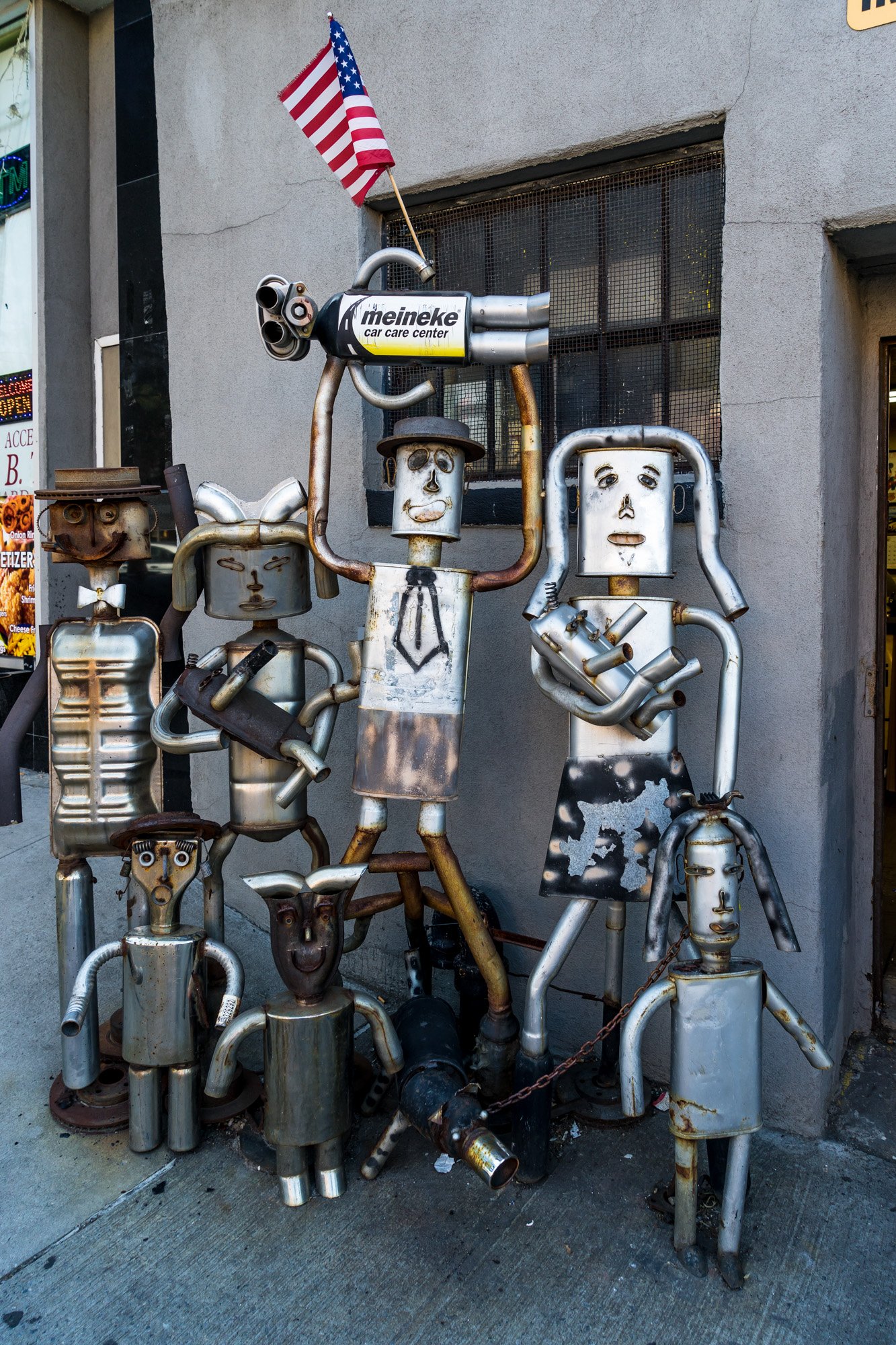
Meineke robots, Carroll Gardens — Sony a7II
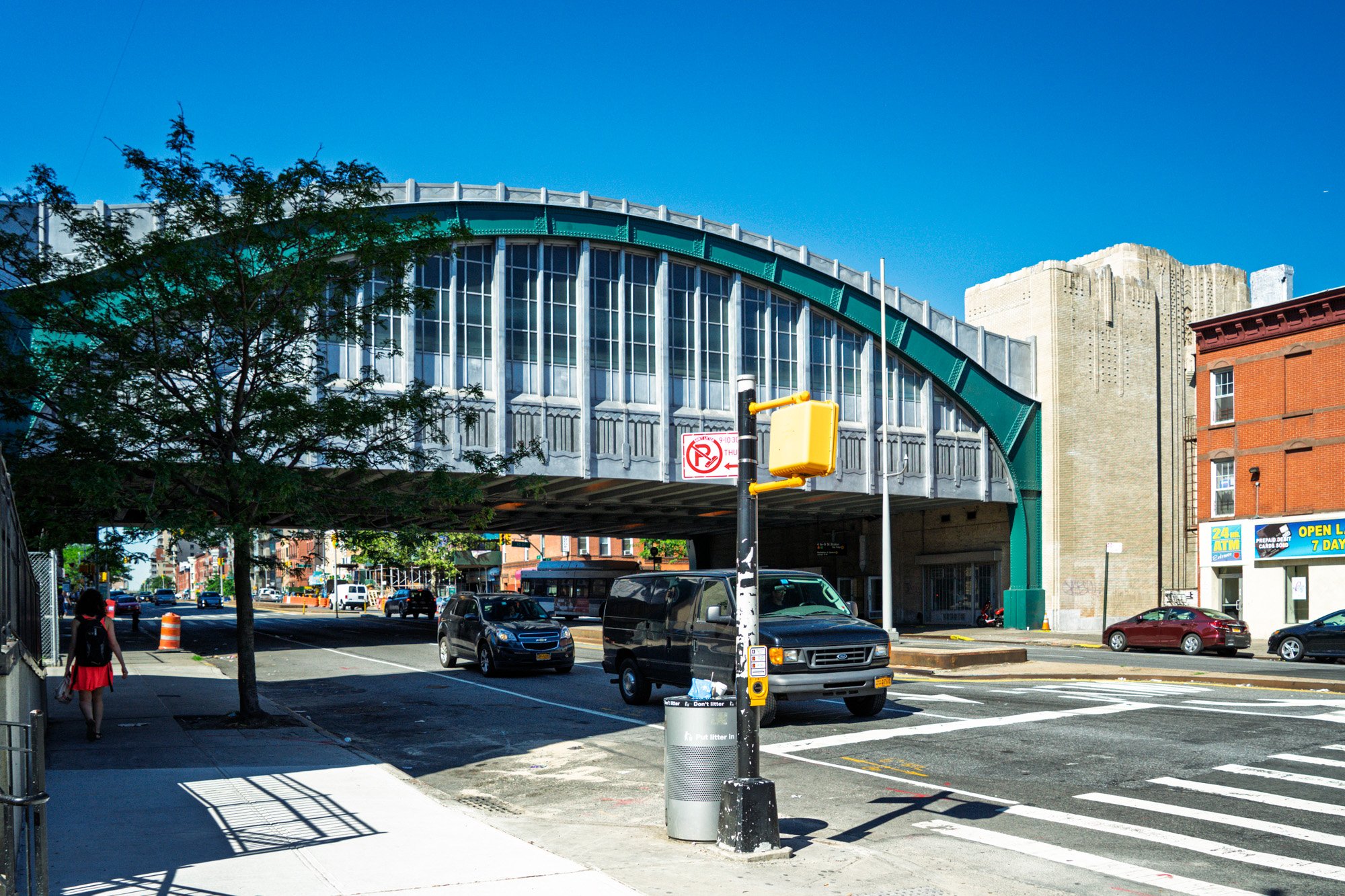
Broadway Junction station — Sony a7II
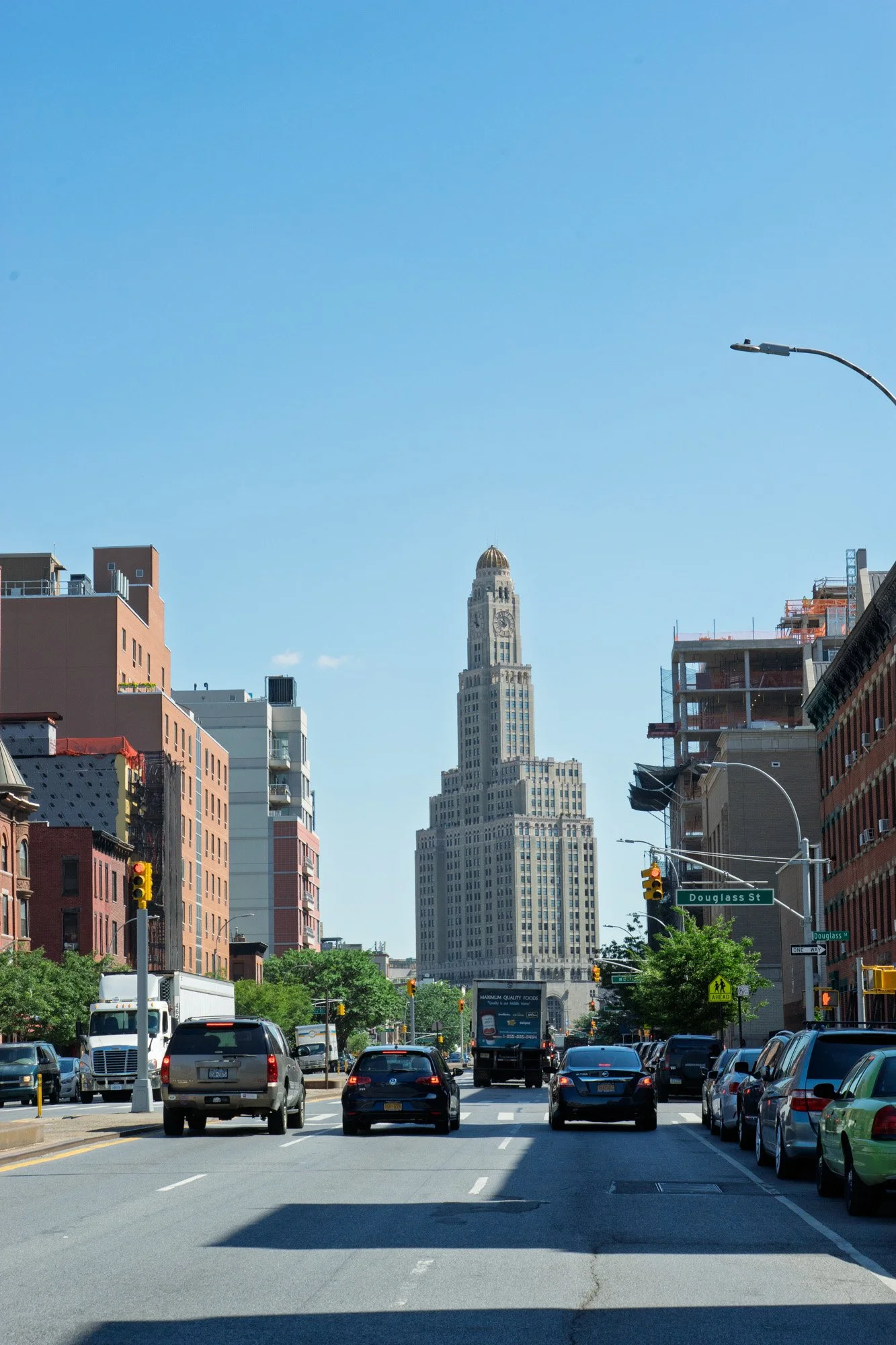
Douglass Street looking north — Sony a7II
Murals as Community Memory
Moving north through Bed-Stuy and Crown Heights, the walls start talking. A large mural near Lincoln Place — figures with raised fists, chains breaking, text reading justice everywhere — documents decades of neighbourhood organising. Dates marked: 1986, 1990. The Dancewave building nearby carries a painted dancer mid-movement, mid-story.
This is the part of Brooklyn street photography that goes beyond aesthetics. These aren't decorations — they're arguments, declarations, histories painted on concrete because someone decided the wall was too important to leave blank. Shooting them requires a certain patience: you need to read them before you photograph them.
The Townhouse Art Gallery on Fulton Street takes this further — the entire façade painted floor to ceiling by artist Jenna Morello, cosmos and animals and city skylines layered over each other, a man checking his phone at the gate as if the building behind him were completely ordinary.
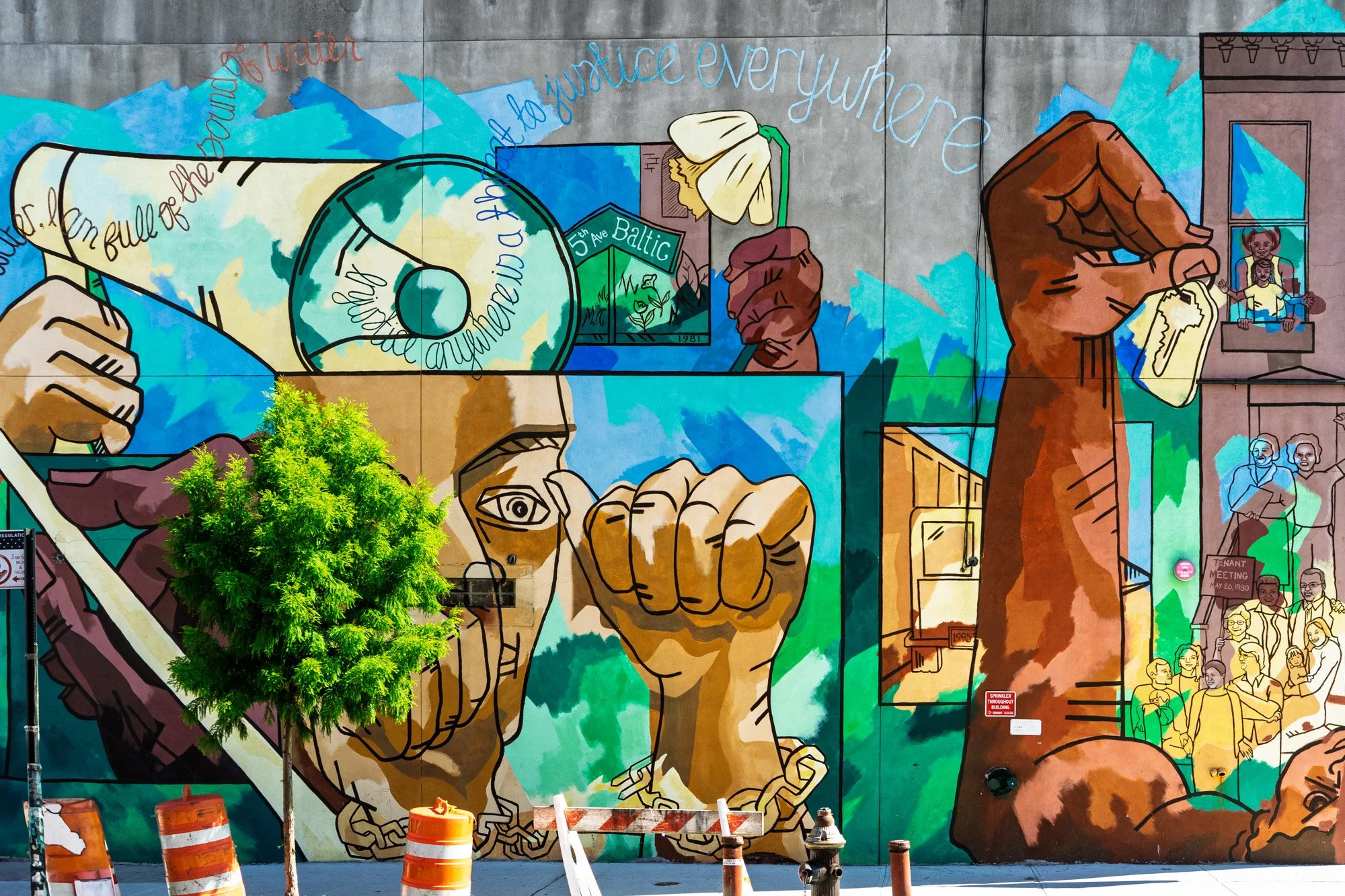
Justice mural, Bed-Stuy — Sony a7II
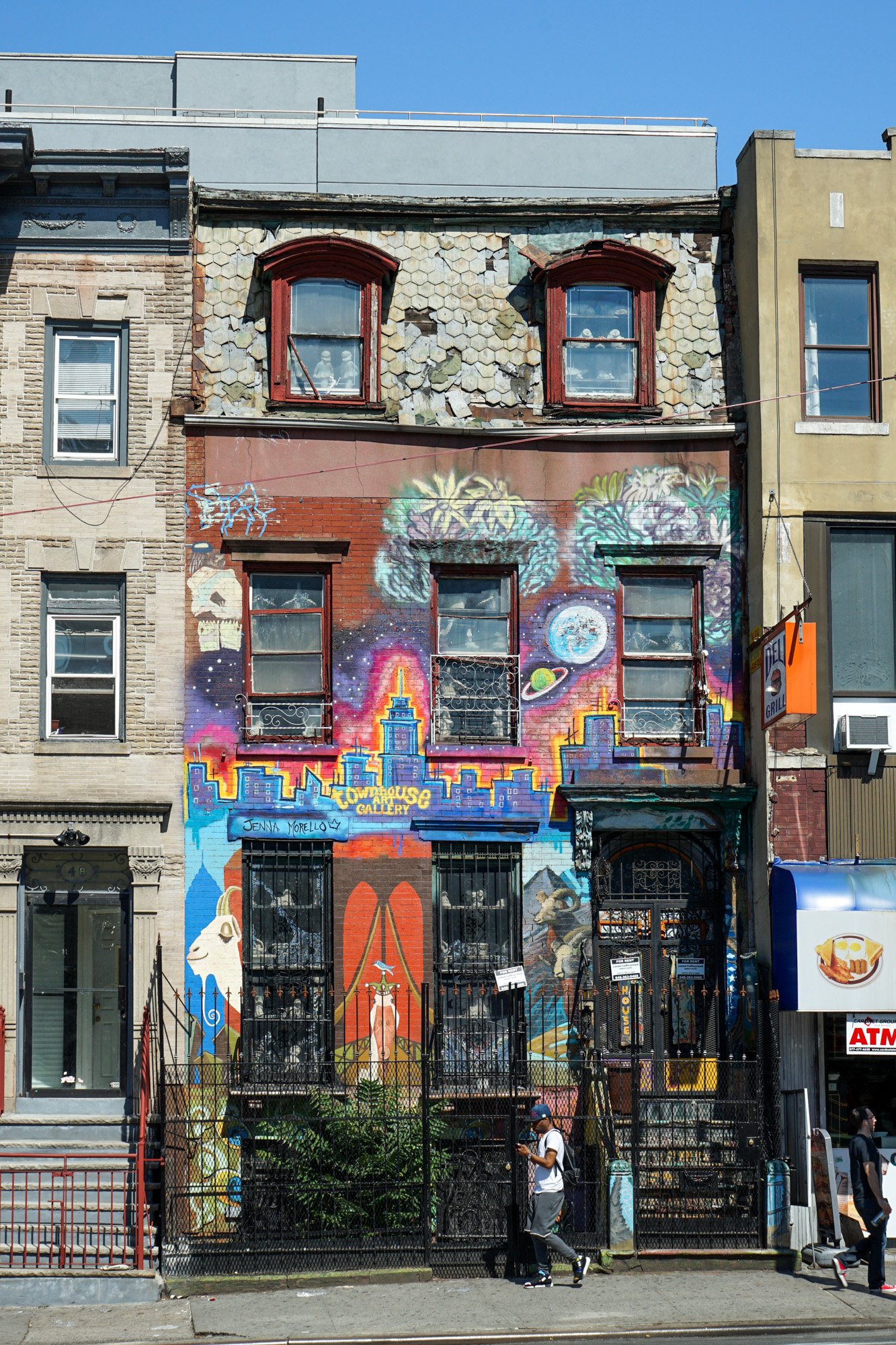
Townhouse Art Gallery, Brooklyn — Sony a7II
Infrastructure as Subject
Broadway Junction appears early on the walk, before the murals even start — an elevated station where several J/M/Z lines converge, sitting above the street like a piece of 19th-century engineering that somehow survived everything. The arched facade, the green metalwork, the geometry of the platform seen from below — it's the kind of structure that photographers in other cities would treat as a landmark. In Brooklyn it's just the subway.
Further north, the Kosciuszko Street station on the J line offers a quieter version of the same idea: stained-glass panels in the platform walls, a church spire visible above the roof, a wooden bench with nobody on it. The city, briefly, at rest.
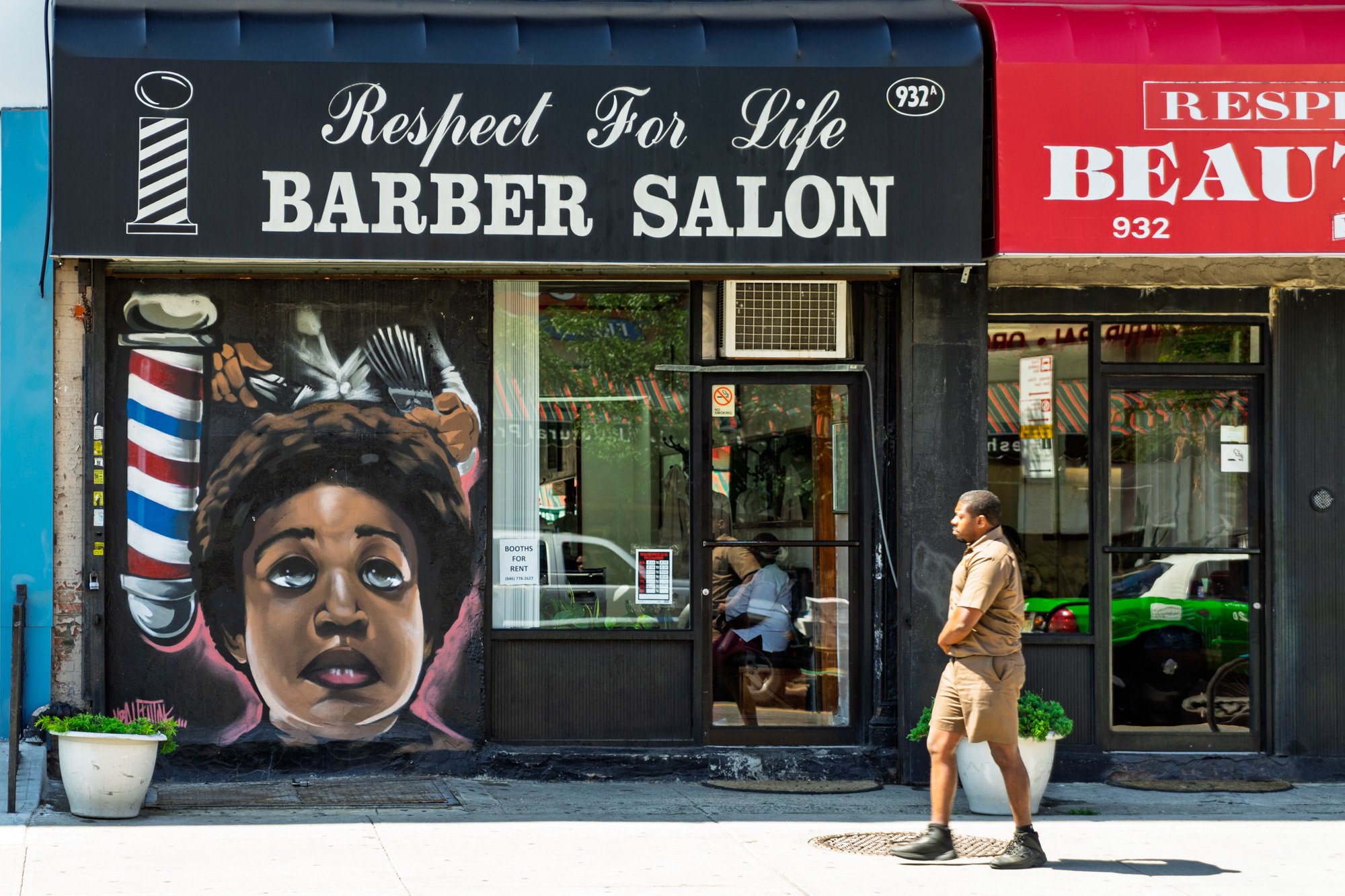
Respect for Life Barber Salon — Sony a7II
Arriving in Williamsburg
The character of the streets shifts somewhere around Flushing Avenue. The murals become denser, the buildings lower, the street-level energy different. At 57 South 6th Street, a corner shop called Super Pak Courier has an Italian-style character painted on its brick wall by Italian artist ZED1— a figure with a globe for a head, a skeleton dog, a clock. The shop's pink awning reads "Best by Test". It feels like a sentence about the neighbourhood.
Then the bridge appears. The Williamsburg Bridge announces itself gradually — first as a presence above the rooflines, then as a full structure seen from below the access ramp, steel and suspension cable against a summer sky. Standing beneath it, looking east along the waterfront, the Domino Sugar Factory chimney visible to the south, you understand something about why people keep coming to photograph this part of Brooklyn. The geometry is relentless.
The walk ends at the water. From the riverfront, looking back at Manhattan across the East River, the skyline sits low and clear — the Freedom Tower, the older midtown towers, the Brooklyn Bridge just visible to the left. It's a view that closes the loop: you started in Brooklyn looking north, and you've arrived at Brooklyn looking west.
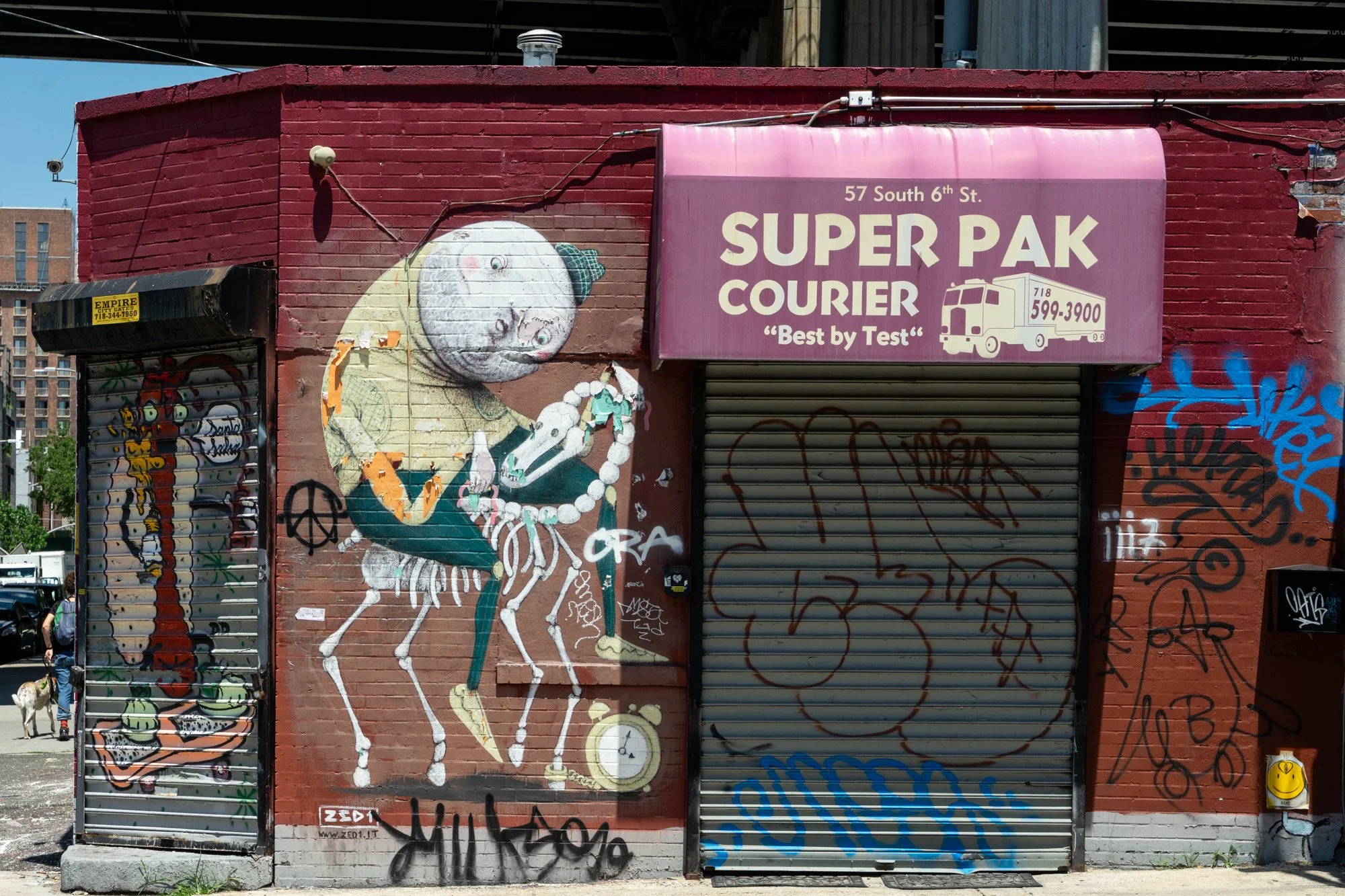
ZED1 mural, South 6th St., Williamsburg — Sony a7II
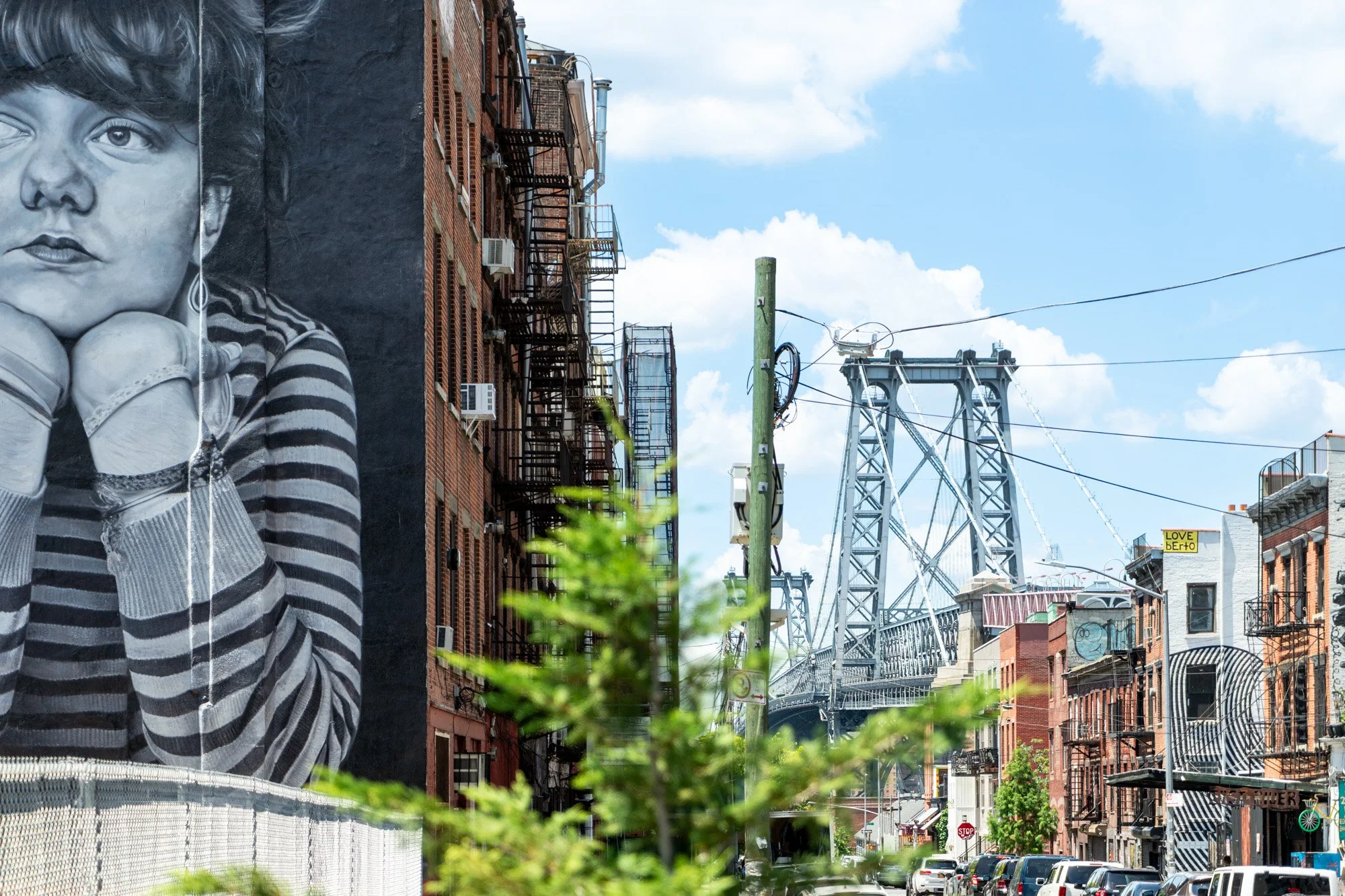
Williamsburg Bridge and mural, Brooklyn — Sony a7II
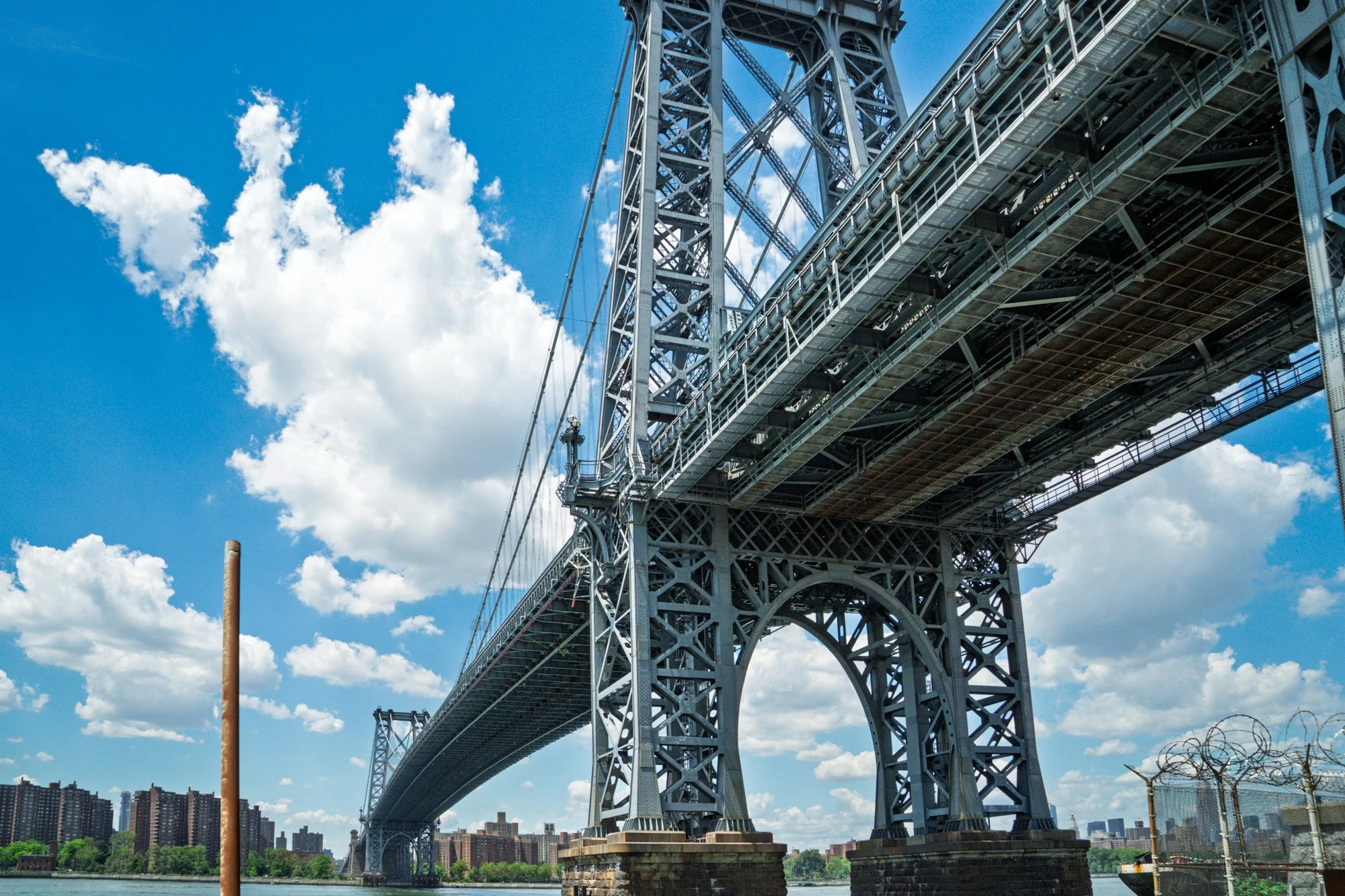
Williamsburg Bridge from below — Sony a7II
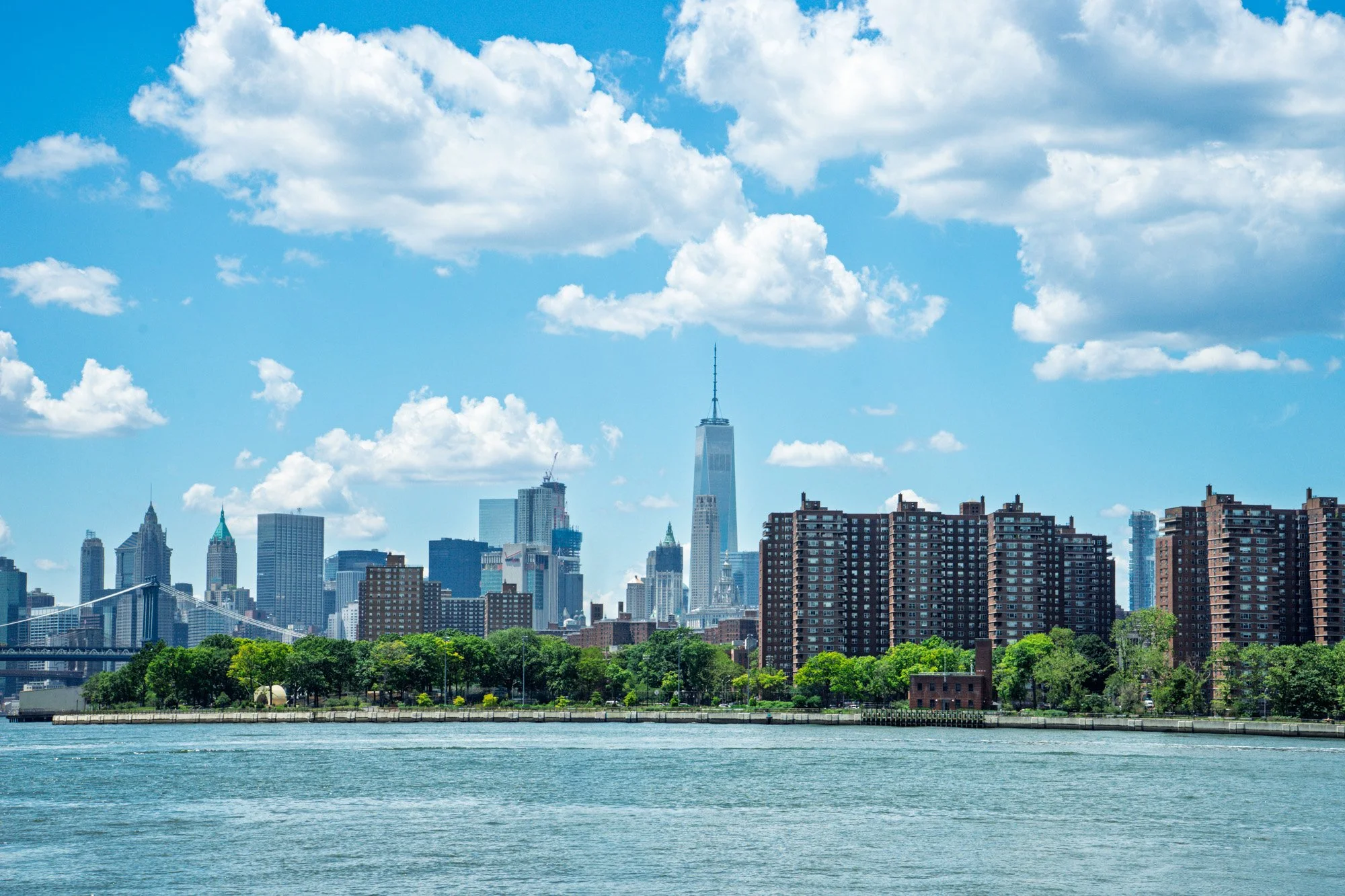
Manhattan skyline from Williamsburg — Sony a7II
If you want to follow the same route, start at Douglass Street and Atlantic Avenue, head north on 4th Avenue, and let the murals guide you the rest of the way. The Graffiti & Street Art gallery has more from New York and beyond.
For another perspective on Williamsburg, don't miss The Mona Lisa of Williamsburg — one of Brooklyn's most extraordinary murals, found by accident on the same walk.
Photos: Sony a7 II · various focal lengths · ISO 100–400
The walk: Carroll Gardens → Broadway Junction → Bed-Stuy → Williamsburg Bridge
New York has more to offer than any single walk. Read Mona Lisa of Williamsburg for a close look at one of Brooklyn's most iconic murals, or 4th of July Fireworks in New York for the city at its most celebratory.
Like these images?
These photographs are available as signed, numbered fine art prints on archival paper. See sizes and order →
See more street photography in the portfolio.
Cosme Lapena is a Barcelona-based street and urban photographer and founder of bCLPhoto. Browse the portfolio or read more on the blog