Murano Glassmakers, Part II: The Colors of Molten Glass
ORIGINALLY PUBLISHED NOV 2023 — UPDATED MAY 2026
MURANO 2 — Light, Heat, and the Art of Seeing in the Dark
(A note before you read: this post is the second part of a visit to a Murano glassblowing workshop. If you haven't read Part 1, I'd suggest starting there — it sets the scene.)
The Camera as a Problem to Solve
I've photographed in difficult light many times. Concerts, underground spaces, late evenings on the street. But Murano presented a specific challenge I hadn't quite encountered before: a scene where the subject itself was the only significant light source, and that source was constantly moving.
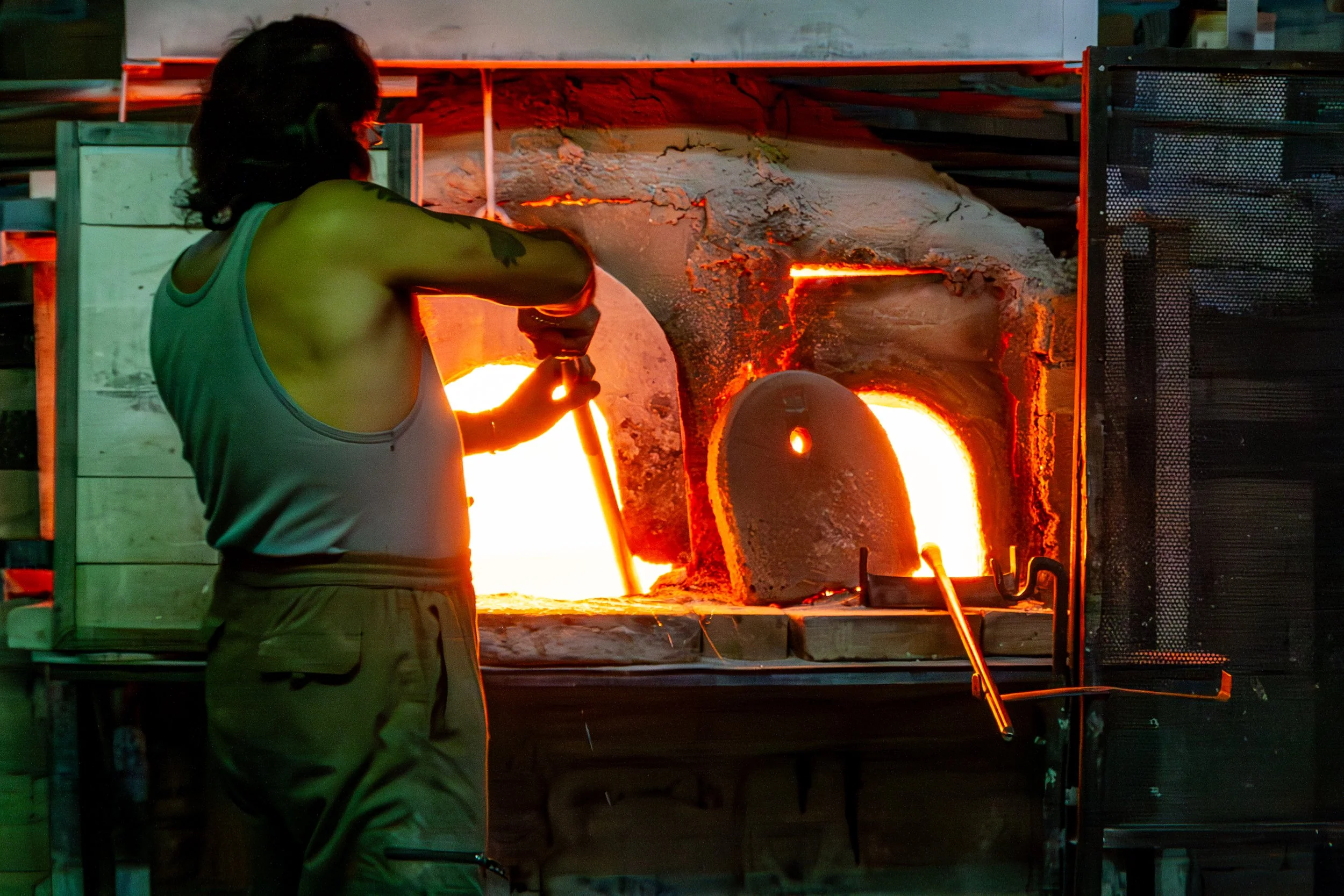
Murano glassmaker blowing molten glass, Venice – bCLPhoto
Molten glass doesn't hold still. The maestros rotate the blowpipe continuously — it's not decorative, it's structural, the only thing keeping gravity from distorting the form. So the glowing gather moves in arcs, the light it throws shifts direction and intensity with every turn, and the faces and hands of the craftsmen are alternately illuminated and shadowed in a rhythm you can't predict or control
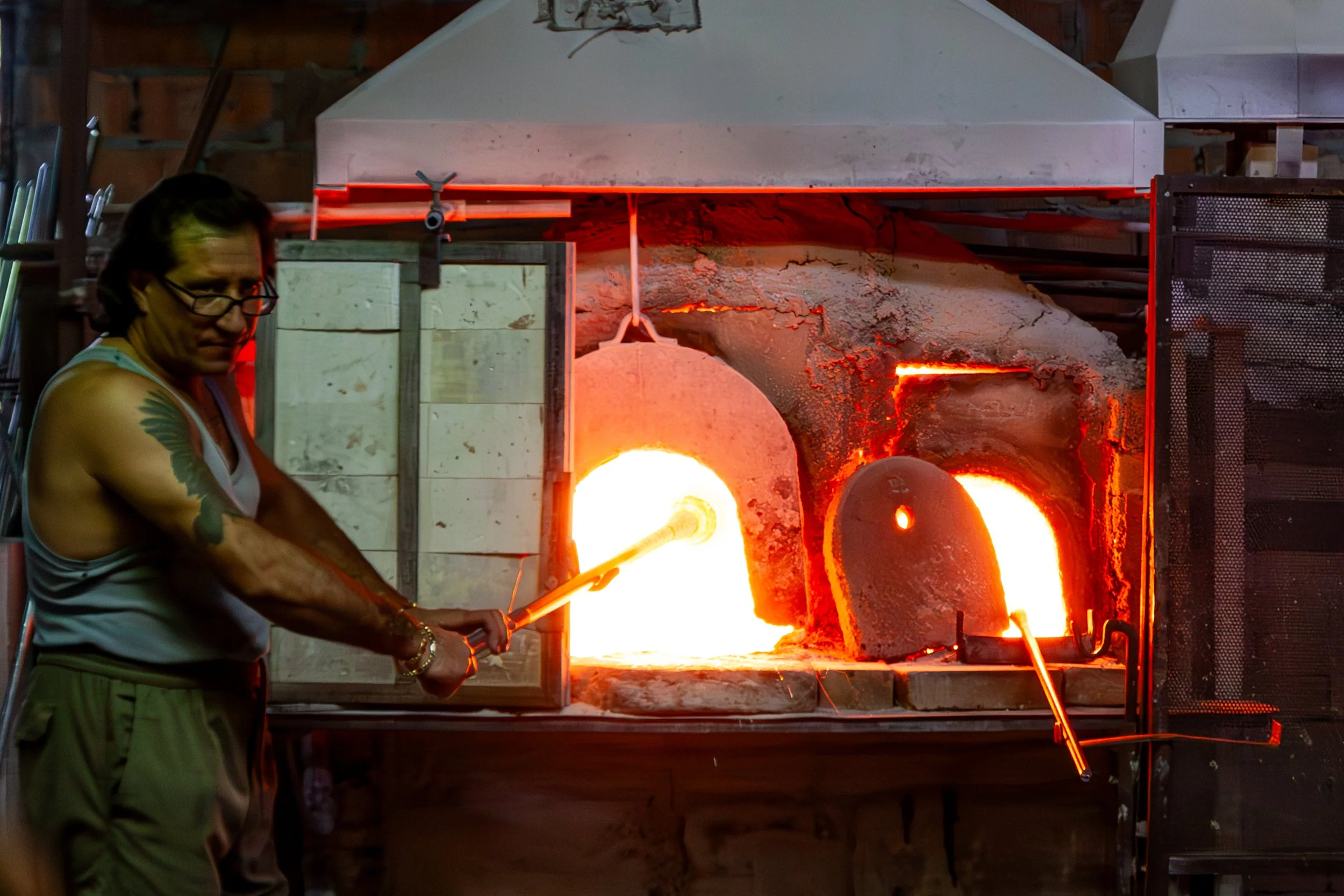
Glassmaker shaping molten glass at the furnace, Murano – bCLPhoto
My approach was to slow down and watch before shooting. To understand the rhythm of the work — the pull from the furnace, the rotation, the breath, the return. Once you see the pattern, you can begin to anticipate the moments when the light will fall where you want it. You wait. You pre-focus on the hands. And when the gather swings into position and the glow catches the maestro's face, you press the shutter.
Not every frame works. Many don't. But the ones that do have something in them that a well-lit studio shot could never replicate — the heat, the effort, the fragility of the moment.

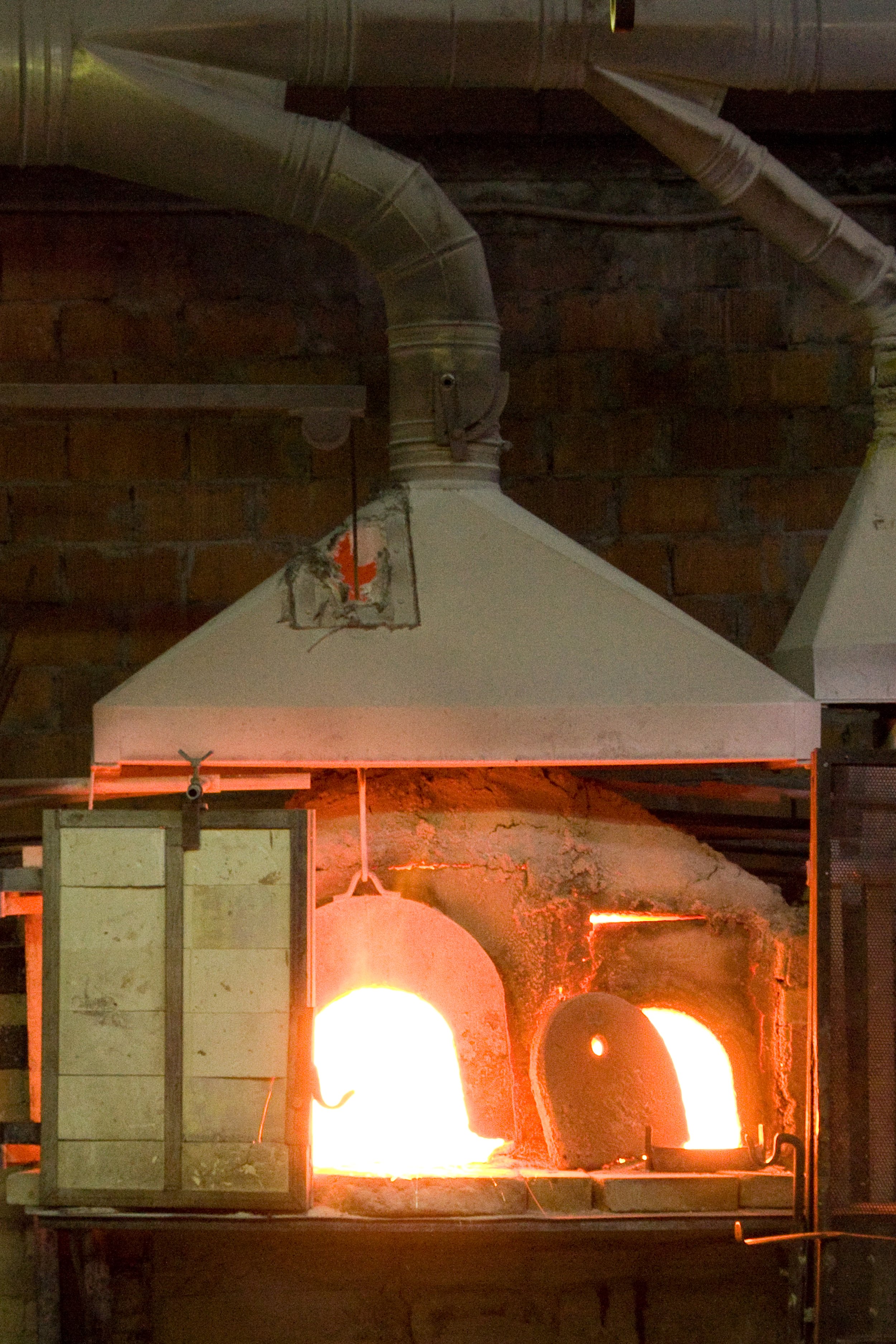
Murano glassblower at work in the furnace, Venice – bCLPhoto
What I Brought Back
Looking at the images now, what strikes me most is how the darkness serves the subject. Murano glassblowing is an ancient craft, and there's something right about photographs that don't look clean or modern. The grain, the deep shadows, the isolated pools of orange light — they feel true to the place in a way that a perfectly exposed, evenly lit set of images would not.
If you ever find yourself in Venice with a free afternoon, take the vaporetto to Murano. Walk past the tourist shops selling mass-produced glass and find one of the working fornaci — some offer free entry to watch the maestros at work. Bring a fast lens. Leave the flash at home. And give your eyes time to adjust.
The light, when you find it, is unlike anything else.

Molten glass being worked by a Murano craftsman – bCLPhoto
Getting There
Murano is reachable by vaporetto from Venice — lines 4.1 and 4.2 from Fondamente Nove, or line 3 from Piazzale Roma and the train station. The journey takes around 40 minutes. Several fornaci offer free glassblowing demonstrations; the Museo del Vetro (Glass Museum) on the island is also worth a visit for context on the history of the craft.
Missed the first part? Start with Murano Glassmakers, Part I: The Craft in Black and White. For more European travel photography, see Paris Photography or Hamburg: A City Built on Bridges.
Browse the full travel photography portfolio at bCLPhoto.
Cosme Lapena is a Barcelona-based street and urban photographer and founder of bCLPhoto.
Exhibited at espai [b] since 2010 · Published in The Eye of Photography and 35mmc. Browse the portfolio or read more on the blog.