Paris Photography — Louvre, Eiffel Tower and Pont des Arts
ORIGINALLY PUBLISHED AUG 2023 — UPDATED MAY 2026
A SHORT VIEW
There are cities you visit, and cities that visit you back. Paris is the latter. I had been to the French capital before, but this time I arrived with a different mindset — camera in hand, no tourist agenda, just the intention of letting the city show me what it wanted to be photographed.
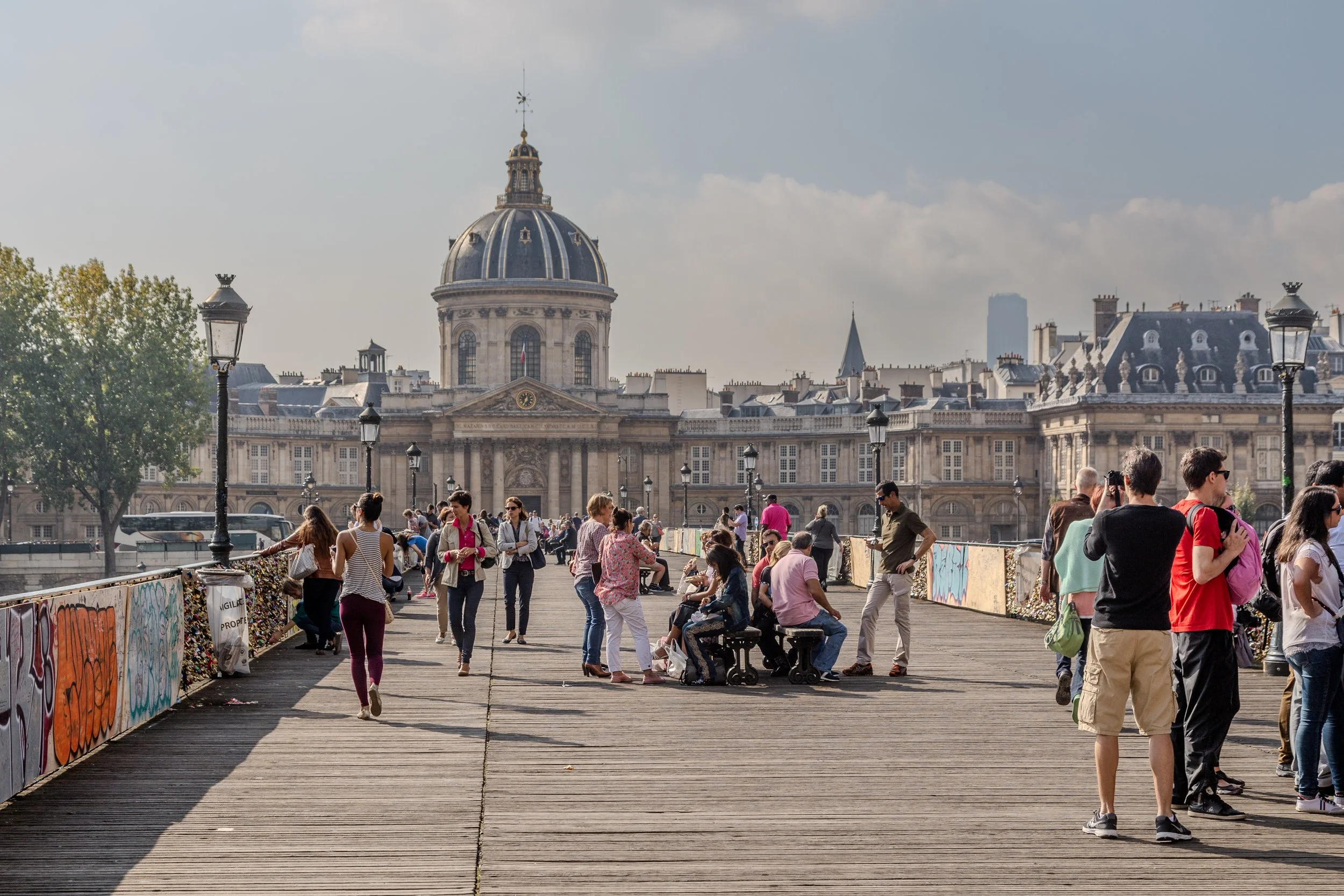
People walking on the Pont des Arts, Paris – street photography - bCLPhoto
Pont des Arts
My first morning I headed straight to the Pont des Arts. It was early, barely past seven, and the pedestrian bridge over the Seine was still quiet — just a few joggers and the soft grey light that Paris does so well. That diffused, overcast morning light is honestly a photographer's gift: no harsh shadows, no blown-out skies, just even tones that let the textures of the city breathe.
The bridge connects the Institut de France to the courtyard of the Louvre Palace, and standing at its midpoint you get one of the most painterly views in the city — the Seine stretching in both directions, the stone façades glowing, the Eiffel Tower lurking in the distance. I shot this handheld at around 1/200s, letting the movement of the few people crossing the bridge add life to the frame without motion blur becoming a problem.

The Louvre Museum with M. Pei's glass pyramid, Napoleon Courtyard, Paris – bCLPhoto
The Louvre
No visit to Paris makes sense without at least one hour at the Louvre. Not to rush through the galleries chasing the Mona Lisa with a thousand other people — but to photograph the building itself. I.M. Pei's glass pyramid in the Napoleon Courtyard is one of those rare architectural subjects that never gets old. It plays with light in a completely different way depending on the time of day: in the morning it reflects the pale sky, by midday it becomes almost transparent, and at dusk the warm light inside starts glowing through the glass.
I spent a good while working the geometry of the pyramid against the classical Baroque symmetry of the palace around it. A wide-angle lens emphasizes that dialogue beautifully — the tension between old and new is right there in the frame. The Louvre has been a museum since the late 18th century, but photographically speaking, it became a different kind of icon the day that pyramid went up.
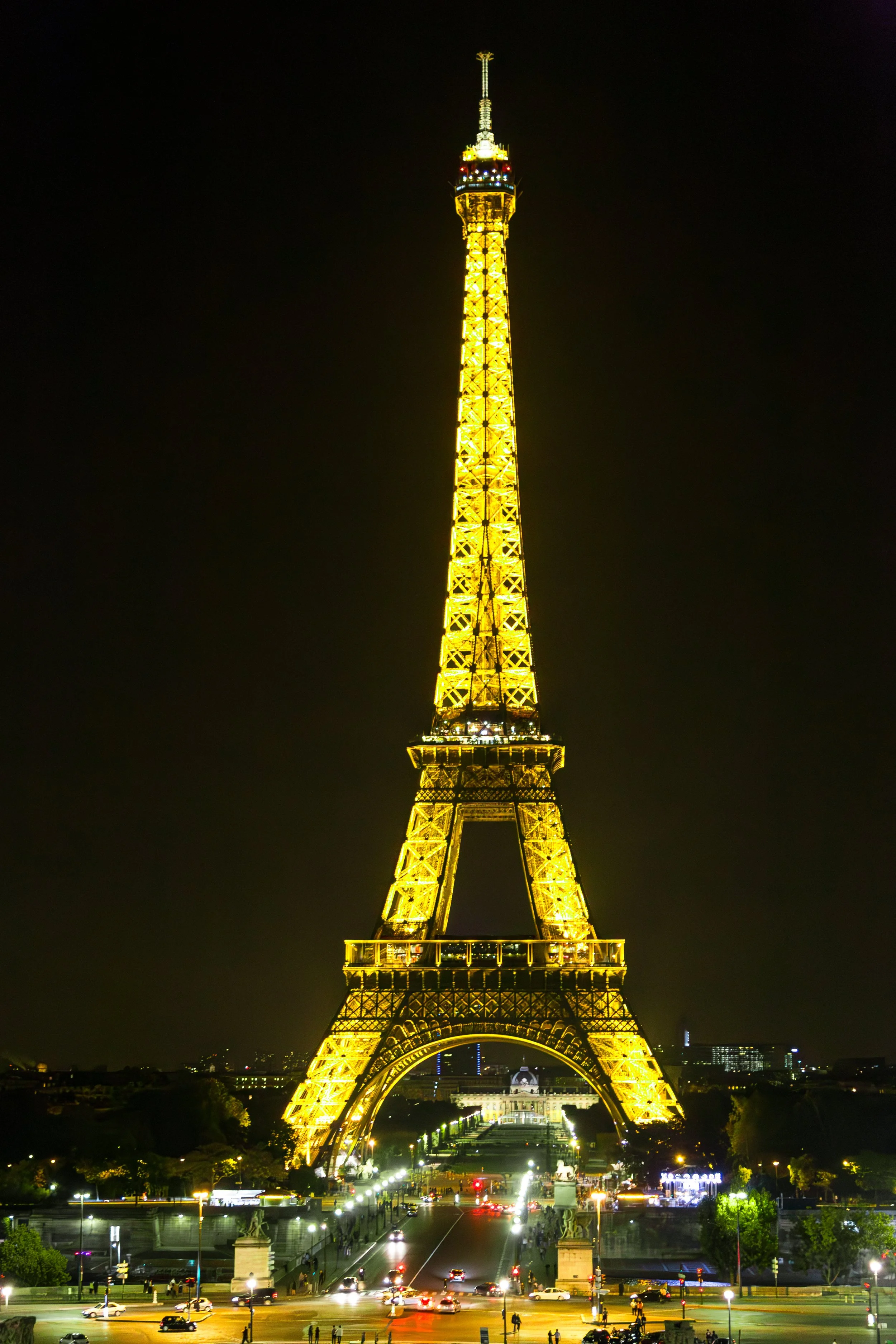
Eiffel Tower at dusk, Paris – bCLPhoto
The Eiffel Tower
I'll be honest: shooting the Eiffel Tower is one of the hardest photographic challenges in Paris, not because it's difficult to find, but because it's nearly impossible to photograph in a way that feels fresh. Everyone has the same shot. So I made myself slow down and think about context rather than the tower itself.
What I ended up with — the image I'm most happy with from the whole trip — was taken from a distance, with the tower framed between two trees and a couple walking below. At 330 metres tall, Gustave Eiffel's wrought-iron structure dominates any composition you put it in, so the trick is to let it breathe, to give it space, to let the foreground tell part of the story.
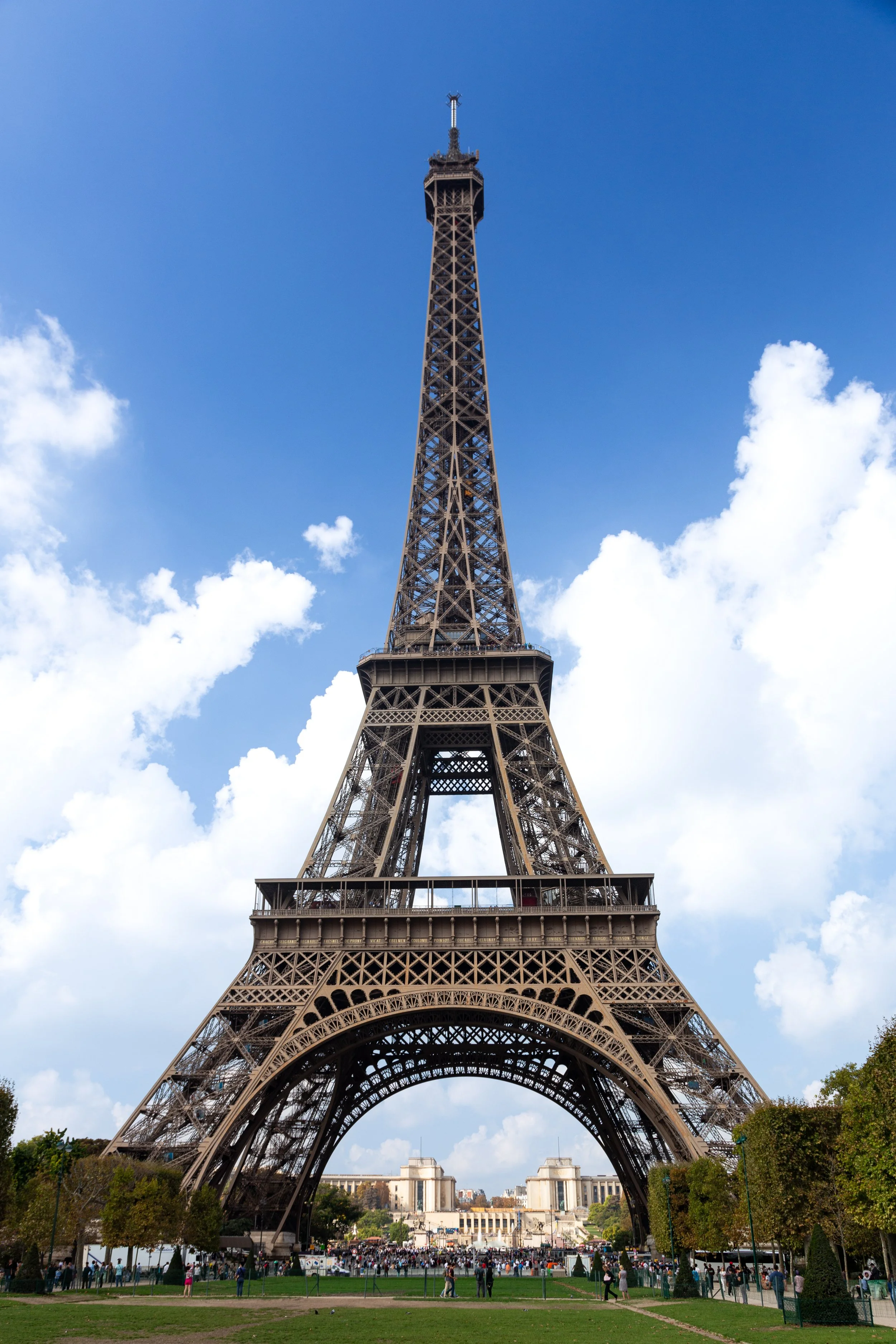
Eiffel Tower from ground level, Paris – bCLPhoto
I also shot it at the blue hour, just after sunset, when the sky goes a deep cobalt and the tower's own lights kick in. For that I set up on a tripod, dropped down to ISO 200 and used a 4-second exposure — long enough to smooth out the Seine's surface but short enough to keep any people in the frame as ghost-like shapes rather than full blur.

"Fame in Combat" sculpture on Pont Alexandre III, Paris – bCLPhoto
Pont Alexandre III
On my last afternoon I crossed the Pont Alexandre III, and I understood immediately why it's considered the most ornate bridge in the city. The gilded sculptures, the lamp posts, the "Fame in Combat" figures at each corner — it's almost overwhelming as a photographic subject. Almost.
I focused on details: the golden torch reflections in the water, the faces of the bronze figures against the cloudy sky. The bridge was built for the 1900 World Exhibition and connects the Champs-Élysées quarter with the Invalides — but standing there with a camera, what struck me most was simply the light bouncing off all that gold onto everything around it. Paris knows how to show off.
If you enjoyed this walk through Paris, you might also like Snapshots of Lisbon — another European capital photographed on foot — or Hamburg: A City Built on Bridges, where the waterways tell the story.
See more travel photography in the portfolio.
Cosme Lapena is a Barcelona-based street and urban photographer and founder of bCLPhoto.
Exhibited at espai [b] since 2010 · Published in The Eye of Photography and 35mmc. Browse the portfolio or read more on the blog.