Sitges Zombie Walk: Street Photography at the Film Festival
The Sitges Zombie Walk starts at seven in the evening, but in Sitges nobody waits that long. I went down on Saturday 10 October with the whole family, my wife, our two daughters and our two granddaughters, and a bright, sunny day stayed with us until the parade began. From the moment we set foot in the streets, costumed characters were already walking among the locals and the day-trippers. One of my granddaughters spent the day photographing them with a Panasonic Lumix LX100 II, her first real camera, and she loved it. It had been many years since I last came for the festival, and I had forgotten how early it starts: the town was busy from the first hours of the morning, and everyone seemed pleased with what the day was about to offer.
The reason is the Sitges Film Festival, the International Fantastic Film Festival of Catalonia, which has filled this seaside town with horror, fantasy and science fiction every October for more than half a century. This year was its 59th edition. The Zombie Walk grew up around it much later, a parade of the living dead open to anyone with makeup and nerve, and it has become the festival's most public moment. Sitges is little more than half an hour by train from Barcelona, and on that Saturday it felt like the whole city had come down.
What you find in the streets is a cast without a script: classic zombies, bloodied handmaids carrying babies in their arms, zombie brides, monsters from other worlds, vampires, skeletons, more than one Freddy Krueger, a chef eating a heart with an enormous cleaver in his hand, nurses with knives, and spectators who have simply painted a scar on their cheek and joined in. In Warsaw I once photographed a city in costume; Sitges is the darker version of the same idea, where the costumes are blood and latex and the performers are anyone who wants to be one.
The Afternoon Before the Sitges Zombie Walk
The most interesting frames of the afternoon came from the friction between the costumes and an ordinary October Saturday. Outside a white house with black shutters, a boy in a pale green T-shirt and a black backpack wore a plastic cleaver through his head, blade on one side, handle on the other, painted blood around both. He looked into the lens with complete calm. Behind him a man walked past with a bag over his shoulder and never turned his head, and two children sat on a step watching something else.
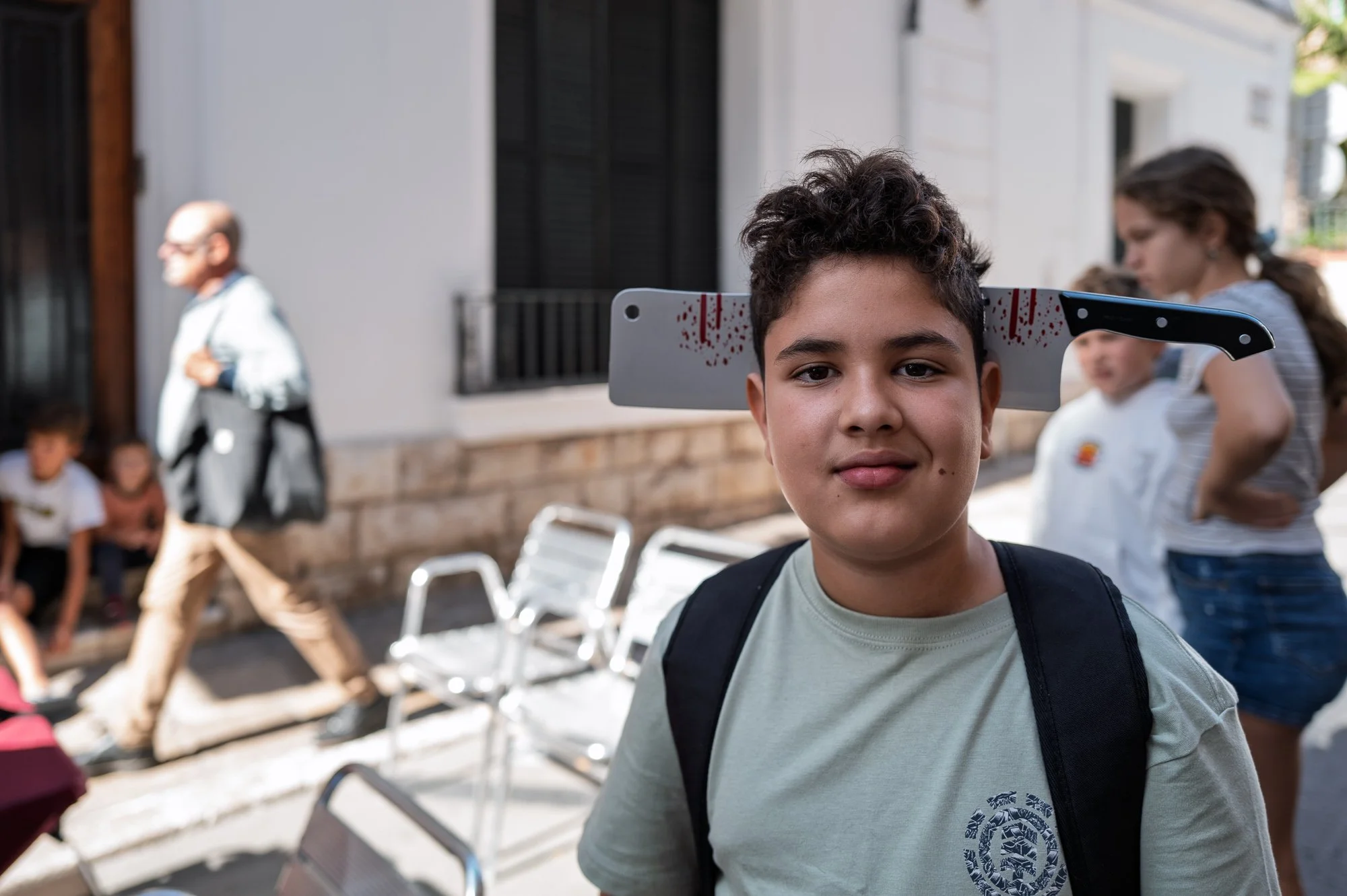
Calm Under the Blade — Leica Q3
On the seafront I followed a woman whose back was streaked with fake blood from the shoulders down, running over a pink lace corset and on down a long purple skirt, one red hand hanging at her side. Beside her walked a young man in a white "Urban Code 99" T-shirt, perfectly clean. Coming the other way, an older man in a straw hat, a wicker basket on his arm, raised a hand to his chest, somewhere between alarm and greeting. It is my favourite photograph of the day: the horror has arrived, and the terrace chairs have not noticed.
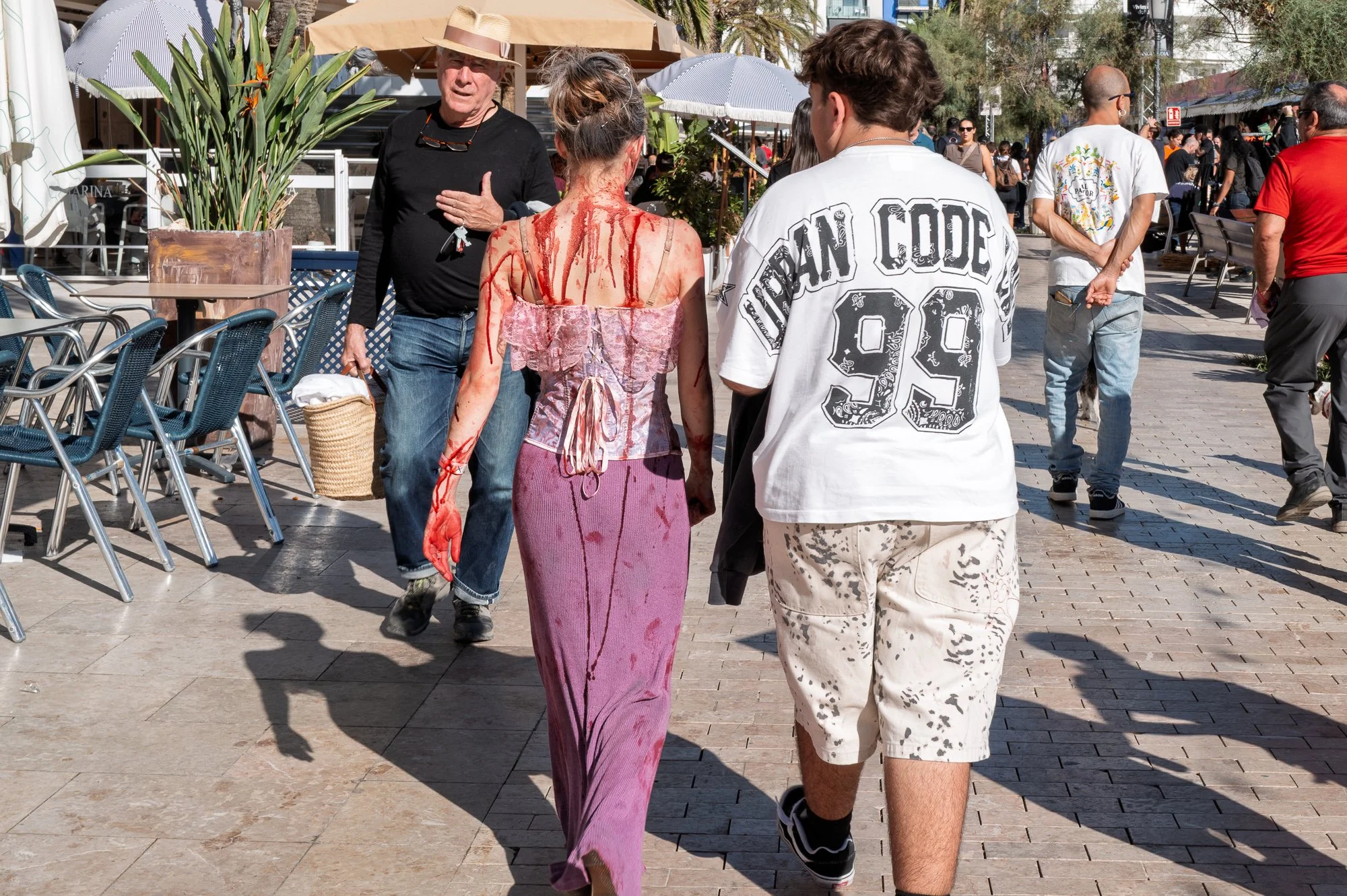
The Terrace Hasn't Noticed — Leica Q3
At the corner of a wall of rough stone blocks, a zombie chef in a white jacket and hat, both soaked red, raised a cleaver in one hand and bit into a heart held in the other, his face painted black. A man in a denim jacket leaned against the wall a couple of metres away, looking in the opposite direction. That afternoon in Sitges, indifference was the most convincing costume of all.
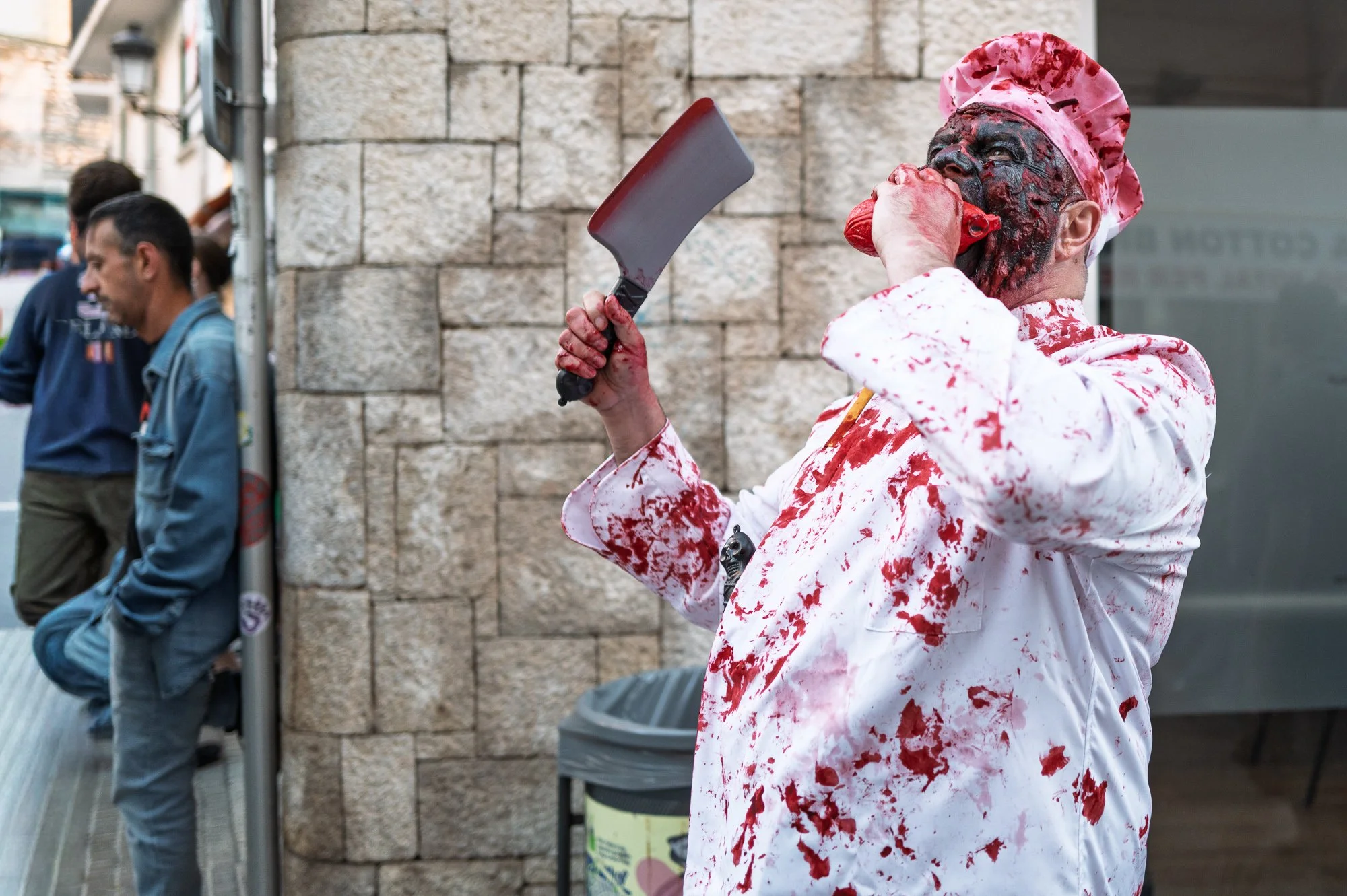
The Chef's Special — Leica Q3
The Exorcist Bedroom at the Miramar
Not everything was in the street. At the Miramar – Centre Cultural, the neoclassical building on Carrer de Fonollar above Sant Sebastià beach, the festival's exhibition They're Just Children. 50 Years of ¿Quién puede matar a un niño? follows the evil child through seven decades of fantastic cinema. One room had rebuilt the bedroom from The Exorcist: a grey wall stained with damp, the words "HELP ME" dripping in red paint, a bed whose posts were wrapped in ochre blankets and bound with white straps, two lamps throwing small pools of warm light onto terracotta tiles and a worn rug. In the middle, a life-size figure in a pale blue nightgown sat on a floral patchwork quilt, long red hair falling over a ruined face, a pink teddy bear in her lap. I photographed the room straight on, the way you would photograph a stage.
Then a visitor stepped in beside her, a bald, bearded man in a denim shirt, leaning towards the figure with a wide grin for somebody's phone. The first frame is the set; the second is what people do with a set. Half a century after William Friedkin's film emptied cinema seats, the possessed girl has become a photo opportunity, and his grin is the most honest reaction in the room.
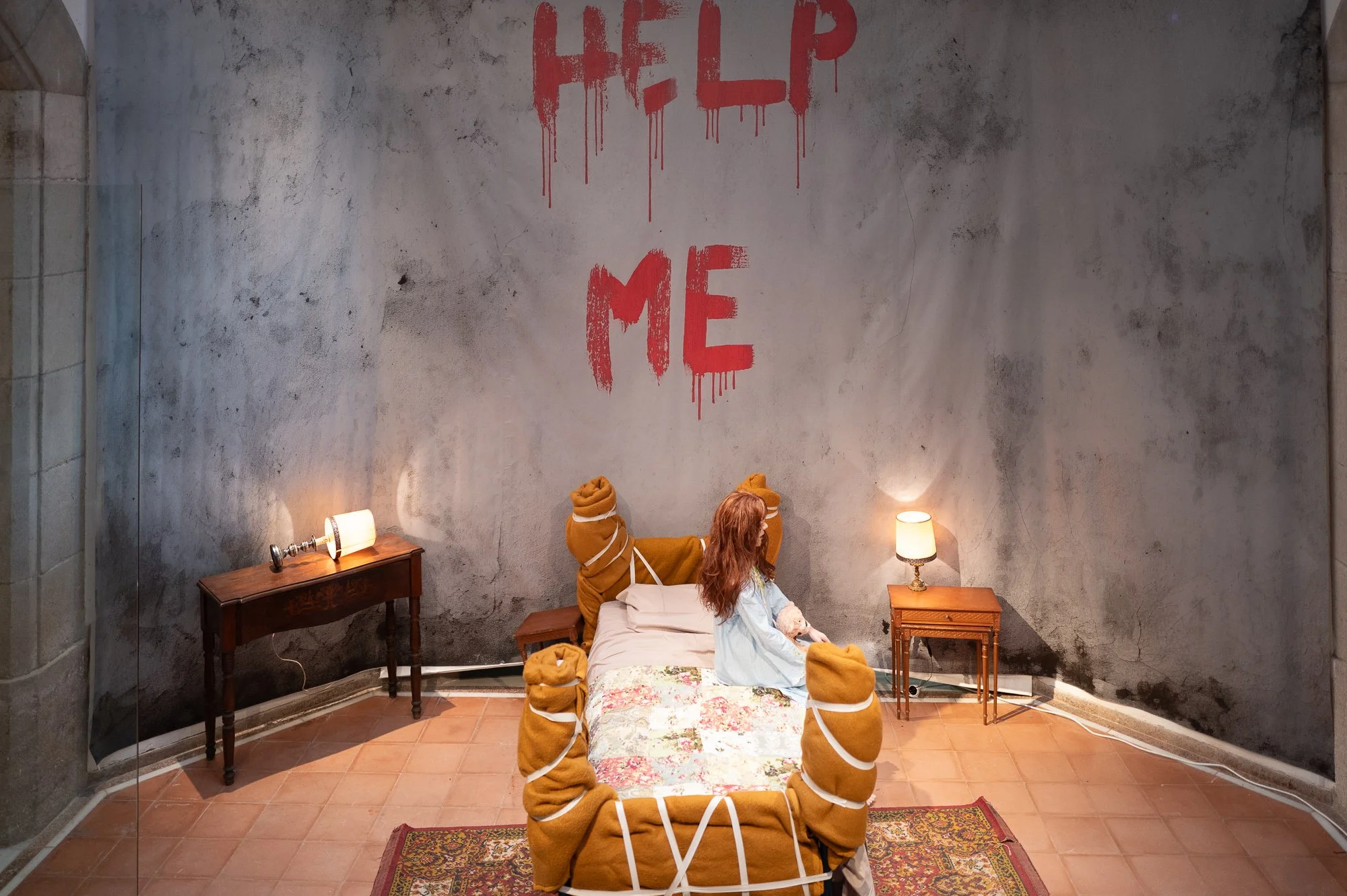
The Set — Leica Q3
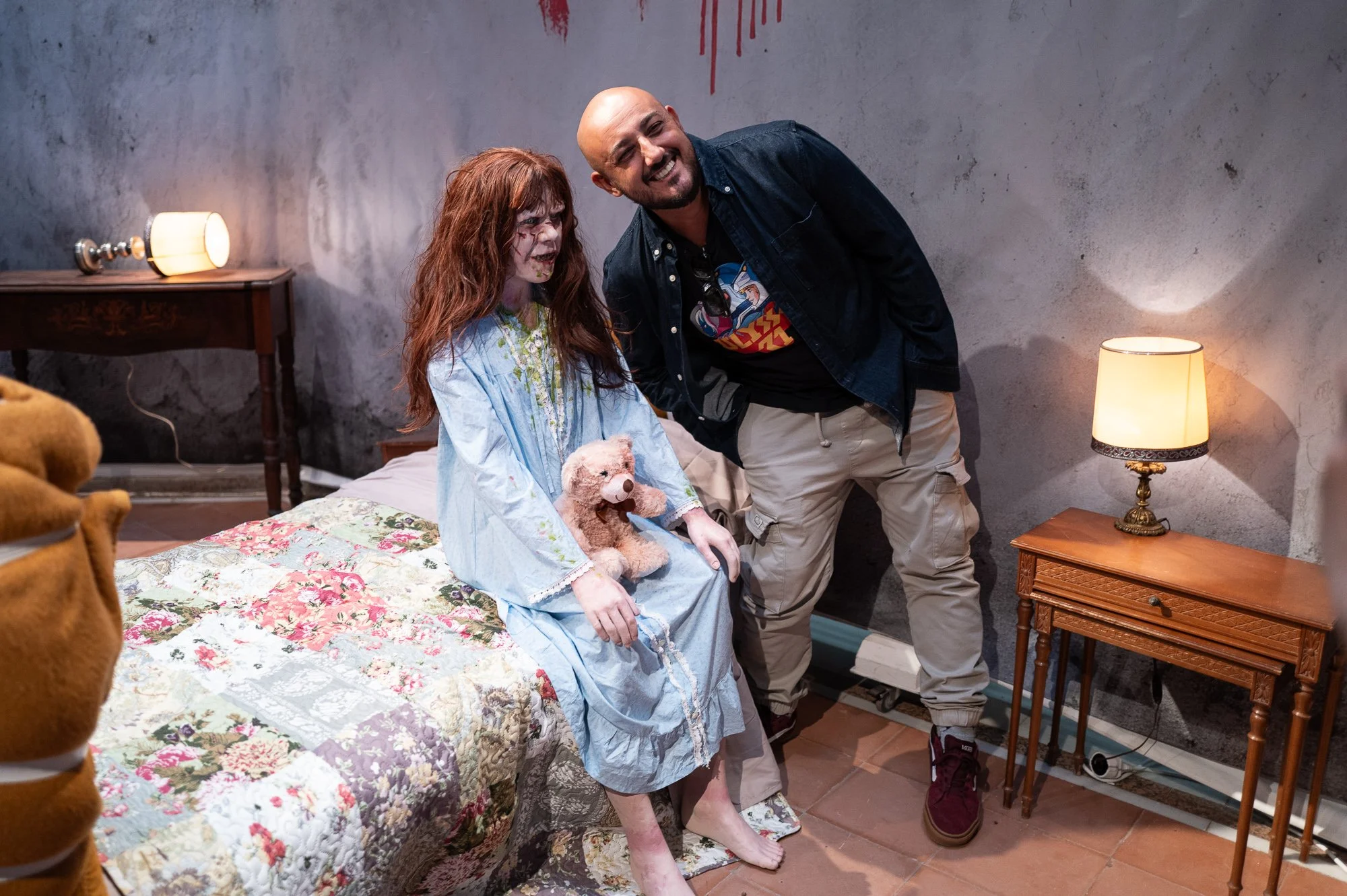
What People Do With a Set — Leica Q3
Zombies at Dusk
As the afternoon went on, the characters in full makeup multiplied. Two women came up a cobbled lane in bridesmaid dresses, one pink and one in navy lace, both with satin sashes, corsages and plastic cockroaches pinned to the fabric, their arms and faces painted raw red and their eyes turned white by contact lenses. The one in front turned her head towards me as she passed, slowly, the way a zombie in a film turns towards a noise.
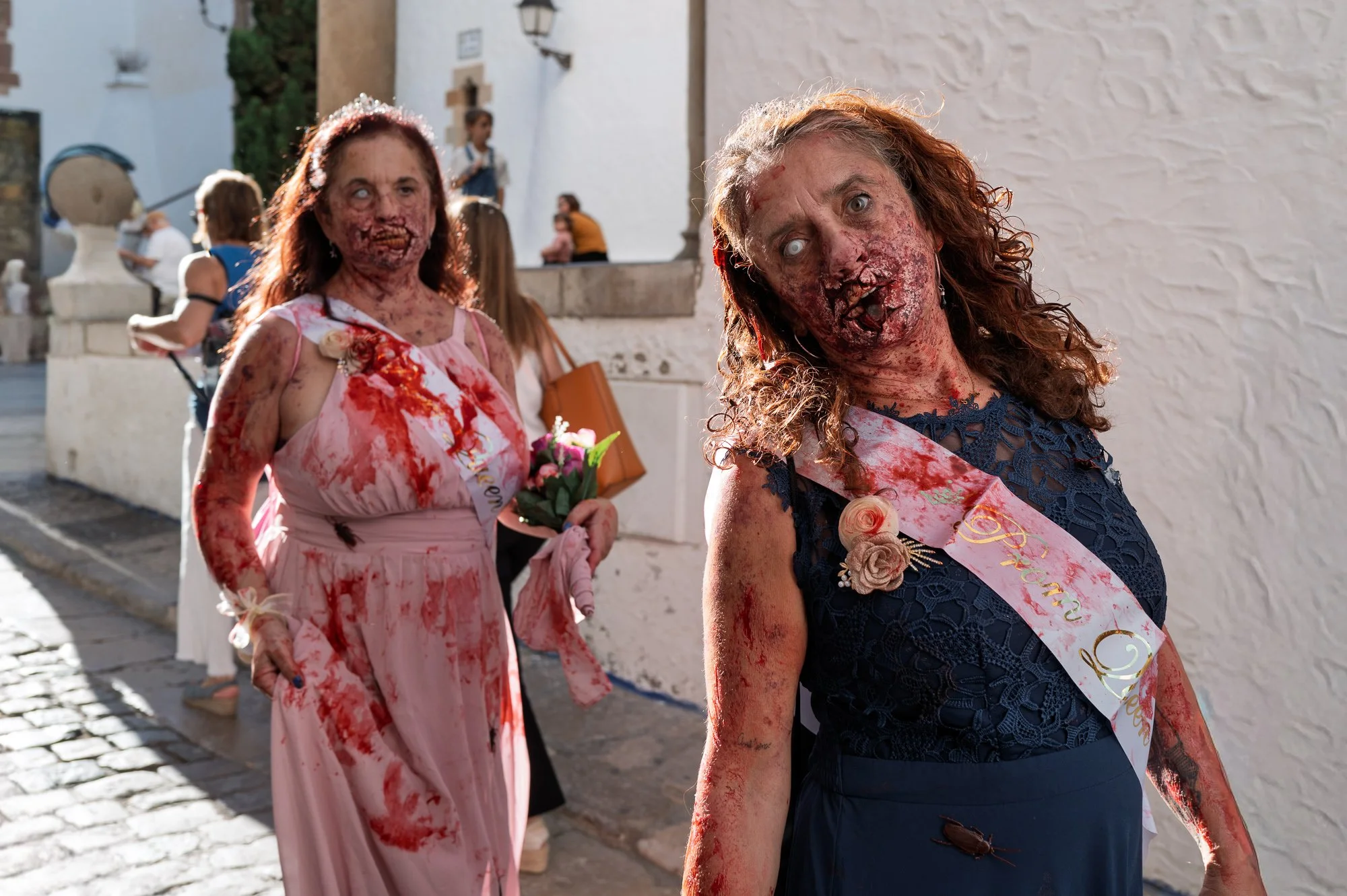
The Bridesmaids — Leica Q3
Against a reed fence, a family posed in matching costume: father and son as vampire nerds, with round black glasses, fangs, orange bow ties and braces over blood-spattered white shirts, the mother behind them in a red wig and a green school pinafore with a checked tie. They gave the camera exactly the expression they had rehearsed, heads tilted, while behind them a boy carried on kicking a football against the railing.
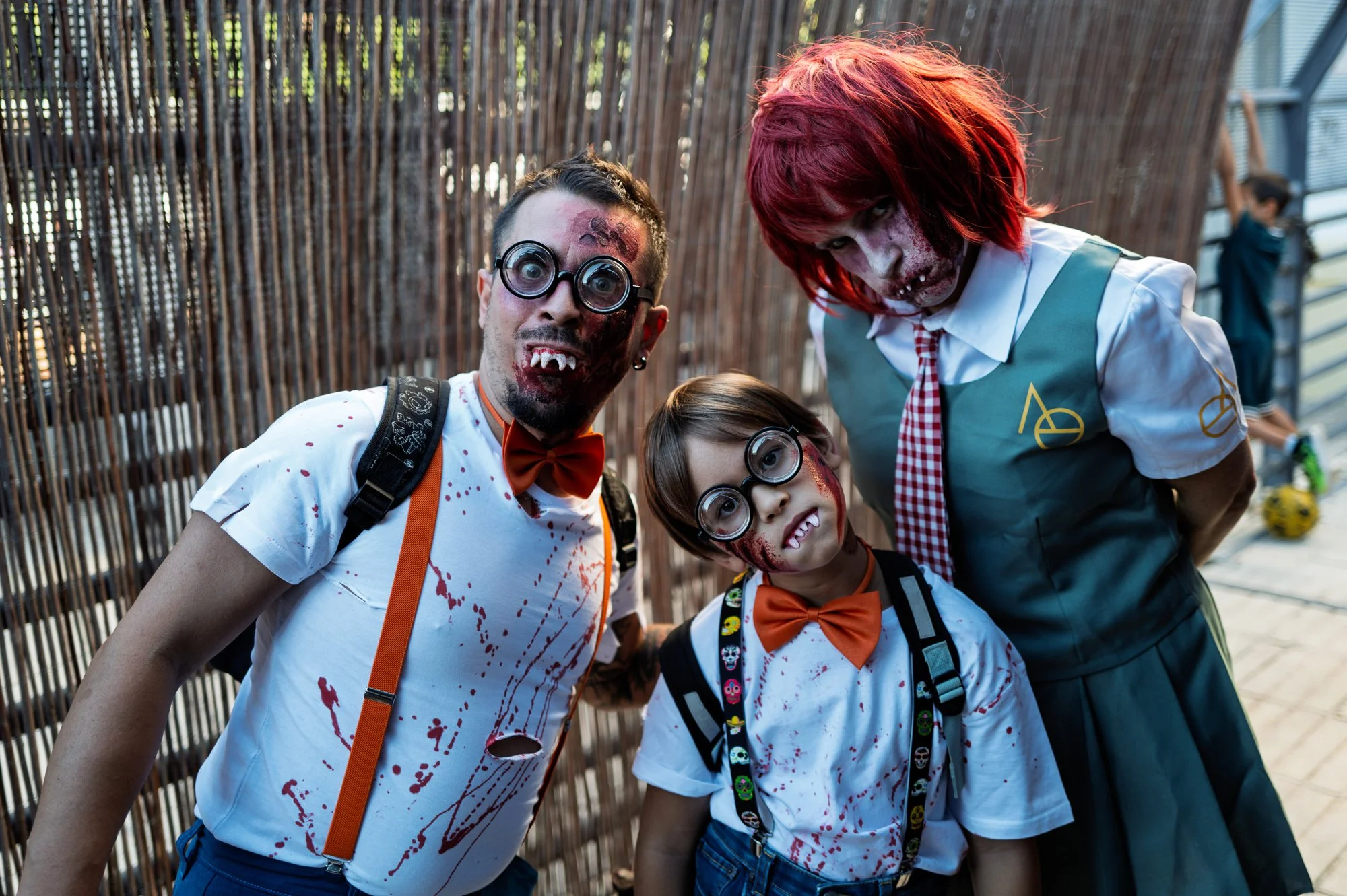
Rehearsed Expressions — Leica Q3
The figure I kept crossing that afternoon was a zombie prom queen: a jewelled tiara on pink-streaked hair, a white face with the jaw torn open in latex, a bouquet of pink roses and a garland of silver and blue stars trailing behind her. On the promenade, with a wrought-iron lamp post and palms behind her and the sea light going pale, she stopped and stared into the lens without a flicker, while the people behind her checked their phones.
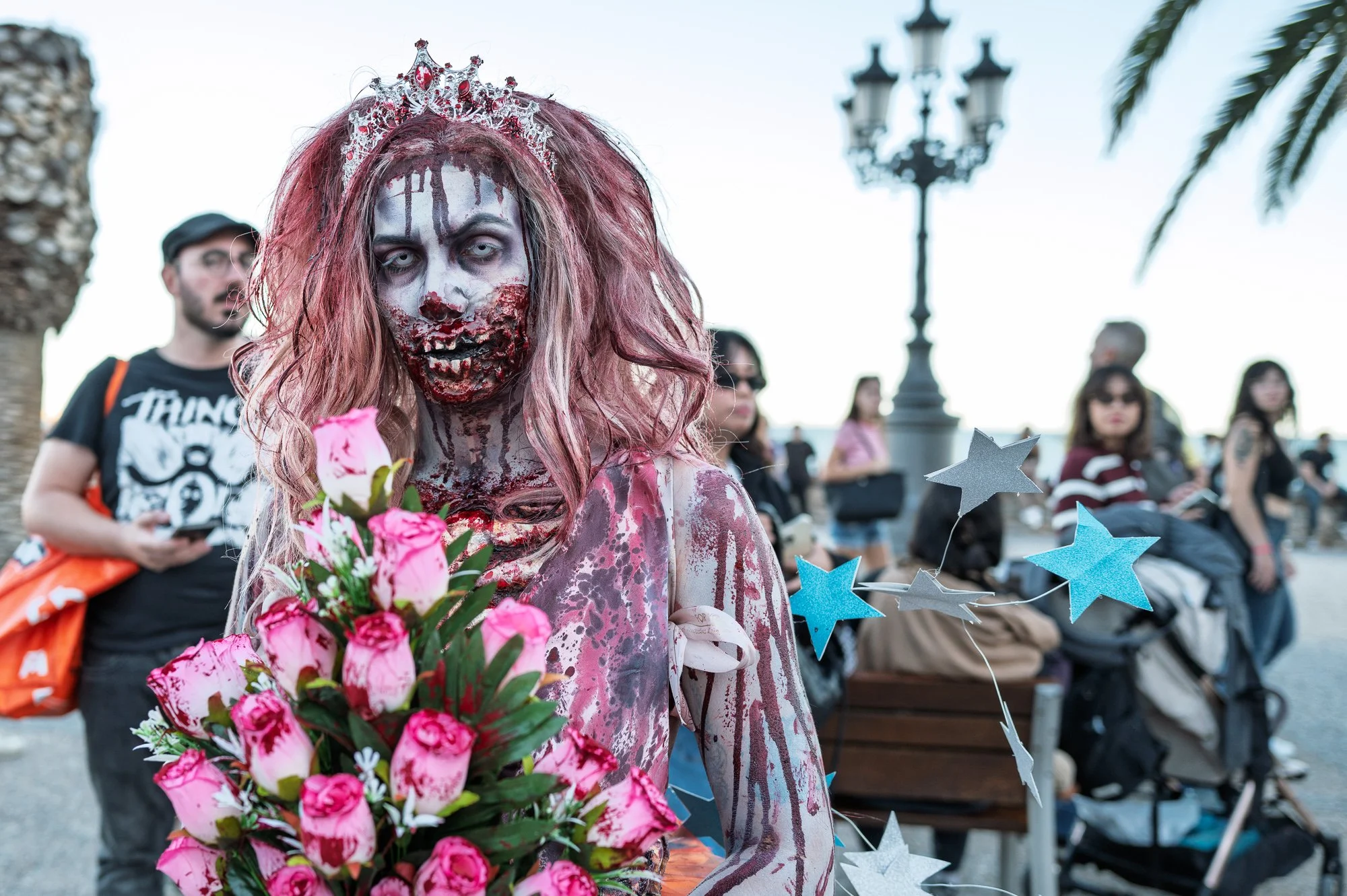
The Prom Queen — Leica Q3
A few streets away, an orc hunched along a narrow cobbled street: grey horned mask, fur over leather, a spear in one hand and the other raised in claws, black tights ending in fur boots. A second warrior in leather armour followed him along an ochre wall. The pose was theatre; the street, with its kerbs and a couple strolling at the far end, was not.
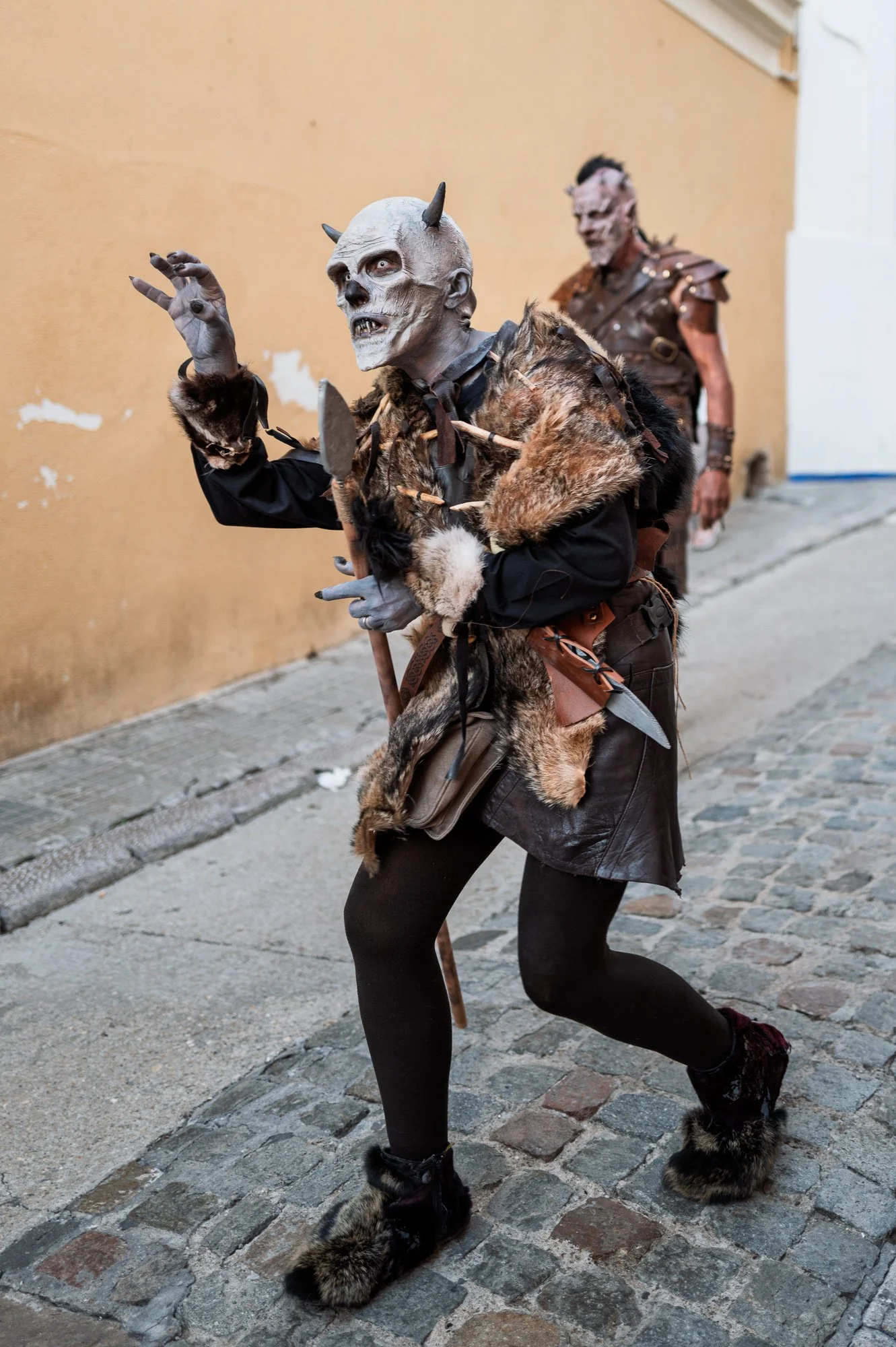
The Orc — Leica Q3
Three handmaids in red cloaks and white bonnets walked together, each cradling a swaddled doll smeared with blood, their faces painted grey and red. The one in the middle, glasses on, was laughing. It is a costume borrowed from The Handmaid's Tale, carried through a festival crowd as dark comedy, and I am still not sure which of the two the photograph is about.
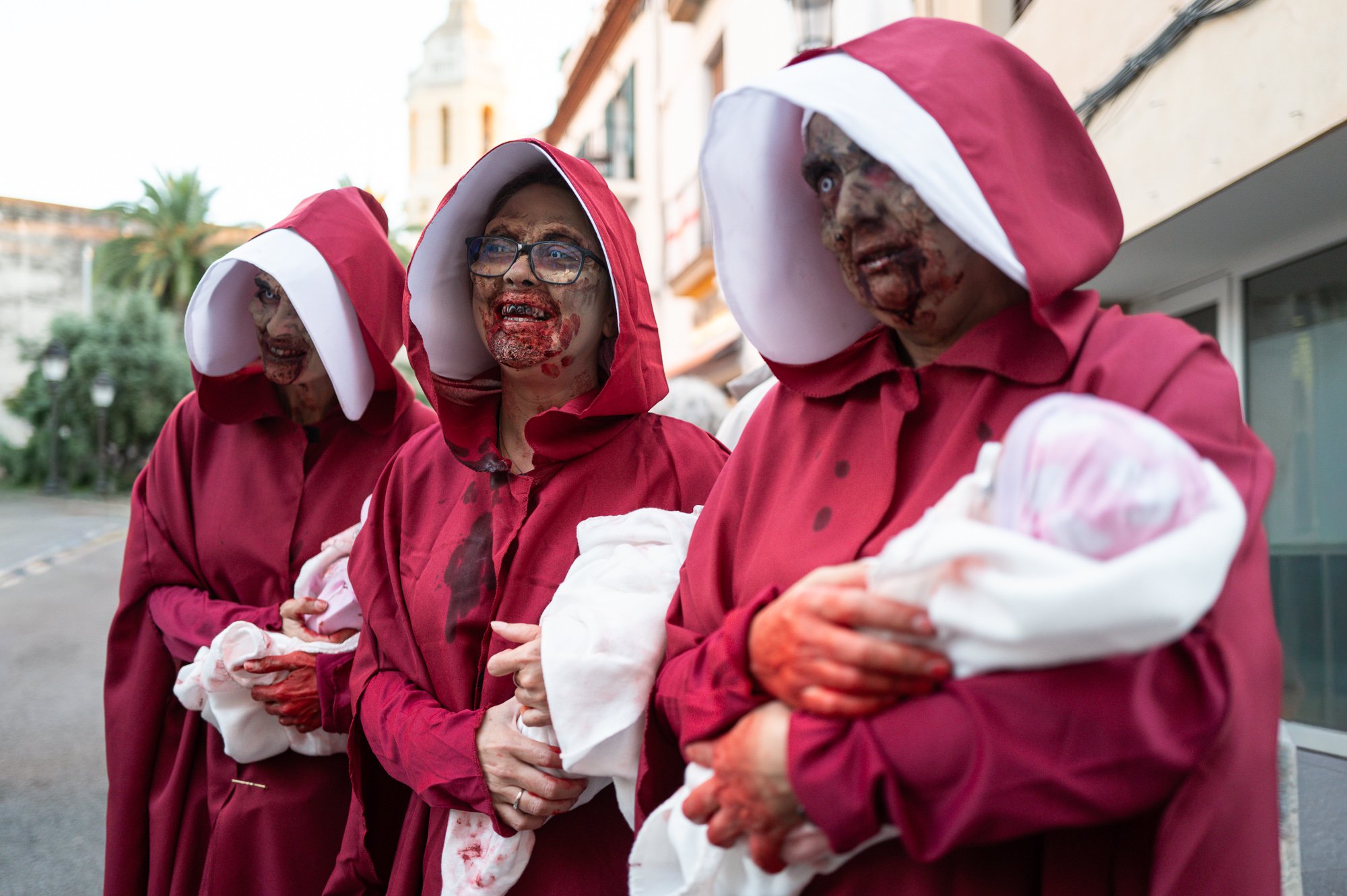
The Handmaids — Leica Q3
The Sitges Zombie Walk After Dark
At seven the sun went and the parade began. The streets of the old town filled from wall to wall, the spectators pressed back against the doorways, and the 28mm of the Q3 meant working inside the march rather than watching it from the kerb. Under the street lamps the light turned warm on the façades and harsh on the faces, and every few metres someone stopped to perform for whichever camera or phone was closest.
Under a floodlit ochre wall, a nurse in a bloodied apron with a red cross walked straight at the camera carrying a cleaver. Beside her came a man in a muzzle mask, his chain held by a woman in a black lace veil and dress, a few red roses in her other hand. Around them, a man in a torn grey jumper, a drummer, a woman laughing behind her hand, phones held up on both sides of the street. Of all the night frames, this is the one that explains what the Zombie Walk is.
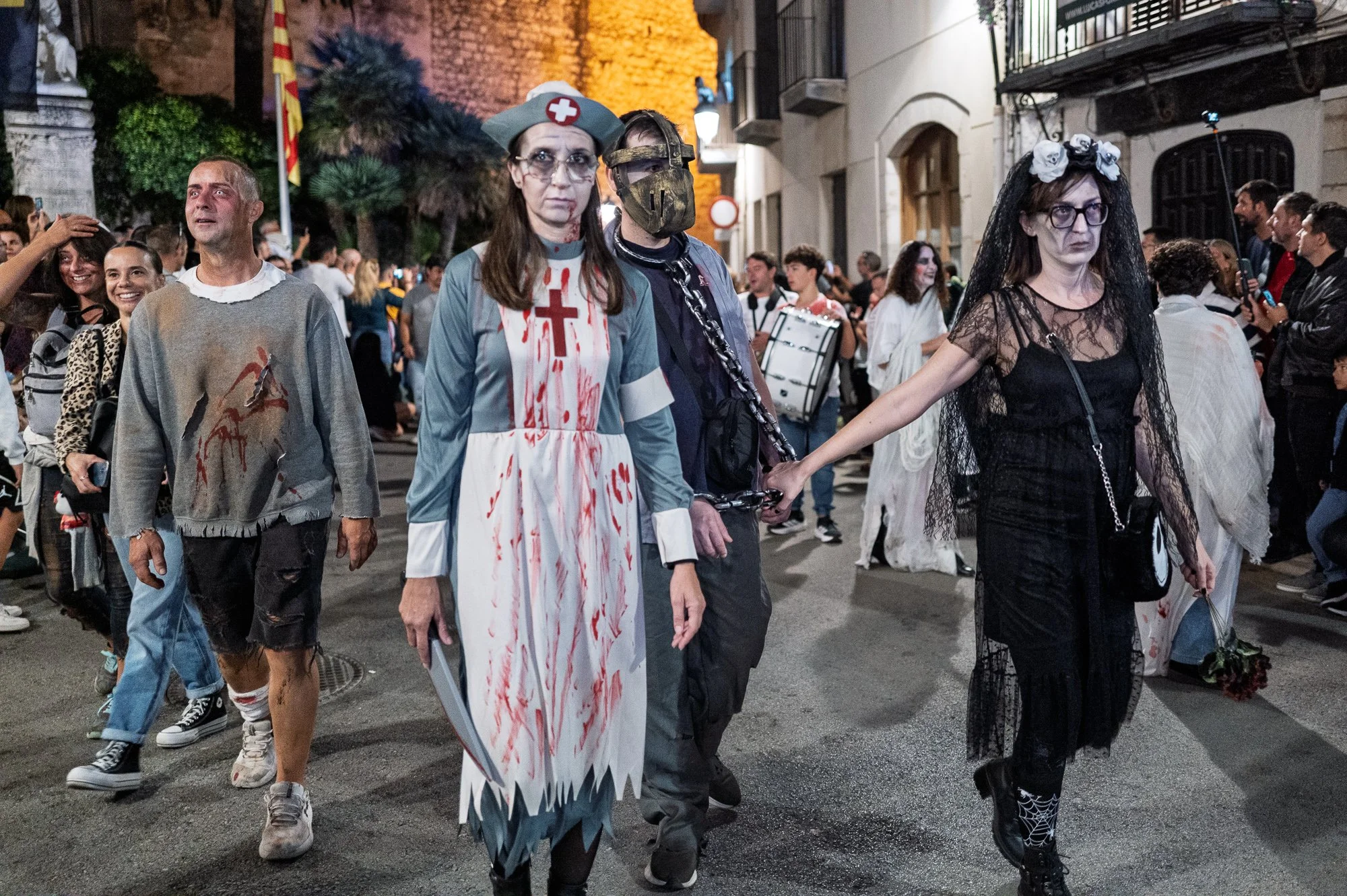
The Parade — Leica Q3
In a white street, a man with his head wrapped in grey bandage cloth carried a doll's head in a bridal veil against his chest like a bouquet, its face pale and its eyes ringed in black. In front of him a child pulled a white duck hat with an orange beak down over his ears, out of focus, and behind him came a surgeon in a green cap, a zombie plumber in a red cap and a bride with blood down her dress. Every layer of the frame belongs to a different film.
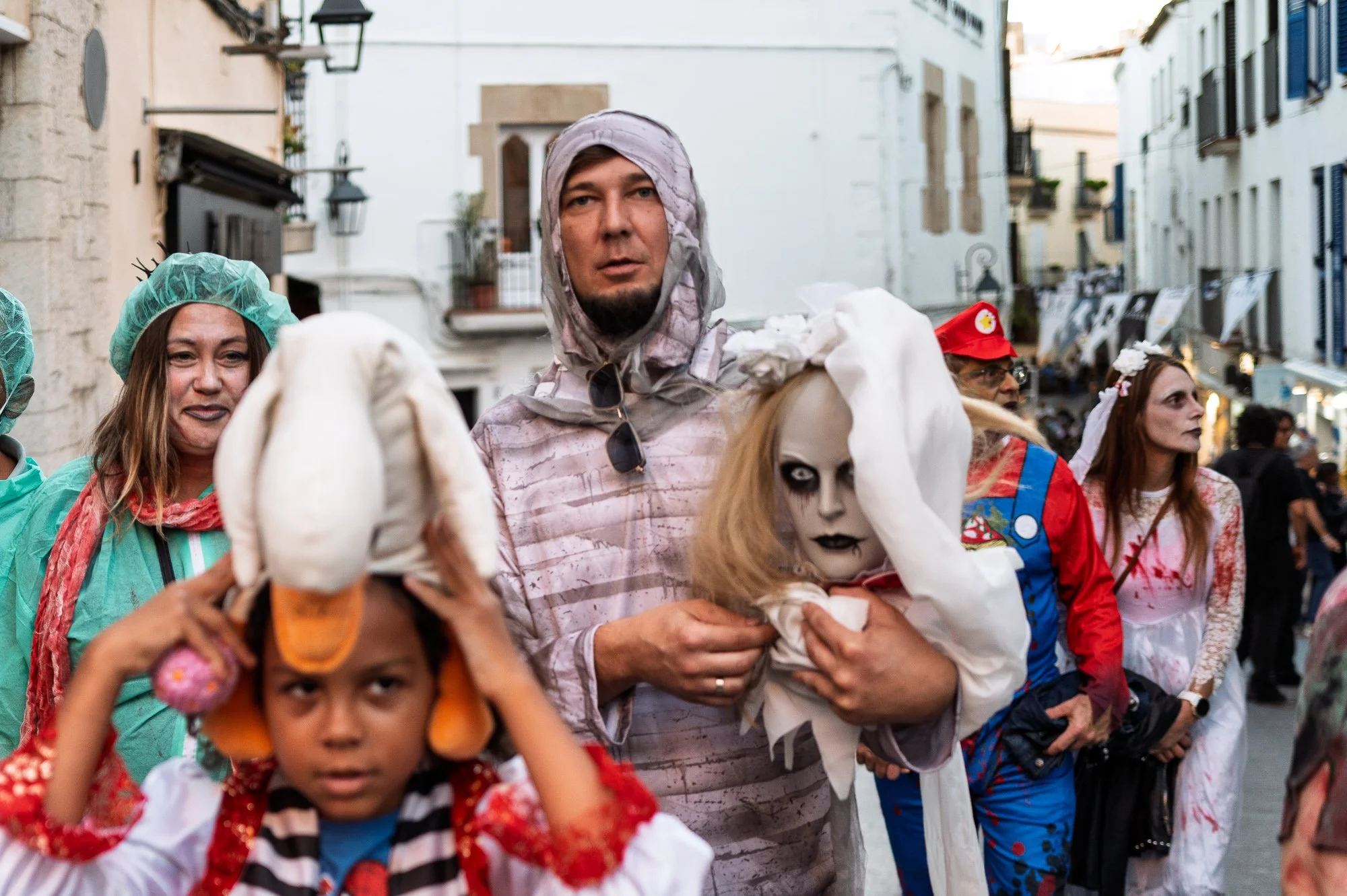
Every Layer a Different Film — Leica Q3
At the edge of the crowd, a girl with a white face, dark-ringed eyes and stitches painted down her neck wore a hairband topped with a severed hand, its black nails resting on her forehead. A vampire with bared fangs stood behind her, and the face of the woman beside her crossed the edge of the frame. Among so many performers, she was the only one who did not seem to be performing.
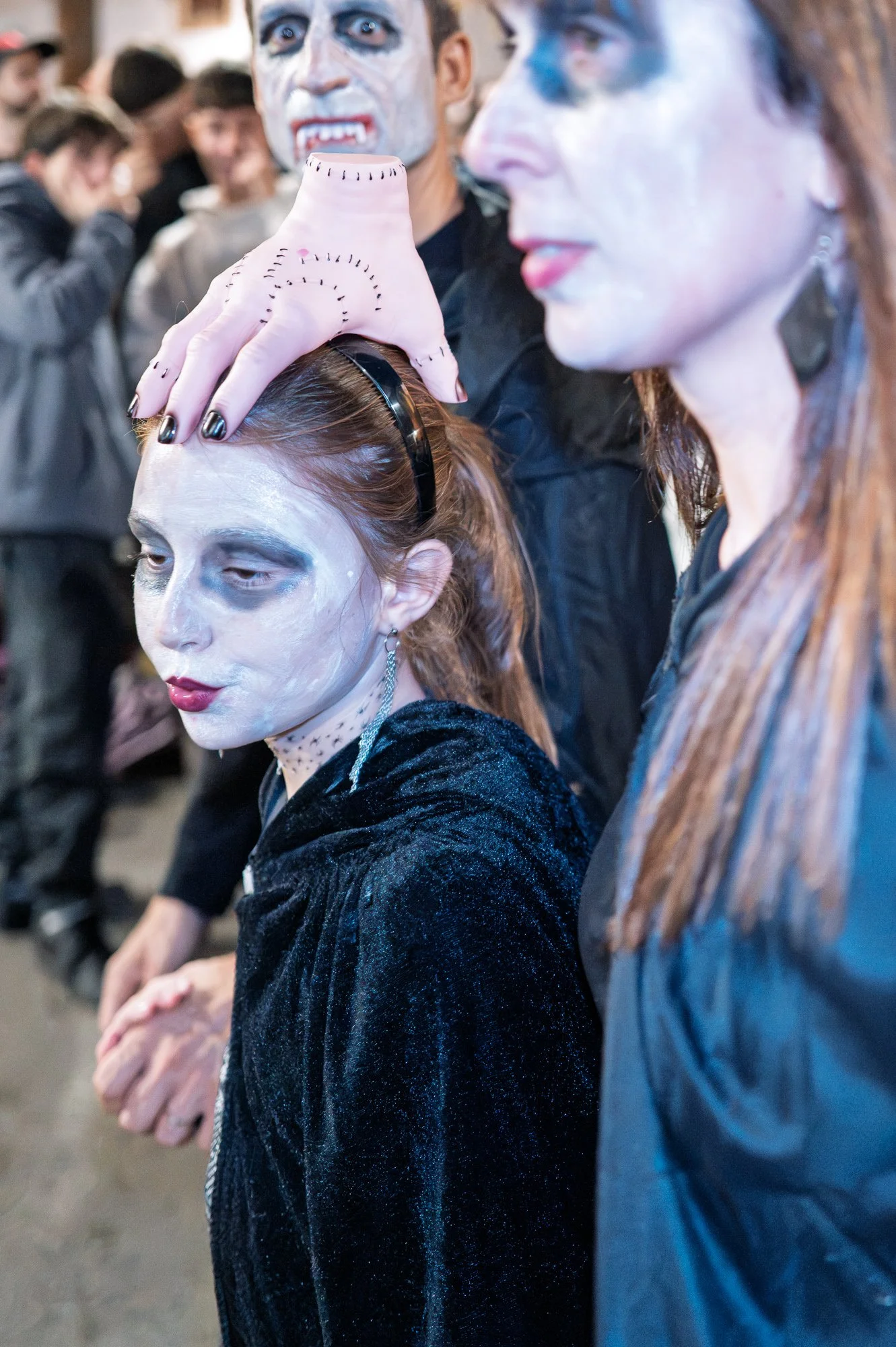
The Only One Not Performing — Leica Q3
Nearby, a woman with a painted gash on her cheek and blood spattered across her glasses held a skull candelabra in one hand and a can of beer in the other, mouth open at something to her left, among horned headdresses, a pink wig and a bridal veil. The candles were electric; the beer was not.
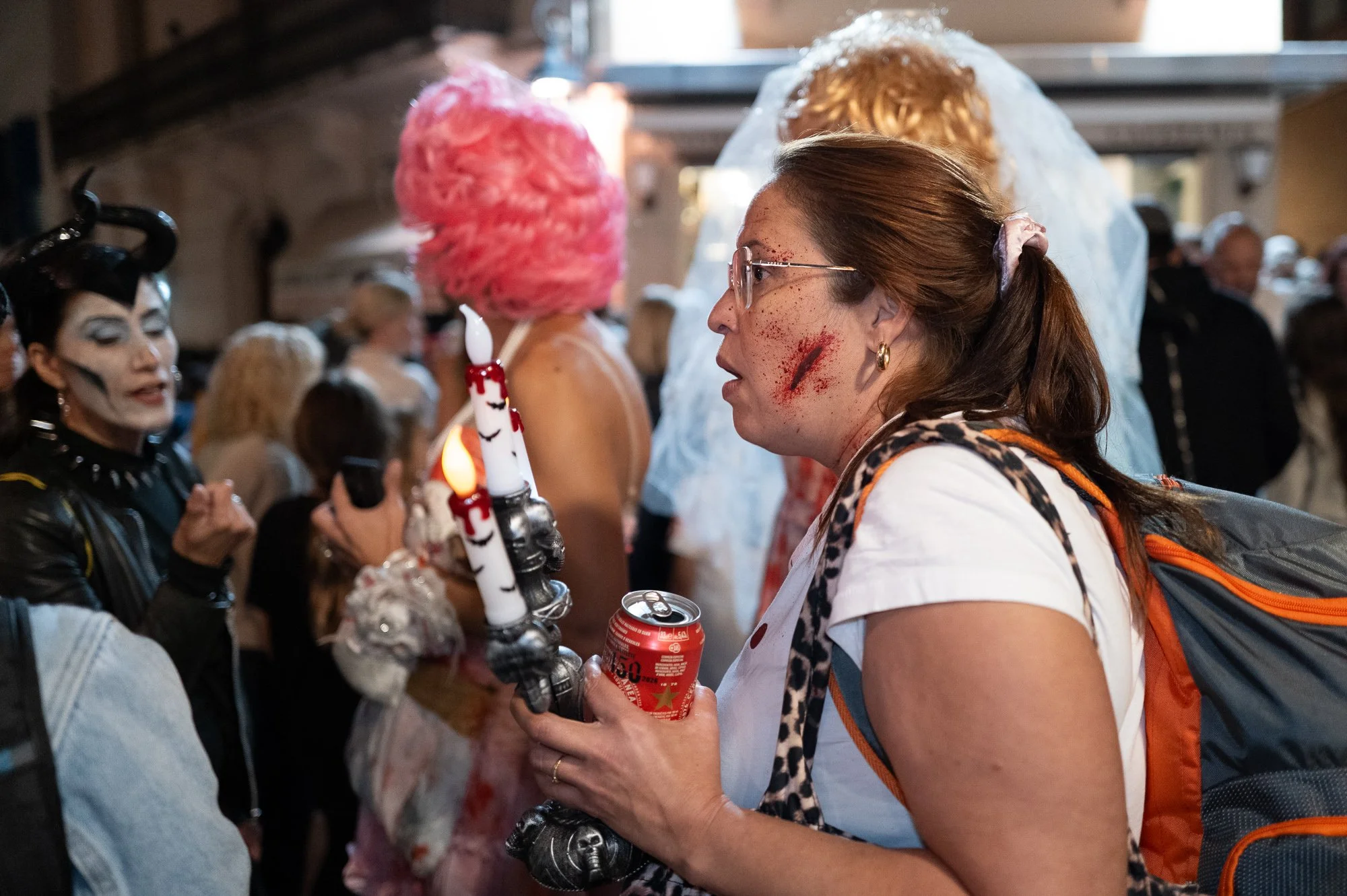
Electric Candles, Real Beer — Leica Q3
Near the end, a woman dressed as Freddy Krueger walked down the middle of the street in a red and green striped jumper and a brown fedora, the bladed glove spread across her face. Behind her the public filled the pavement, and a man in a red T-shirt carried a small child on his shoulders, a red balloon in his hand, the child looking calmly away from the monster. The parade belongs to the zombies, but the town lines up to watch it.
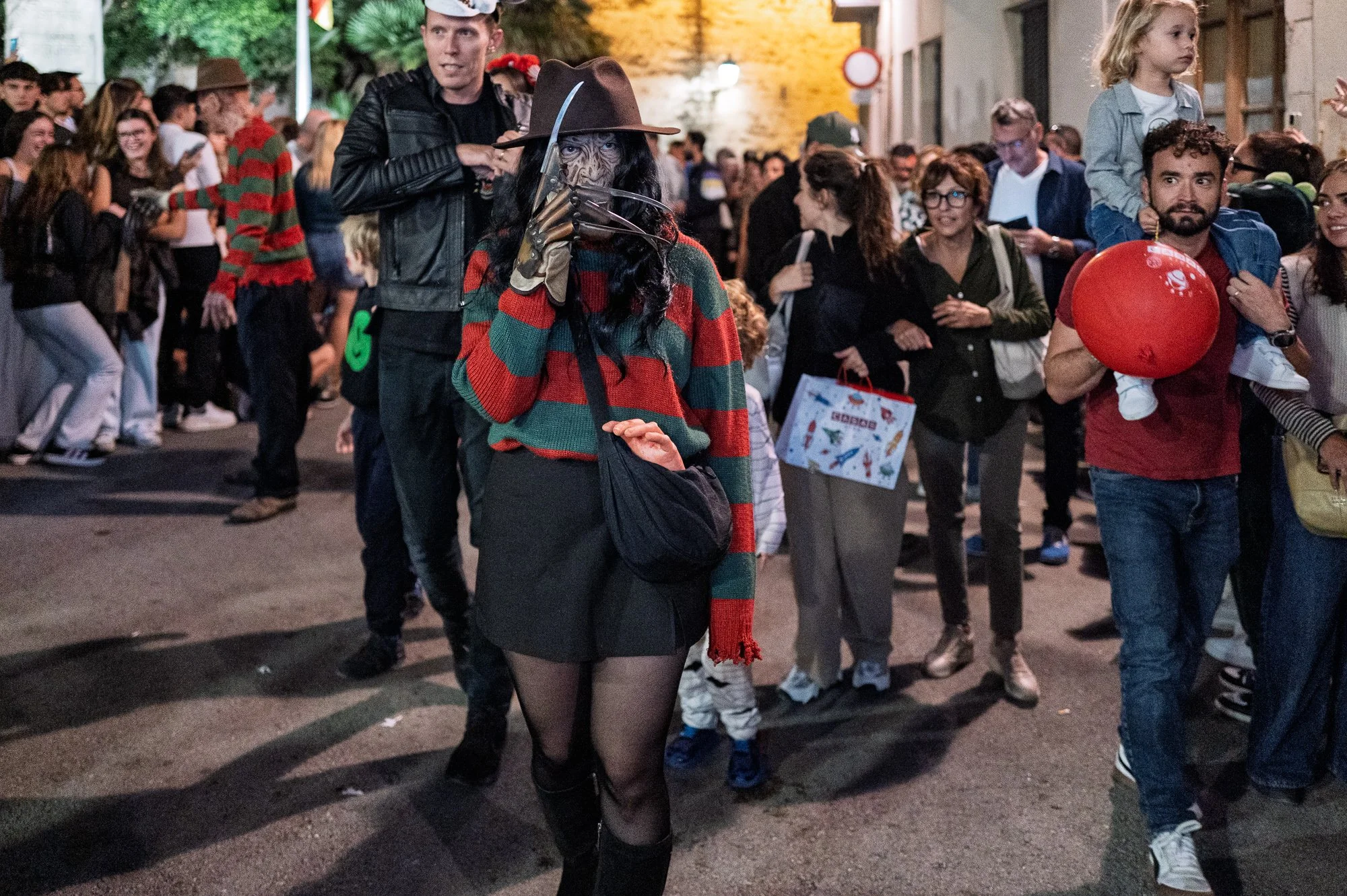
The Town Watches — Leica Q3
Like Prague, where the whole city seemed to behave like a stage, Sitges spends one Saturday a year inside its own film, and cast and audience keep swapping roles until nobody can tell them apart. When the day was over and we headed home, we all knew it had been a great one.
If you go, arrive in the morning, while the costumes are still mixing with an ordinary Saturday, and stay until the last zombie has passed.
Subscribe to the newsletter to receive new walks first, along with a free street photography guide.
Photos: Leica Q3 · 28mm · Sitges, October 2026
See more street photography in the portfolio. Every photograph in this post is also available as a fine art print.
Cosme Lapena is a Barcelona-based street and urban photographer and founder of bCLPhoto.
Exhibited at espai [b] since 2010 · Published in The Eye of Photography and 35mmc. Browse the portfolio or read more on the blog.