Barcelona Street Photography: A Local's Guide to the Best Spots
Barcelona street photography rewards those who walk slowly. I have been photographing this city for twenty-five years, and these are the nine neighborhoods I keep coming back to: my list of the best street photography spots in Barcelona, built from real mornings and evenings with a camera, not from a map.
The Best Street Photography Spots in Barcelona, Neighborhood by Neighborhood
Each of these areas has its own rhythm, its own quality of light, its own reason to bring a camera. Some reward early risers, others come alive after dark, but none of them ever really switches off: at almost any hour there is light worth following and a composition waiting somewhere, and the same corner can give you two different photographs depending on whether you find it in the morning or at night. What follows is less a checklist than a set of walks. Each neighborhood deserves a Saturday morning of its own; two in one morning is about as far as I would stretch it.
Barri Gòtic
The Gothic Quarter is where contrast does the work for you. Narrow medieval streets funnel light into thin, bright corridors between deep shadow, and a single shaft falling across stone can turn an ordinary doorway into a frame worth waiting for. Late morning, when the sun clears the rooftops, is when the alleys around Plaça Sant Felip Neri and Carrer del Bisbe start to earn their reputation. After dark, walk on to Plaça del Rei. The square is lit almost entirely by the palaces that enclose it, warm light on old stone and deep shadow everywhere else, and it is one of the best places in the old city for night photography. On the same square, the Palau del Lloctinent deserves a visit of its own; it is where I made the lantern photograph in Barcelona Street Photography: Glimpses of a City in Full Summer. I have written at length about shooting here in Barcelona Gothic Quarter: Street Photography in the Old City, including specific corners worth returning to more than once.
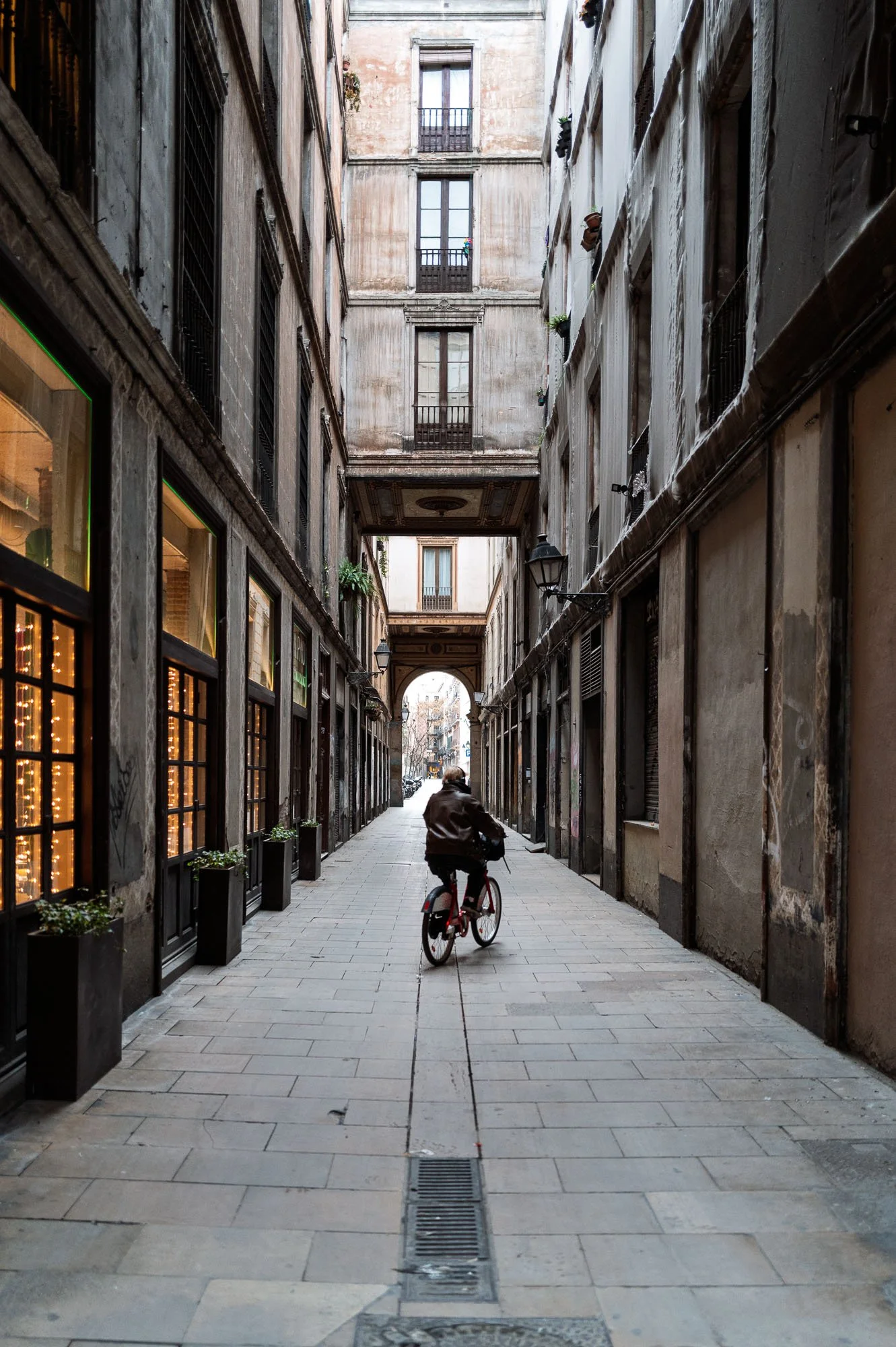
Barri Gòtic — Leica Q3
El Born
El Born trades the Gòtic's tight drama for something calmer. I love wandering the narrow streets that run off Passeig del Born, and I have made photographs in every one of them. Any frame taken here is street photography in the plainest sense, people, doorways, daily life, but the setting is unlike anything you would find in the centre of most cities. Walking down Carrer de Montcada, between its medieval palaces, is as close as Barcelona gets to stepping back into the Middle Ages. The light is more even than in the Gòtic, which makes El Born a good place to work on composition rather than chase contrast. I have photographed its terraces and workshops in El Born: Terraces, Artisans and Street Art.
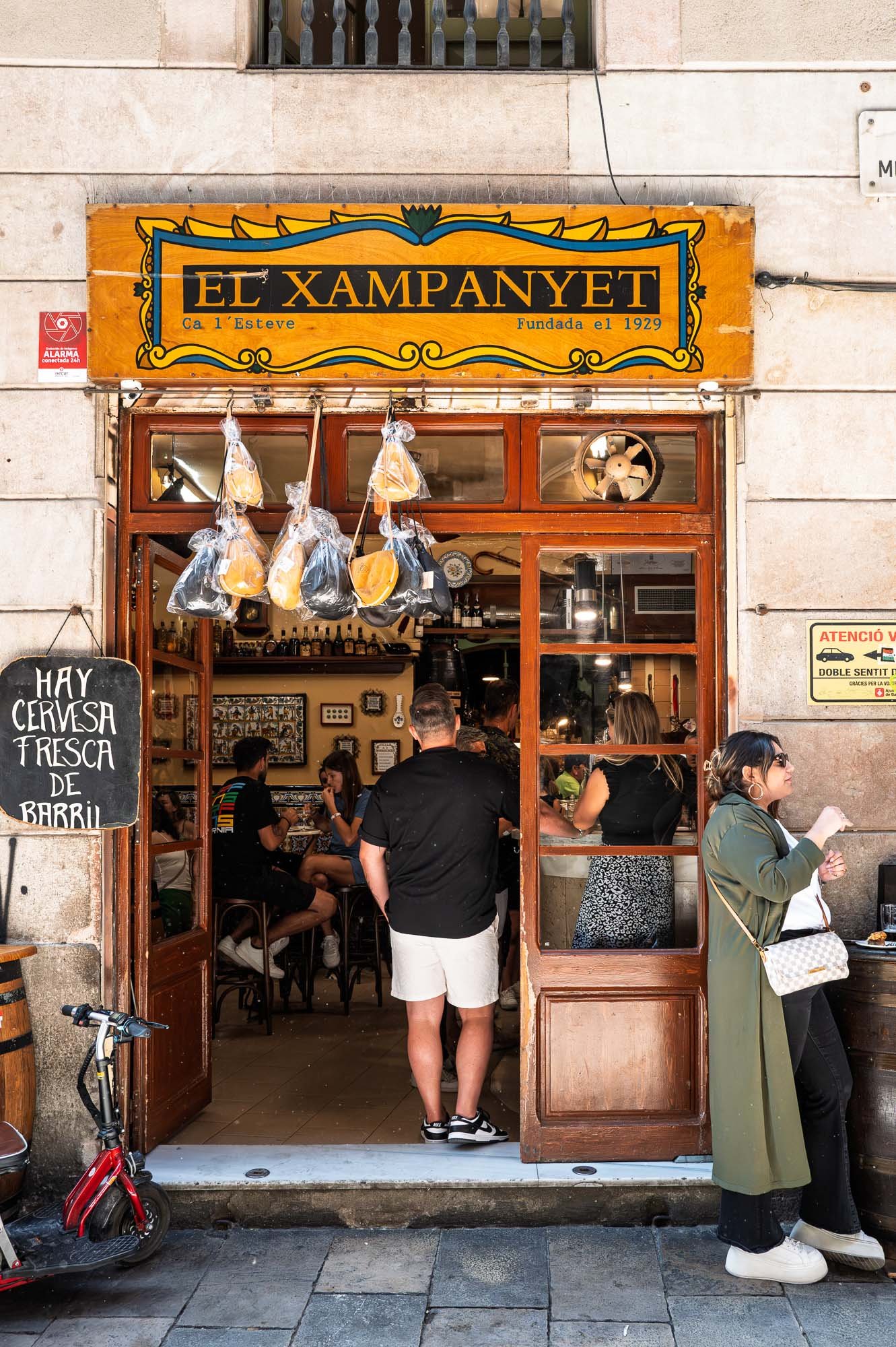
El Xampanyet, Carrer de Montcada — Leica Q3
Barceloneta
Barceloneta was once the city's fishing quarter, and its tight grid of streets still shows it: laundry lines, peeling shutters, neighbors sitting outside their doors. Walk through it and you will always end up on the seafront promenade and the beach; you can't get lost. It is one of the liveliest places in Barcelona and one of the most photographable, at any hour of the day, and the friction between the neighborhood's own life and the crowds a few streets away is exactly what makes it worth the walk.
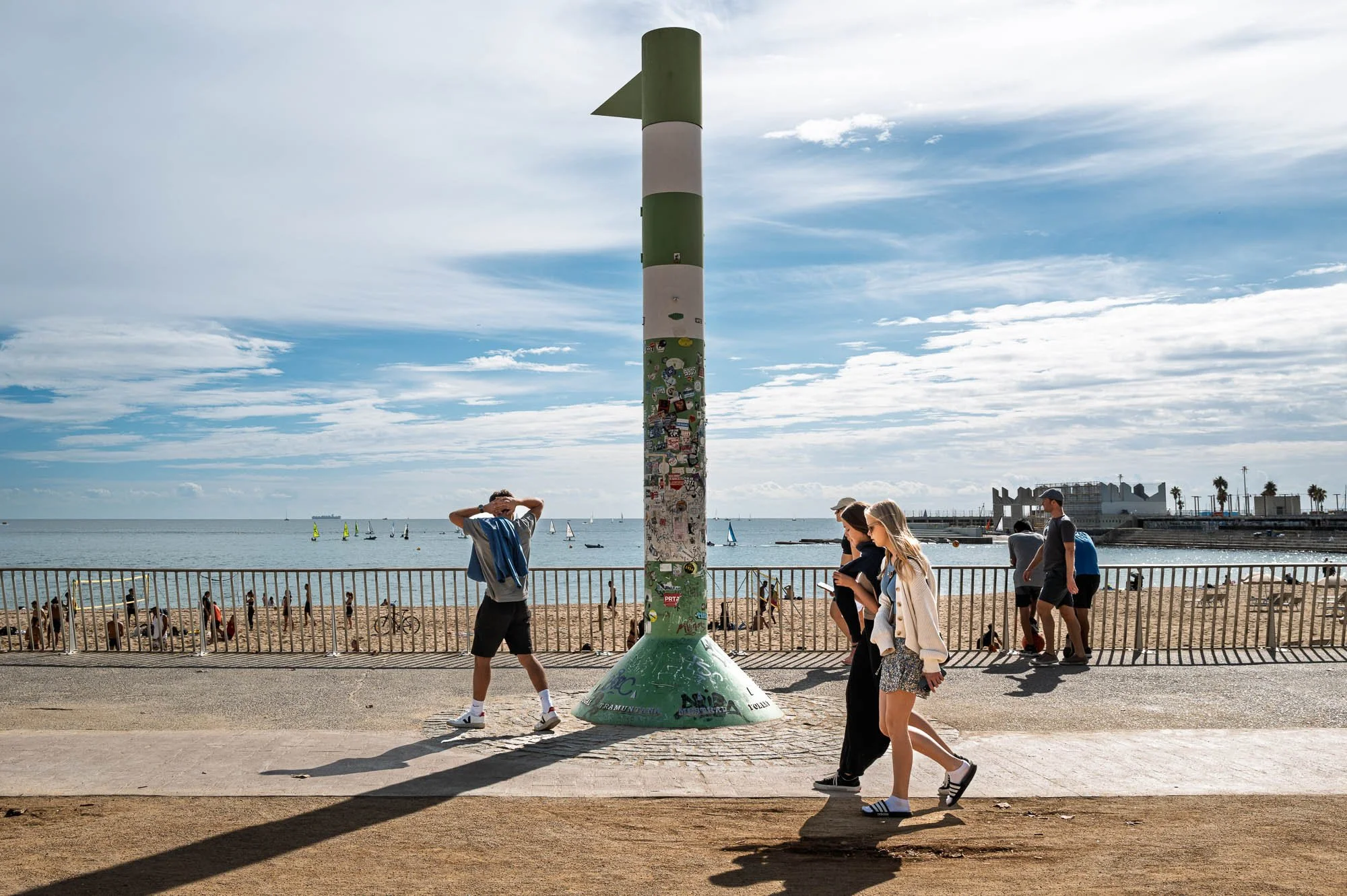
Barceloneta seafront — Leica Q3
Gràcia
Gràcia is where Barcelona photographs like a village instead of a city. Plaça del Sol and Plaça de la Vila de Gràcia fill with locals rather than visitors, and Carrer Verdi's balconies and hanging plants give it a domestic, unhurried feel that's hard to find closer to the center. Evenings are best here, when neighbors spill out of bars onto the square and the light goes soft and low. If you can, come in mid-August for the Festa Major de Gràcia. The neighbors spend months preparing the decorations, and each street is dressed overhead around a different theme. The decorated streets make wonderful photographs; just expect to share them with a lot of people. I often go the day before it opens, when the neighbors are still at work in the street, and I like going back the day after it closes.
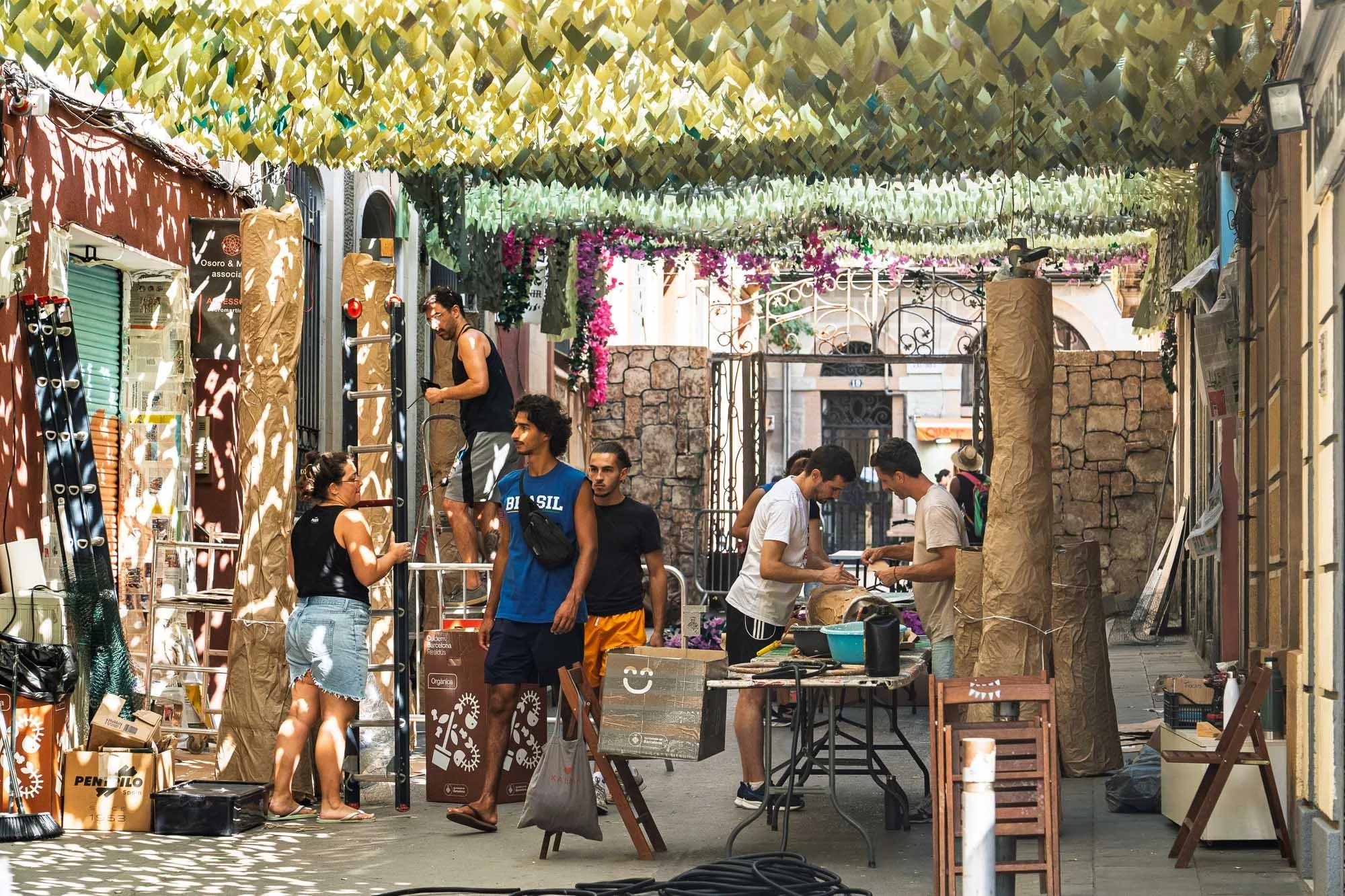
Gràcia, the day before the Festa Major — Sony a7R IV
Raval
Raval is Barcelona's most contradictory neighborhood, and contradiction is good material. Within a few blocks you'll find contemporary art crowds outside MACBA, working immigrant communities, and some of the city's oldest bars, often on the same street. It's grittier and less polished than the other neighborhoods on this list, and that's the point: Raval doesn't perform for the camera, which is exactly why it photographs well. It is also where you are most likely to meet the most photogenic characters in the city.
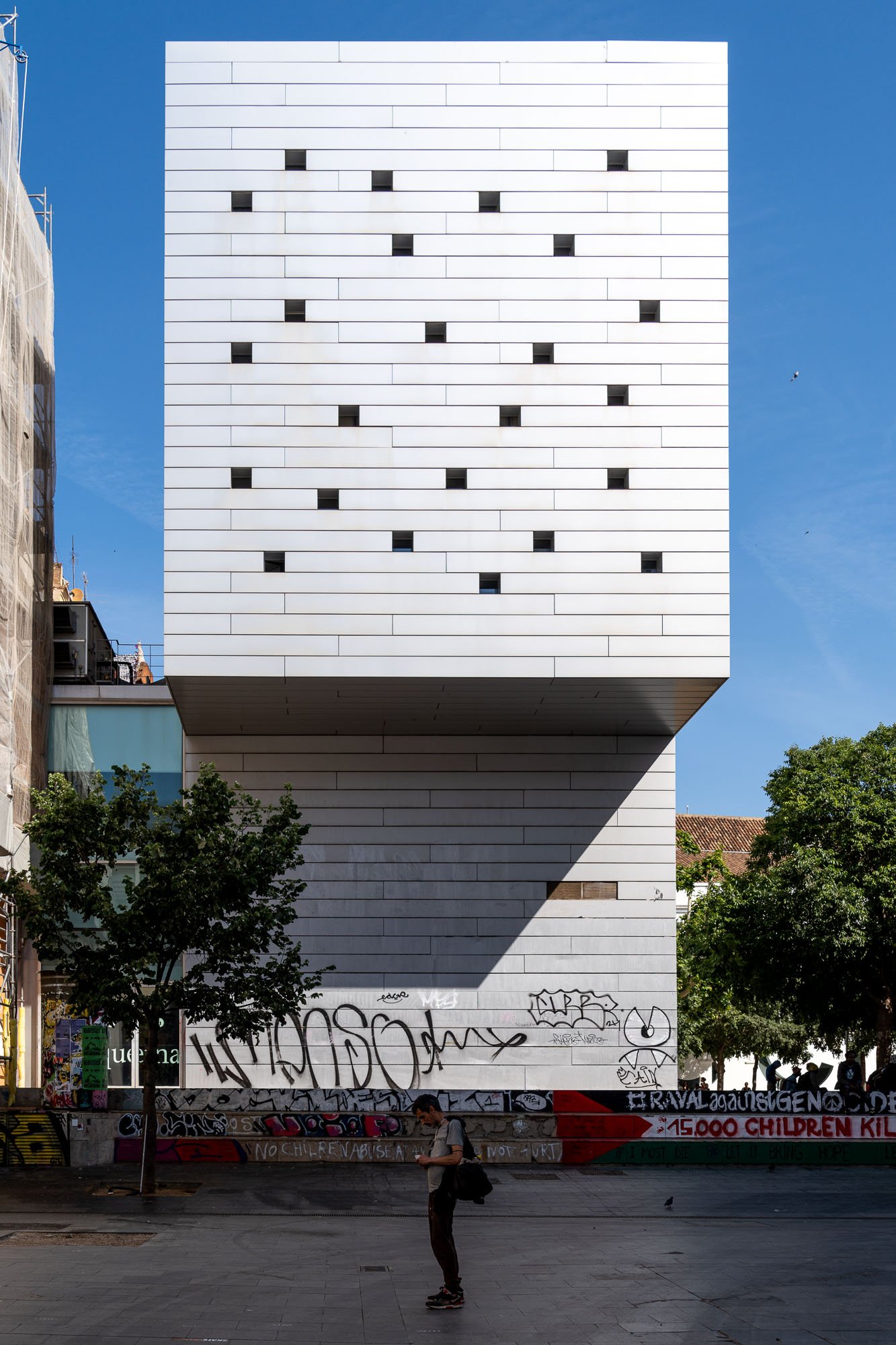
El Raval — Sony a7R IV
Poble Sec and Avinguda del Paral·lel
I'll be honest: Poble Sec is probably one of the less interesting neighborhoods on this list to photograph, but there is always a picture waiting for you somewhere. The neighborhood climbs from Avinguda del Paral·lel toward Montjuïc, with old theatre facades along the avenue and quiet residential streets just behind. Early evening is the strongest window, when the sun drops behind Montjuïc and rakes light sideways down Carrer de Blai. At its lower edge, the Parc de les Tres Xemeneies keeps the three brick chimneys of an old power station, and the long graffiti walls beneath them are where skaters gather in the late afternoon.
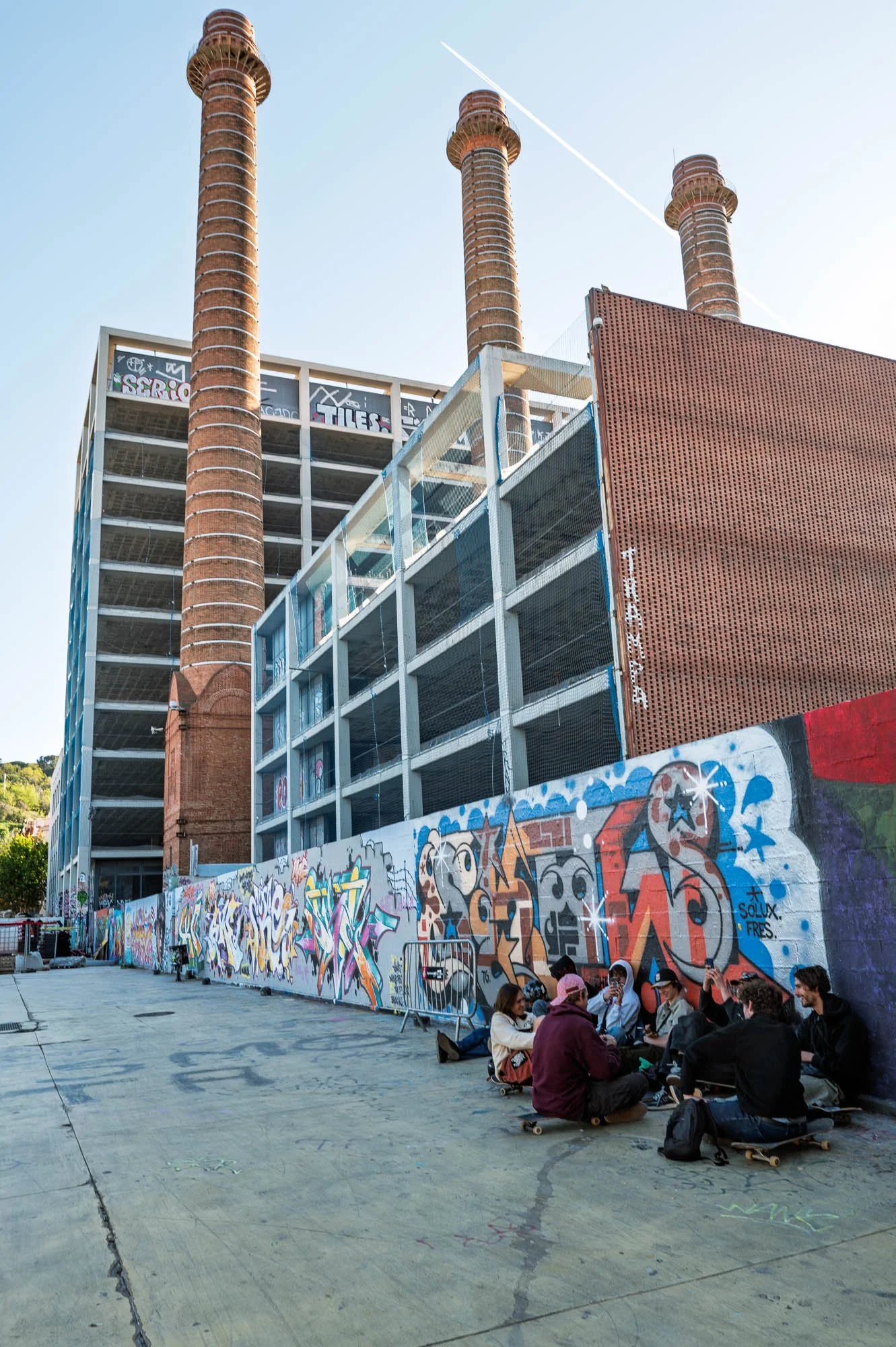
Tres Xemeneies, Poble Sec — Leica Q3
Eixample and Catalan Modernism
The Eixample is a different kind of street photography altogether: architecture as the subject rather than the backdrop. Casa Batlló and Casa Milà along Passeig de Gràcia reward looking up as much as looking ahead, and the wrought iron, curved stone, and stained glass of Catalan Modernism give even a simple street corner real visual weight. The buildings are not the only subject. Streams of Gaudí fans shuttle between La Pedrera and Casa Batlló, taking hundreds of photographs as they go, and they are every bit as photographable as the façades. The luxury shops along Passeig de Gràcia add something else: huge windows that are an endless source of reflections, shifting from one side of the street to the other as the light moves through the day. I covered the architecture in more depth in Barcelona Modern Architecture: A Street Photography Series, including how to frame the buildings without a wide-angle lens.
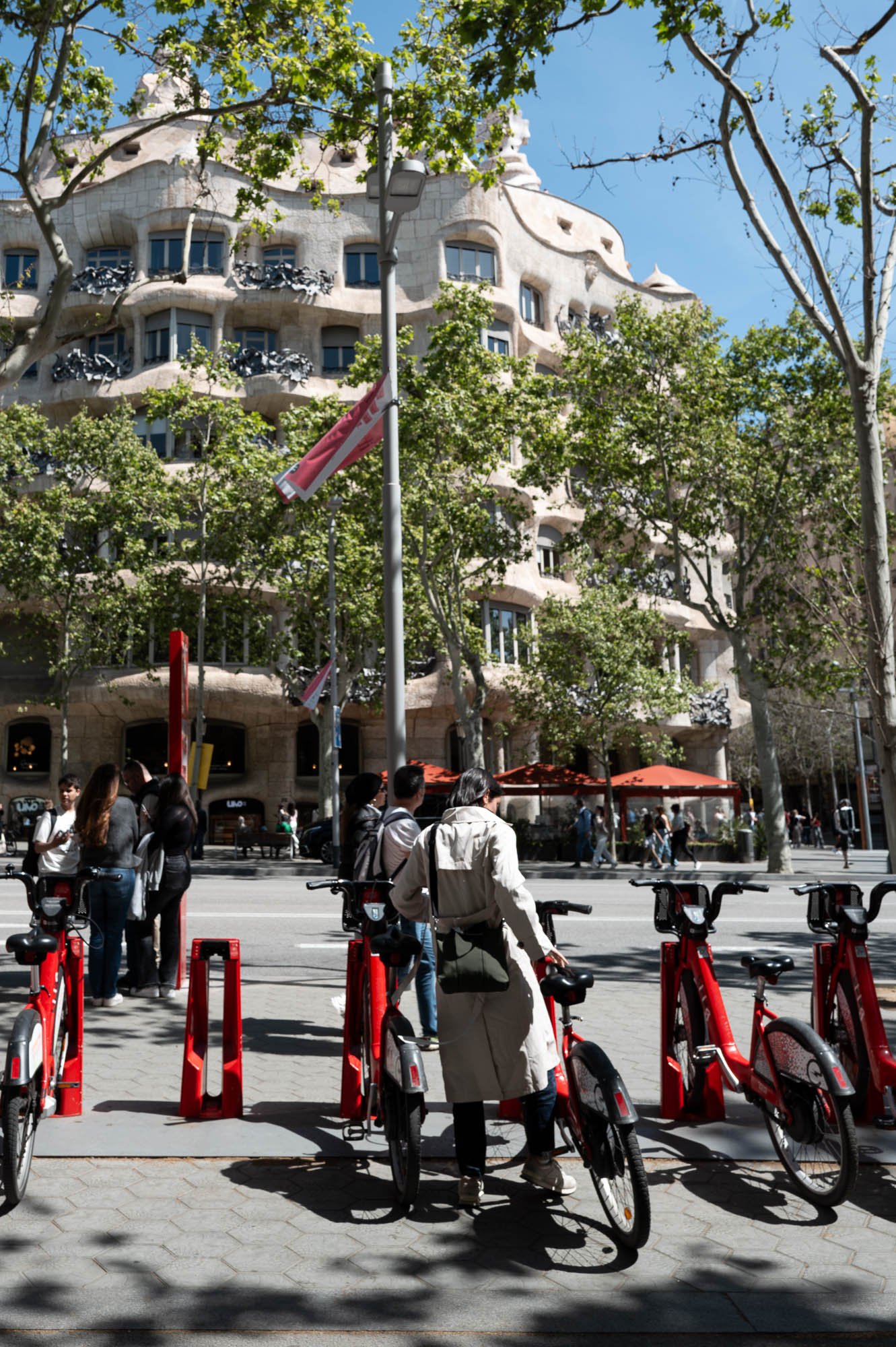
Passeig de Gràcia — Leica Q3
Poblenou and Glòries
Poblenou is where Barcelona is changing fastest, and the change itself is the subject. The textile mills and warehouses that once earned it the name of the Catalan Manchester are giving way to glass offices, design studios and new apartment blocks, often with a single brick chimney left standing between them. The neighborhood has filled with expats and new arrivals, and the meeting of old Poblenou and new shows up on almost every corner. At its edge, the renovated Plaça de les Glòries has traded its traffic flyover for open parkland, overlooked by the Torre Glòries, the former Torre Agbar, and by the Disseny Hub building that everyone in Barcelona calls la grapadora, the stapler. Next door, the Encants market trades under a huge mirrored canopy that turns the stalls and the crowds below into a ceiling of reflections.
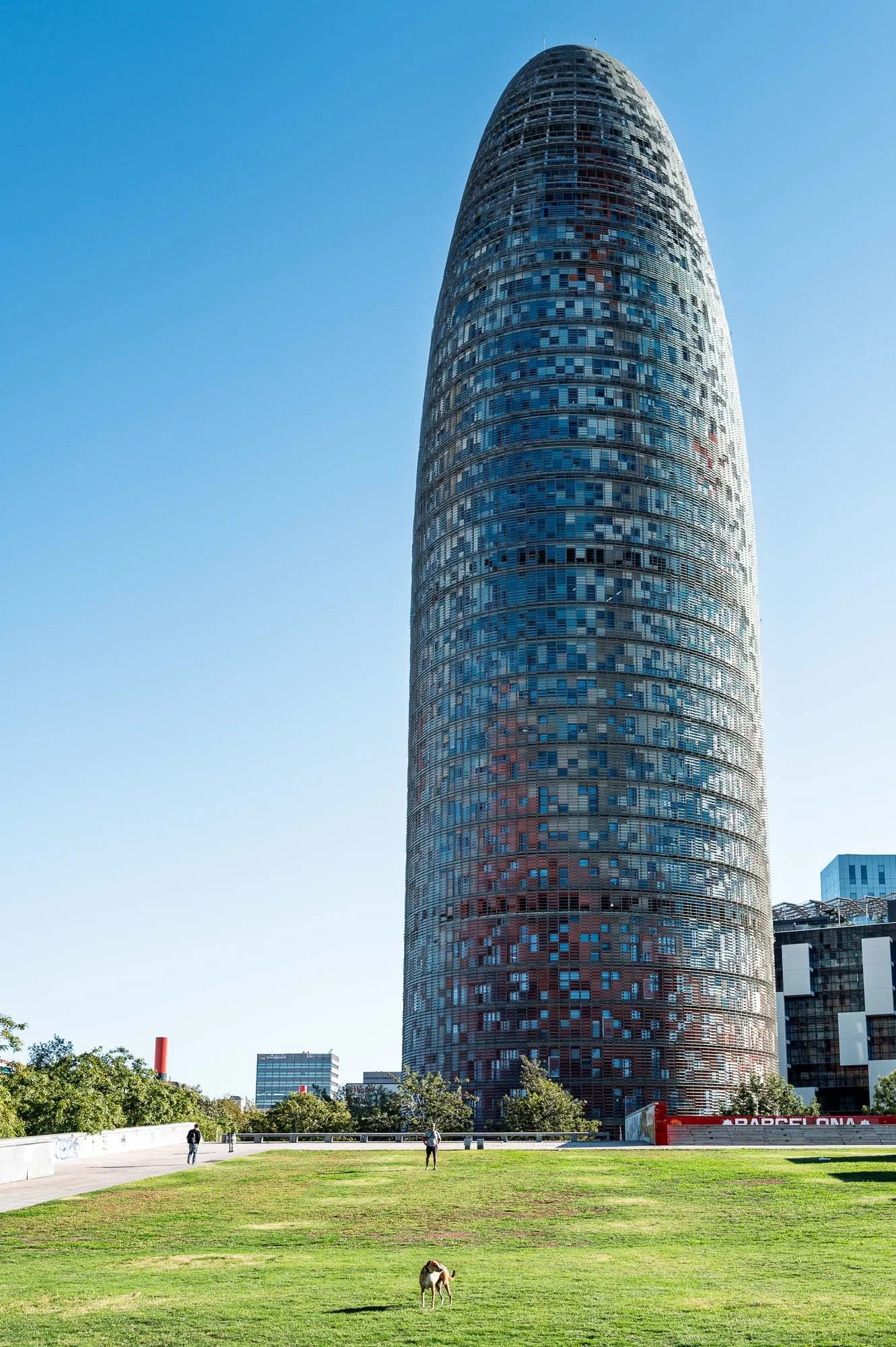
Torre Glòries, Poblenou — Leica Q3
Graffiti and Street Art
Barcelona's graffiti scene is its own kind of street photography, less about people and more about color and typography breaking up the grid of the city. Poblenou, pockets of the Raval and the walls of the Tres Xemeneies carry some of the strongest work, and it changes fast enough that a spot worth shooting this month might be painted over by the next. I keep an updated selection in the Graffiti & Street Art gallery.
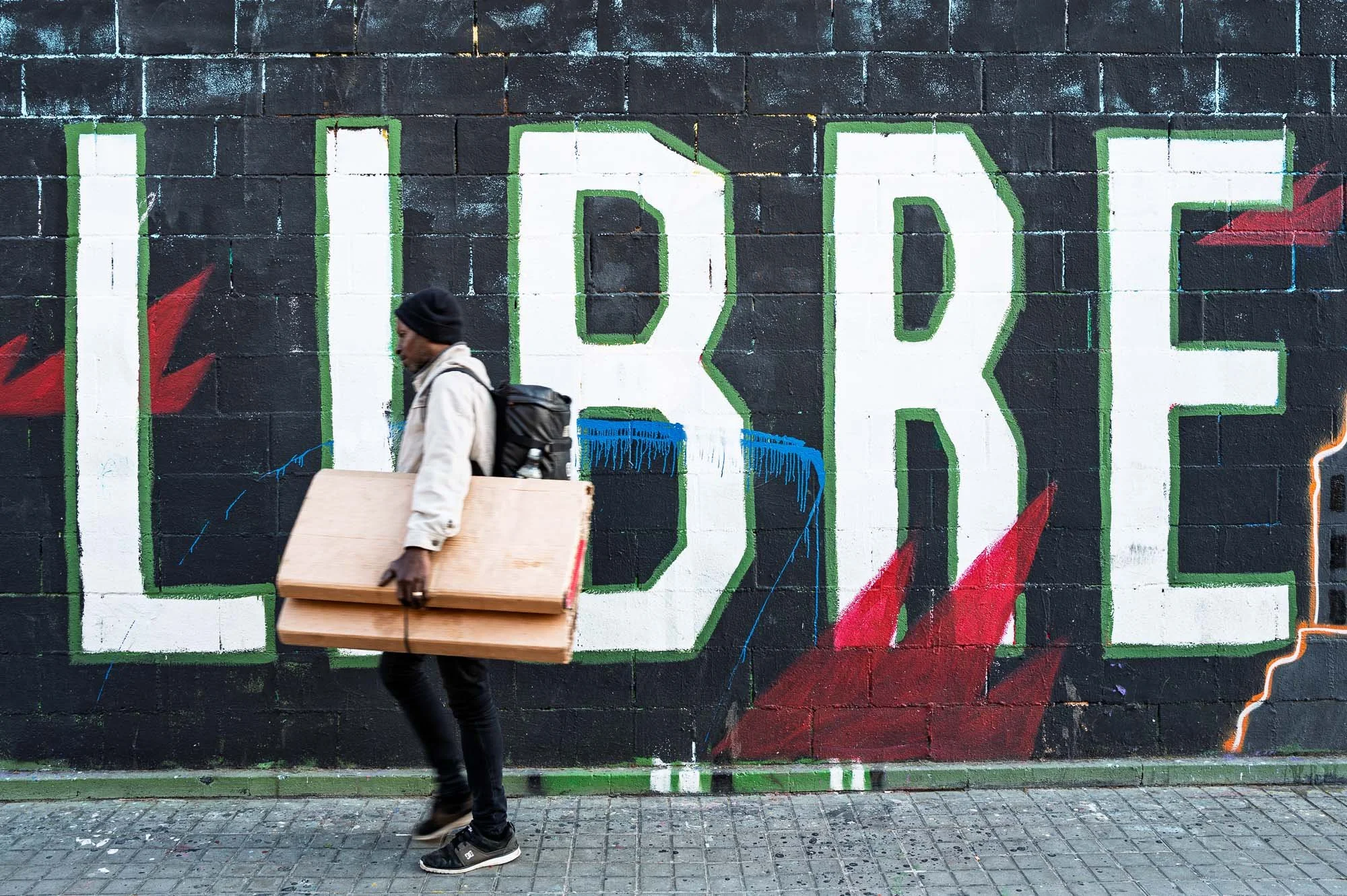
Street art, Tres Xemeneies — Leica Q3
What ties these nine neighborhoods together isn't geography: it's that each one gives light and shadow something to do. Street photography in Barcelona is rarely about waiting for a decisive moment in the classic sense; it's about knowing which wall, which hour, and which angle will make the ordinary look considered. Most of these spots work just as well in monochrome, as in Barcelona Street Photography in Black and White.
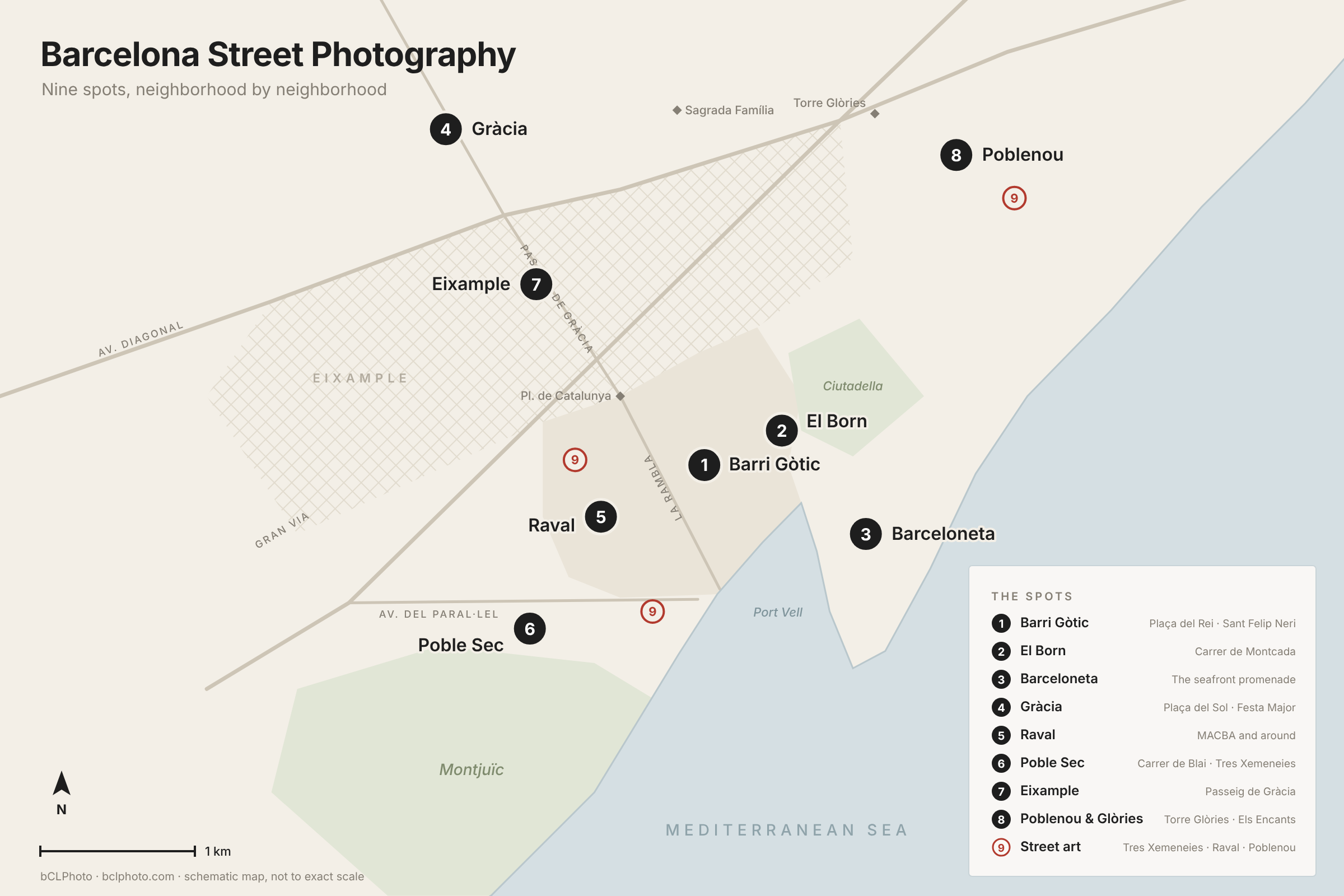
The nine spots, neighborhood by neighborhood
If you're planning your own walk through these neighborhoods, give each one a morning, carry one lens, and let the route change with the light rather than the map.
Subscribe to the newsletter to get new walks first, along with a free street photography guide.
Photos: Leica Q3 · Sony a7R IV · Barcelona
See more street photography in the portfolio. Every photograph in this guide is also available as a fine art print.
Cosme Lapena is a Barcelona-based street and urban photographer and founder of bCLPhoto. Exhibited at espai [b] since 2010 · Contributor at 35mmc. Browse the portfolio or read more on the blog.