Sultanahmet Mosques: Istanbul's Sacred Skyline
Sixteen years ago, before a fixed 28mm frame and decades of instinct had settled into my street photography, I spent a week walking the Sultanahmet mosques of Istanbul — the Blue Mosque, Hagia Sophia, Süleymaniye — trying to understand a skyline stacked from six centuries of competing faiths and empires.
The Blue Mosque and Its Six Minarets
The Sultan Ahmed Mosque — everyone calls it the Blue Mosque, for the İznik tiles inside — dominates the old city with six minarets, a number that reportedly caused controversy in 1616 because it matched the mosque in Mecca. From the garden path, palm fronds cut into the frame against all that grey stone; from the courtyard, the ablution fountain sits low and octagonal beneath a canopy of domes, and a woman in a pale hijab crosses the marble at just the right distance to give the architecture scale. One minaret, photographed straight up against a single passing cloud, is the kind of shot street photographers keep coming back to mosques for — pure geometry, no people, just the tension between stone and sky.
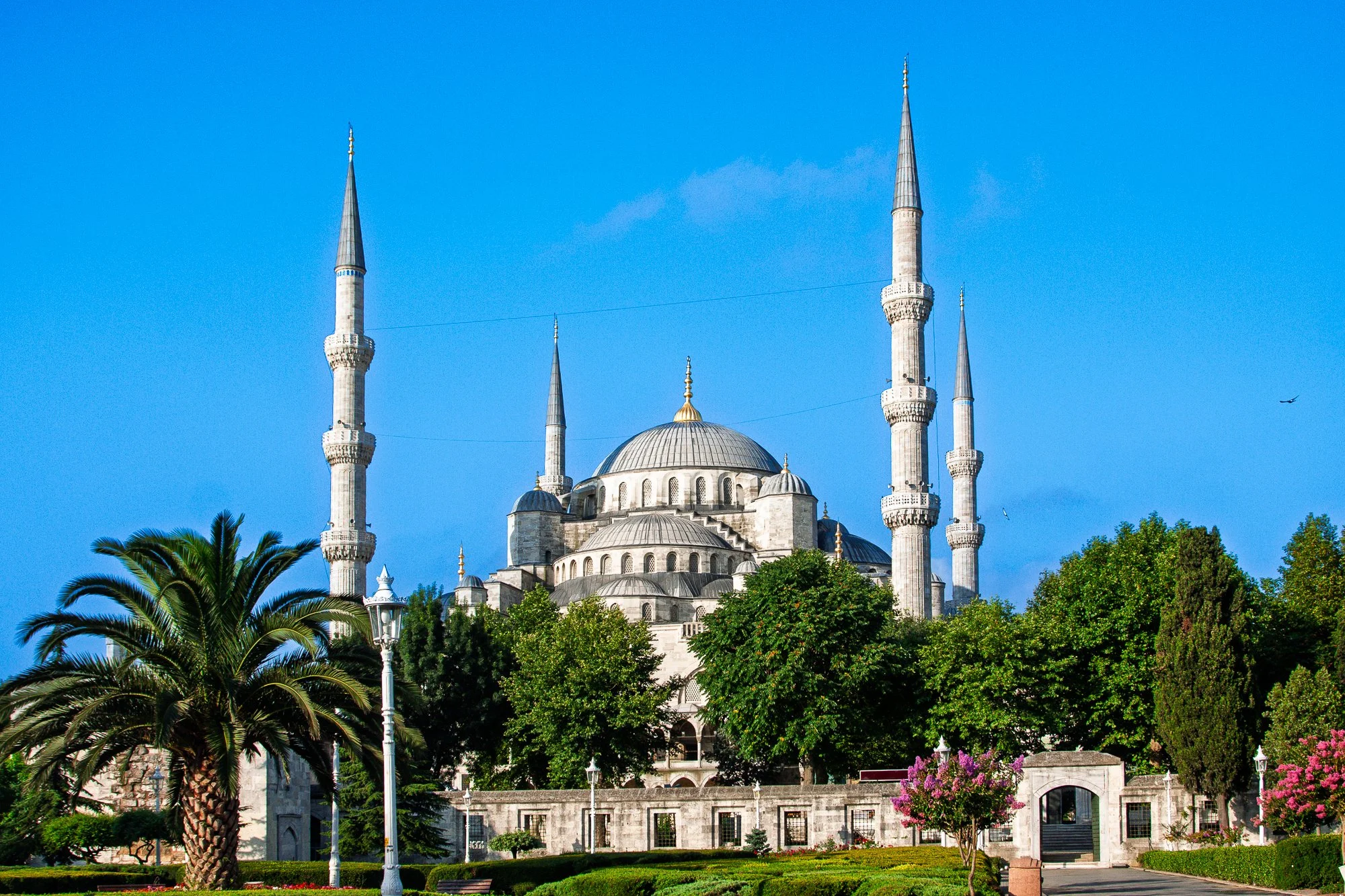
The Blue Mosque, seen from the garden path. — bCLPhoto
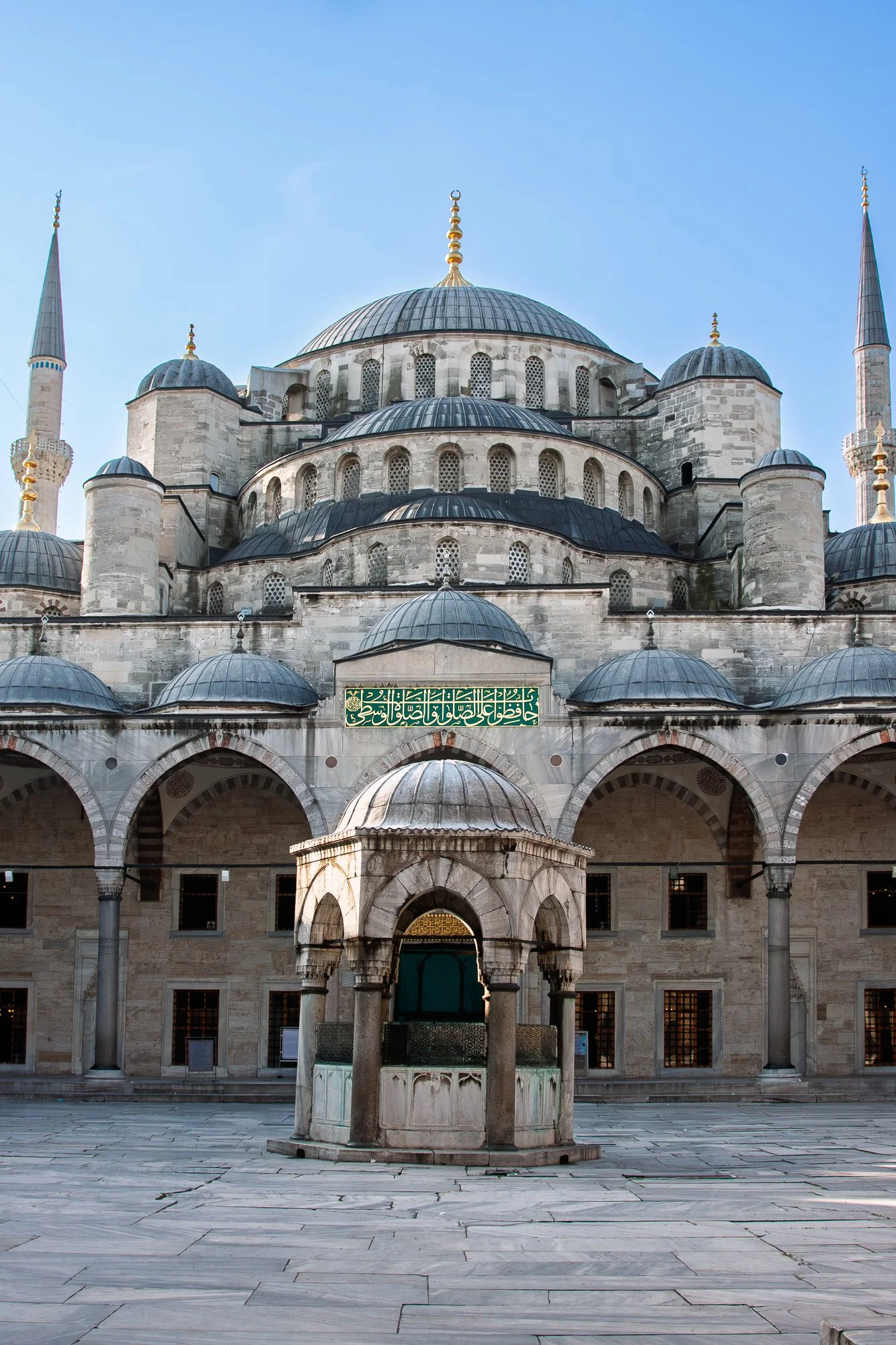
The courtyard fountain, minarets behind it — bCLPhoto
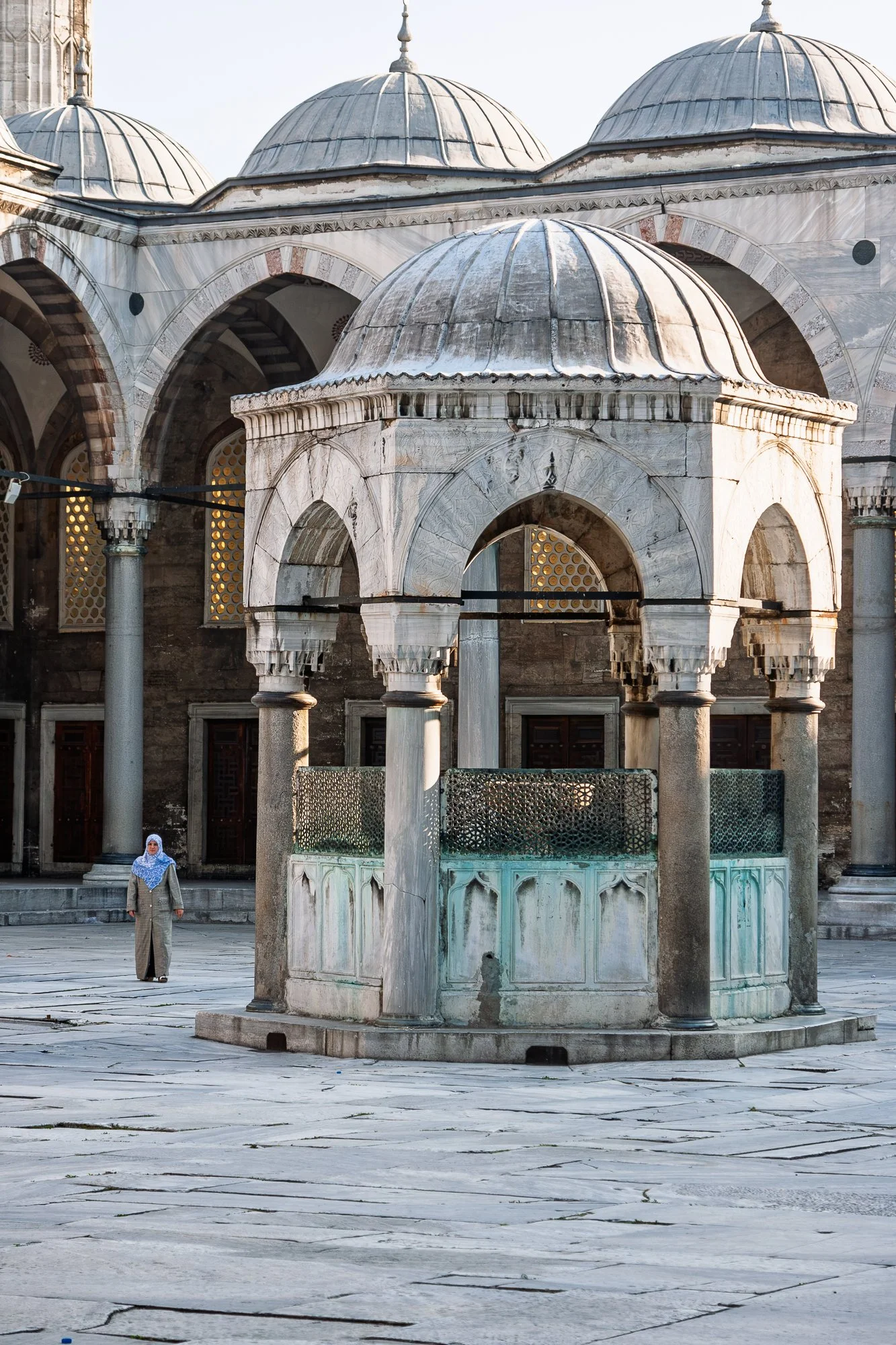
A moment of scale in the courtyard — bCLPhoto
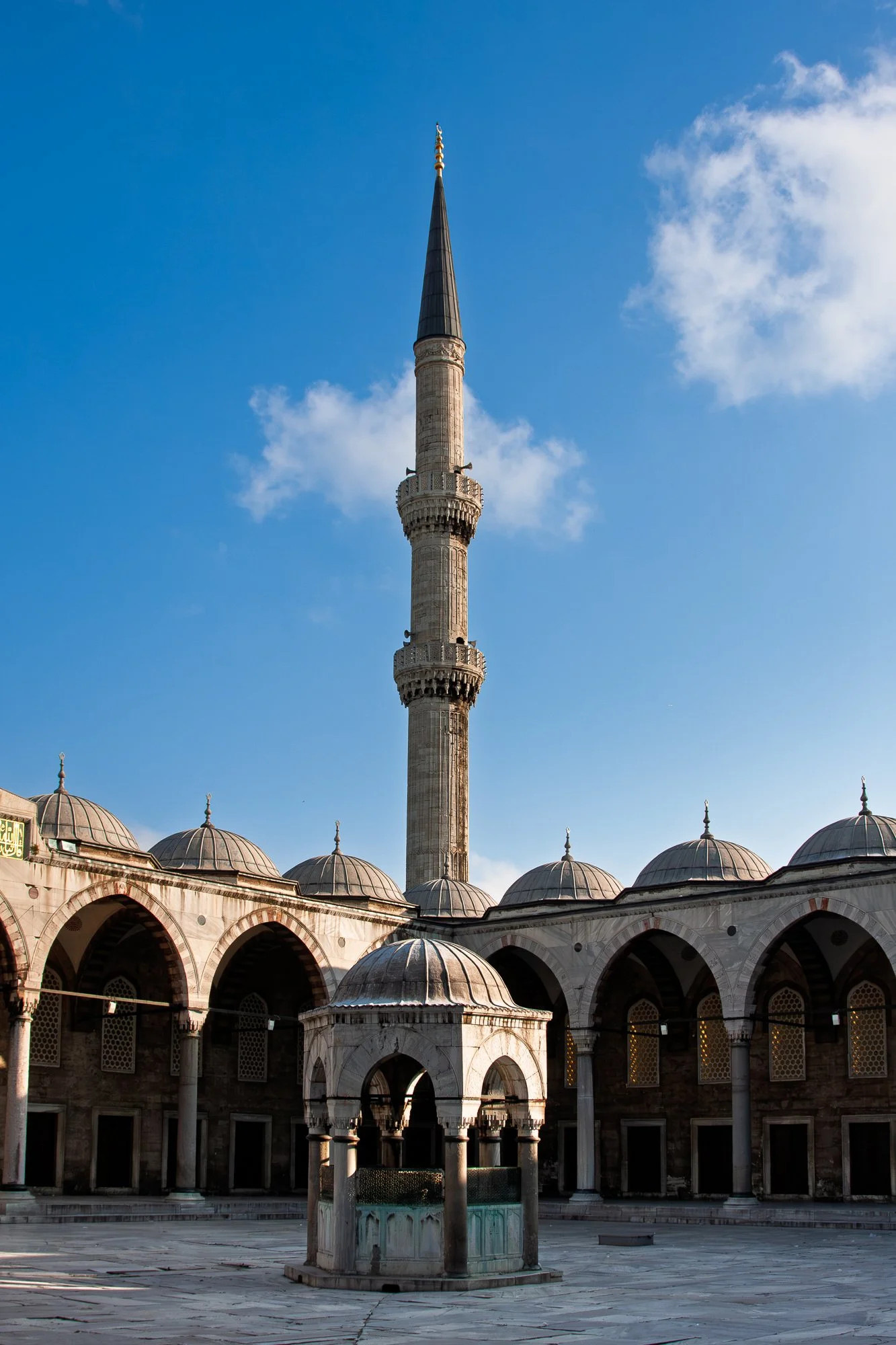
One minaret, one cloud — bCLPhoto
Inside, the dome opens into a wheel of calligraphy and floral tilework, chandeliers hung so low on their chains that visitors instinctively duck, even though there's clearance to spare. The famous blue tiles are harder to isolate in a single frame than photographs suggest — from the floor, the eye reads red carpet and gold light before it reads blue at all.
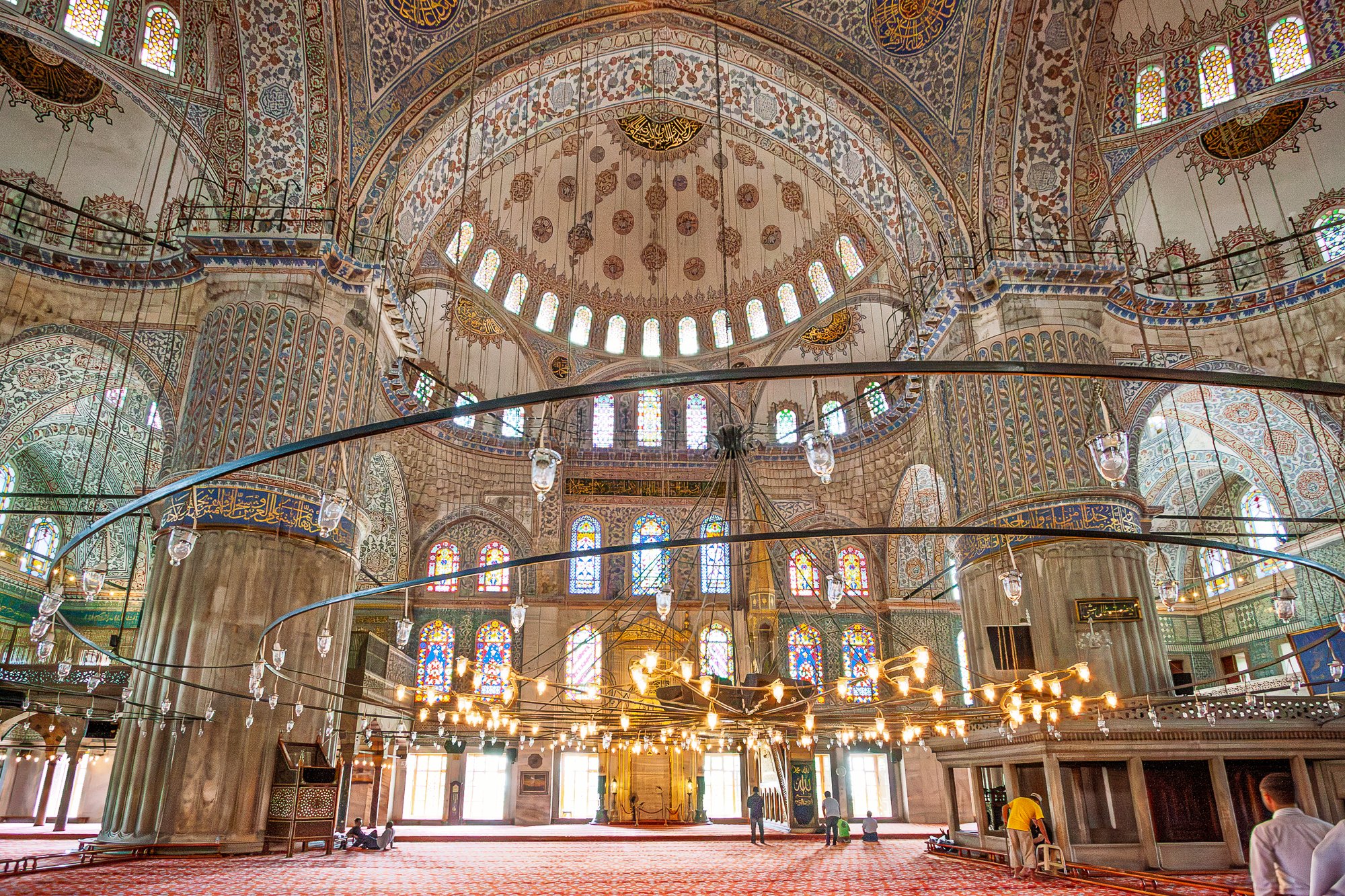
Chandeliers hung low beneath the dome — bCLPhoto
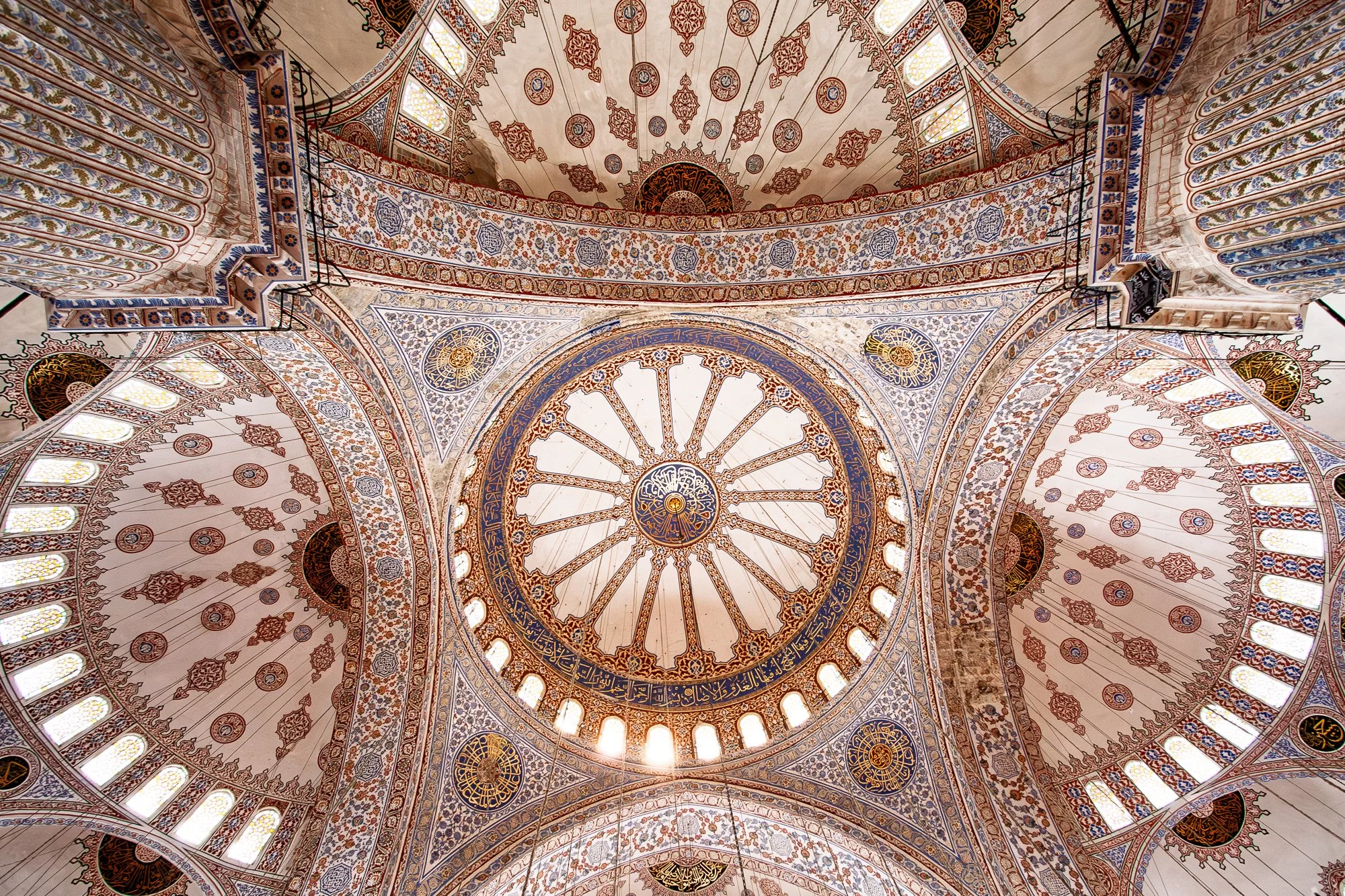
Two faiths under one dome — bCLPhoto
Hagia Sophia: A Building That Refuses to Choose
A ten-minute walk away, Hagia Sophia does something the Blue Mosque doesn't even attempt: it argues with itself. Walk in from the park — past oleander in full pink bloom, past a bookseller's kiosk and the ordinary summer crowd — and the dome still carries both Christian mosaic and Islamic calligraphy at once, medallions bearing the names of Allah and Muhammad hung directly beneath a ceiling that once depicted saints. It reads less like a single building than an argument still in progress, six centuries after the Ottomans converted it and decades after it stopped being either a mosque or a church in any simple sense.
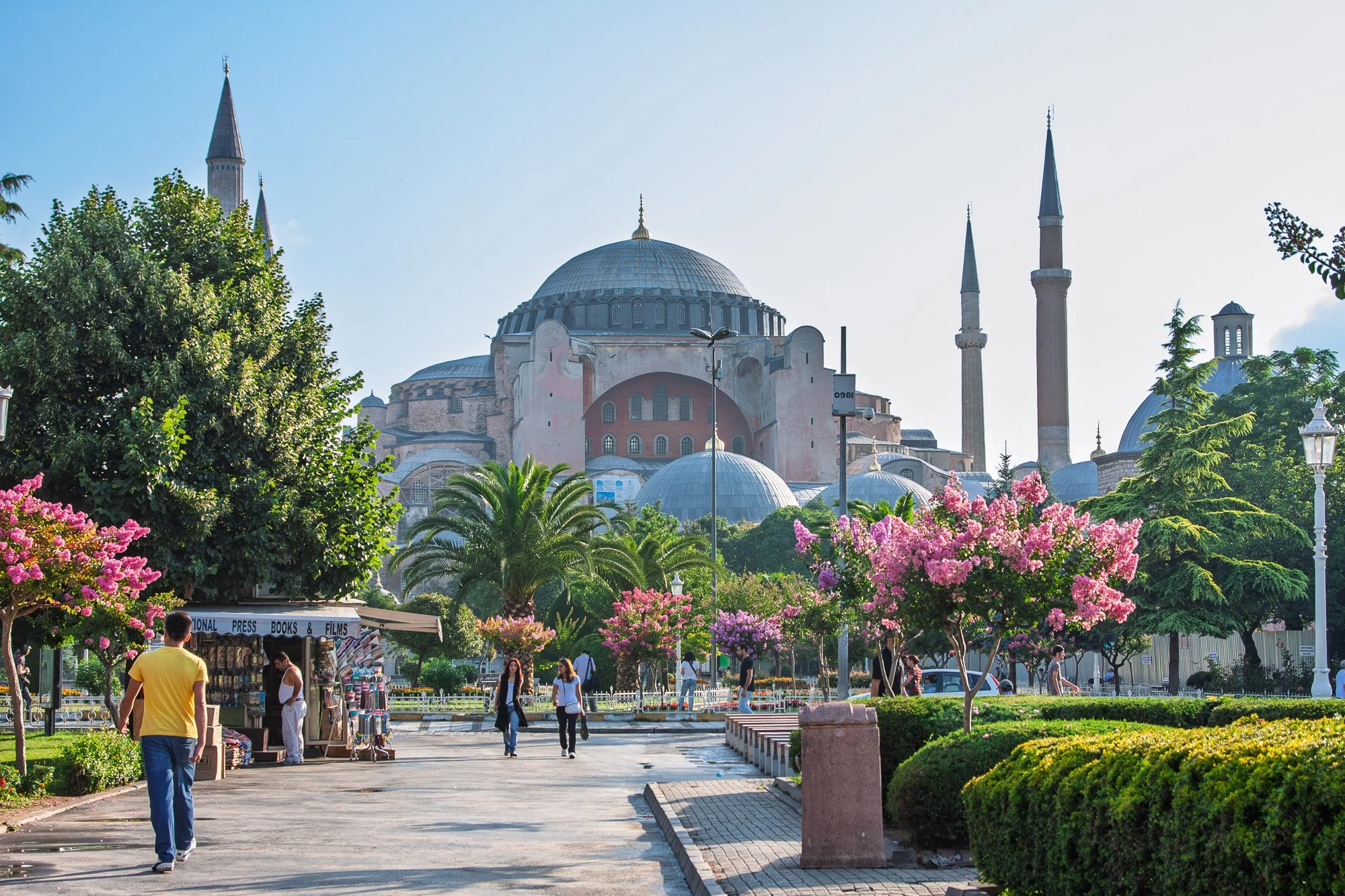
Hagia Sophia above the oleander — bCLPhoto
Süleymaniye, the Fountains, and the Rhythm of the Old City
Süleymaniye Mosque sits on its own hill above the Golden Horn, less visited than the Blue Mosque but arguably the finer building — the work of Mimar Sinan, the Ottoman Empire's greatest architect, near the height of his powers. From street level, its dome and six minarets read as one continuous silhouette against the traffic signs and rooftops of modern Istanbul, which is exactly the contrast worth photographing: a sixteenth-century mosque doing nothing to accommodate the "Sirkeci — Sultanahmet" road sign planted in front of it. Closer to the water, Yeni Camii — the so-called New Mosque, itself over three centuries old — closes the view from the Golden Horn, its bulk answering Süleymaniye's from below.
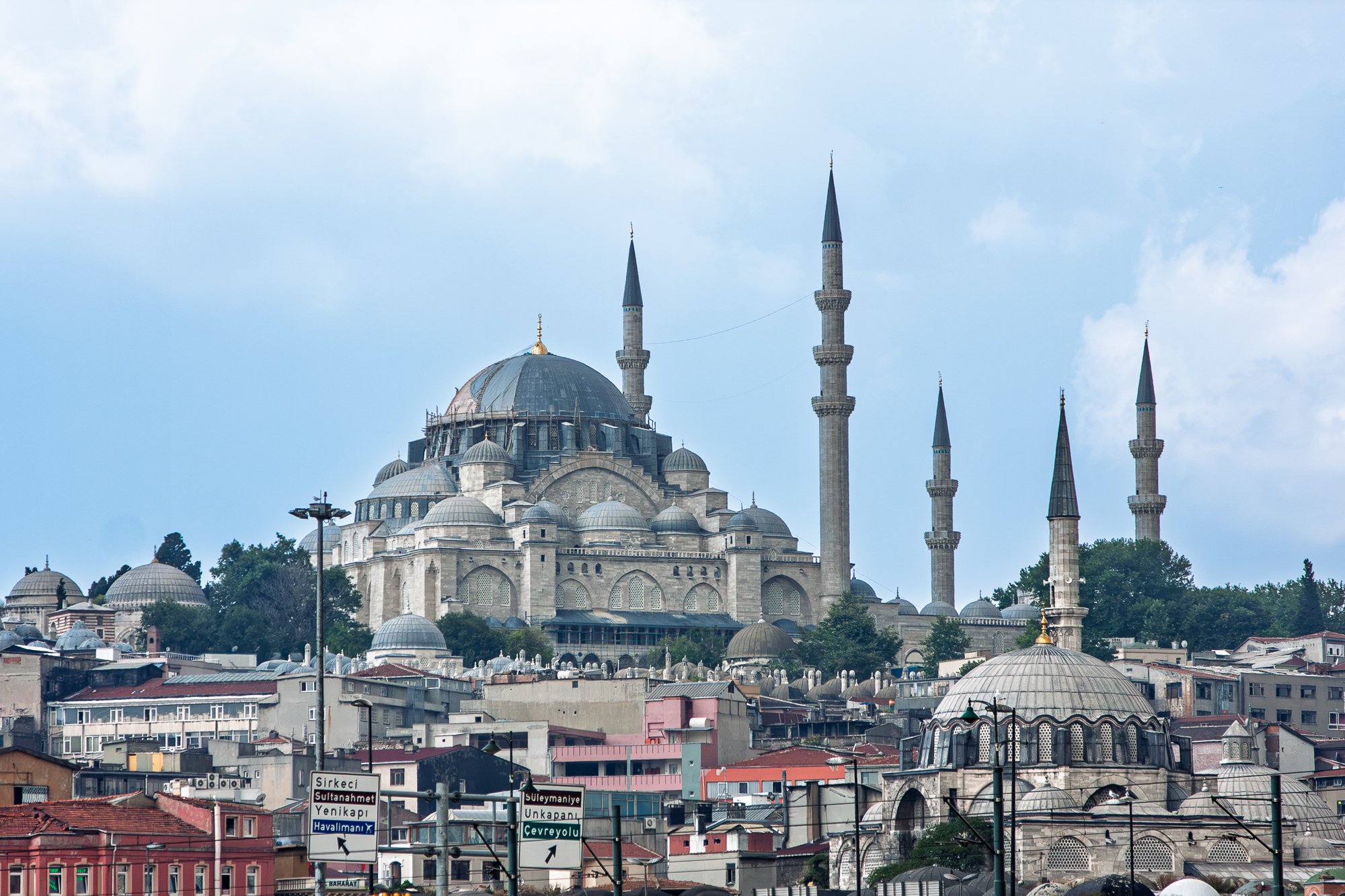
Süleymaniye, indifferent to the road signs — bCLPhoto
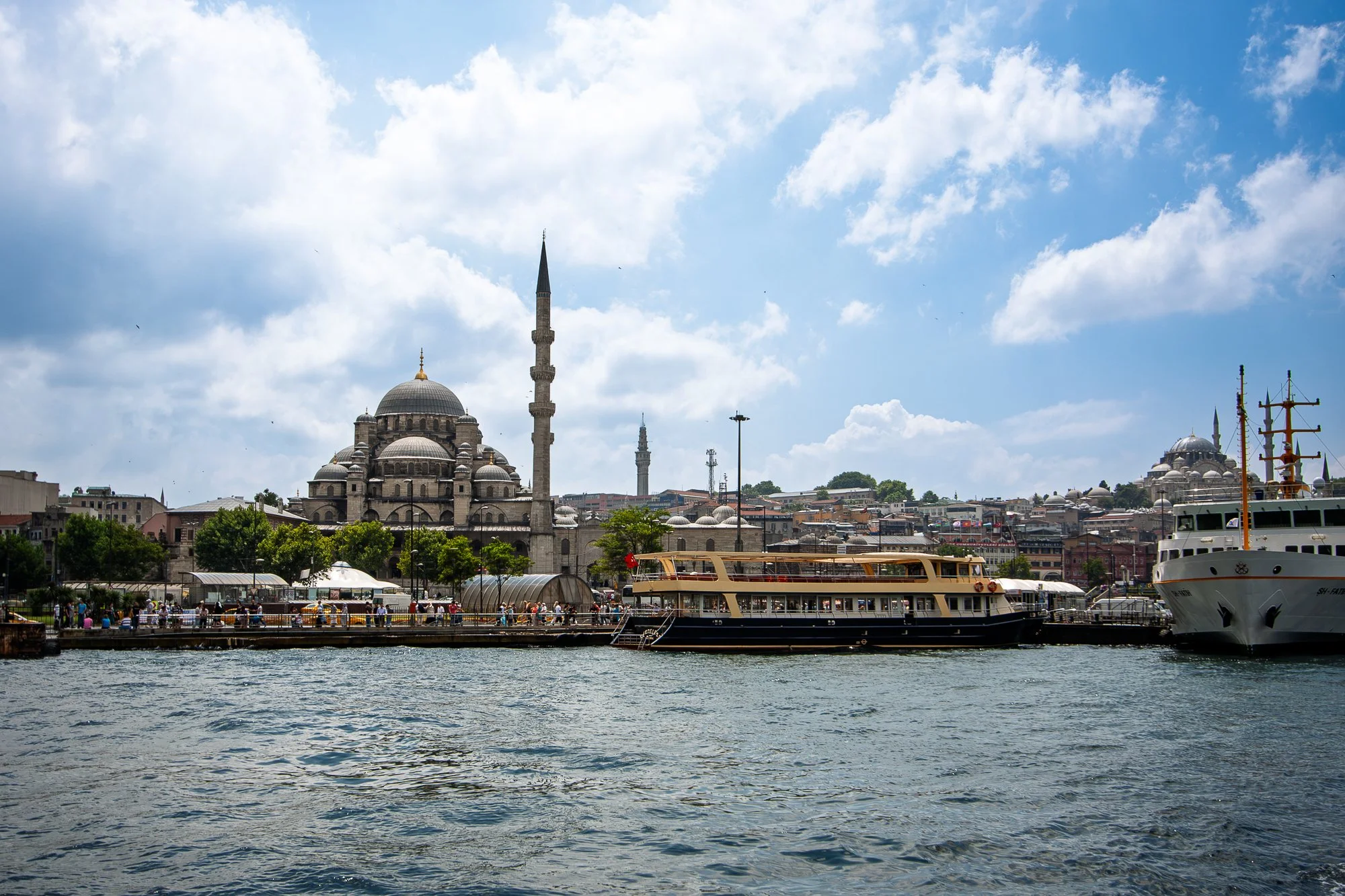
The New Mosque, centuries old — bCLPhoto
Between the monuments, the smaller architecture does the real storytelling. The Fountain of Ahmed III, gilded and canopied, works as much as a shaded meeting point for tired tourists as it does a historic monument. And the ablution fountains along the mosque courtyards — rows of taps at knee height, men sitting to wash their feet before prayer — are where I found the moments that actually explain the place: ritual folded into an ordinary Tuesday morning, one man glancing at the camera mid-wash with more curiosity than annoyance.
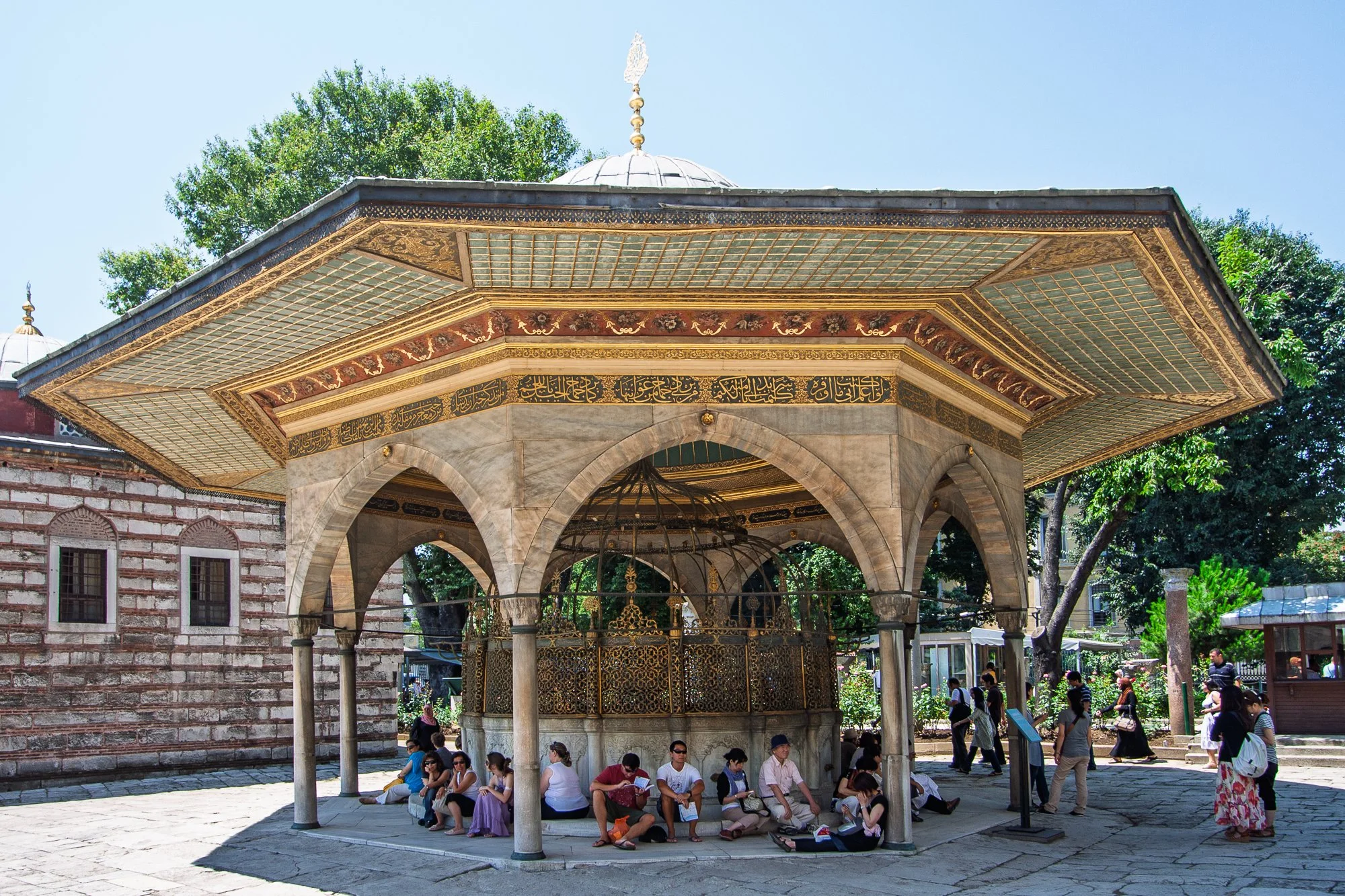
Shade and gold leaf — bCLPhoto
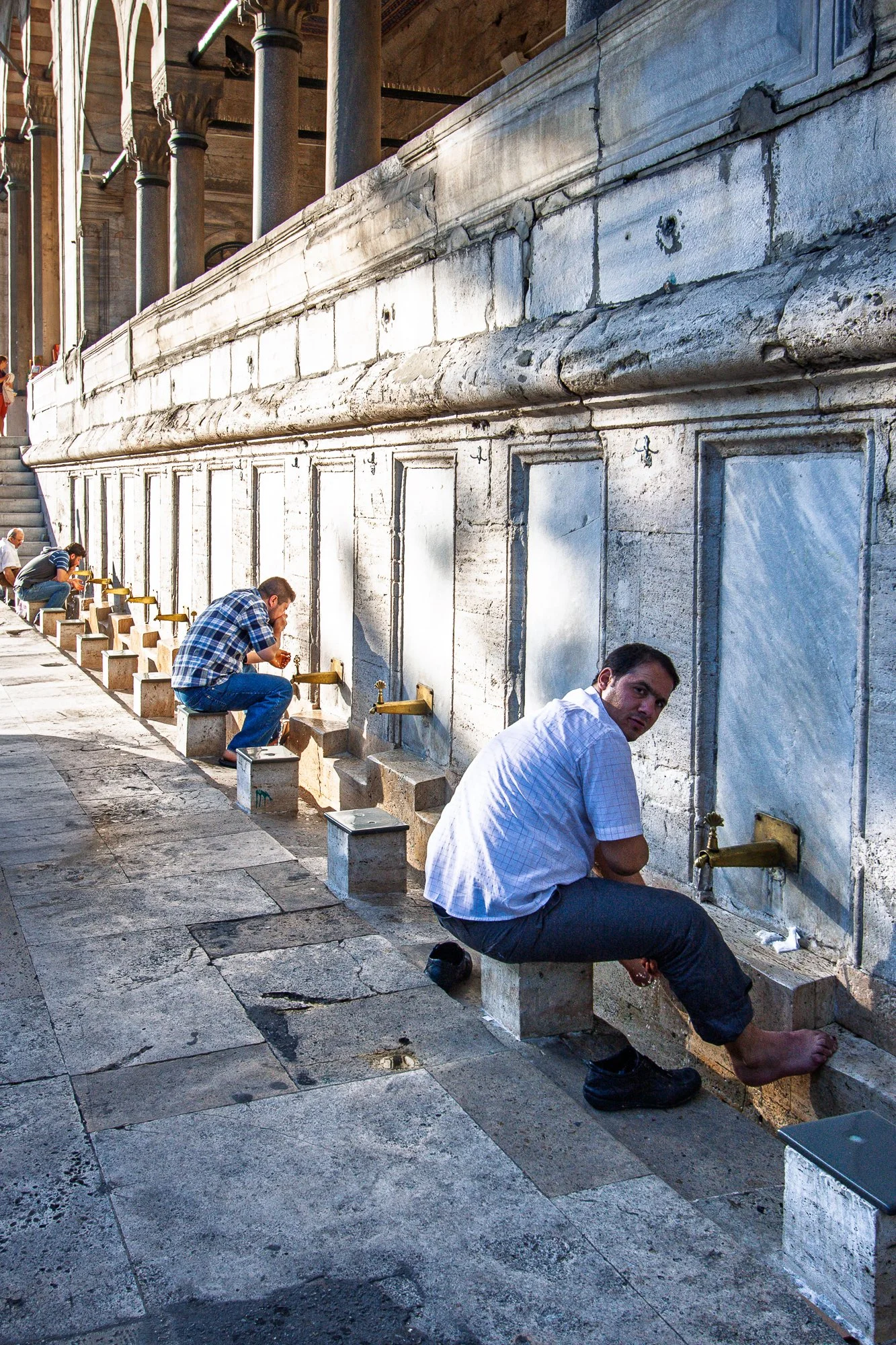
Ritual before prayer, an ordinary morning — bCLPhoto
What strikes me now, looking at these frames again after sixteen years, is how differently Istanbul's light behaves compared to Barcelona's. The stone here holds a warmer grey, and the domes seem to gather light rather than reflect it — by mid-morning the marble courtyards turn nearly white, hot enough that people perch on the ablution benches in whatever shade they can find. Photographing architecture this ornate means constantly fighting the temptation to include everything; the discipline is in choosing one arch, one minaret, one gesture, and trusting it to carry the rest of the frame.
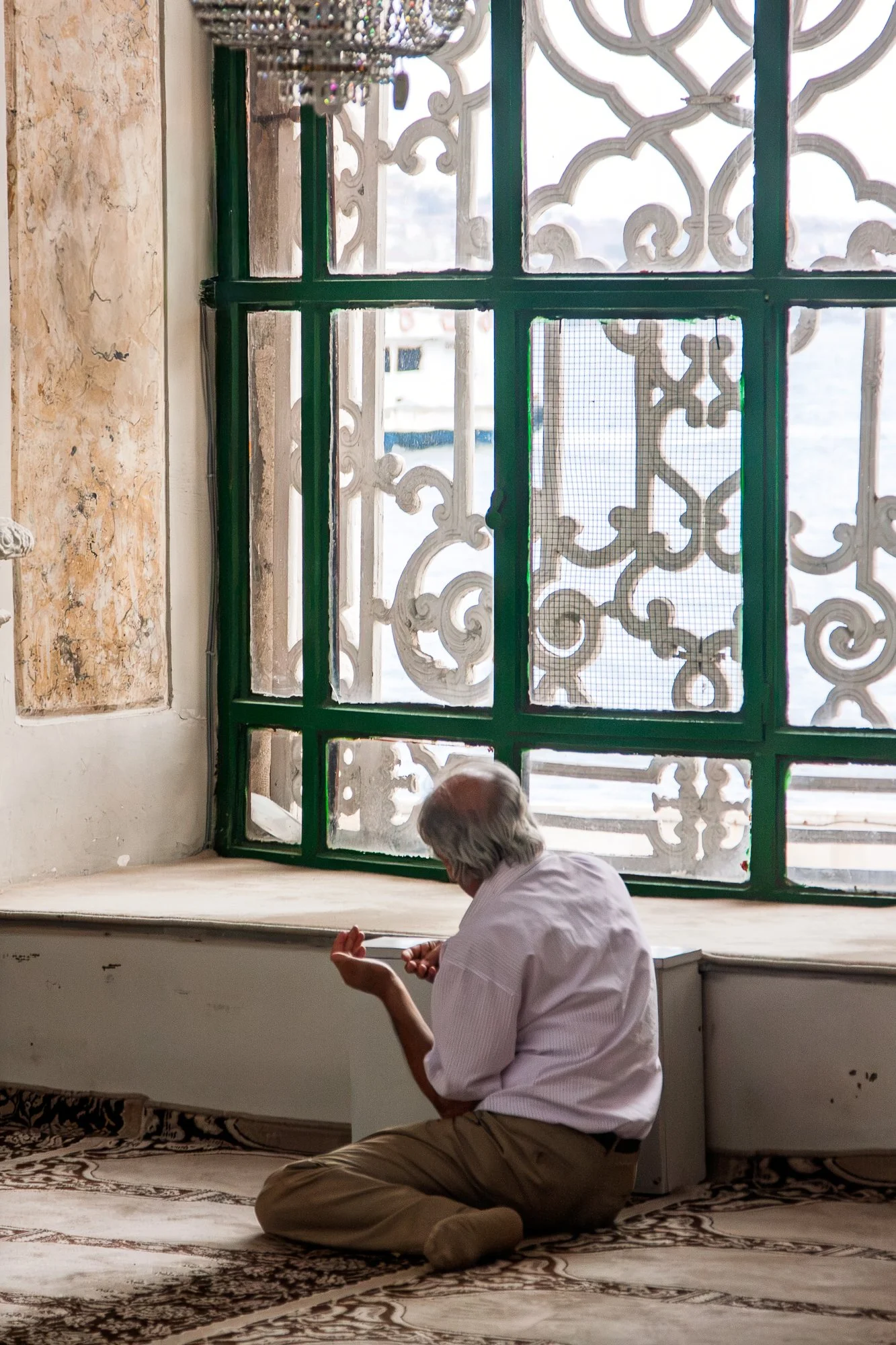
Prayer, and a view of the water — bCLPhoto
Returning to Photographs Sixteen Years Later
I shot this material long before the Leica Q3 became my default camera, on a trip I made before bCLPhoto existed as a project at all. Revisiting the RAW files now, what surprised me wasn't the architecture — Sultanahmet hasn't changed — but how much the city's ordinary rhythm around these buildings has stayed exactly the same: the muezzin's call still rolls across the rooftops five times a day, the smell of dust and hot stone still catches in the courtyards by noon, and tourists still crowd the same fountain for the same ten minutes of shade.
The same trip took me most of an afternoon inside the Grand Bazaar, a short walk downhill — the noisy, commercial counterweight to all this stone, and a far harder photographic problem: no daylight, no tripod, and the shutter dragging at 1/8.
And between the mosques and the market there was everything else: a simit seller crossing a cobbled square with his basket balanced on his head, a shoe-shiner working under a hand-painted sign, a woman rolling out gözleme dough on a corner. Those frames waited longer than the rest, and eventually became a post about Istanbul's street vendors and old trades.
If Barcelona's Sagrada Família taught me to photograph a building still becoming itself, Sultanahmet taught me to photograph ones that had already argued their way through several identities — and still aren't finished.
Photos: Canon EOS 40D · Canon 24-105mm f/4L IS USM · Istanbul, Turkey, 2010
See more urban architecture photography in the portfolio.
Want one of these on your wall?
Every photo on this site can be printed — archival paper, signed and numbered. Browse prints →