El Born Barcelona Architecture: A Walk Through Medieval Streets
The alleys of El Born narrow before they open — a rhythm you feel in your shoulders before you see it. This is where El Born Barcelona architecture reveals itself best: not in a single monument, but in the accumulation of six centuries pressed into a few hundred meters of stone.
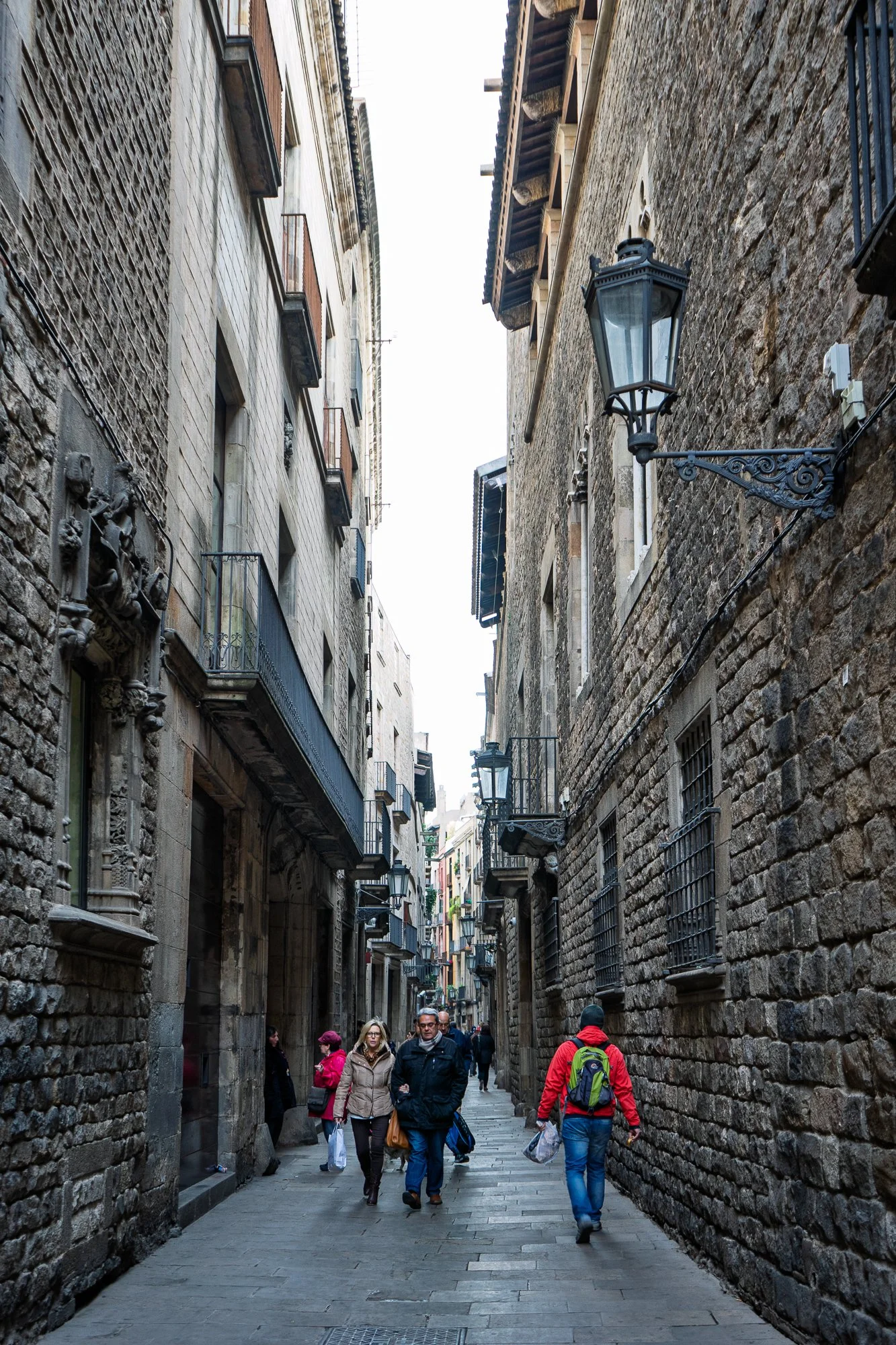
Gothic archway, Carrer de Montcada — Leica Q3
A Medieval Merchant Quarter
Between the 13th and 15th centuries, this district was the commercial heart of Barcelona. International merchants, shipowners, artisans, bankers, and nobility lived and worked within these blocks, drawn by proximity to the port just steps away. Wealth moved through El Born in a way that shaped everything still standing today — the scale of the buildings, the width of the doorways built for loaded carts, the stone facades meant to signal status to a rival merchant walking past.
That proximity to the sea wasn't incidental — it was the entire logic of the neighborhood. Ships arrived loaded with wool, spices, and textiles, and El Born's warehouses and workshops processed and moved that trade inland. Streets were laid out for that purpose: straight enough for carts, narrow enough to keep the summer sun off the goods stacked against the walls. Five centuries later, the same geometry now shapes how light falls on the people walking through it, which is half of what makes these alleys worth photographing.
That history isn't abstract here. It's structural. Walk down any of these streets and the buildings themselves are the record: thick foundations, arched entryways, upper floors that lean almost imperceptibly toward each other after five hundred years of settling.
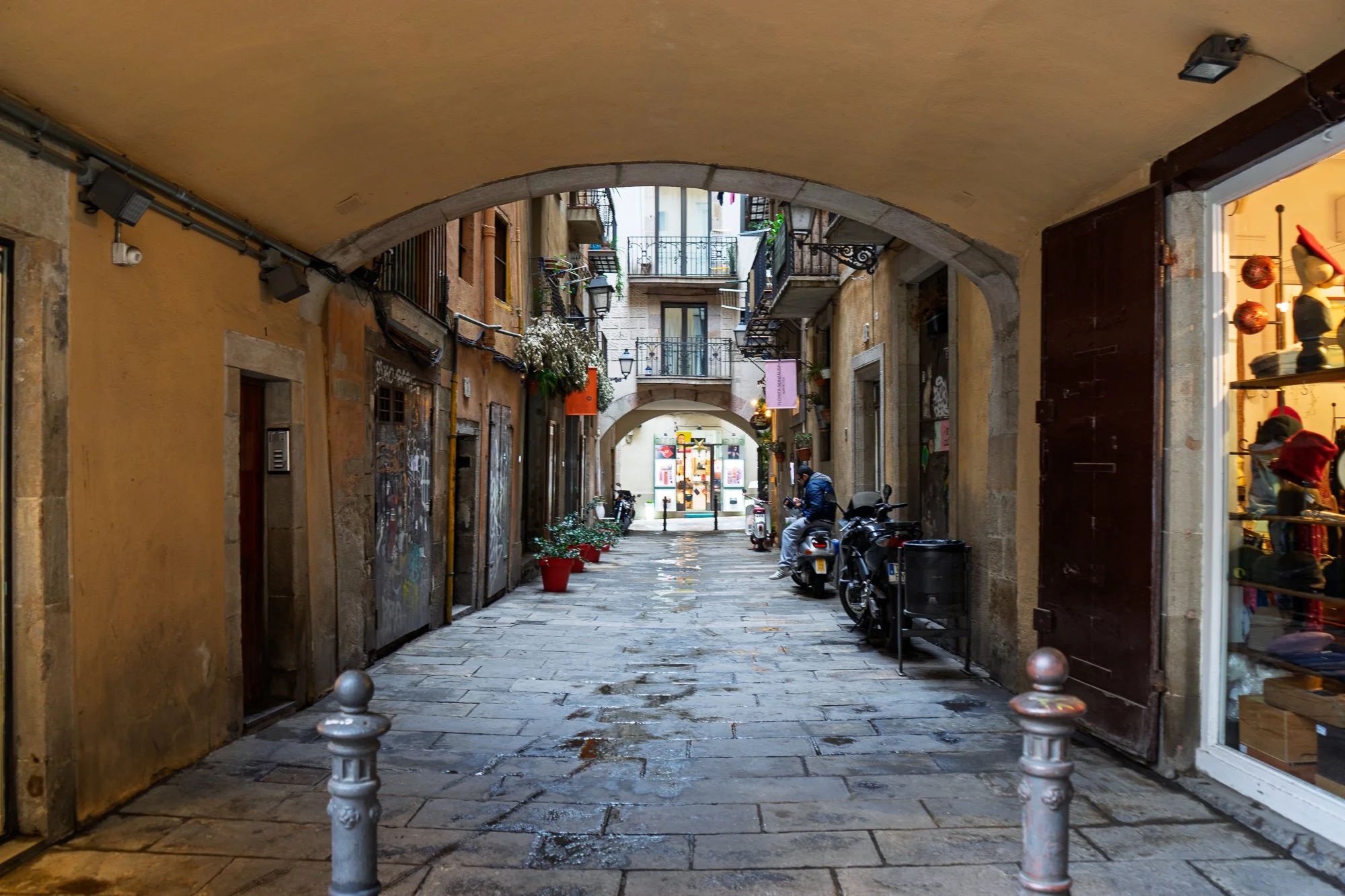
A passage built for carts, now for scooters — Leica Q3
Carrer de Montcada: Barcelona's Best-Preserved Gothic Street
If one street explains El Born's medieval wealth, it's Carrer de Montcada. Widely considered the best-preserved noble street of medieval Barcelona, it was lined during the 13th to 15th centuries with the palaces of the city's wealthiest families. Several of those Gothic buildings survive largely intact and now house museums, including the Museu Picasso— a Barcelona institution most visitors never connect to the medieval merchant economy that built the walls around it.
Photographing this street means working with what's already there: heavy stone archways framing narrow slices of sky, courtyards visible only through half-open gates, centuries of foot traffic worn smooth into the paving stones. Nothing needs staging. The history of Carrer de Montcada is doing the composition for you.
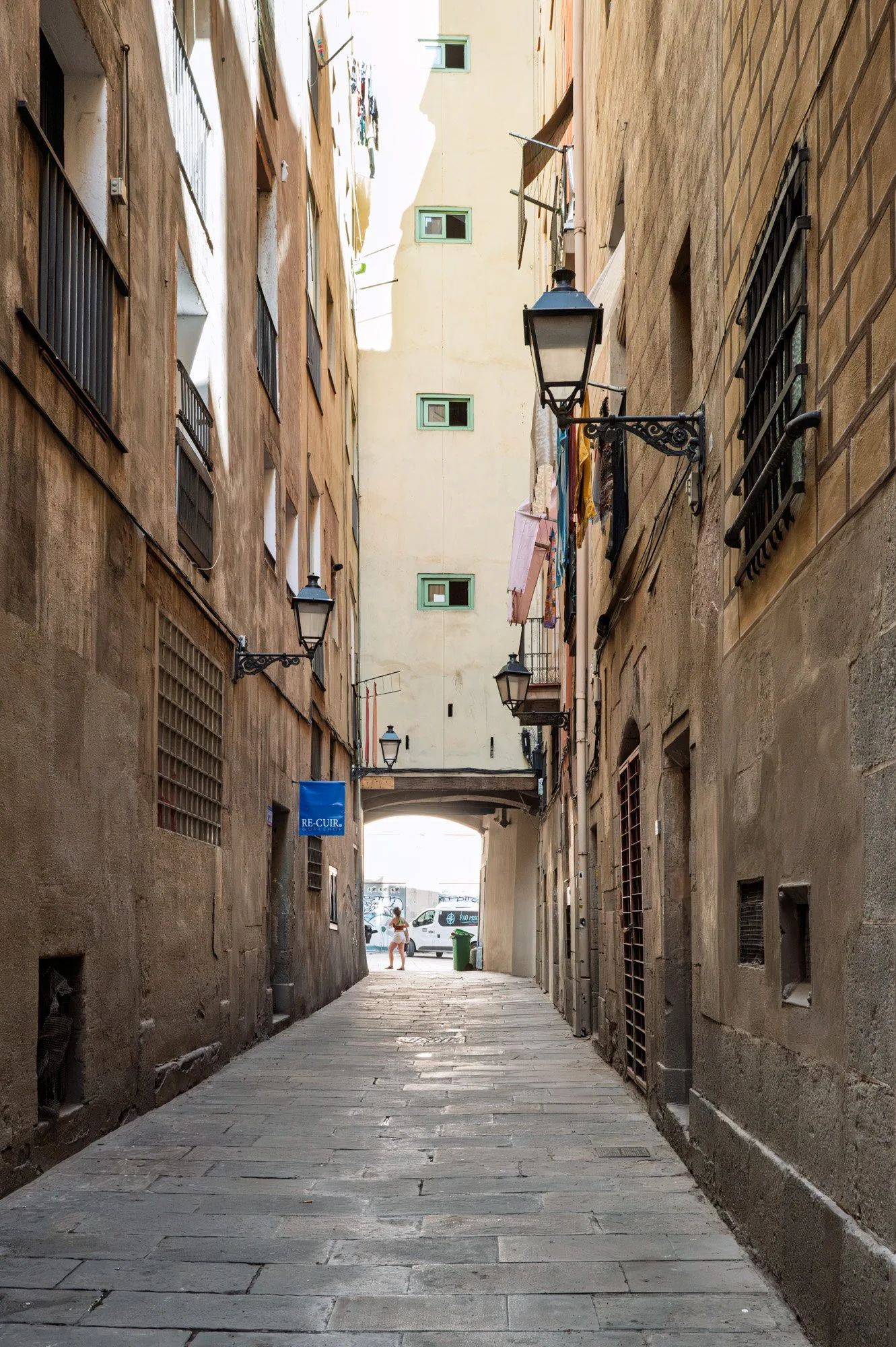
A stone bridge arch spanning the alley — Leica Q3
Layers: Gothic Stone, Modernist Corners, Street Art
What keeps El Born from feeling like a preserved shell is how visibly it keeps changing on top of itself. A block from a 14th-century archway, a modernist corner building shows off wrought-iron balconies from three hundred years later. Push into one of the interior courtyards and you might find a wall of fresh graffiti next to parked bicycles, or a laundry line strung between windows that have been open to that same alley since before the street had a name. None of it is smoothed over or curated — it's just how a neighborhood looks when nobody stopped it from living.
That layering is a gift for a photographer. A single frame can hold a Gothic archway, a scooter, a hand-painted shop sign, and a reflection in a modern shop window without any of it feeling out of place. El Born rewards patience more than any single "best angle" — the interesting shot is usually one street further than you planned to walk.
Some of those walls have since become destinations in their own right — El Beso and the murals of El Born pull crowds that the Gothic archways never do.
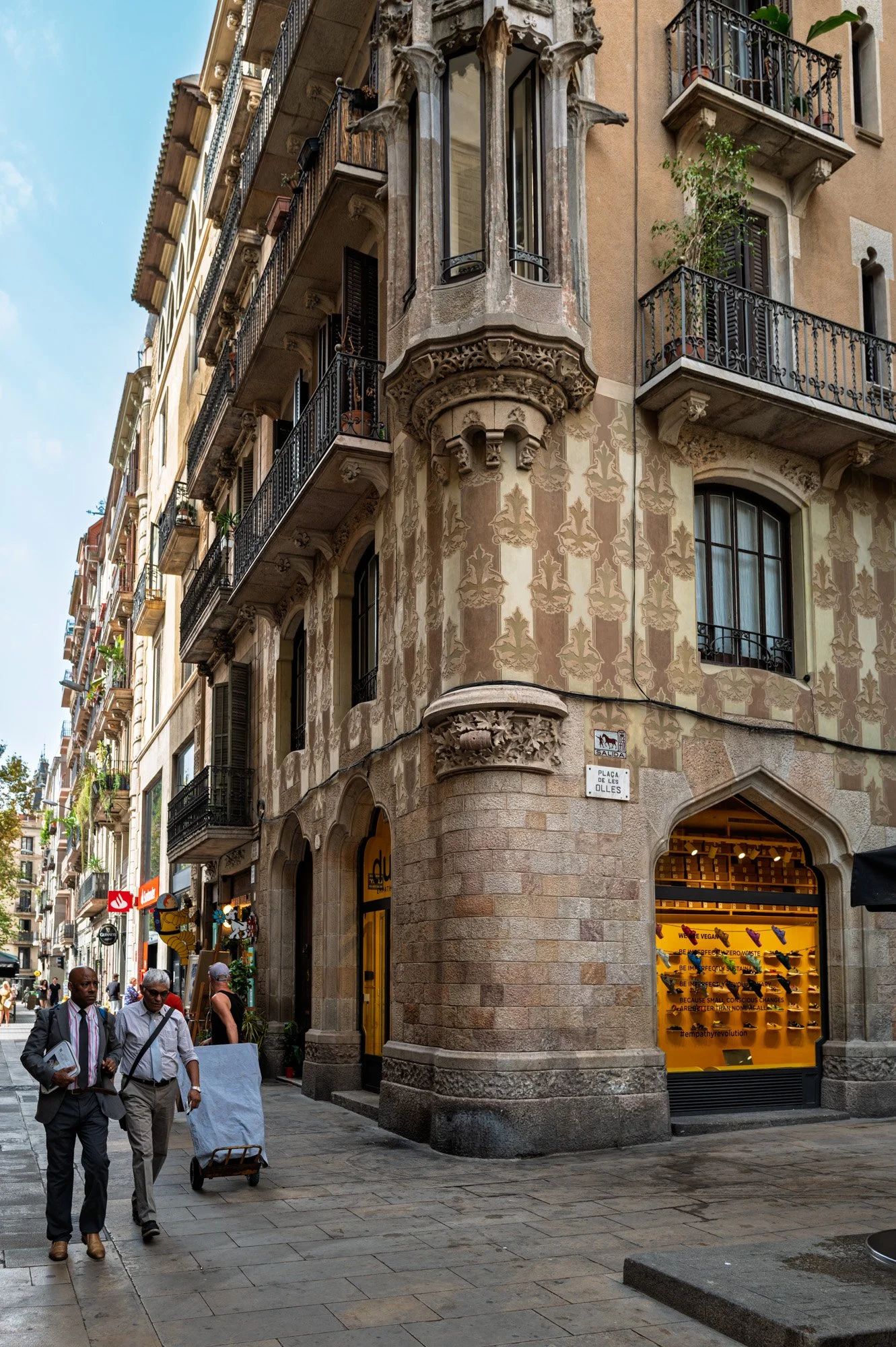
A modernist corner among Gothic neighbors — Leica Q3
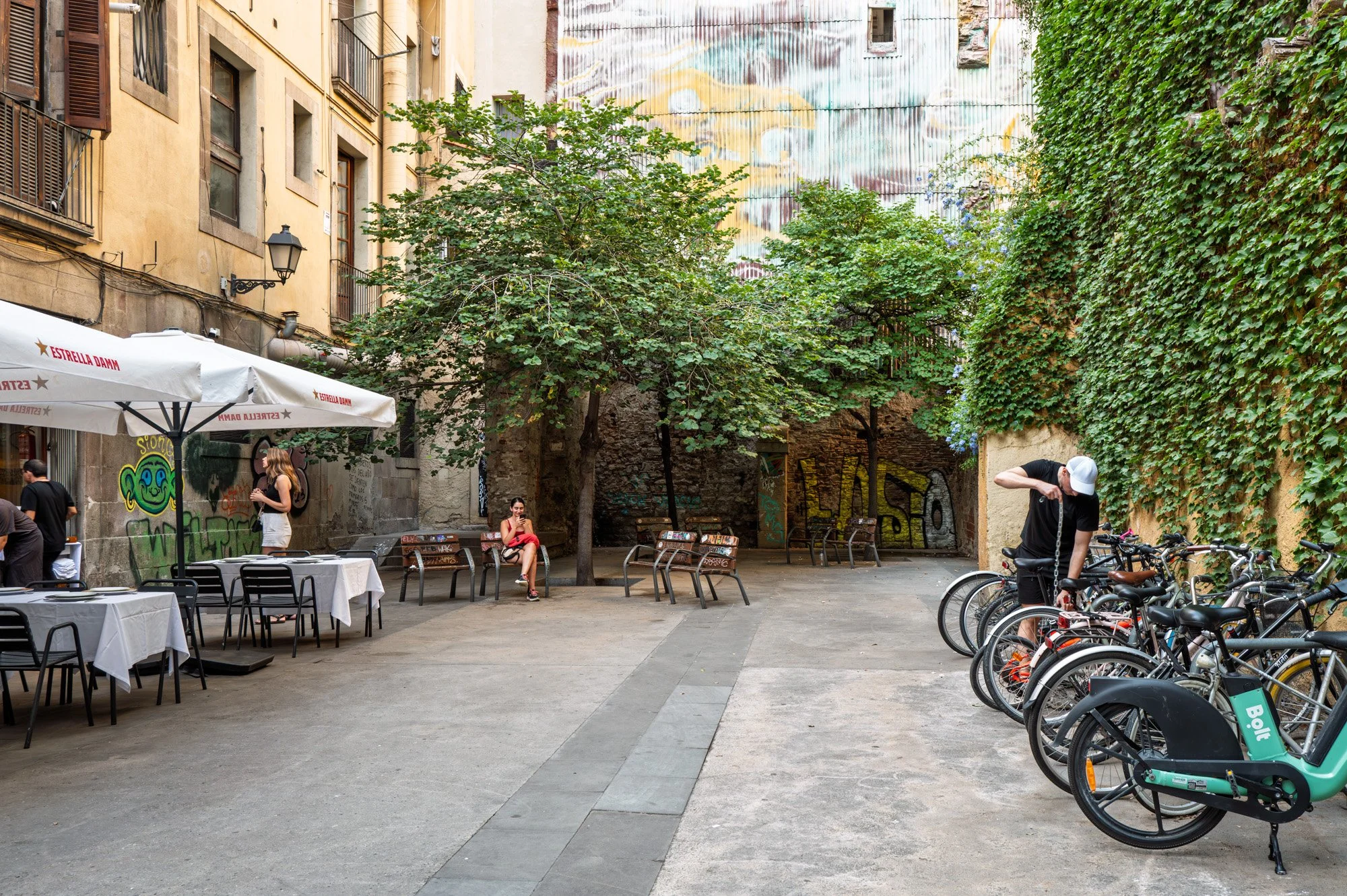
Interior courtyard, bicycles and fresh graffiti — Leica Q3
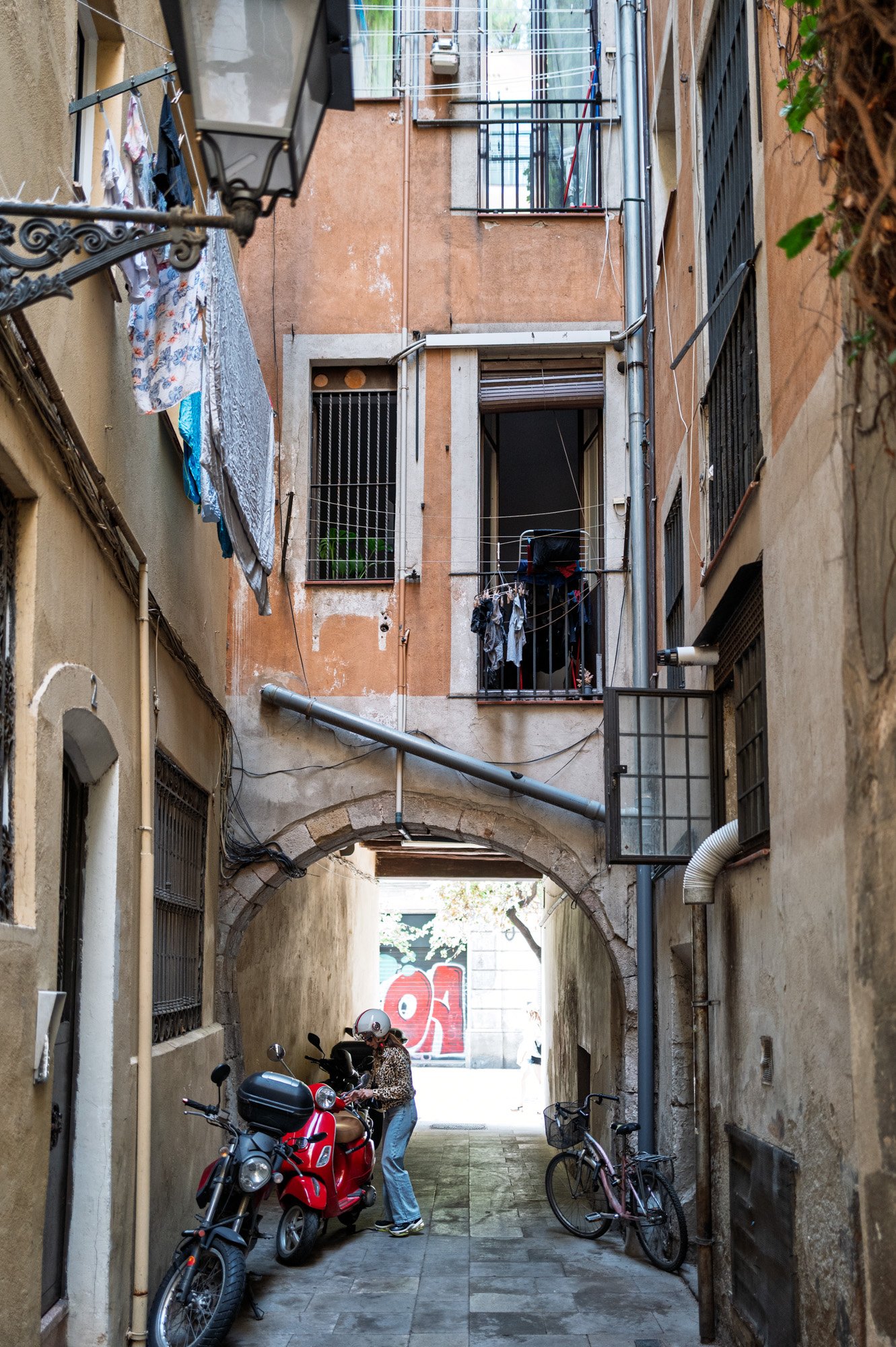
Laundry strung across a centuries-old alley — Leica Q3
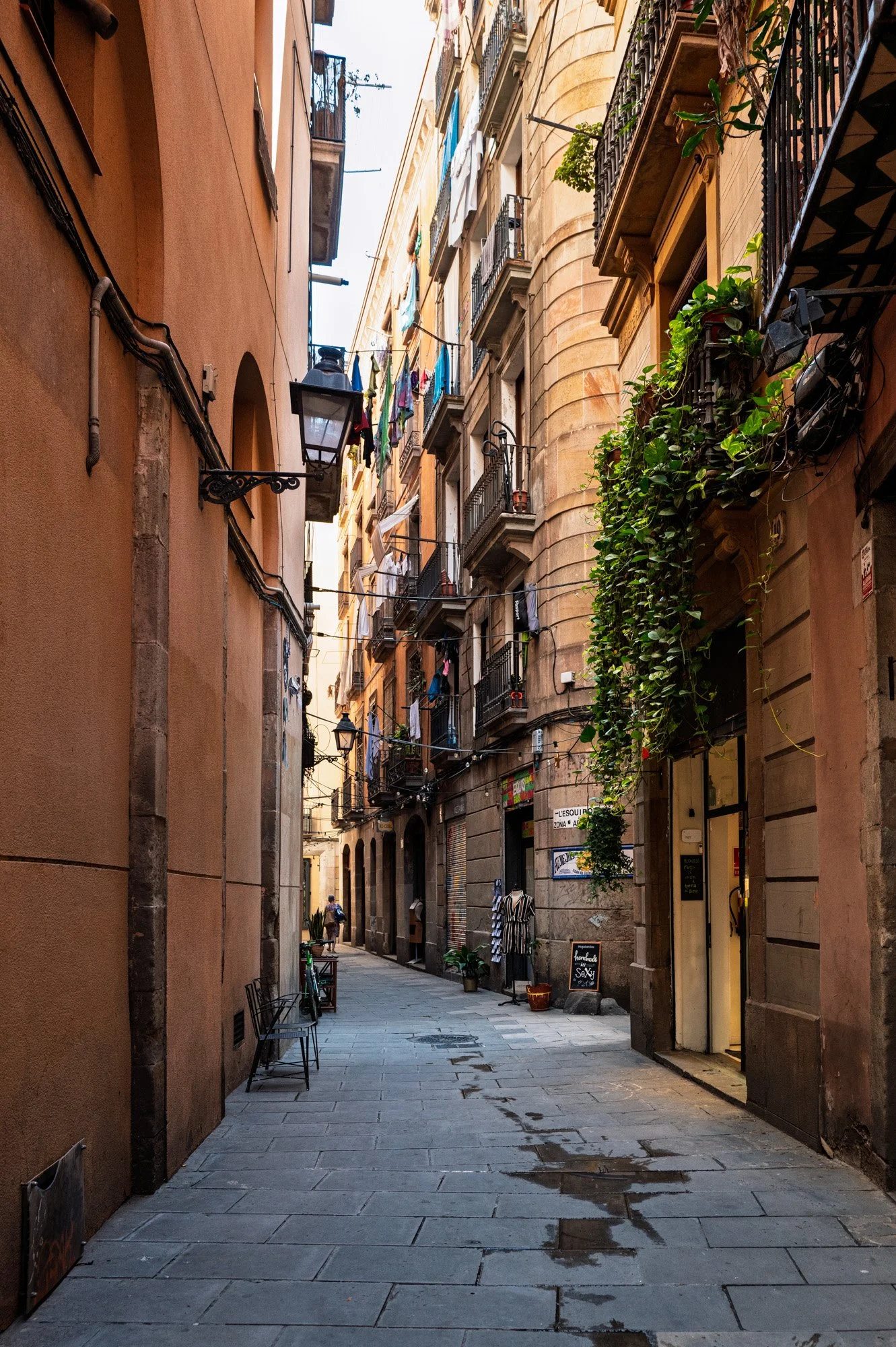
A shopfront detail, Carrer de l'Esquirol — Leica Q3
El Born Barcelona Architecture Today
What makes El Born different from other Gothic Quarter streets is how lived-in it still is. The ground floors that once housed textile merchants and metalworkers now hold gin bars, ateliers, and small workshops — but the bones of the buildings haven't changed. Balconies still overhang the same narrow passages. Iron streetlamps still cast the same long shadows across the same cobblestones.
For anyone documenting the city more broadly, El Born sits naturally alongside the rest of our urban architecture portfolio— different eras of Barcelona, same instinct to look up at what's easy to walk past.
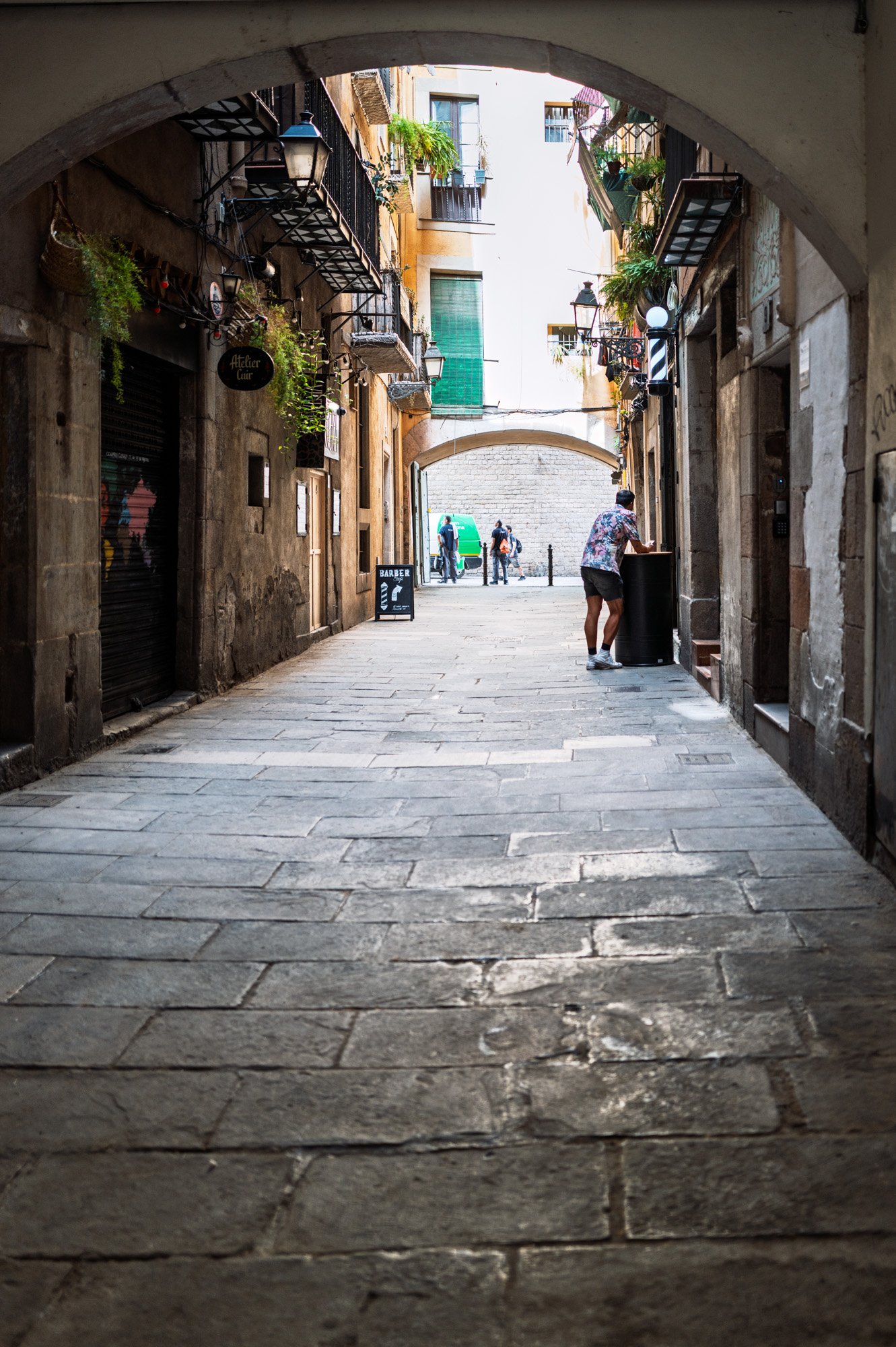
An atelier under the old arcade — Leica Q3
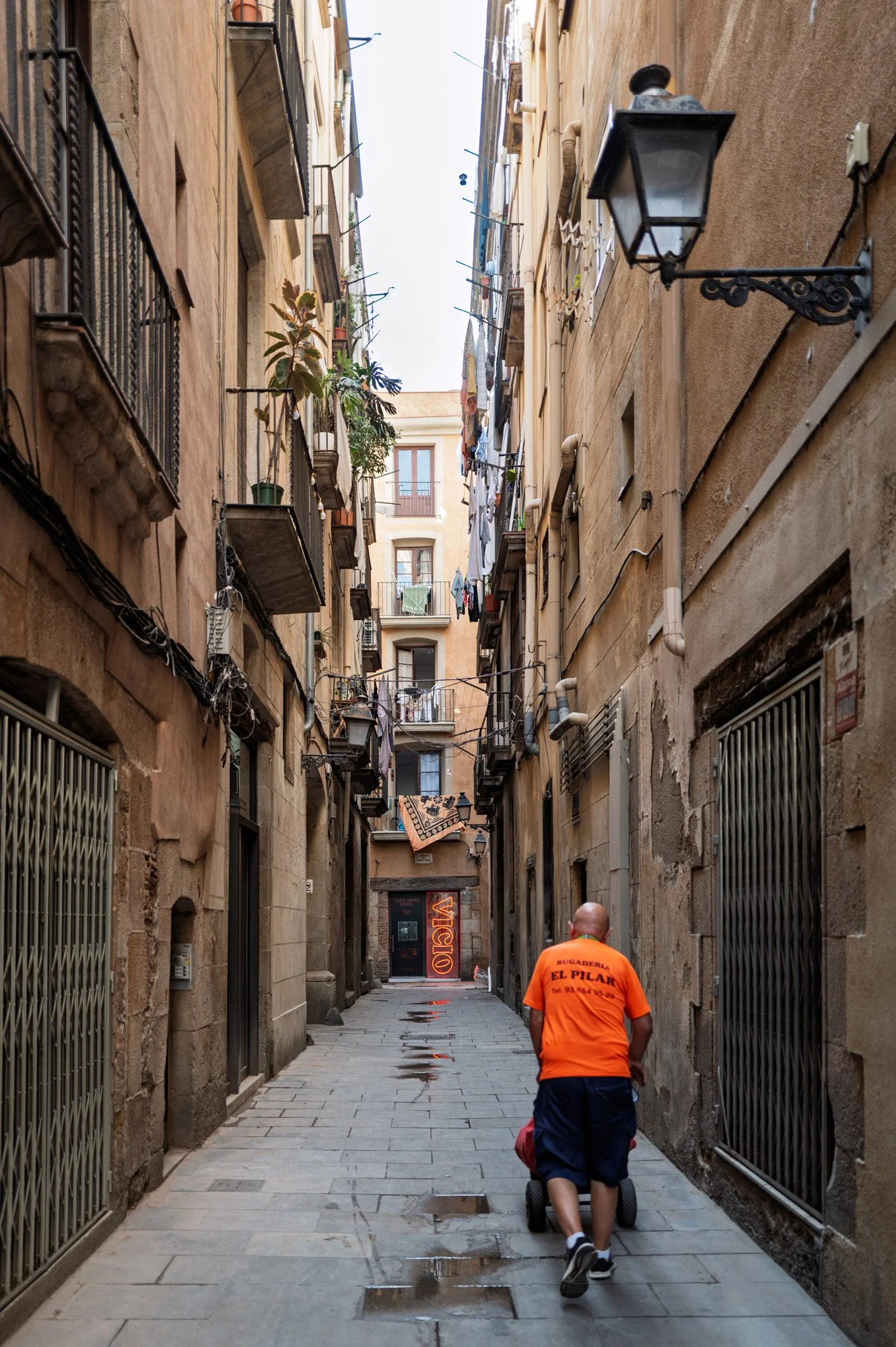
Neon against six centuries of stone — Leica Q3
Light, Shadow, and the Rhythm of Narrow Streets
Shooting these alleys with the Leica Q3 means constantly recalculating exposure — one step forward and you're in full shade, one step back and the sun is bouncing hard off pale stone. The narrowness that makes these streets atmospheric also makes them technically demanding: dynamic range swings fast, and there's rarely more than a few seconds to catch a passing cyclist or a courtyard door left open before it closes again.
There's a particular smell to these mornings before the terraces open — damp stone, coffee from somewhere unseen, the faint metallic note of a scooter idling against a wall. Sound carries strangely too, funneled by the buildings until you can hear a conversation from a balcony two streets over more clearly than the person walking next to you. None of that shows up in a photograph directly, but it shapes where you point the camera.
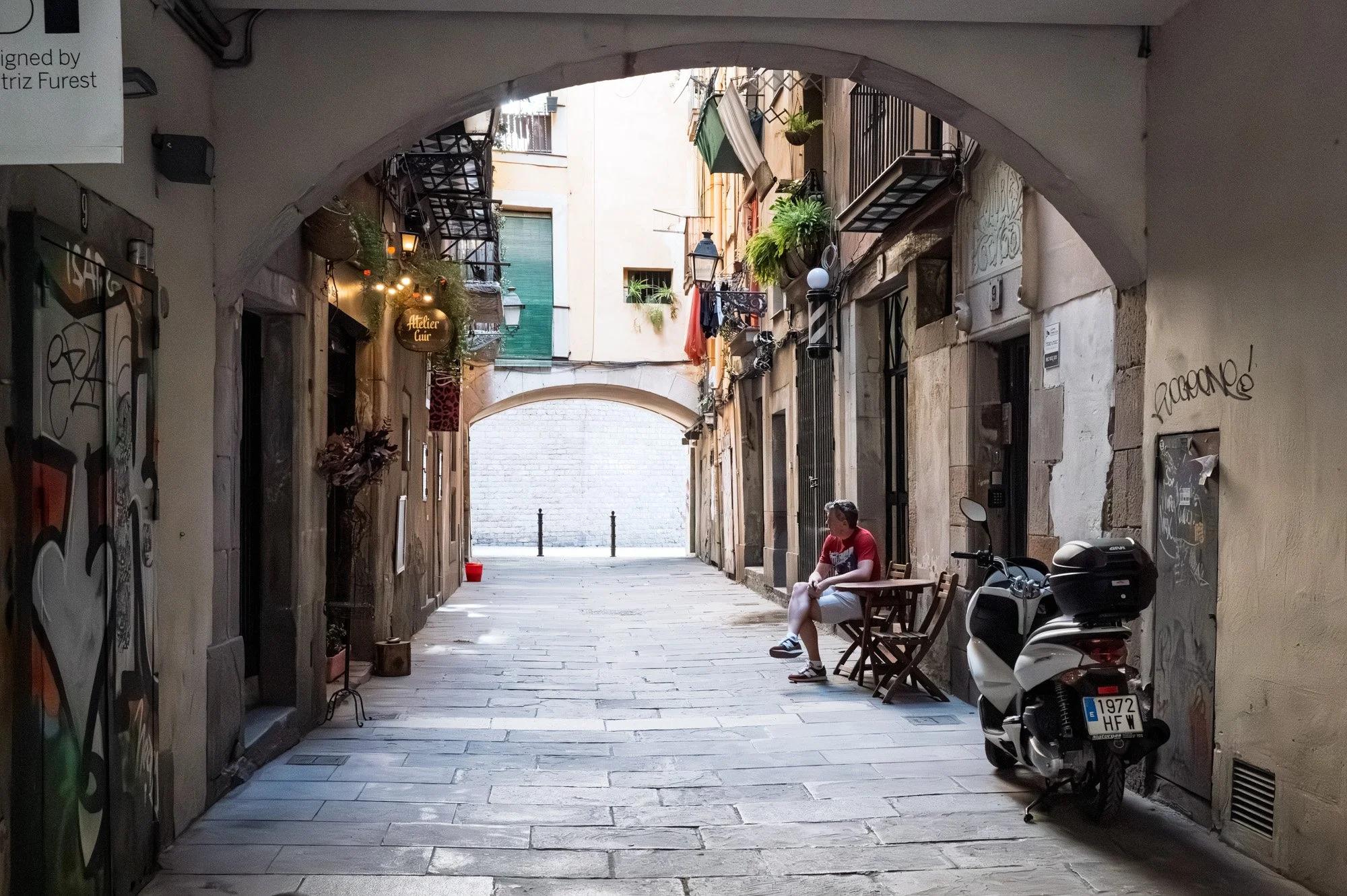
Passing under the arcade — Leica Q3
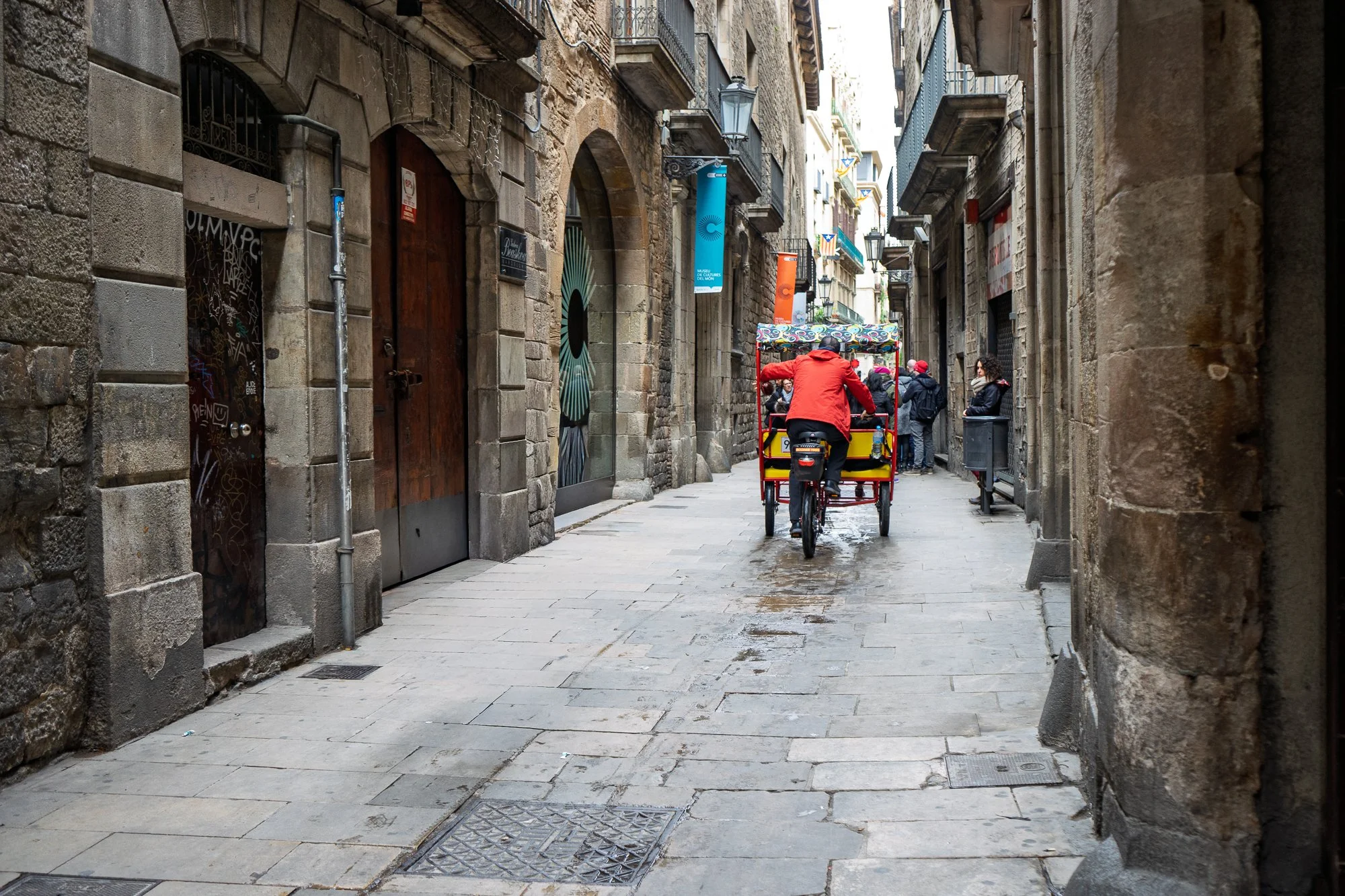
A pedicab threading the alley — Leica Q3
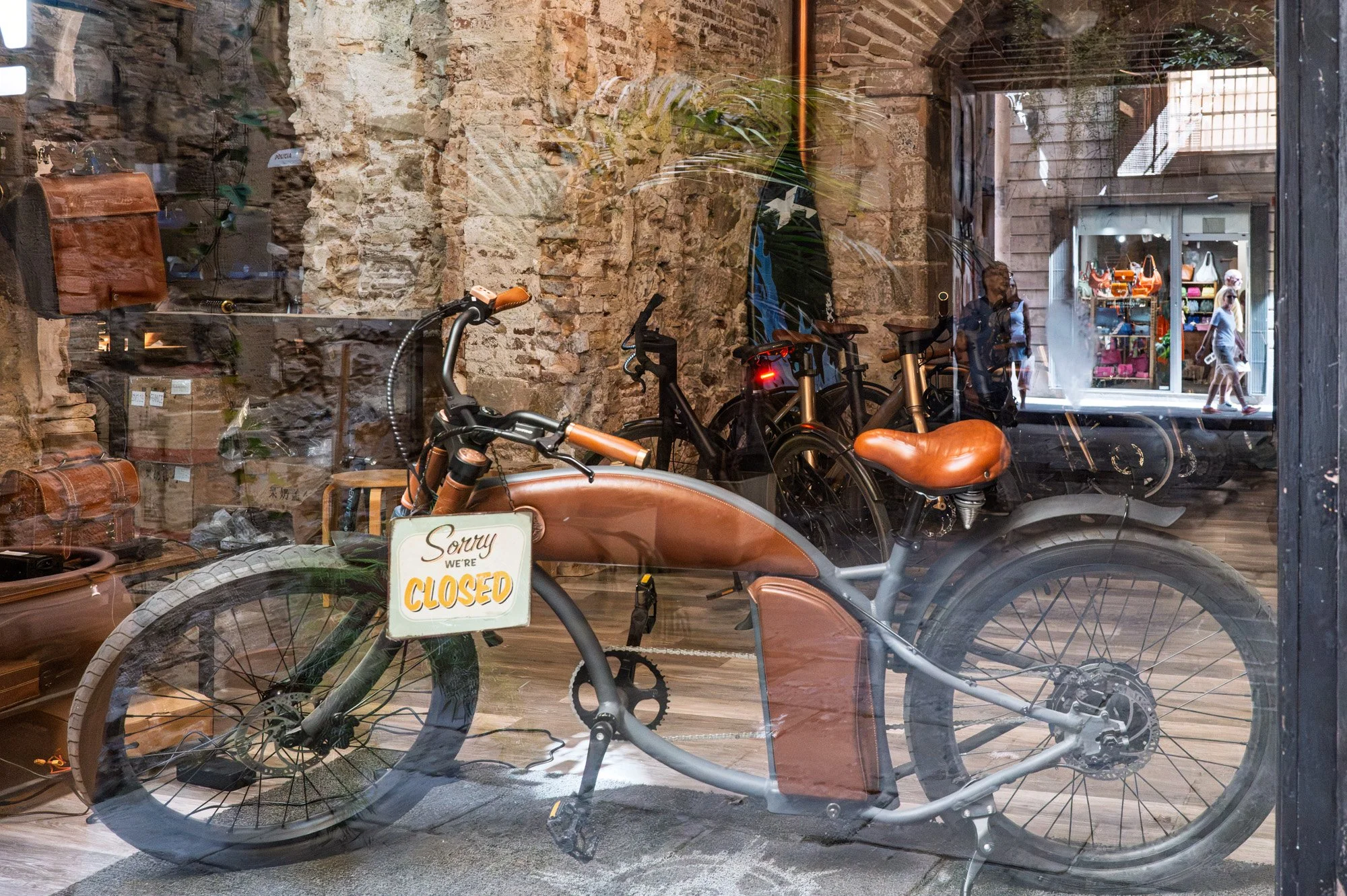
Reflections in an old shop window — Leica Q3
If this is your first stop in El Born, our earlier post on El Born street photography covers the neighborhood's faces — the portraits that happen in these same doorways and courtyards, before the camera ever turns toward the walls.
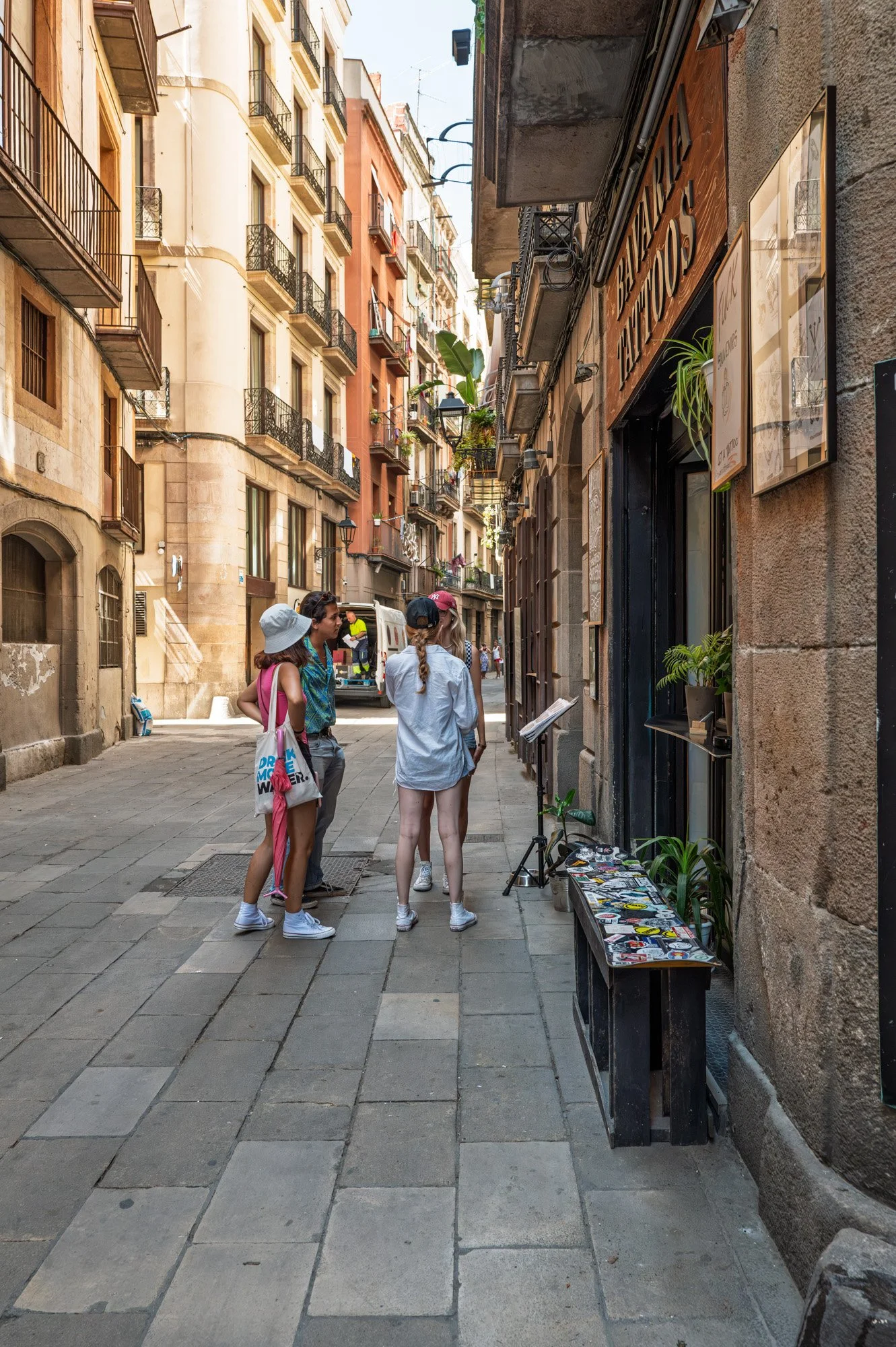
Still a working street, six centuries on — Leica Q3
One building in the neighbourhood ended up with a post of its own: the iron market at the top of El Born, and the eighteenth-century streets it now shelters.
Come walk El Born slowly, camera or not — the streets ask for nothing more than that.
Photos: Leica Q3 · ISO 250 · 28mm · f/2.8–8 · 1/250s
See more street photography from Barcelona in the portfolio.
Like these images?
These photographs are available as signed, numbered fine art prints on archival paper. See sizes and order →