Grand Bazaar Istanbul photography starts before you are inside the building. At Gate 7, the Beyazıt Kapısı, the stone arch carries a date in raised gold letters — 1461 — and below it the crowd bunches, hesitates and then pours through. My wife and I stood on the far side of the square for a while, watching the rhythm of it: a wave of people every thirty seconds or so, then a pause, then another. The bazaar breathes through its gates.
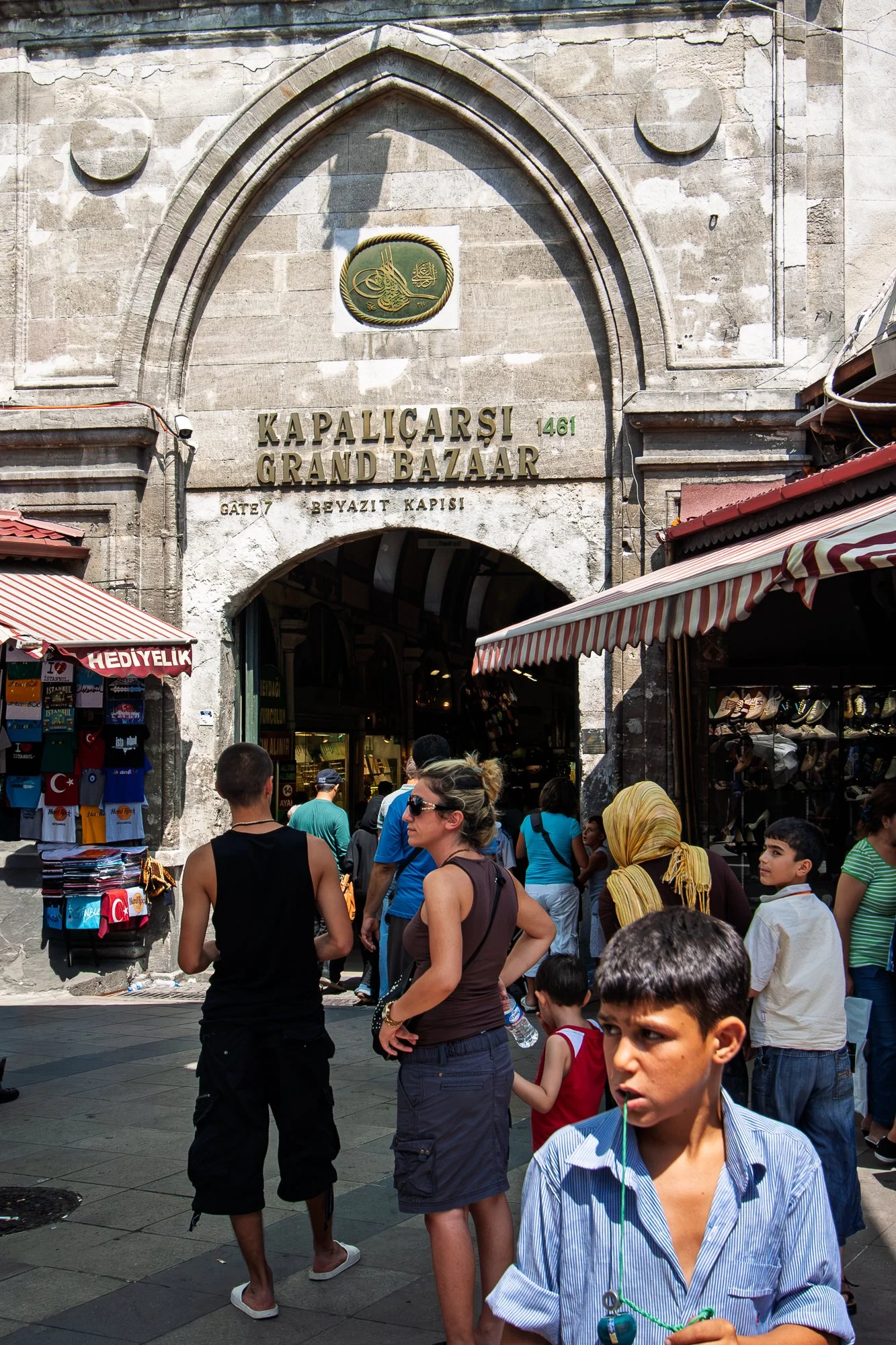
Beyazıt Kapısı, Gate 7 — Canon EOS 40D
Through the Beyazıt Gate
Nothing about the entrance prepares you for the scale of what is behind it. From the outside, Kapalıçarşı reads as a wall with holes in it — a modest arch, an awning, a rack of football shirts and fridge magnets. Step through and you are in one of the oldest covered markets in the world, a roofed grid of some sixty streets that has been trading continuously since the years after the Ottoman conquest. It sits a short walk downhill from the mosques of Sultanahmet, and the two make a useful pair for a photographer: silence and vertical space on one side of the morning, noise and commerce on the other. Both stand inside the Historic Areas of Istanbul.
The streets leading up to the gates are worth as much time as the interior. On the Mahmutpaşa side, striped awnings in red and yellow stretch across the lane and turn the midday sun into something you can photograph: the light comes through the fabric already coloured, and every face below it picks up a warm cast. Traders walk the middle of the street with bundles roped to hand trolleys. Shirts hang in blocks of flat colour, ten deep. It is a graphic photographer's street, all stripes and repetition, and it moves fast enough that you shoot on instinct rather than plan.
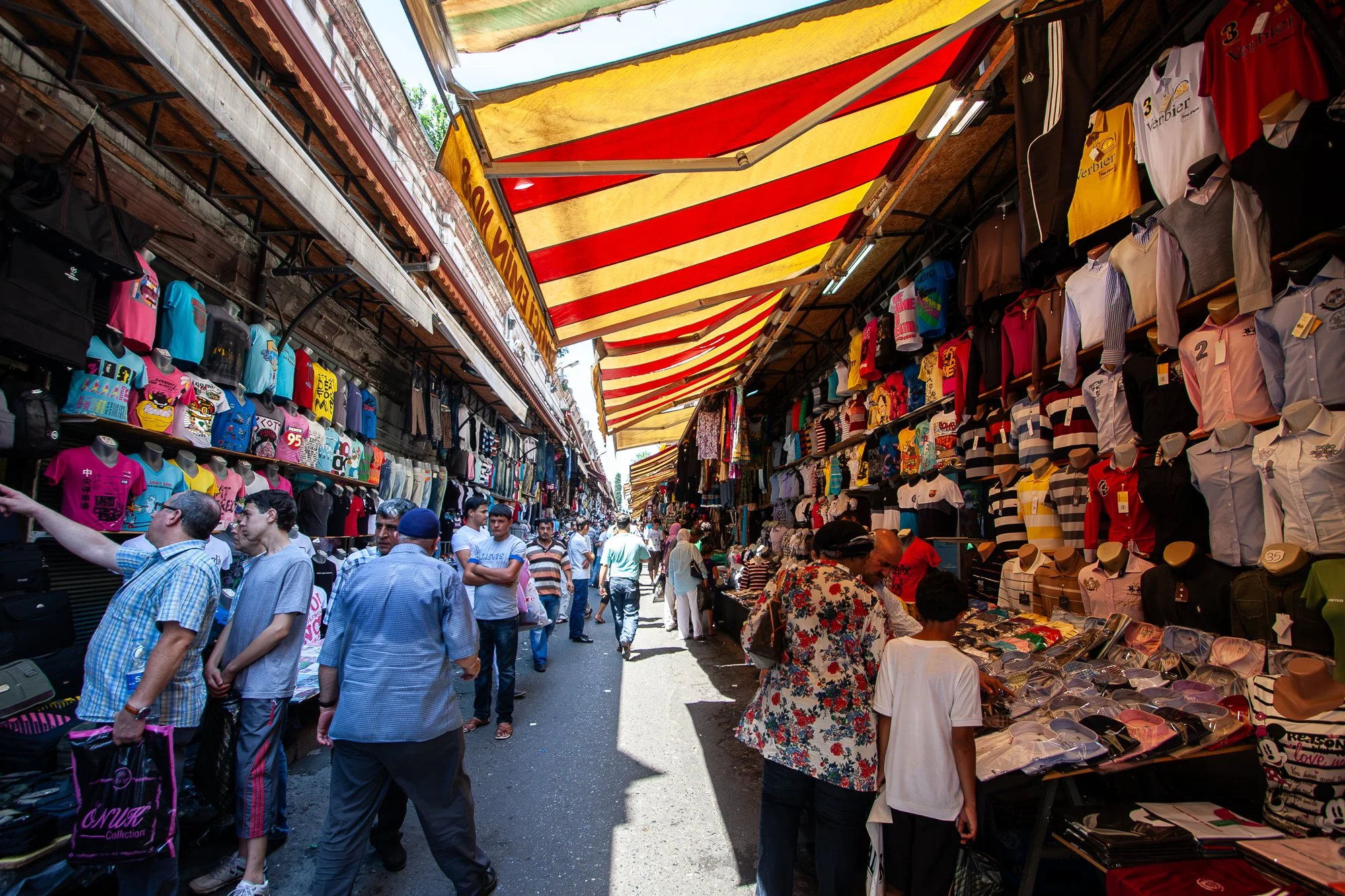
Mahmutpaşa — Canon EOS 40D
Photographing the Grand Bazaar's Vaulted Streets
Inside, the ceiling is the subject. The main arcades are barrel-vaulted and painted — ochre, deep blue, brick red, with medallions at the crown and rows of small windows punched along the sides. Those windows are the only daylight in the place, and by the time it reaches the floor there is almost nothing left of it. Everything else is shop light: fluorescent tubes, halogen spots aimed at gold, the yellow glow leaking out of jewellers' cabinets.
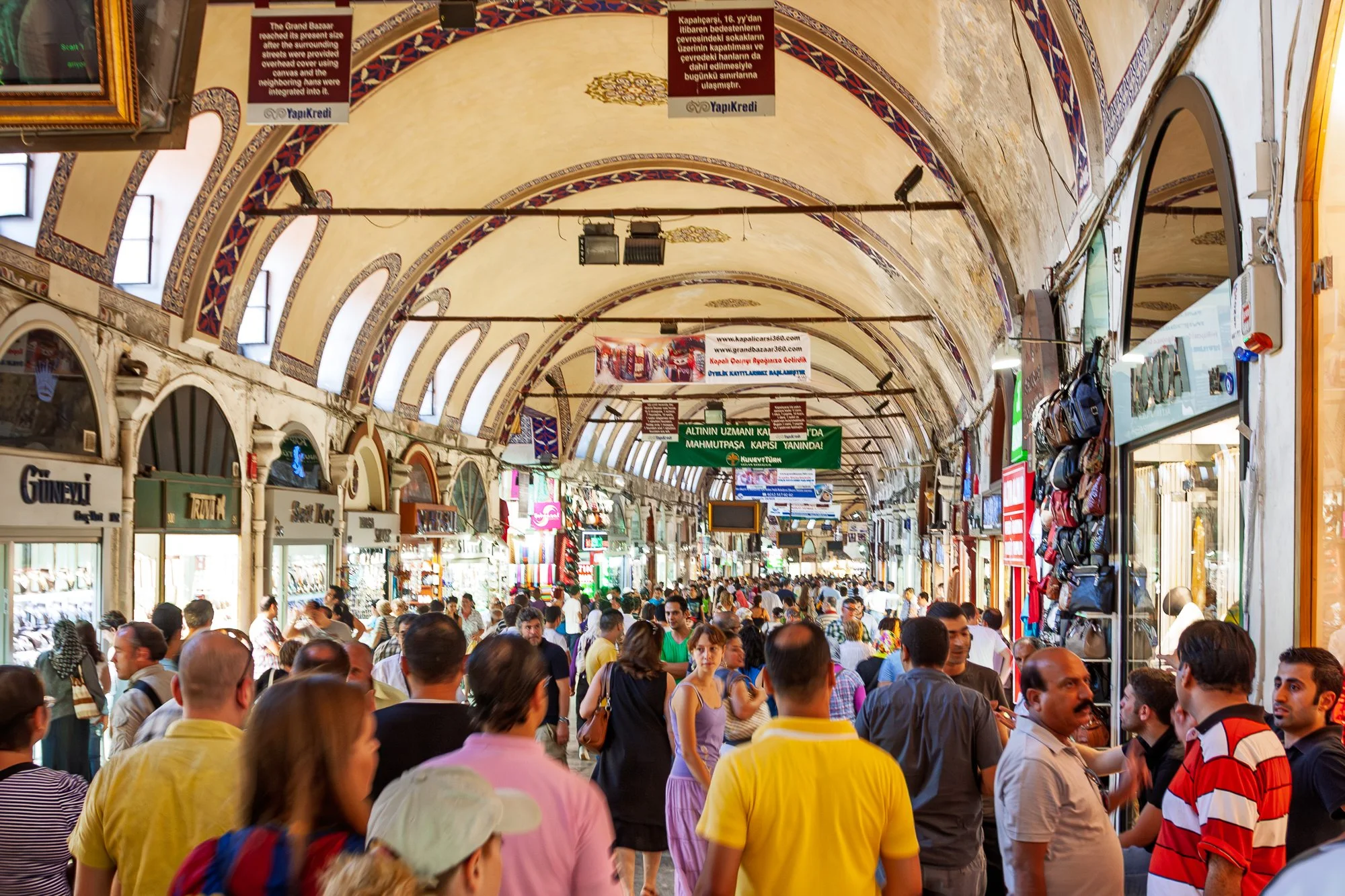
Under the vaults — Canon EOS 40D
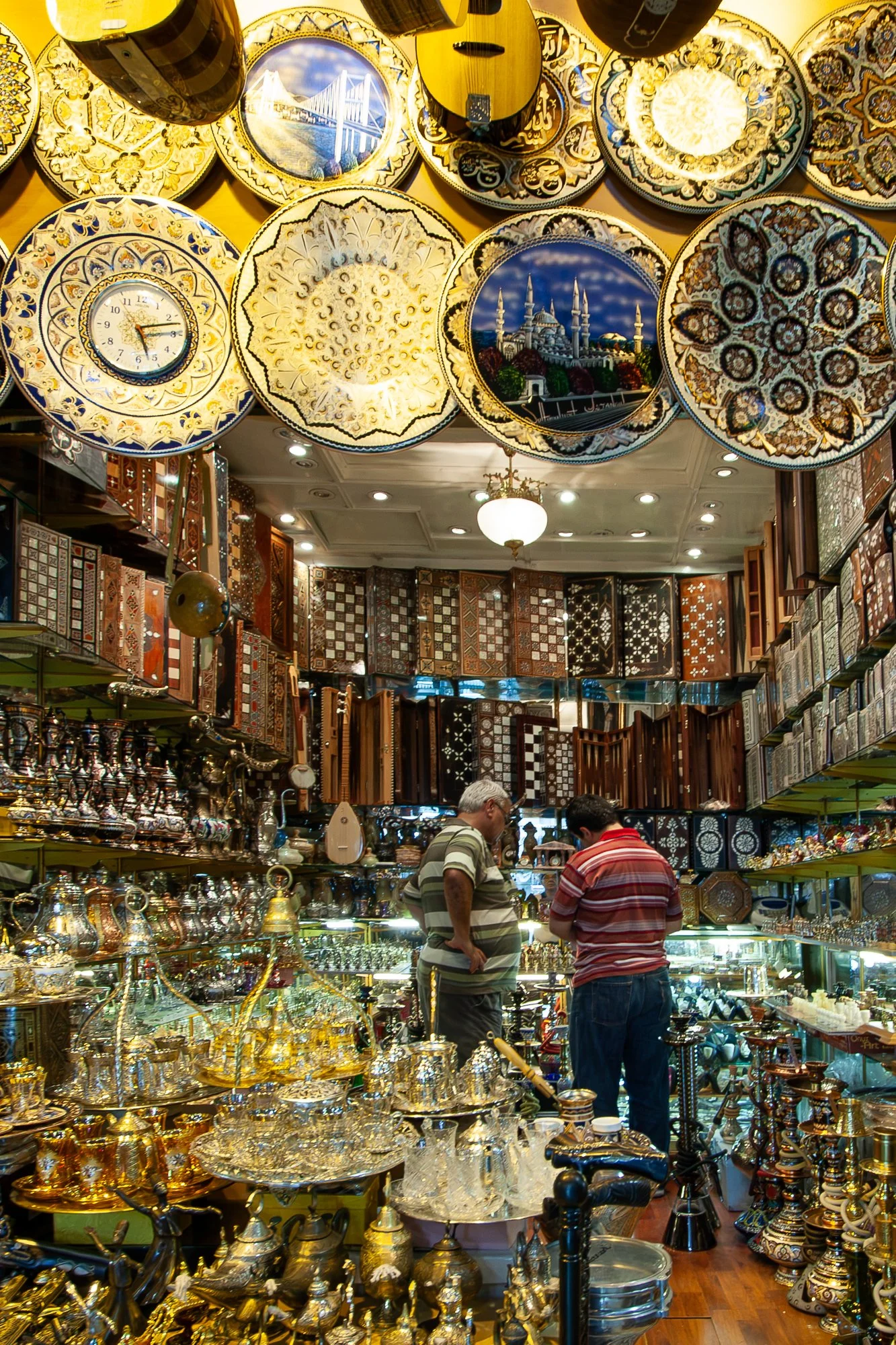
Everything for sale, all at once — Canon EOS 40D
This is where Grand Bazaar Istanbul photography becomes a technical problem rather than a compositional one. Under those vaults I was shooting at 1/6, 1/8, 1/15 of a second, handheld, with a lens that opens no wider than f/4. The honest answer is that a good proportion of the frames were unusable. But some of them are better for it. In the wide view down the central arcade, the crowd has dissolved into a smear of colour and only the architecture holds still — which is closer to how the place actually feels than any frozen frame would be. Movement is what the bazaar is. Letting it blur is not a compromise; on the right frame it is the point.
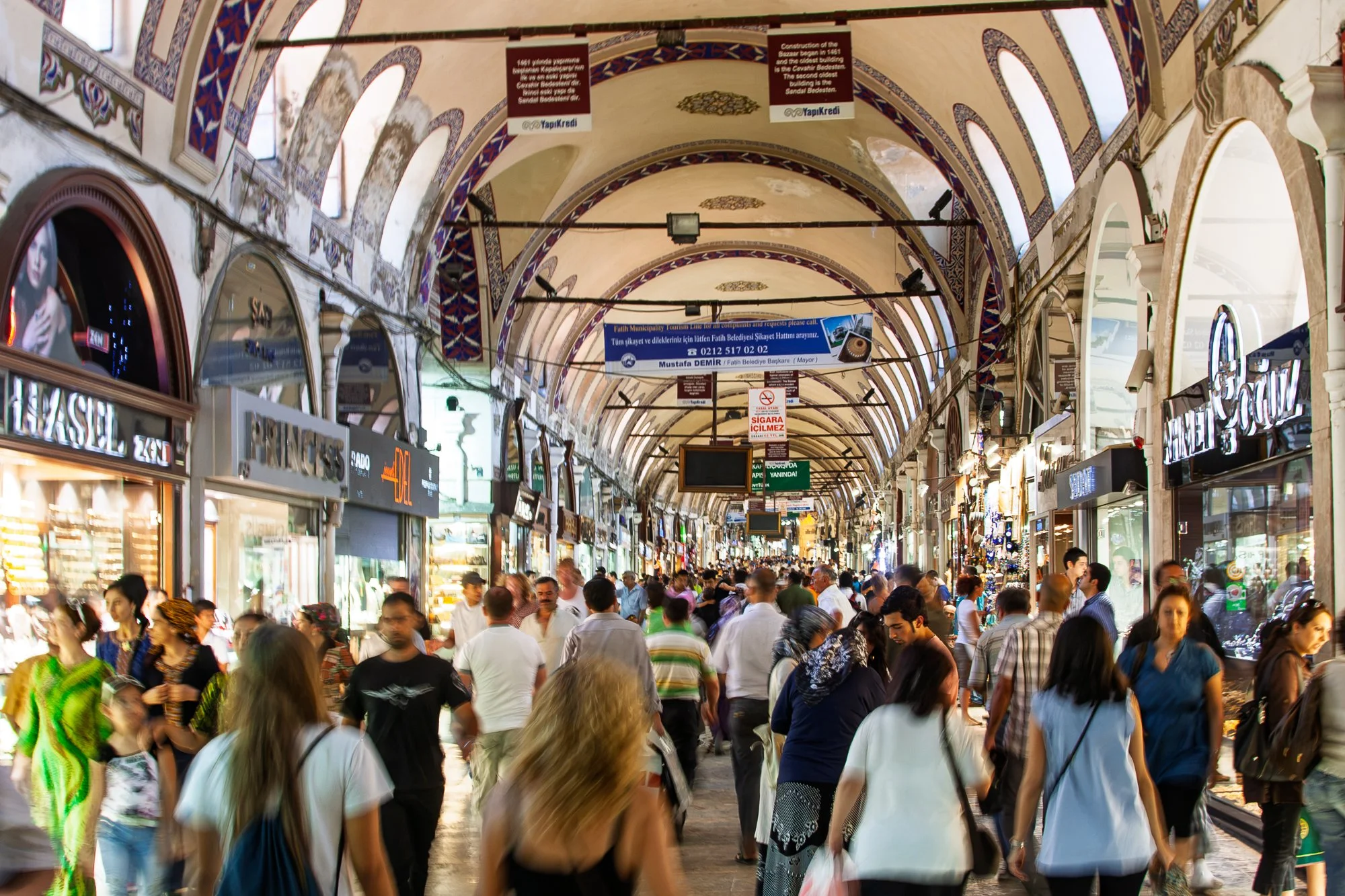
1/6s, handheld — Canon EOS 40D
The trick, such as it is, is finding something to lean on. A pillar, a shop's window ledge, the corner of a display case. I braced against whatever was to hand, shot three or four frames of everything, and accepted that one in four might be sharp enough to keep. Anyone working here today with a modern sensor has an easier time of it, but the constraint taught me to slow down and choose the frame before pressing the shutter, which is a habit worth keeping.
A few streets away I used the same trick, two seconds at a time, in the Basilica Cistern.
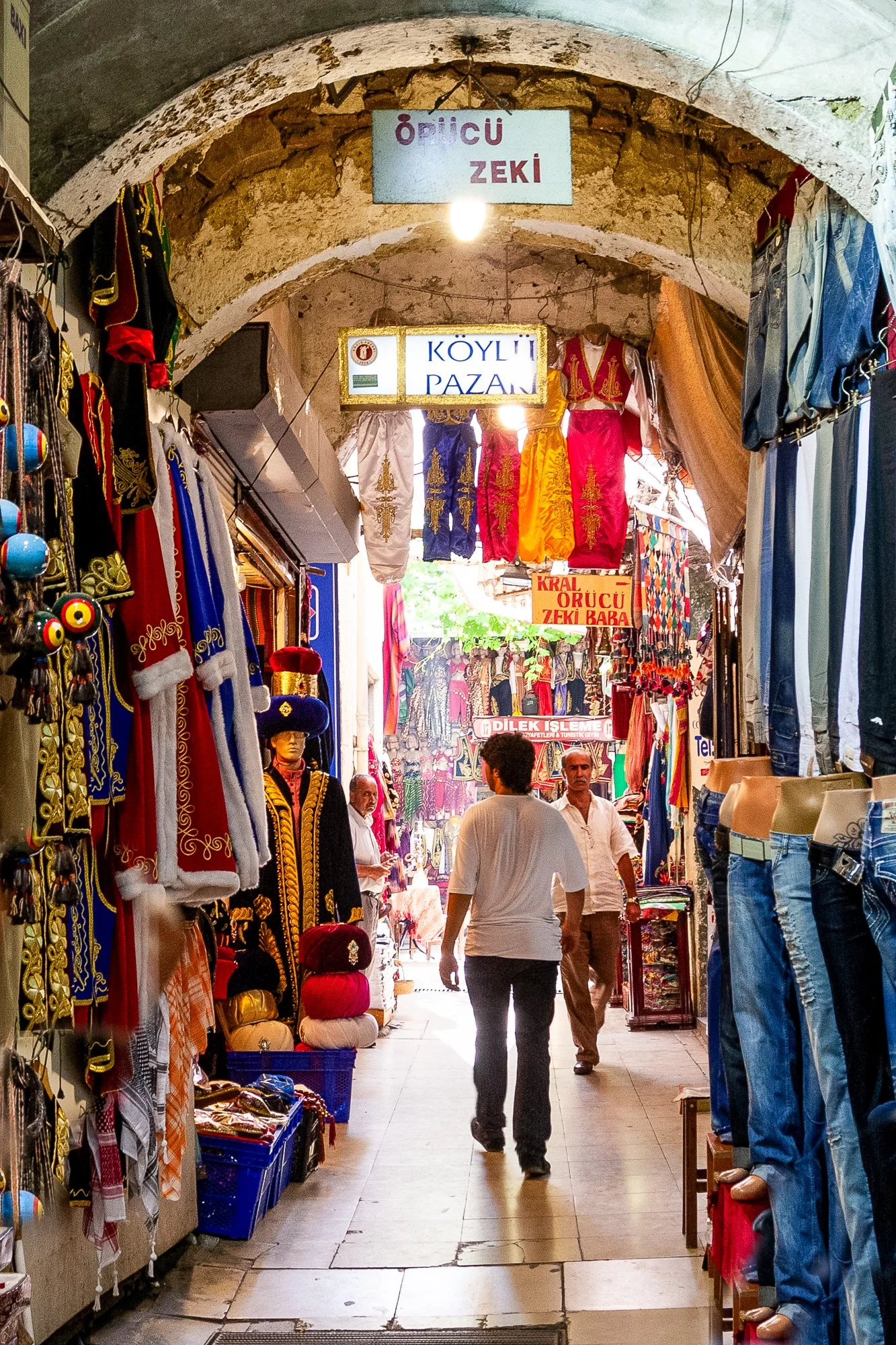
Towards the light — Canon EOS 40D
Some corners reward the effort more than others. The Boybeyi kiosk, a wooden shopfront with a gilded onion dome pushed up against the painted vault, is theatrical in a way nothing else in the bazaar is. The old jewellery and watch passage, panelled in dark wood with polished marble underfoot and a single Turkish flag hanging in the still air, is the opposite — quiet, cool, almost empty. Photograph both and you have the range of the place in two frames.
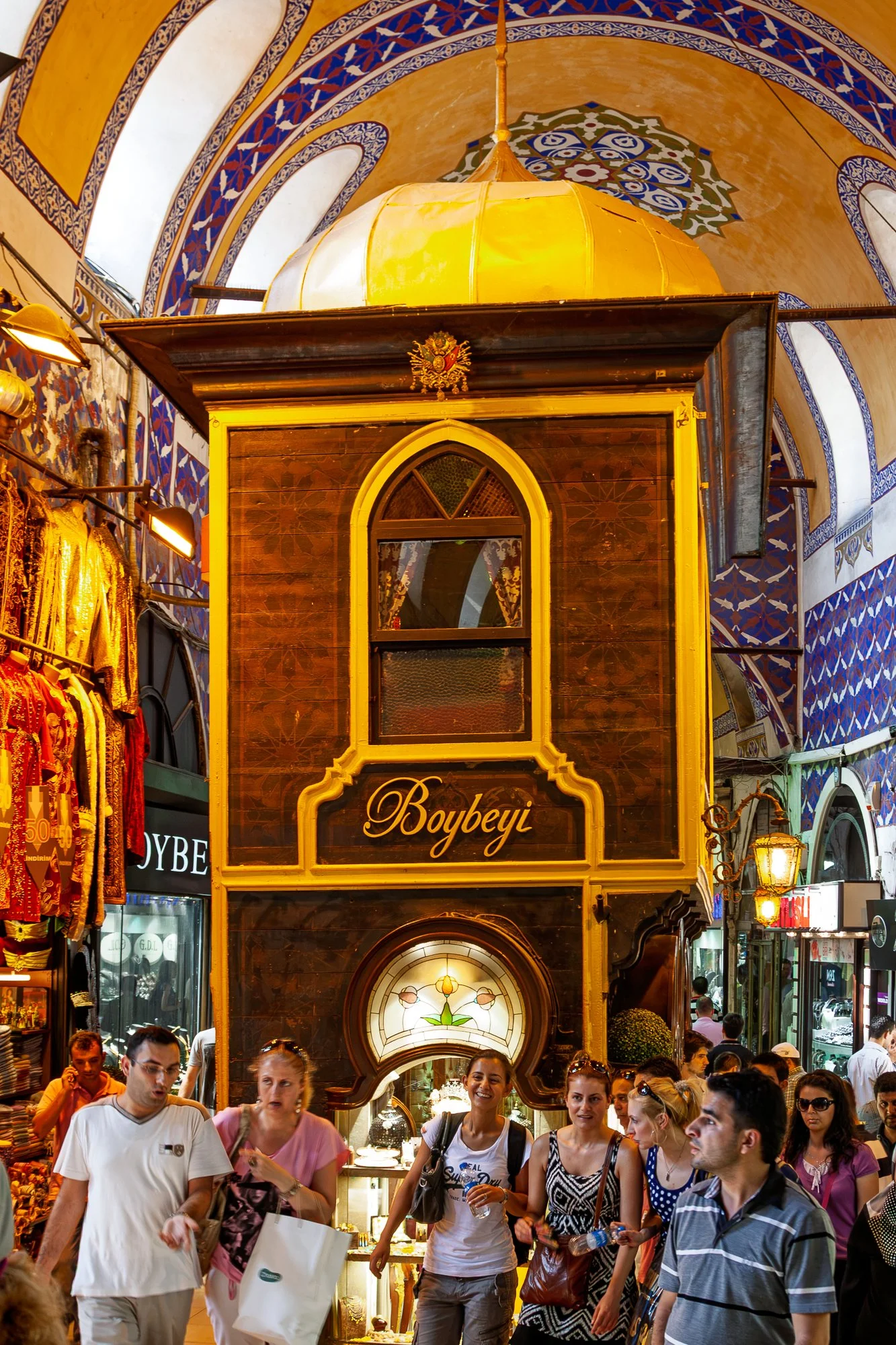
The Boybeyi kiosk — Canon EOS 40D
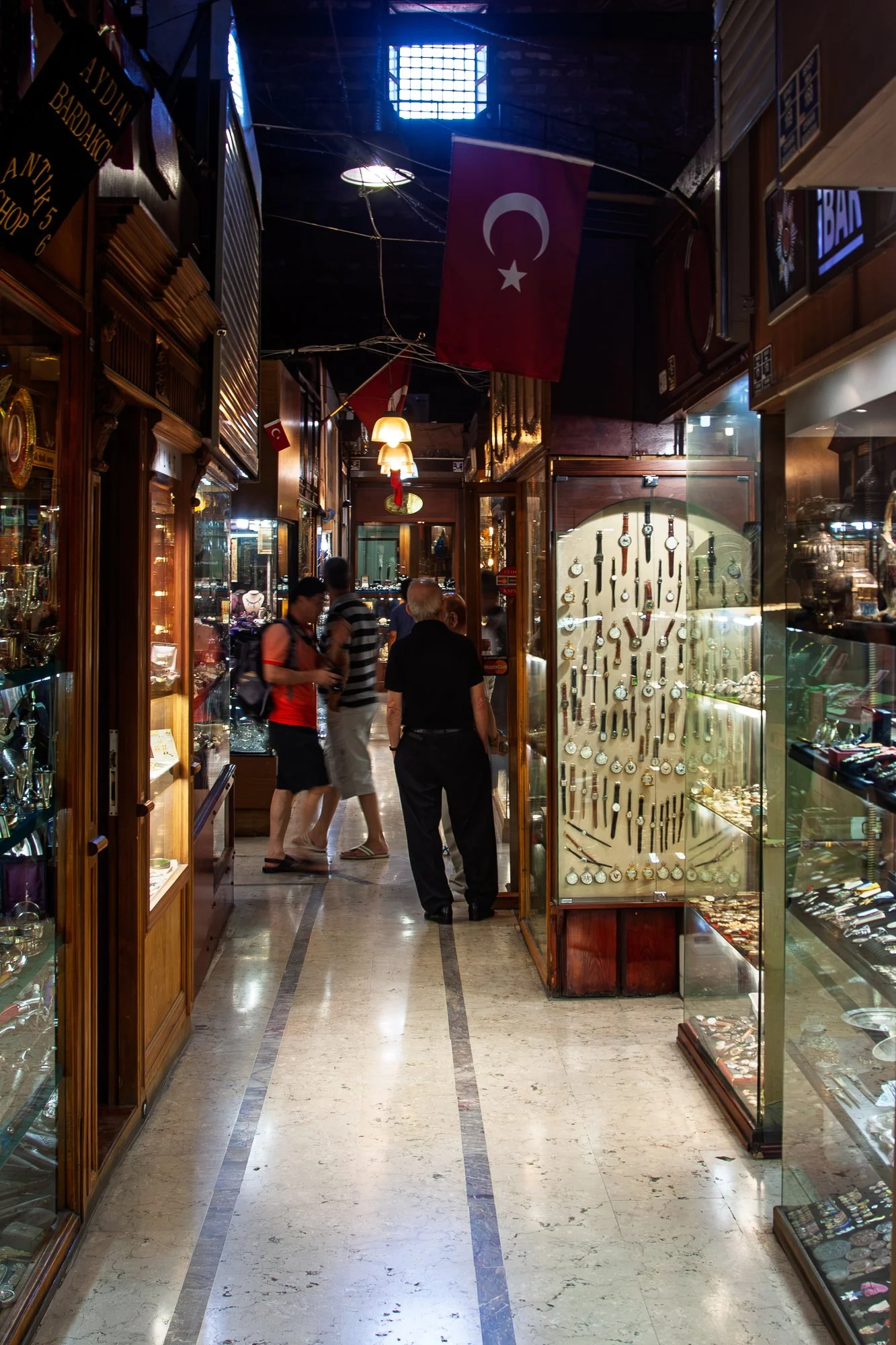
The watch passage — Canon EOS 40D
The People Who Make the Bazaar
The bazaar is a working market, not a museum, and the best pictures come from the transactions. Two women bent over a rack of embroidered purses, comparing them the way you compare anything you are about to haggle for. A group of women in black abayas standing in front of a wall of ceramic bowls, the colour contrast doing all the work. A man in white kitchen clothes with a silver samovar strapped to his back and a bag of bread under his arm, threading through the crowd to make a delivery.
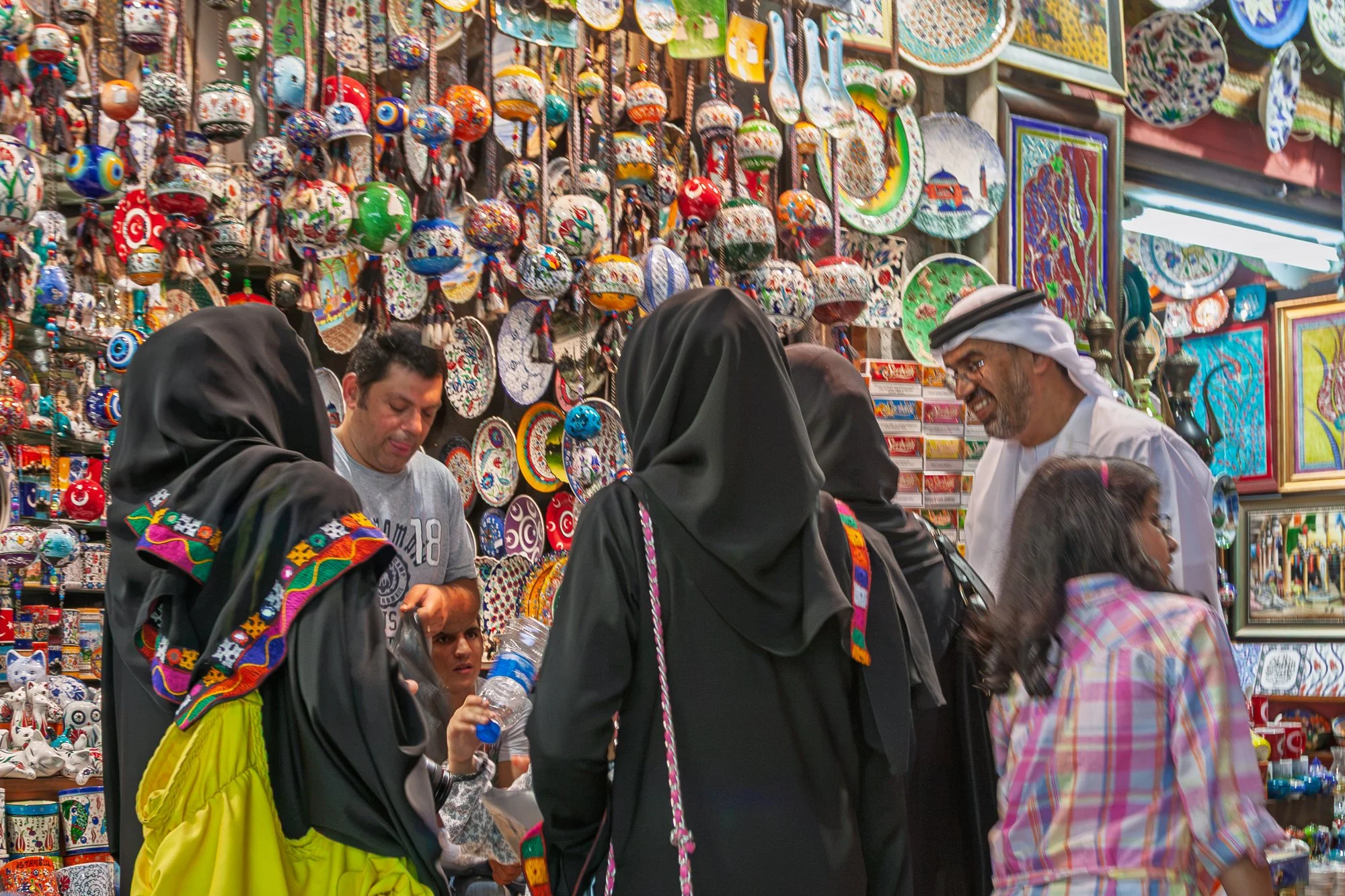
Colour against black — Canon EOS 40D
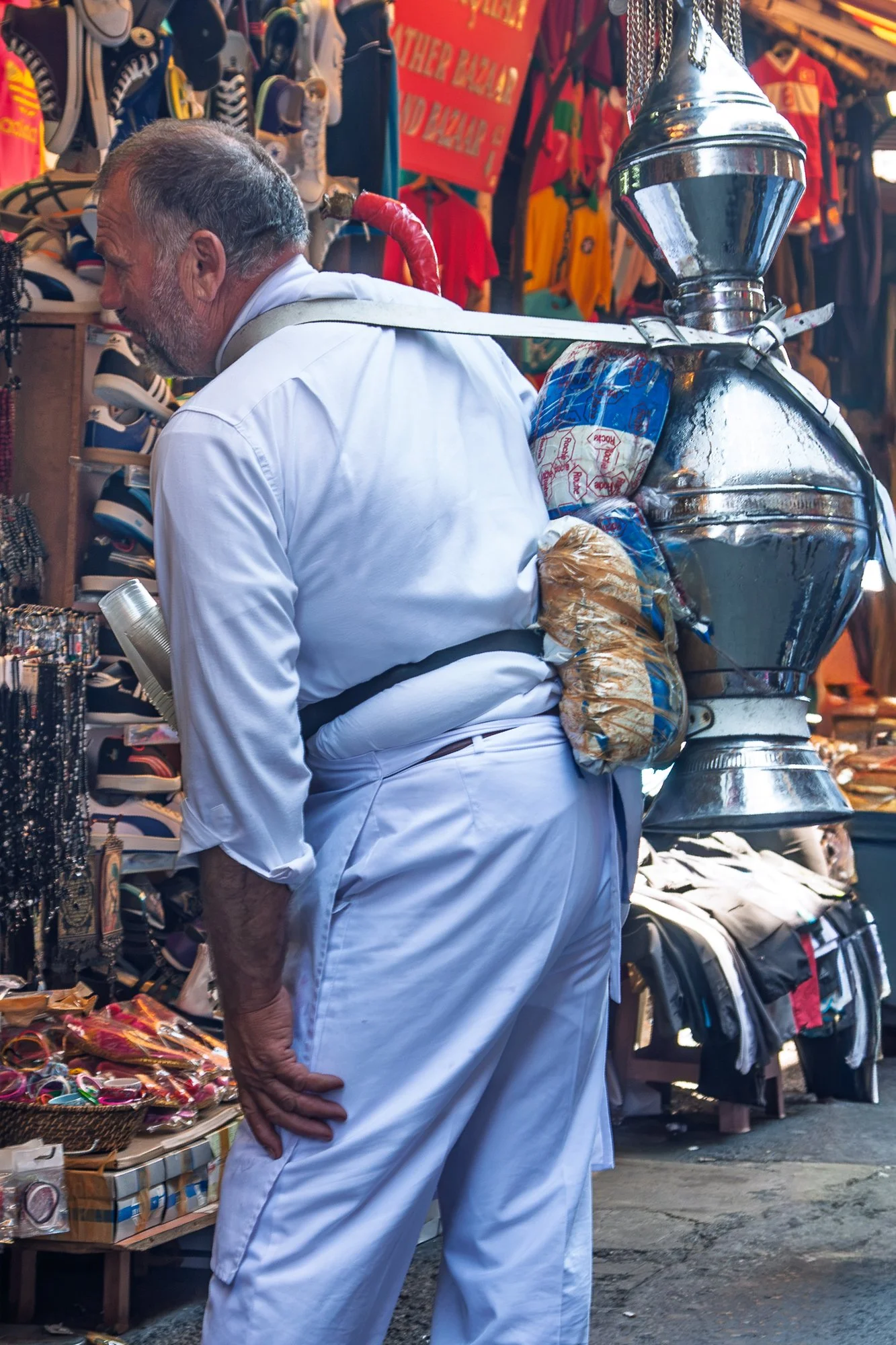
Delivery — Canon EOS 40D
There is a small time capsule in one of these frames: a handwritten sign on a souvenir stall reading 0,50 TL. That was 2010. Half a lira bought you a bookmark then, and the number tells you more about the years since than any caption could. It is one of the quiet pleasures of going back into an old archive — the pictures record things you did not know you were recording.
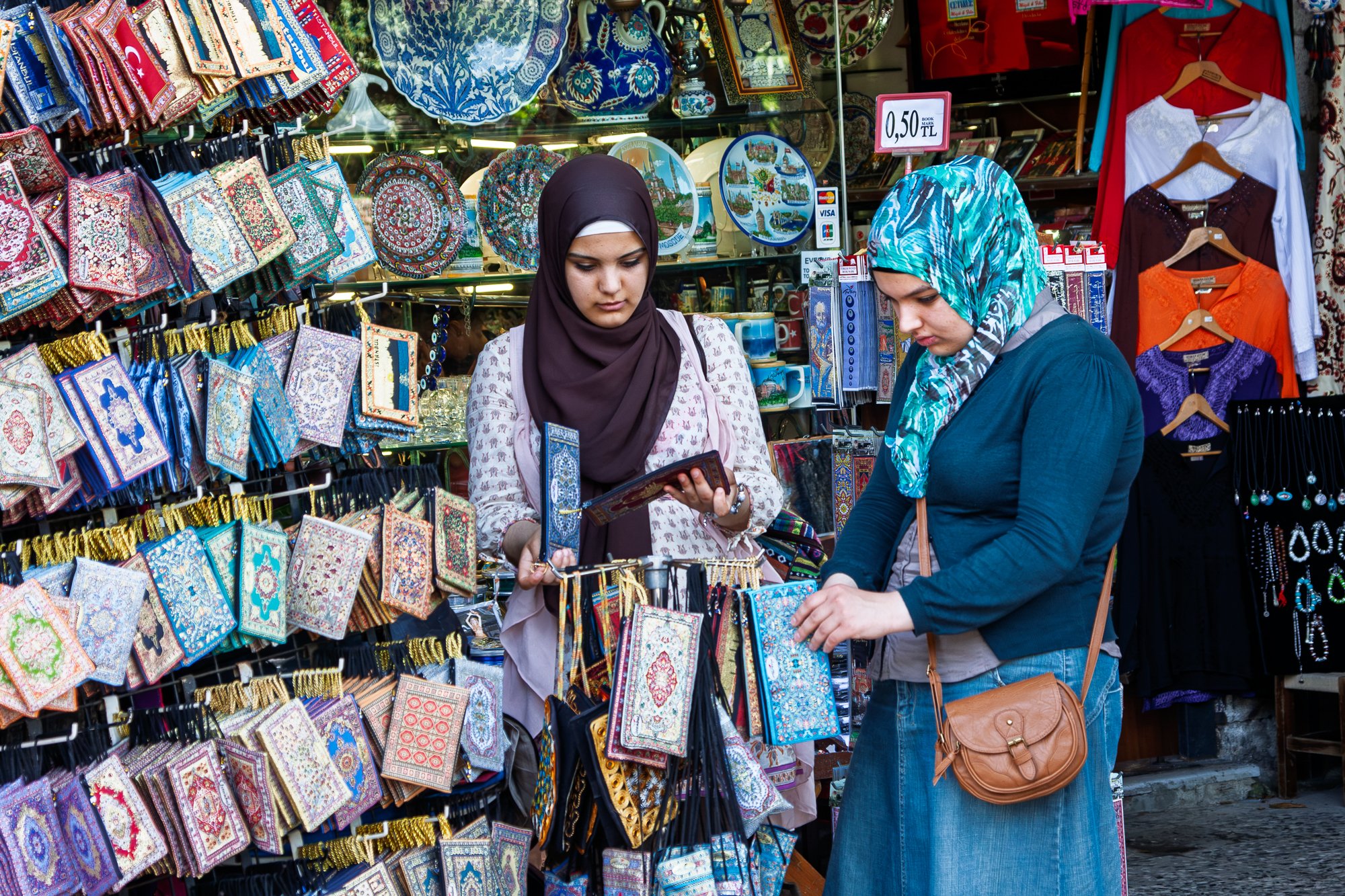
0,50 TL — Canon EOS 40D
Where the Bazaar Spills Into the Street
Kapalıçarşı has no clean edges. Walk out through one of the side gates and the market simply continues under different rules: an arch painted with signs for kilims, ceramics and textiles, opening onto a lane where the carpets hang from the walls; a courtyard behind the arcades where a grapevine has been trained across a blue awning and the noise drops away almost completely. That courtyard was the only place we sat down all afternoon. After two hours under the vaults, green leaves and daylight felt like a different city.
Out there the market stops being a building and becomes a trade. The simit sellers with baskets on their heads, the shoe-shiner with his brass-fitted box, the corn carts under striped awnings — they work the streets the bazaar feeds into, and they turned out to be a story of their own. I collected them in Istanbul's street vendors and the city's old trades.
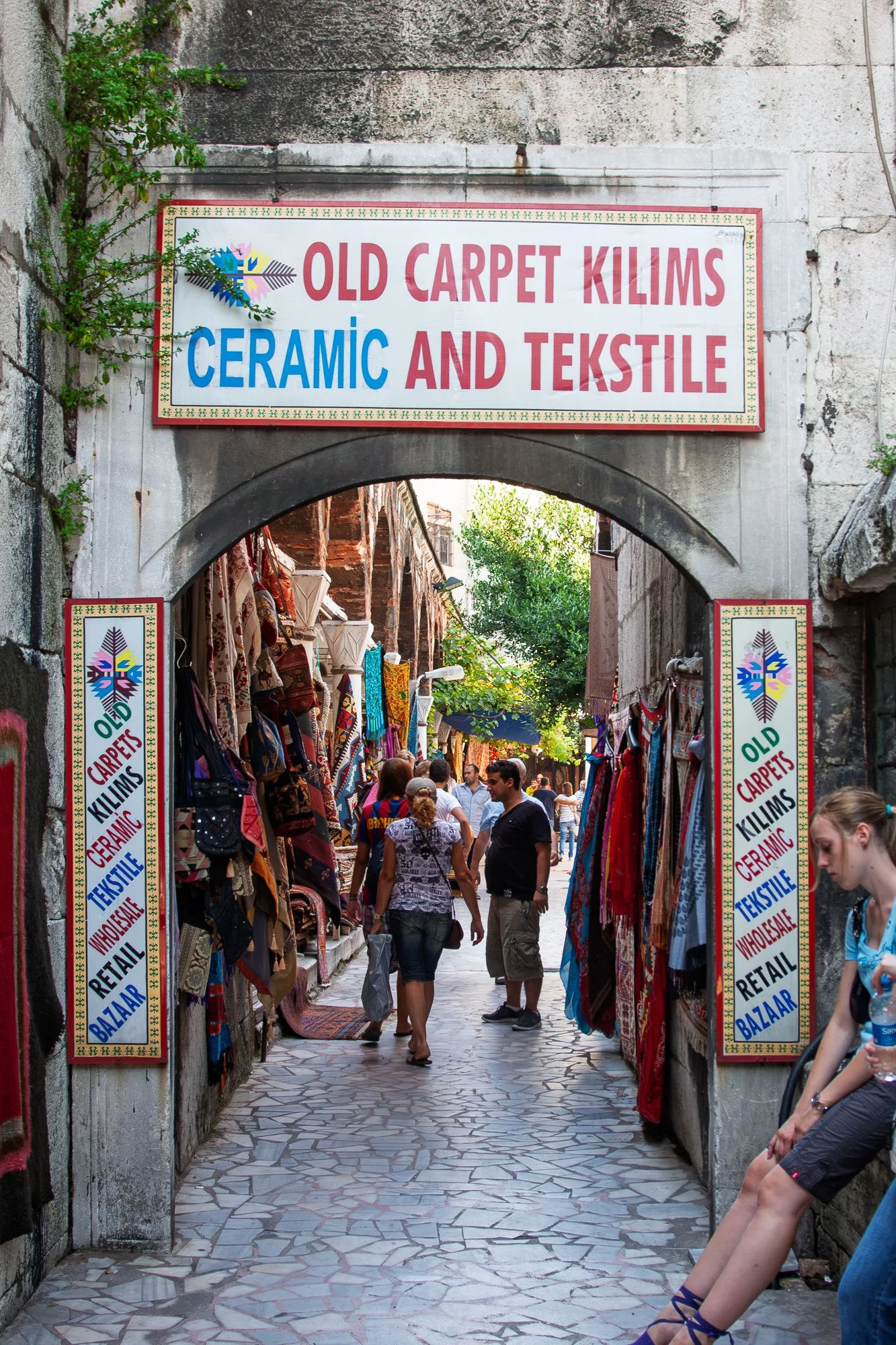
Out through the side gate — Canon EOS 40D
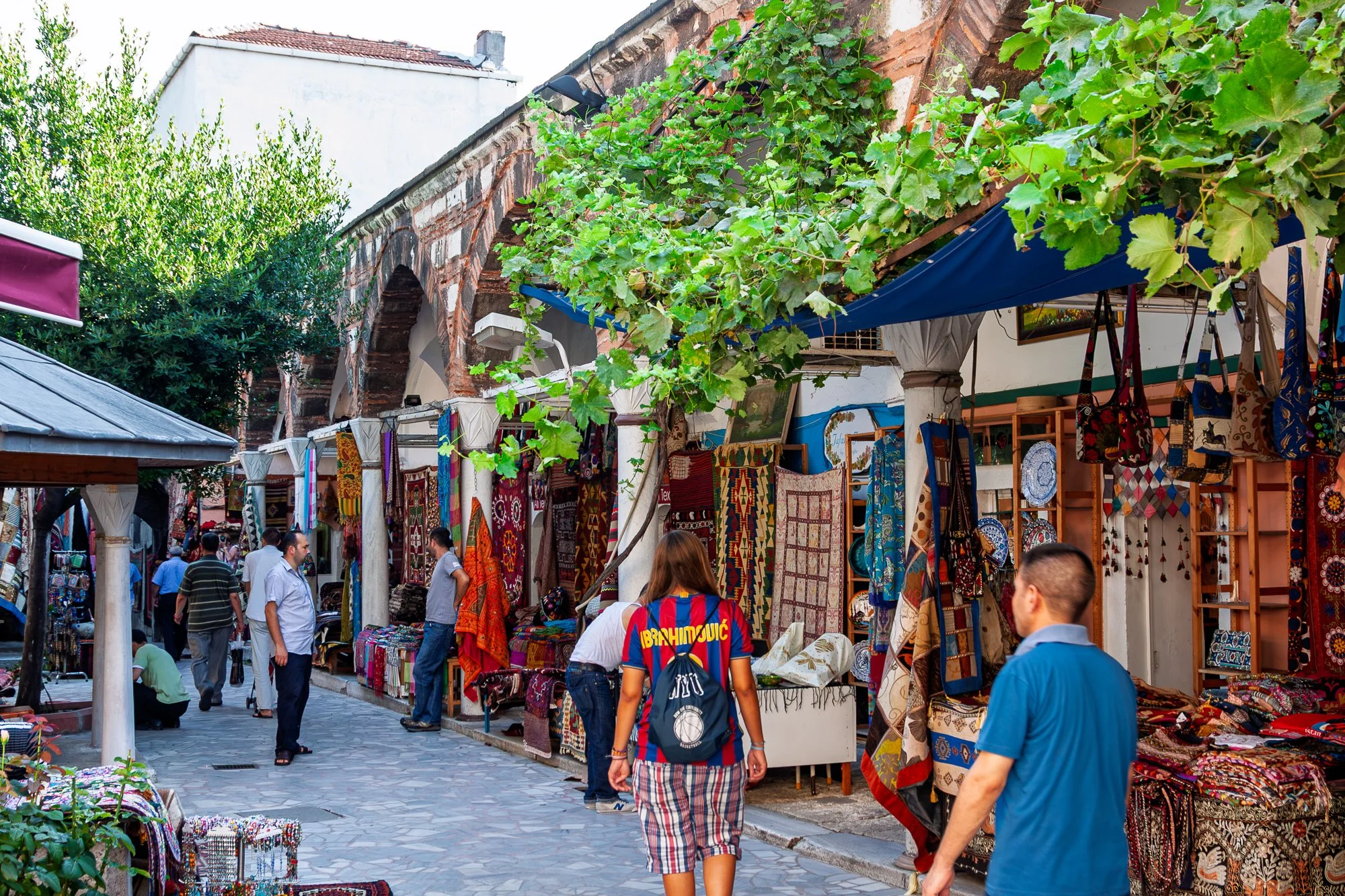
The courtyard — Canon EOS 40D
If you photograph the Grand Bazaar, give yourself the hour on either side of it. The gates, the approach streets and the hans behind the walls are where the market stops performing and starts working, and that is usually where the photographs are.
If you go, arrive early. The vaults are at their emptiest before eleven, and the light through the side windows is at its most useful.
Photos: Canon EOS 40D · Canon 24-105mm f/4L · ISO 400–800 · 1/6–1/250s · Istanbul, 2010
See more street photography in the portfolio.
Want one of these on your wall?
Every photo on this site can be printed — archival paper, signed and numbered. Browse prints →
Cosme Lapena is a Barcelona-based street and urban photographer and founder of bCLPhoto.
Exhibited at espai [b] since 2010 · Published in The Eye of Photography and 35mmc. Browse the portfolio or read more on the blog.