Mercat del Born Ruins and Its Iron Roof
Nobody expects a market to be the most honest building in the neighbourhood. The Mercat del Born ruins lie under a roof that was never meant to protect them, in a hall built for fish and vegetables, in a city that spent a century deciding what to do with the space. We went back this summer with the Q3 and came out with a post about iron.
This is the third part of our El Born series. The first two looked at the people who fill these streets and the medieval stone they walk through. This one stops at a single building on Plaça Comercial and stays there.
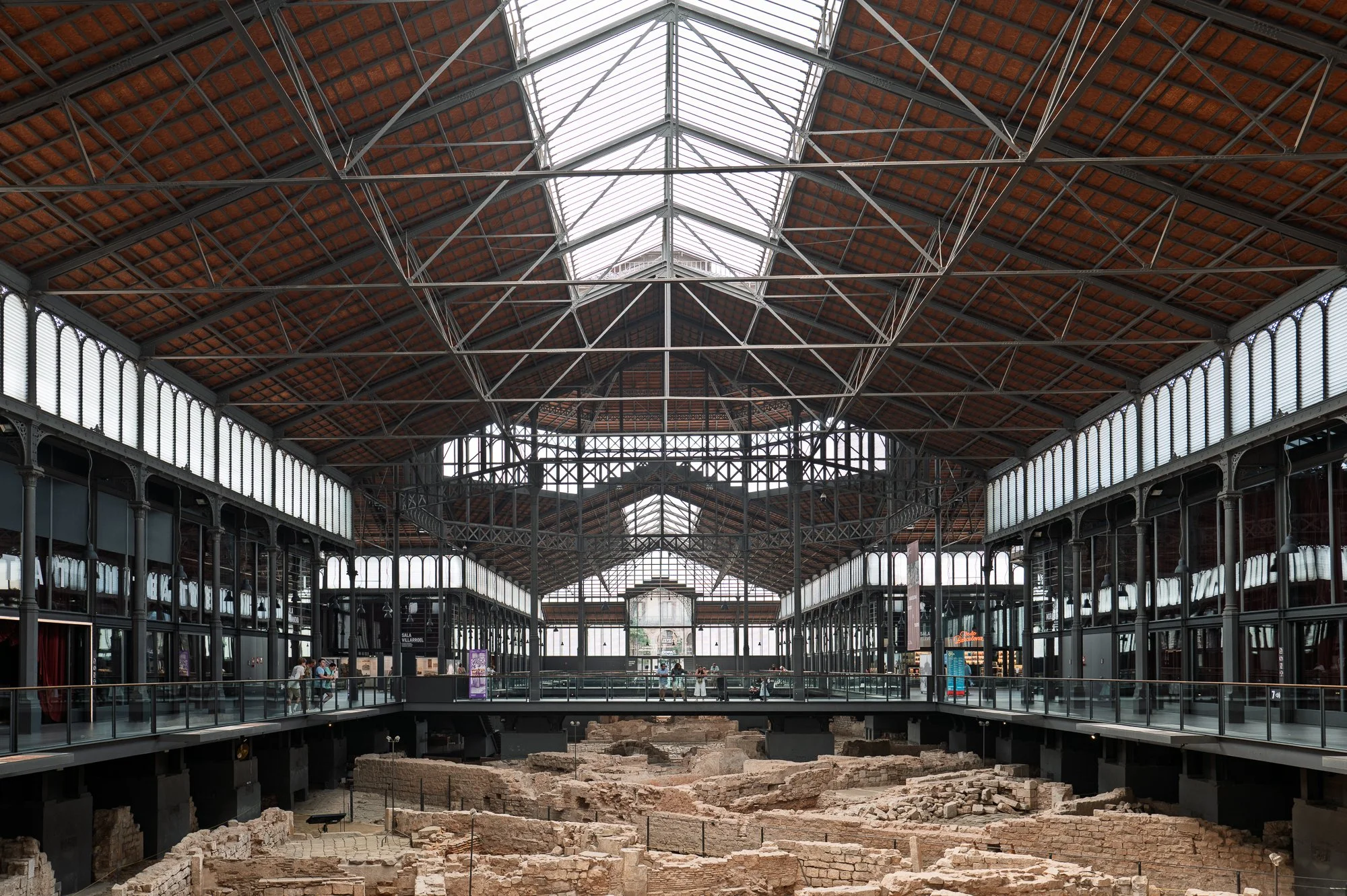
The largest room in the neighbourhood — Leica Q3
Fontserè's Iron Roof
The date is cast into the pediment: 1876. Josep Fontserè i Mestre built the market between 1874 and 1876, in the years when Barcelona had just pulled down its medieval walls and was inventing what came next. Cast iron columns, glazed lunettes, an octagonal lantern over the crossing. It is the same structural confidence you find in Les Halles or in a Victorian railway shed, and it was the largest covered structure in the city when it opened. Fontserè had won the competition to lay out the Parc de la Ciutadella a few years earlier, and the market was the endpoint of that whole plan — a new quarter organised around Passeig del Born, on ground the fortress had cleared.
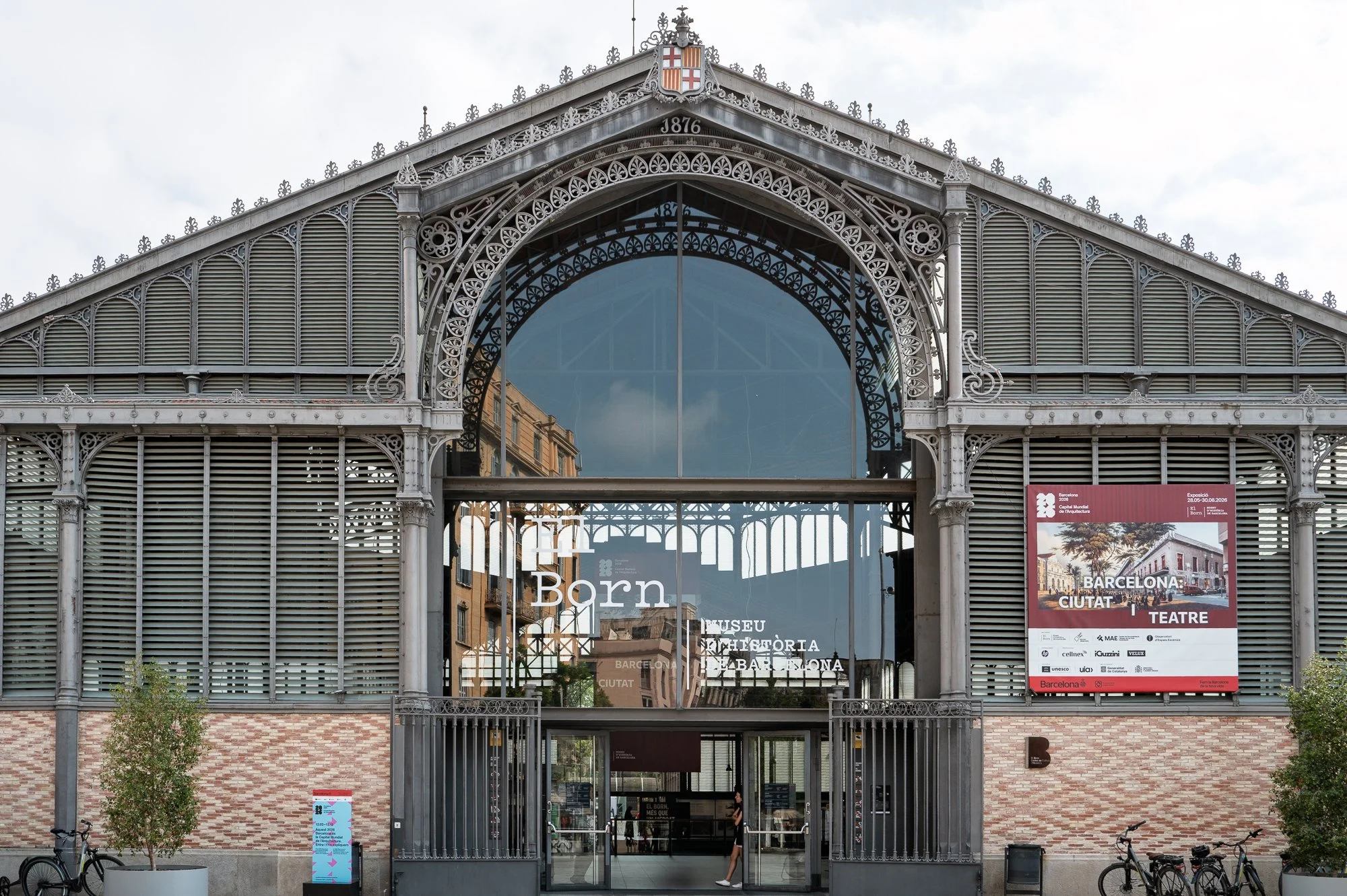
1876, cast into the pediment — Leica Q3
Stand under the lantern and look straight up and you get the frame everyone comes for: eight radiating slopes of terracotta and iron converging on a small glazed oculus, the whole thing as tightly organised as a snowflake. It is worth taking the time to centre it properly. A degree of rotation ruins the symmetry and no amount of correcting in Lightroom afterwards feels the same as getting it right under the roof.
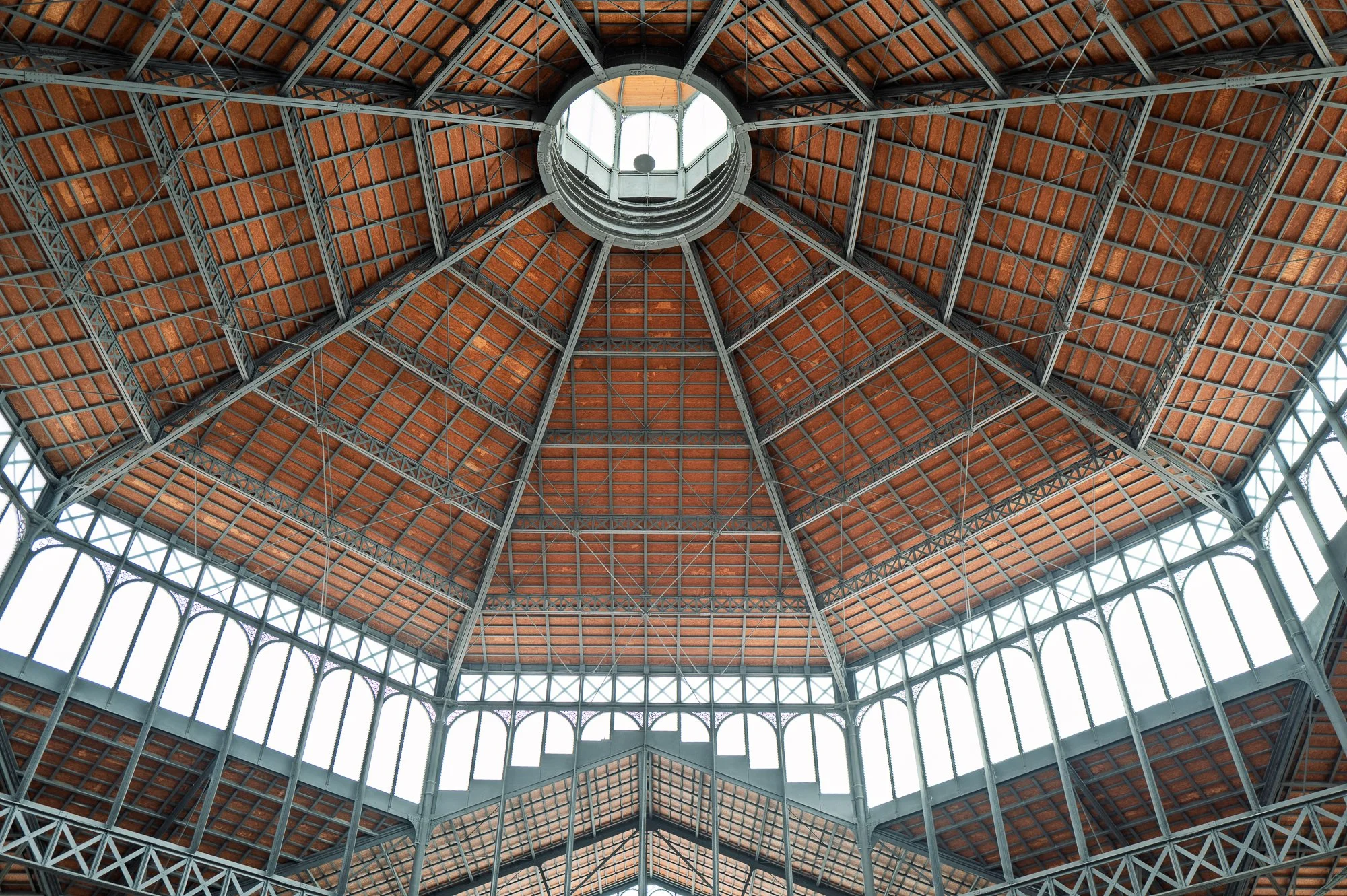
Eight slopes, one oculus — Leica Q3
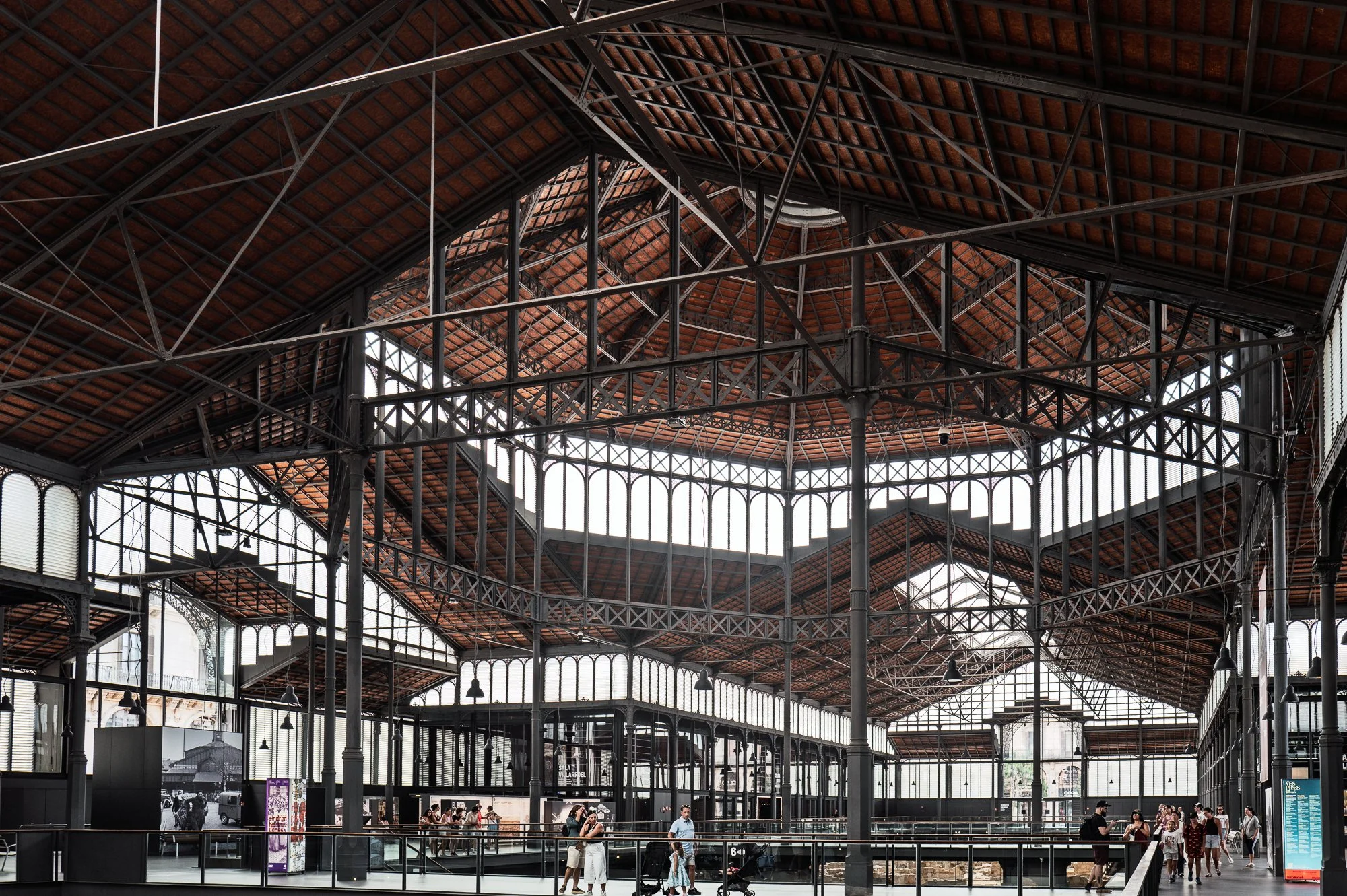
Under the lantern — Leica Q3
The façade rewards the opposite approach. Shot straight on from Plaça Comercial, the great arched window turns into a mirror — you get the ochre building across the square, the sky, and the ghost of the interior structure all layered in the same plane. We shot it twice, once tight on the arch and once wide enough to include the brick base and the plane trees. The reflection does more work than the building itself.
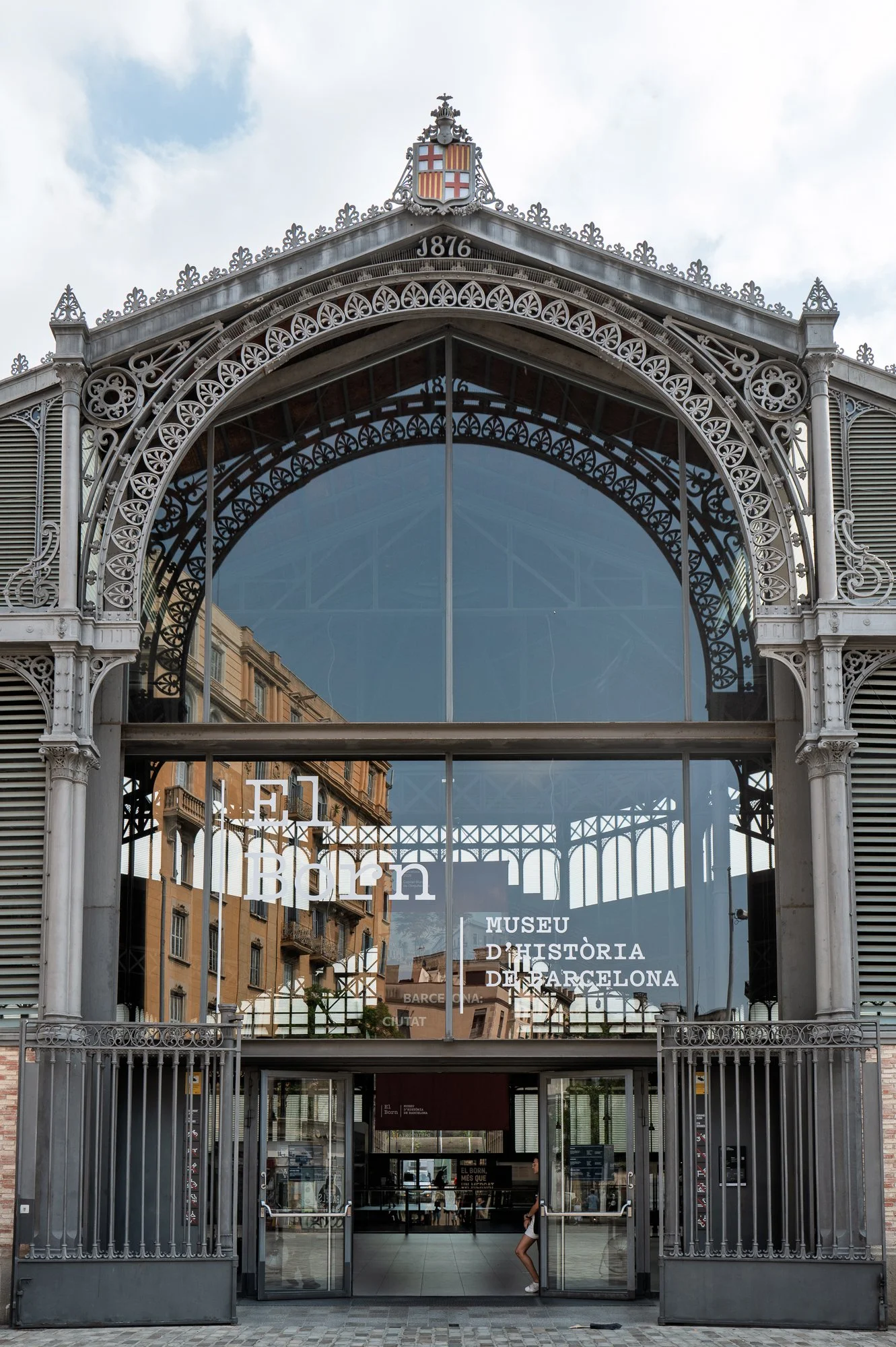
The façade doing its mirror trick — Leica Q3
What They Found Underneath: the Mercat del Born Ruins
The market traded until 1971, then sat empty for thirty years while the city argued. The decision, eventually, was a provincial library. The excavation for it, at the start of the 2000s, turned up something that changed the plan entirely: streets, walls, cisterns and floors from La Ribera — the quarter pulled down after 1714 to clear ground for the Ciutadella fortress.
The library went elsewhere. The building became a lid. It opened to the public in 2013, and since 2025 it has been part of the city history museum, signed on the glass as El Born, Museu d'Història de Barcelona.
You look at the Mercat del Born ruins from a steel walkway that runs around and across the excavation, three or four metres above street level of 1714. That walkway is the whole photographic problem and the whole photographic answer. From up there the ruins read as a plan drawing — legible, tidy, and slightly abstract, a diagram of a place rather than a place. But the walkway also gives you people: two visitors leaning on the rail with the iron arcade behind them, a woman resting her arms on the handrail with the excavation dropping away beneath her. Those are the frames that hold. The stones alone are archaeology. The stones plus one figure are a photograph.
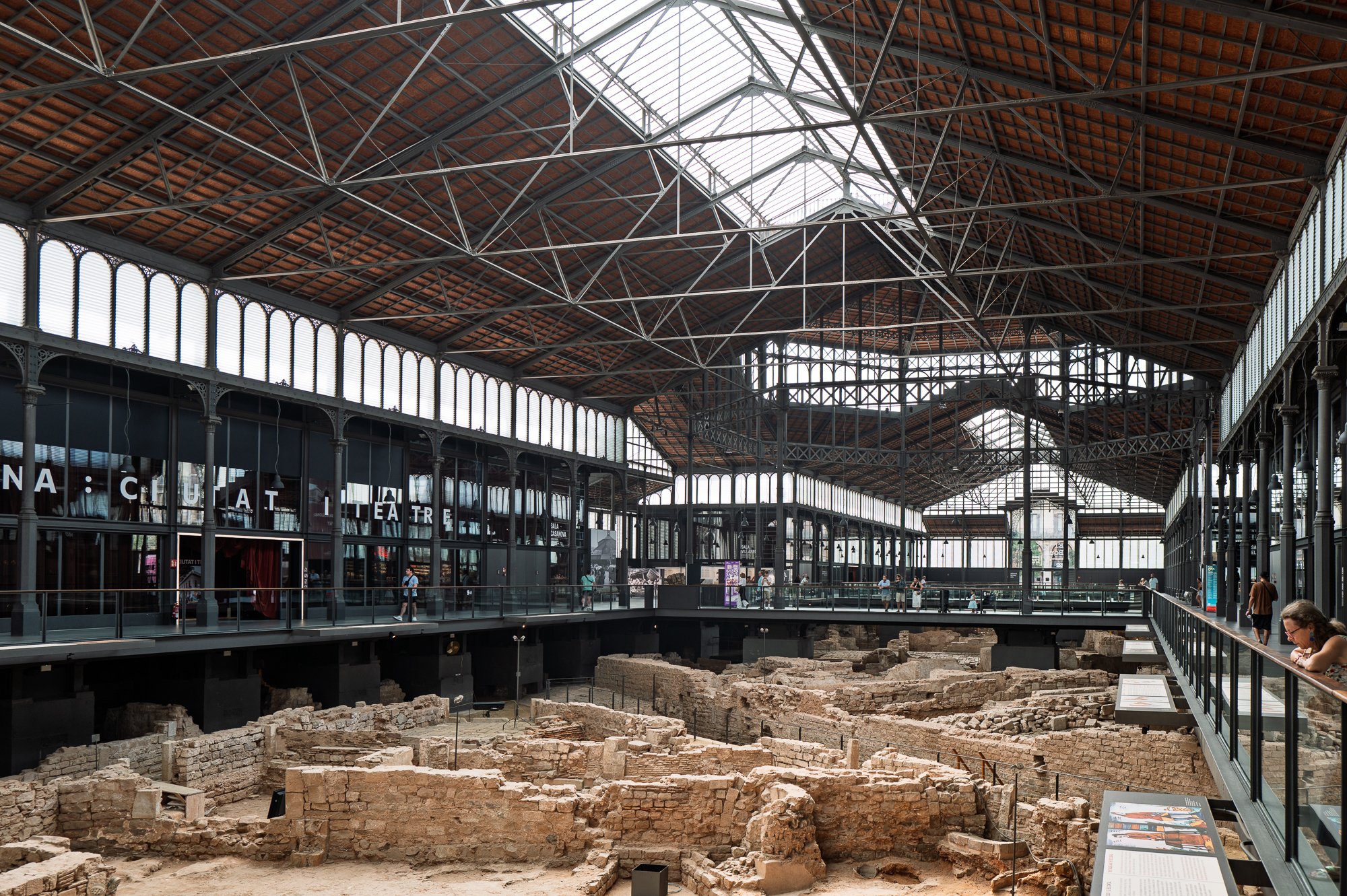
A plan drawing, three metres down — Leica Q3
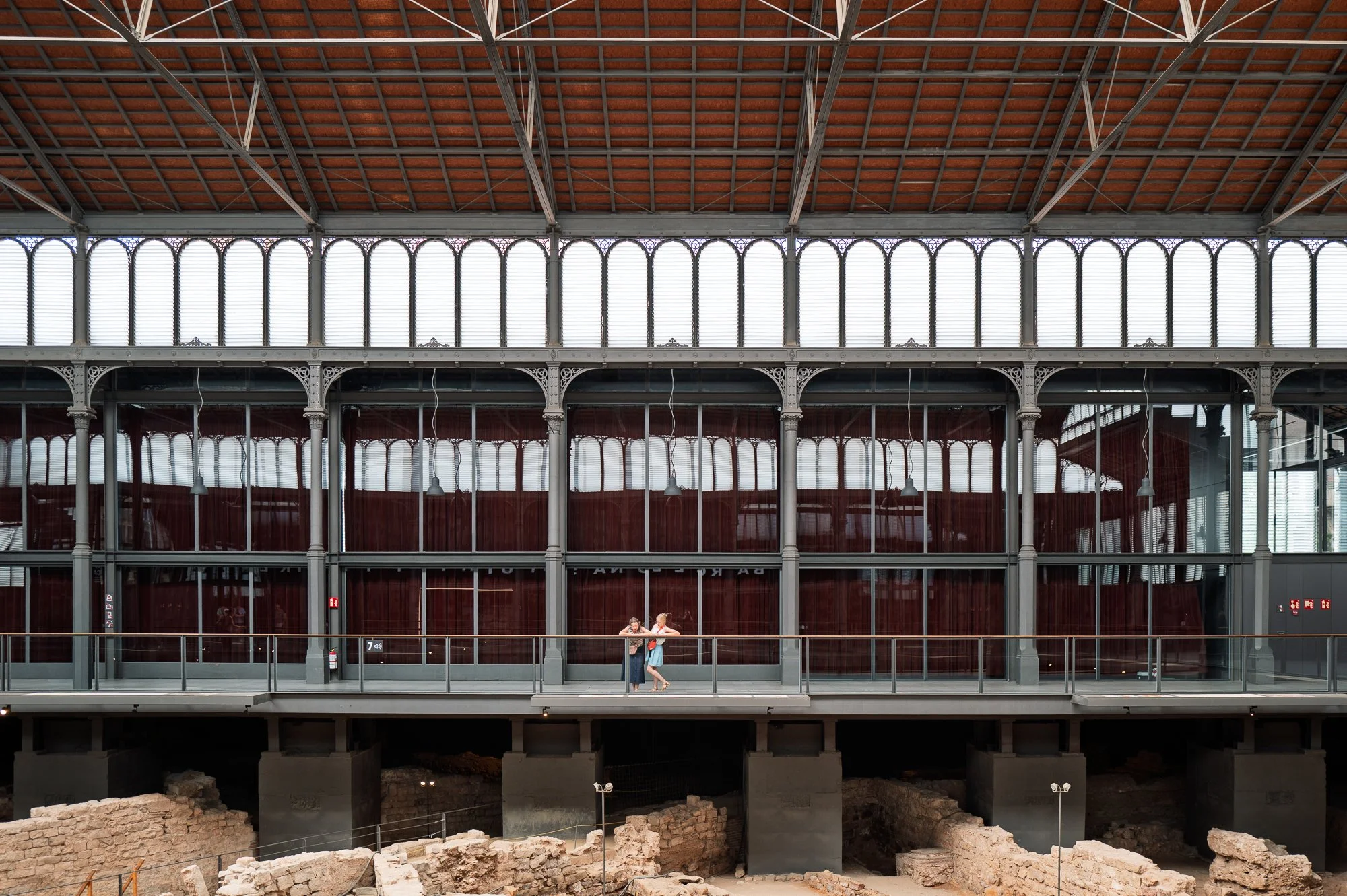
Stones plus one figure — Leica Q3
Photographing Under Glass
The light in here is not difficult so much as contradictory. The lunettes along both flanks are frosted white and read as pure blank at almost any exposure, while the ruins below sit in a soft grey bowl several stops down. If you protect the highlights you lose the excavation; if you open up for the stones, the whole upper half of the frame goes to paper.
We chose the stones, and let the windows blow. It is the honest option — the eye does something similar standing there — and the white bands actually help, because they draw the ironwork as a black graphic line across the top of the frame. Where the two halves had to coexist, we bracketed and blended gently. It is the same discipline as shooting the Sagrada Família interior: decide what the subject is before you decide the exposure.
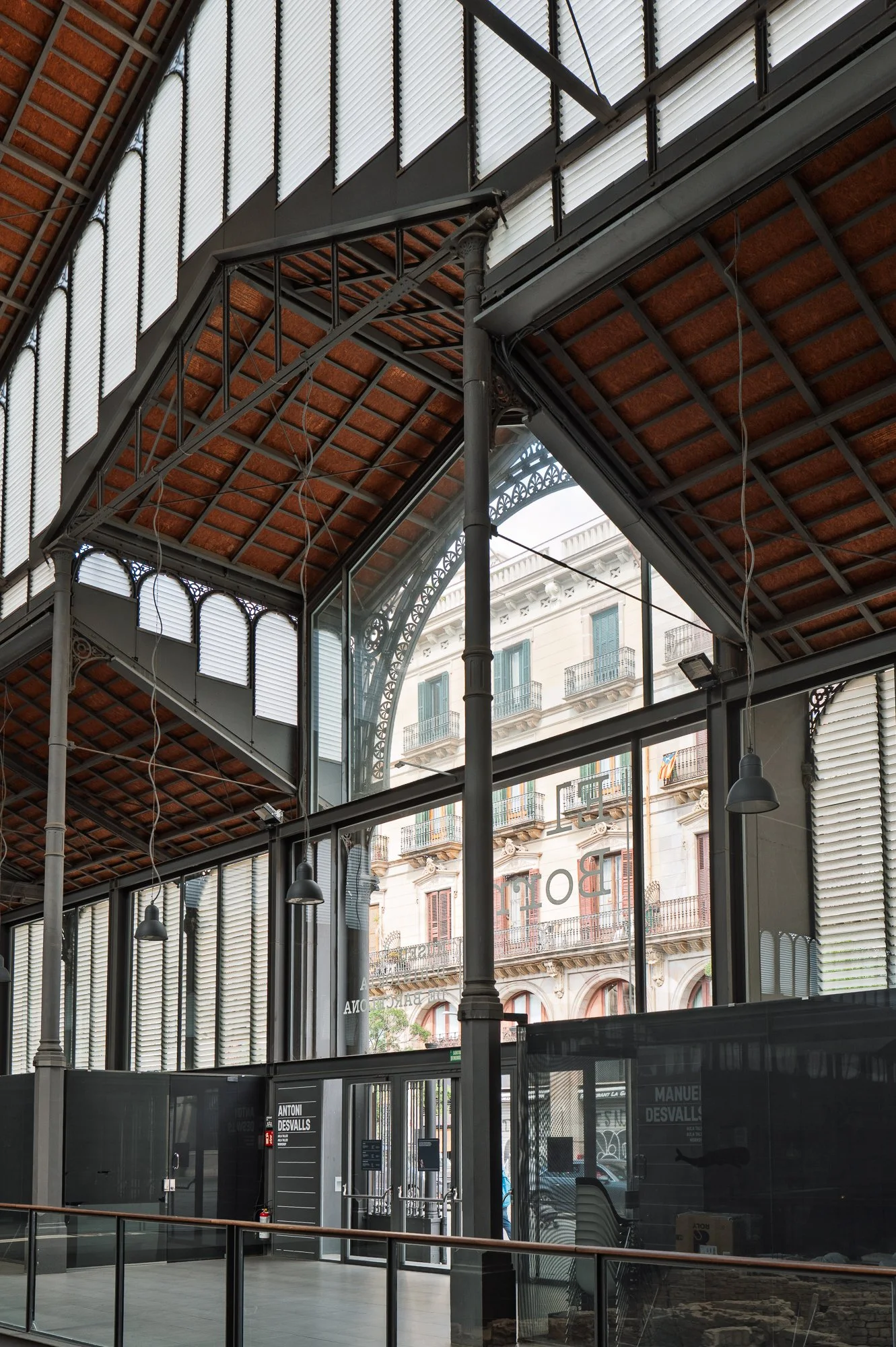
Where the light goes to paper — Leica Q3
The Q3's 28mm is close to ideal for this hall. Wide enough to take the full span of the nave from the walkway, not so wide that the columns start to fall away at the edges. Verticals matter more here than in most street work — the whole appeal of the building is that everything is plumb and repeated — so we kept the camera level and cropped rather than tilting up.
An Iron Market in Barcelona's Architecture Year
There is a good reason to photograph this building in 2026 specifically. Barcelona is the UNESCO-UIA World Capital of Architecture this year, a title that runs from February to December and comes with the UIA World Congress, which the city last hosted in 1996. Most of the attention goes to the obvious names. A nineteenth-century wholesale market that survived demolition twice, and now shelters the thing it was almost built over, makes the argument about as well as any Gaudí roof does.
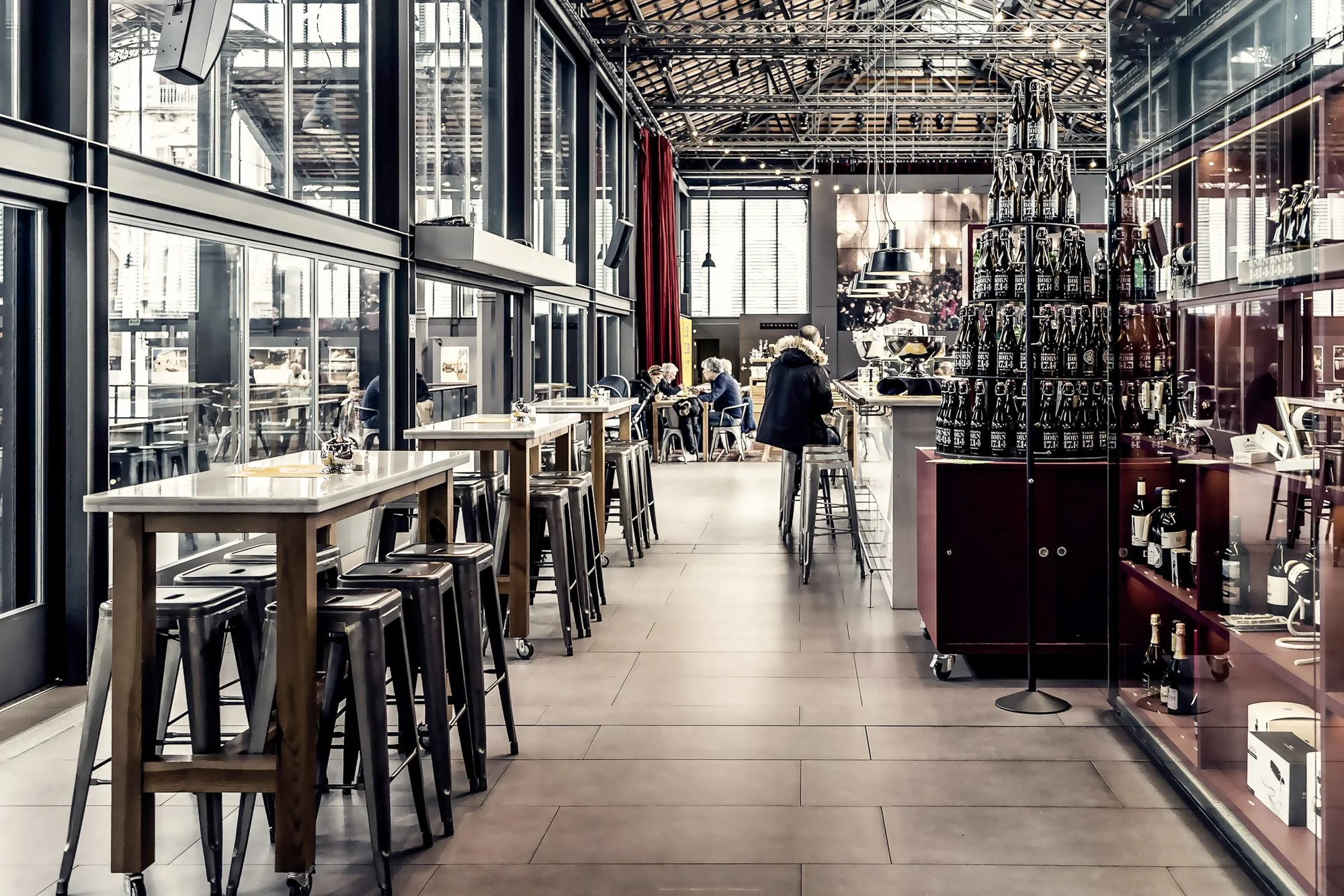
Coffee above the eighteenth century — Sony a7R IV
Step out afterwards onto Passeig del Born and the scale collapses back to human: plane trees, benches, people reading a map in the middle of the paving. Four hundred metres of neighbourhood, and behind you the largest room in it.
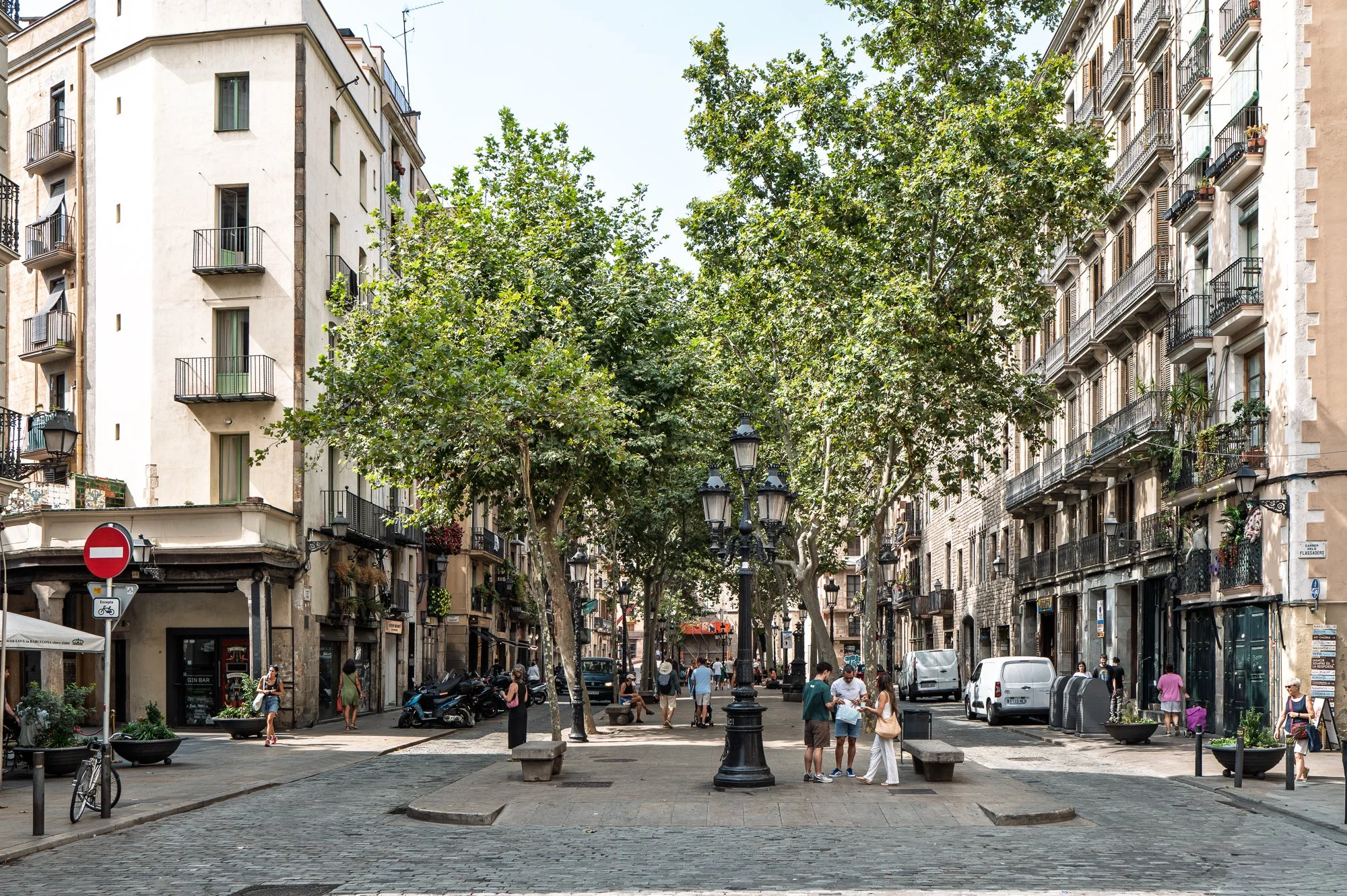
Back out to human scale — Leica Q3
The neighbourhood outside the market gets its own look in our latest post on El Born's terraces, artisans and street art.
Go on a weekday morning, before the light on the lunettes turns to glare, and give yourself twenty minutes just standing under the lantern.
Photos: Leica Q3 · 28mm · Sony a7R IV · El Born, Barcelona
See more urban architecture from Barcelona in the portfolio.
Want one of these on your wall?
Every photo on this site can be printed — archival paper, signed and numbered. Browse prints →
Cosme Lapena is a Barcelona-based street and urban photographer and founder of bCLPhoto.
Exhibited at espai [b] since 2010 · Contributor at 35mmc. Browse the portfolio or read more on the blog.