El Born, Barcelona: Terraces, Artisans and Street Art
El Born is a real neighbourhood, not the theme-park version of the old city that some corners of Barcelona have become. Photographing El Born, Barcelona's street art, its terraces and its shopfronts for an afternoon is a lesson in how little, in some ways, this place has changed: the pavement is still where the neighbourhood happens, not just where it's crossed.
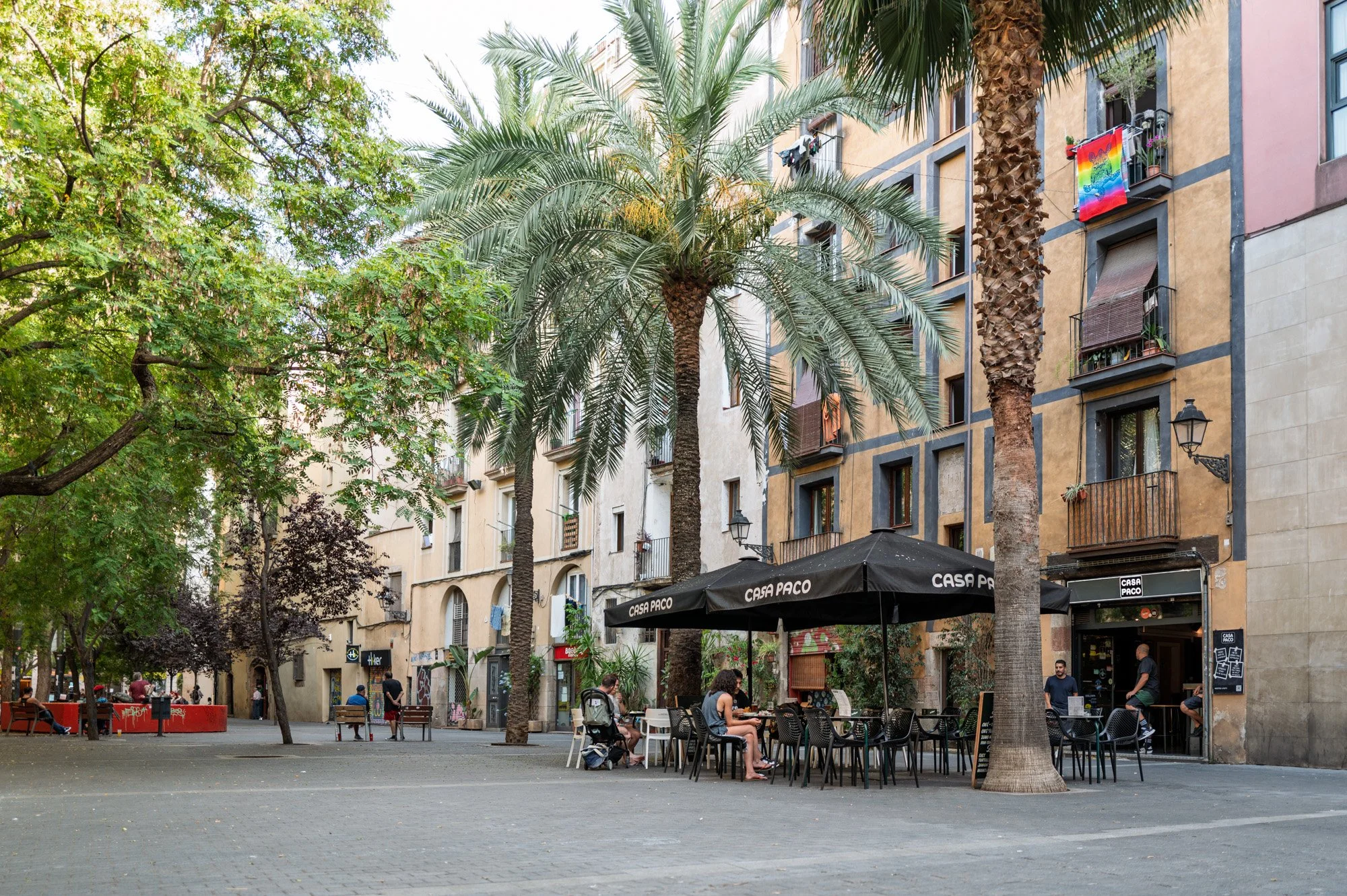
Carrer d'Allada-Vermell, midday
That's the first thing I noticed, camera in hand. The street here isn't a corridor between destinations — it's where shopkeepers greet neighbours, where the flower stall from La Femme Floral spills its buckets and pampas grass onto the cobbles of Carrer de l'Esparteria, where two friends and a dog can hold up a whole corner for twenty minutes without anyone minding. Some of these shops look as though they've traded here for a century, and a few actually have; what's remarkable is how carefully they're kept, not preserved behind glass but used, swept, restocked every morning with evident affection.
I’ve looked at El Born's faces and its Gothic stone and the iron market at the top of the neighbourhood before; this time the camera stayed at street level in between — the terraces, the shopfronts, the walls people walk past without looking up.
Terraces That Spill Onto the Street
Come midday, El Born's bars stop pretending they have an inside. Chairs and folding tables push out past the doorframes until half the sitting happens on the pavement, under palms or awnings or nothing at all, and the neighbourhood's actual business — catching up, arguing gently about football, killing an hour before the next thing — gets conducted three feet from passing foot traffic.
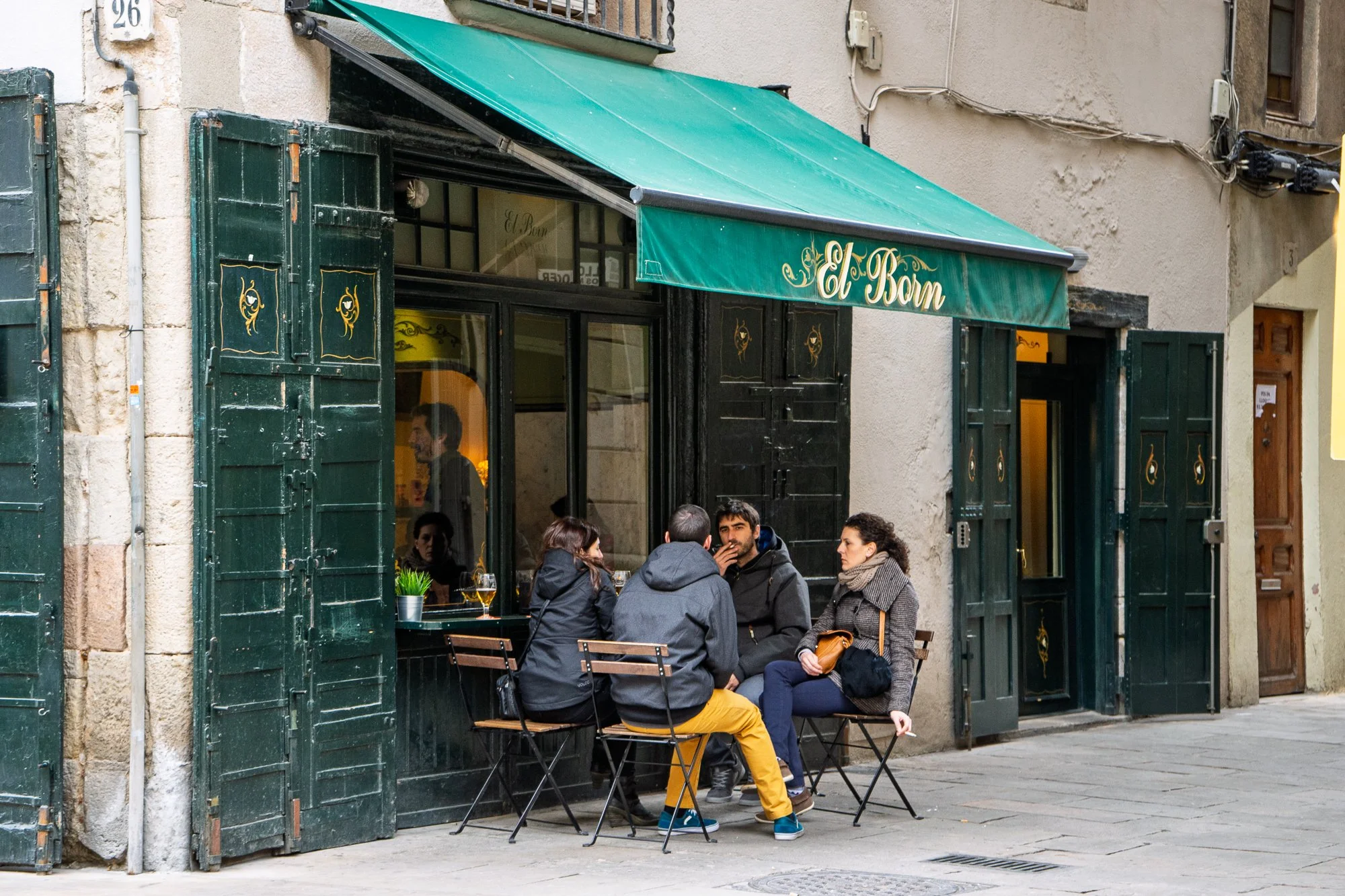
Terrace hour
At Corner, on Carrer de la Pescateria, I watched a dog stand on its hind legs at the counter, patient and shameless, until the woman behind the bar leaned over and fed it by hand; nobody at the surrounding tables so much as looked up. This is evidently a regular transaction.
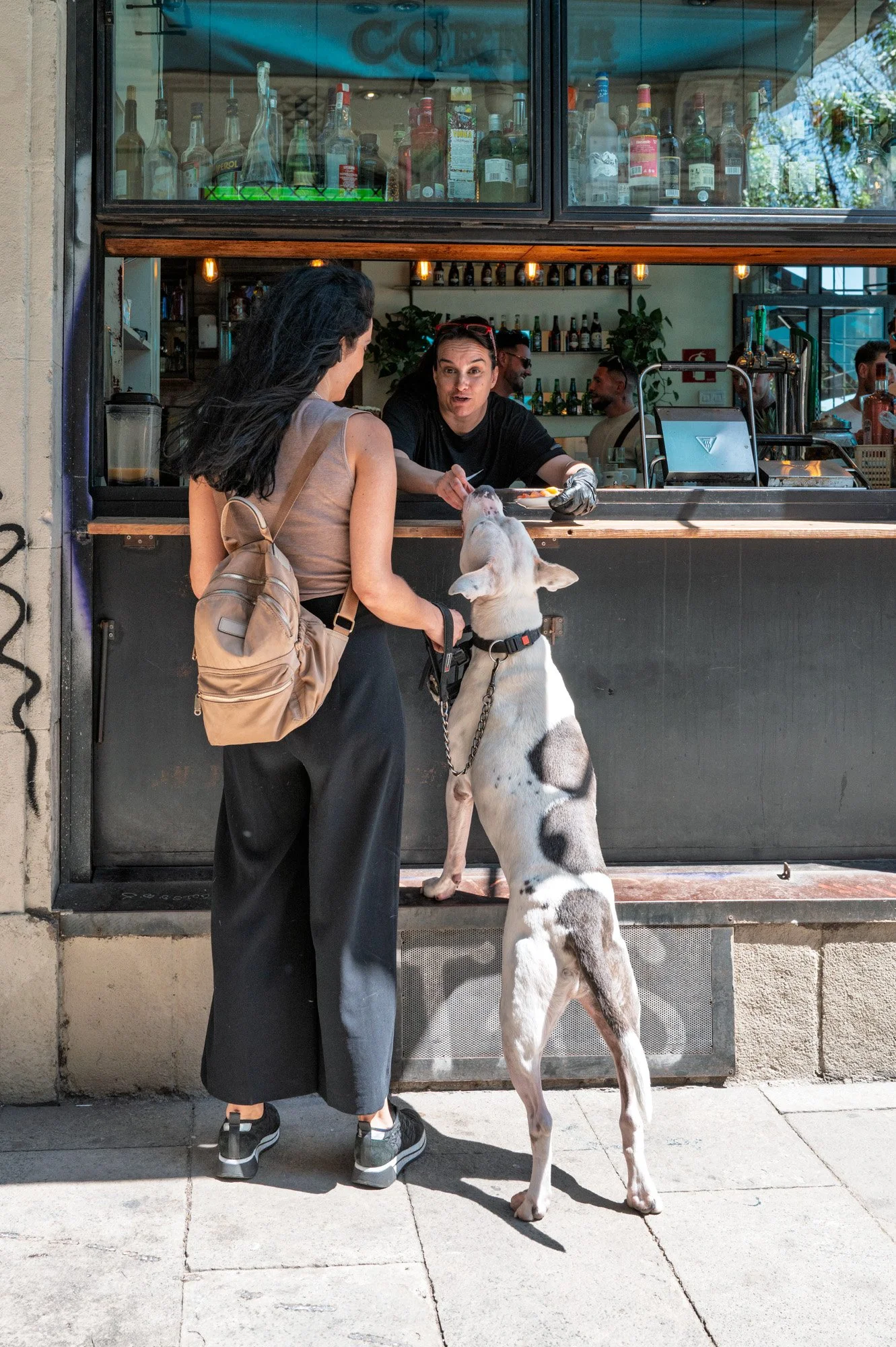
Regulars, four-legged and otherwise
Further along, under the stone arcades that line one of the old squares, two women shared a bottle of wine at a rattan table while their dog dozed against the cool paving. It's a scene that could be thirty years old or from yesterday afternoon, and that collapsing of time is very much the point of a terrace like this — the tables change, the ritual doesn't.
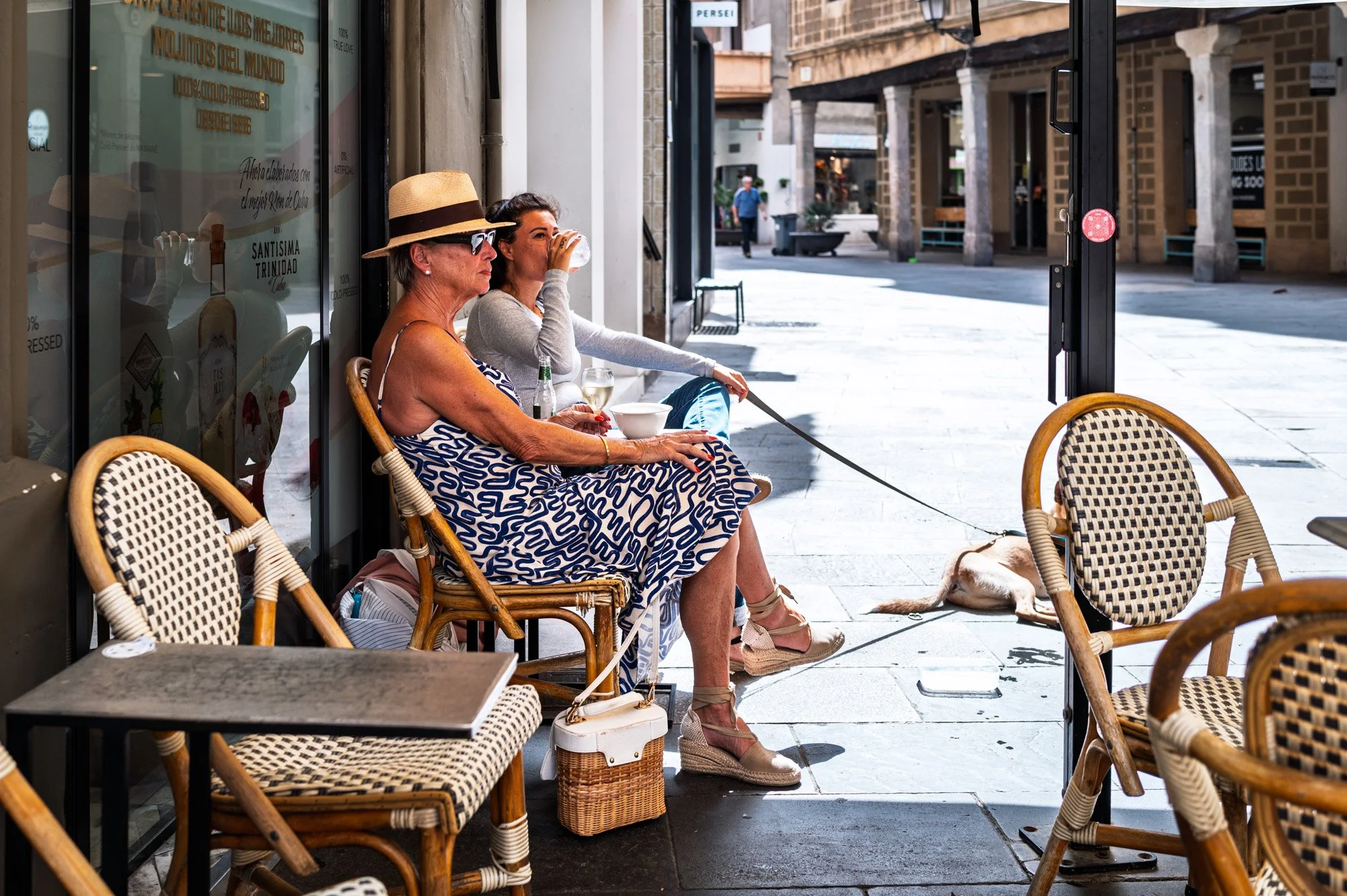
An afternoon under the arcades
Walk past at the right moment and two women in white cross an otherwise empty street in front of a terrace awning, and the whole frame reads as choreography that nobody choreographed.
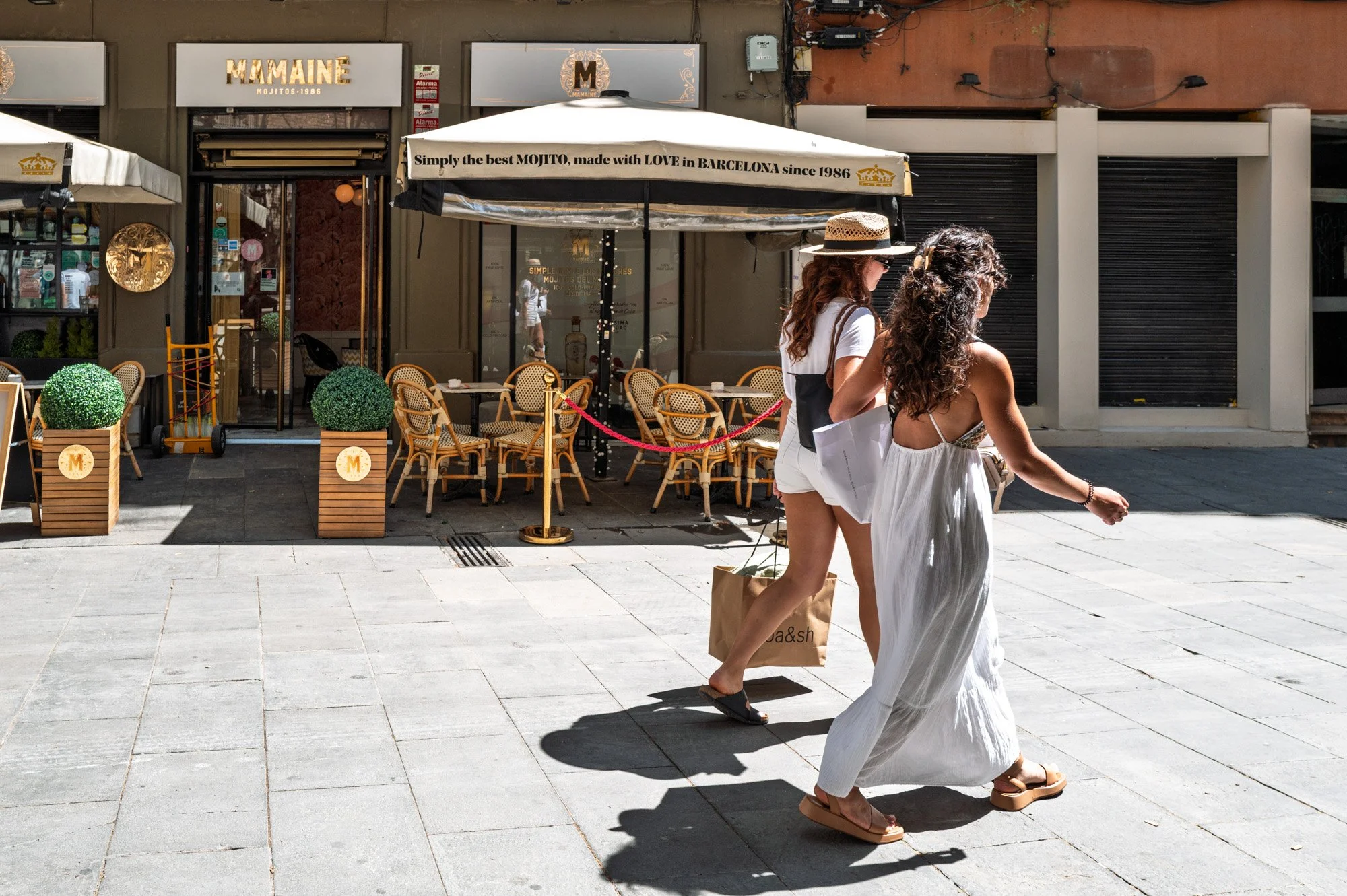
Mamainé, since 1986
The Artisans Who Still Call El Born Home
For every bar terrace there's a workshop or a storefront doing something slower. La Femme Floral, tucked under a pink neon sign on Carrer de l'Esparteria, is as much street theatre as flower shop — buckets of anthurium and dyed pampas grass crowd the cobbles, and on the afternoon I passed, a florist was still arranging stock kerbside as customers stepped around her.
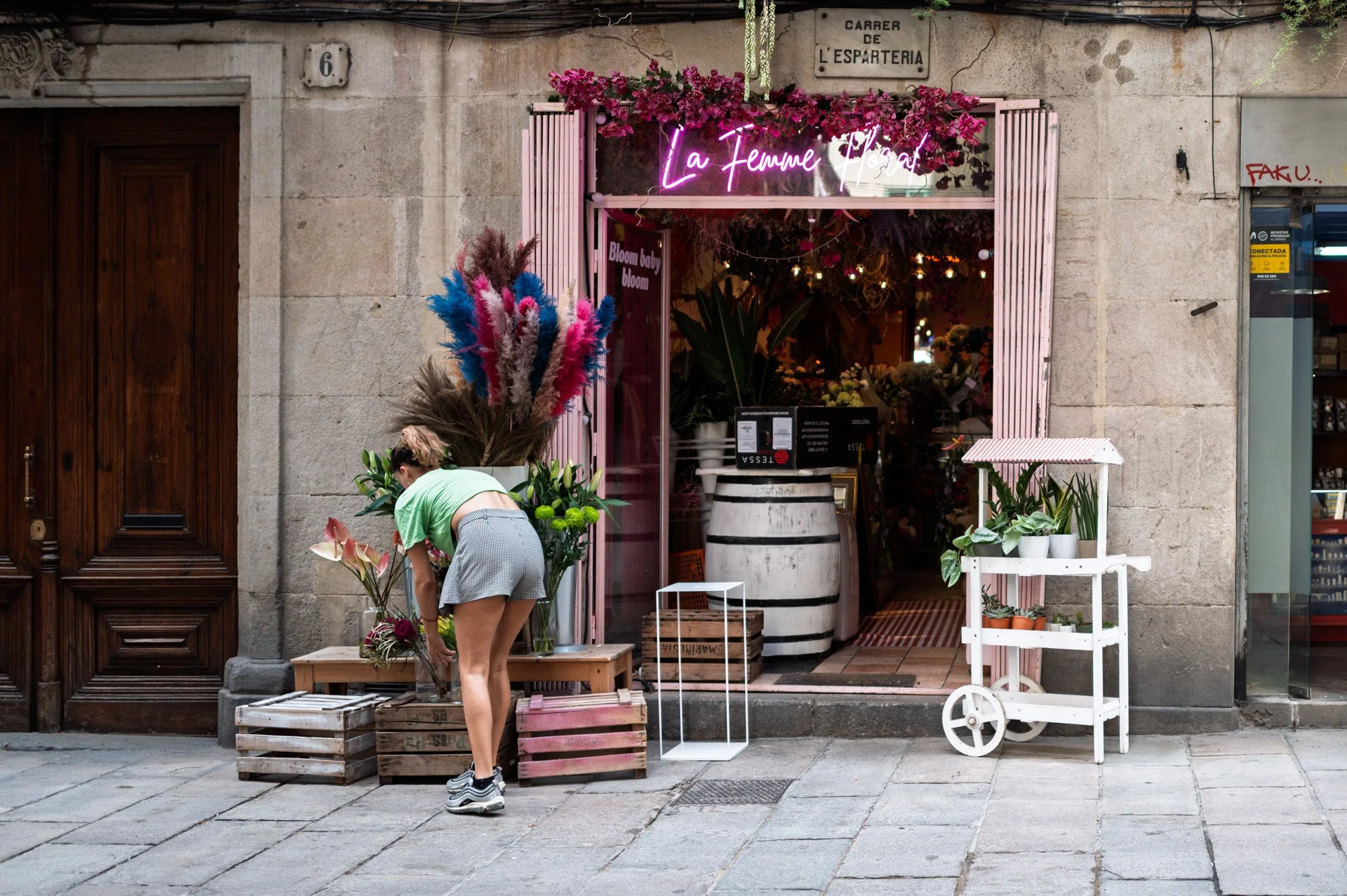
La Femme Floral, Carrer de l'Esparteria
A few doors on, an easel and a folding table were all a street painter needed to sell his own watercolours of Sagrada Família and the Gothic Quarter, propped up between customers with the patience of someone who has done this every day for years.
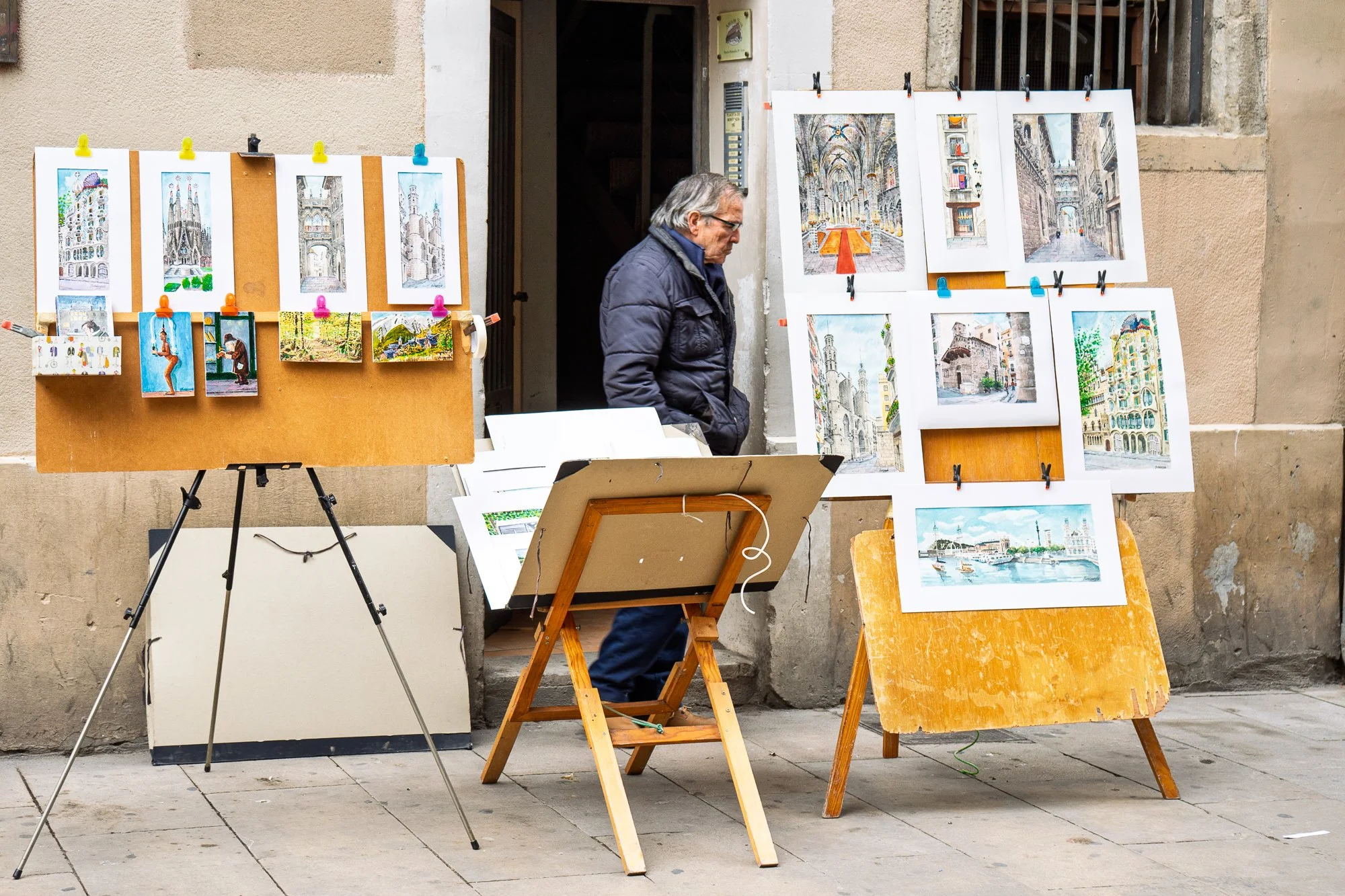
Sagrada Família, in miniature
Round the corner, another artist worked from a photograph on a laptop screen, building up a life-size oil portrait against a doorway one careful layer at a time.
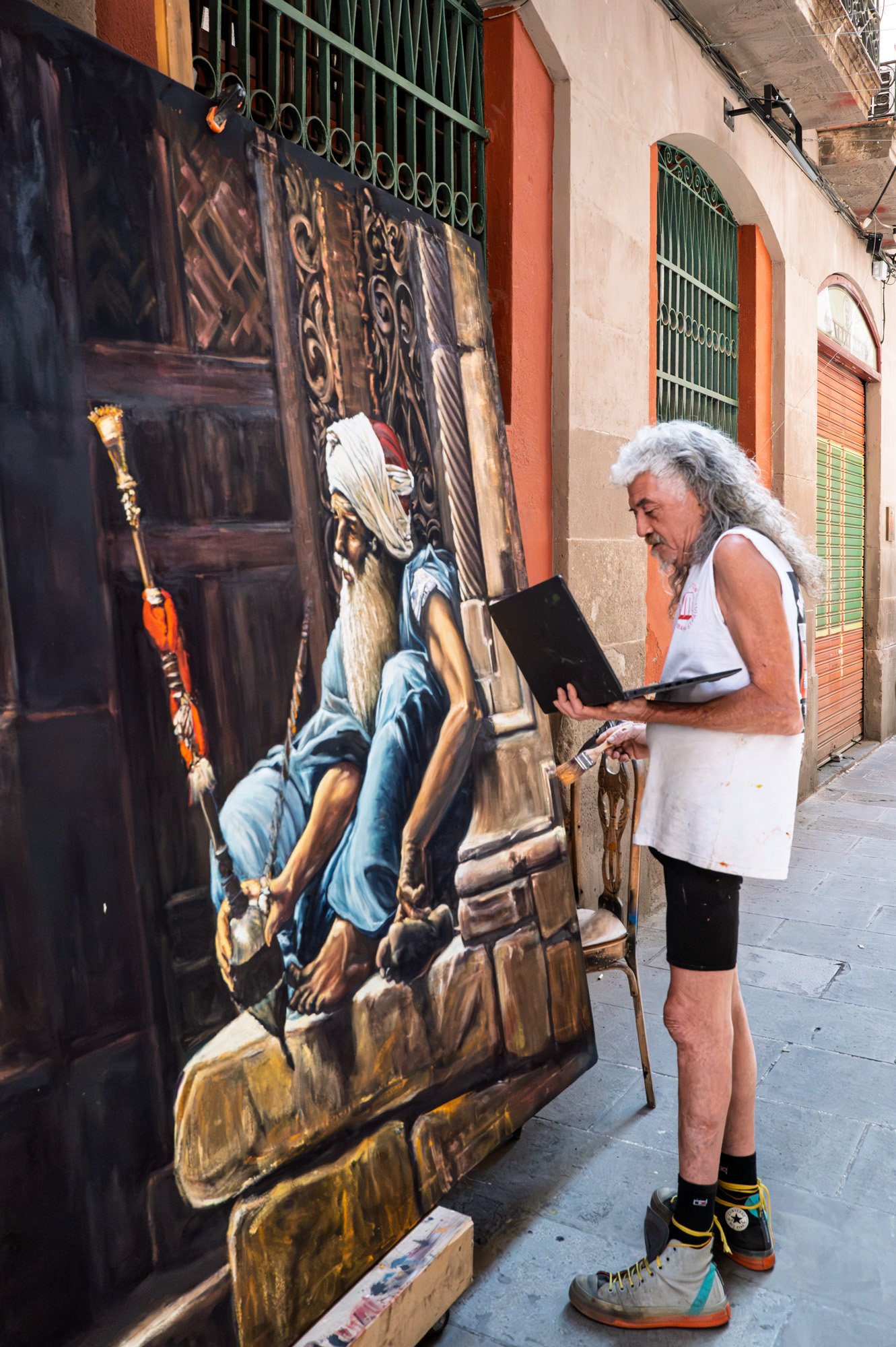
An afternoon's work
Inside, El Born's older shops keep a different rhythm: a nuts-and-wine shop with wicker baskets and glass jars stacked to the ceiling, weighed and wrapped by hand the way it presumably has been since it opened.
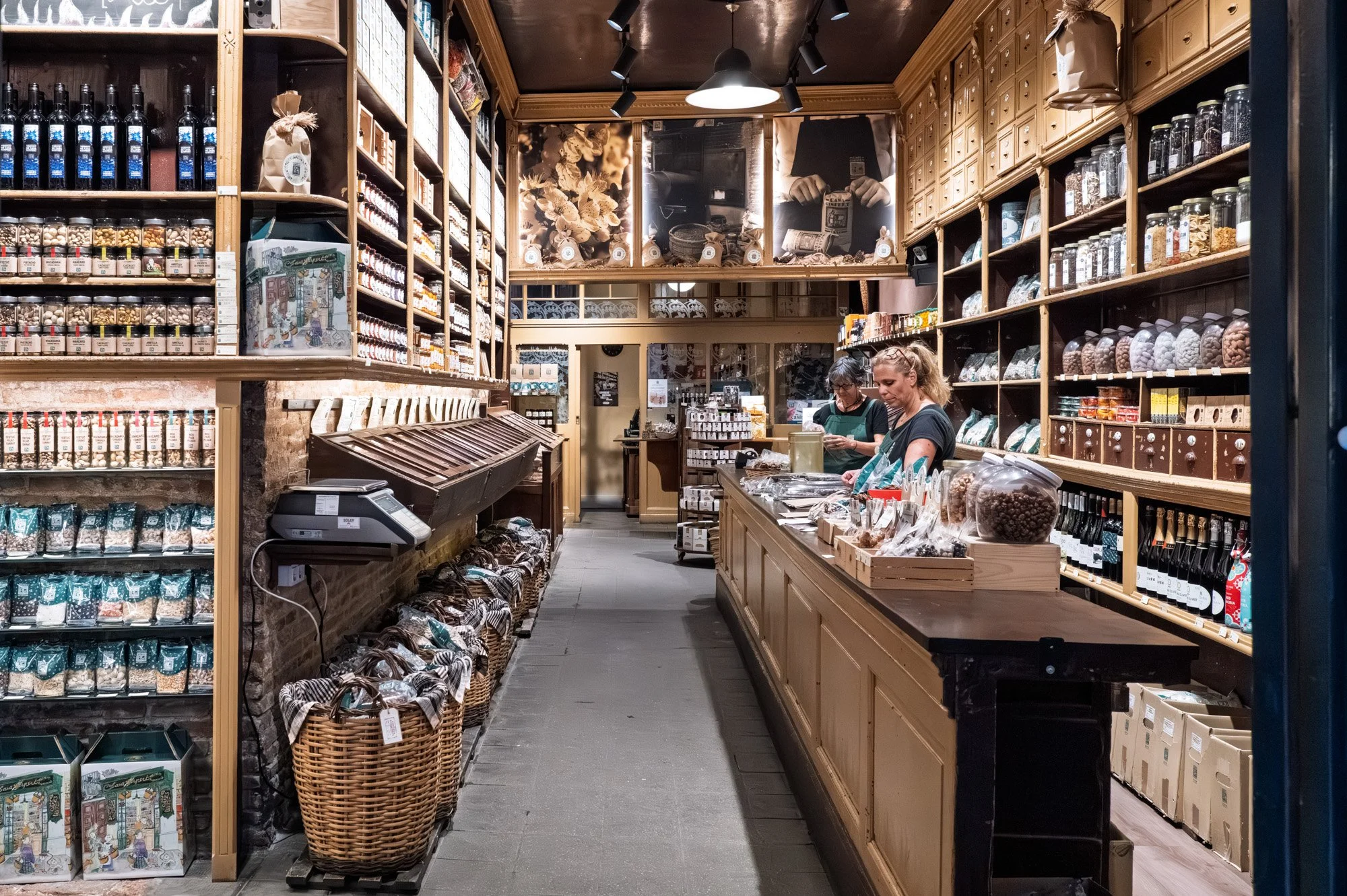
An old-fashioned counter
None of this reads as more genuinely El Born than El Xampanyet, a tapas bar just off Carrer de Montcada that has hung the same cured hams over its door since 1929. Barrels for tables, cava by the glass, tile work that hasn't been fashionable in decades and doesn't need to be — it's the kind of place the neighbourhood would keep exactly as it is even if nobody photographed it, which might be why it photographs so well.
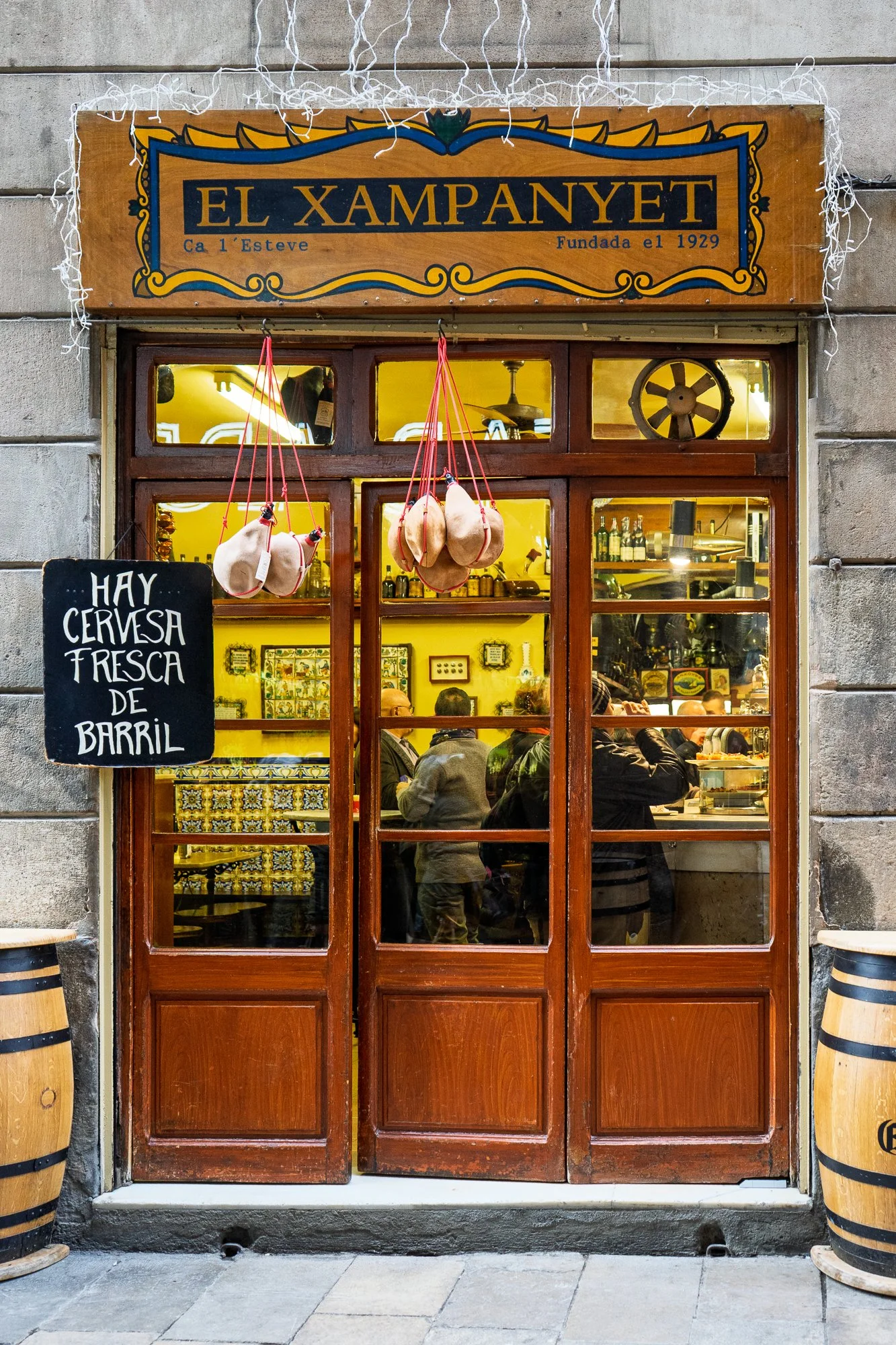
El Xampanyet, since 1929
El Born Barcelona Street Art: When a Mural Becomes a Landmark
Somewhere along the way, El Born's street art stopped being background and started pulling its own crowds. On a corner of Carrer Malcuinat, a short walk from the church of Santa Maria del Mar, a mural called El Beso — a blindfolded man leaning in for a kiss, a bouquet of red roses held behind his back — has become something closer to a pilgrimage site than a wall. The artist, Alberto León (@albertoleon_art), a street and pop artist originally from Tenerife who has worked in Barcelona for over a decade, put it up without permission one August night; within weeks, people were queuing to kiss it and photograph themselves doing so. It's printed and pasted rather than sprayed — a technique León favours precisely because it lets a piece move to a new wall if a landlord objects — but nothing about the effect looks temporary.
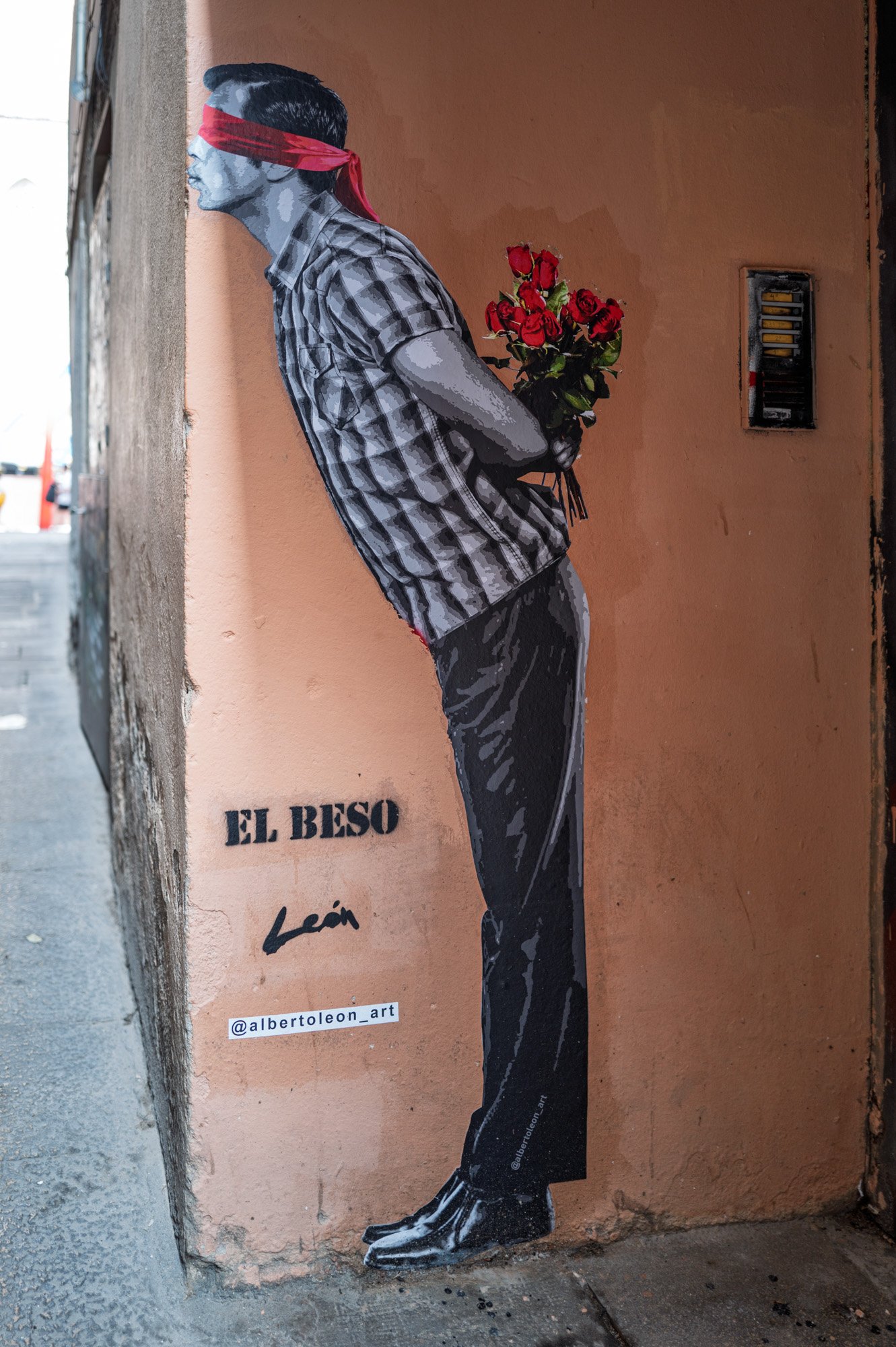
El Beso, by León (@albertoleon_art)
A few streets over, a portrait of Rosalía by Gastón Liberto (@gaston_liberto) fills a bricked-up doorway two storeys up from the paving: flat stripes of green, red, yellow and blue behind a face painted with full volume, gold chains at the throat, and a red bar running down one cheek like a tear that refused to fall. It draws none of El Beso's crowds but holds its wall just as completely, and the afternoon I passed, a pigeon worked the paving below, entirely unbothered by the scale of the thing above it.
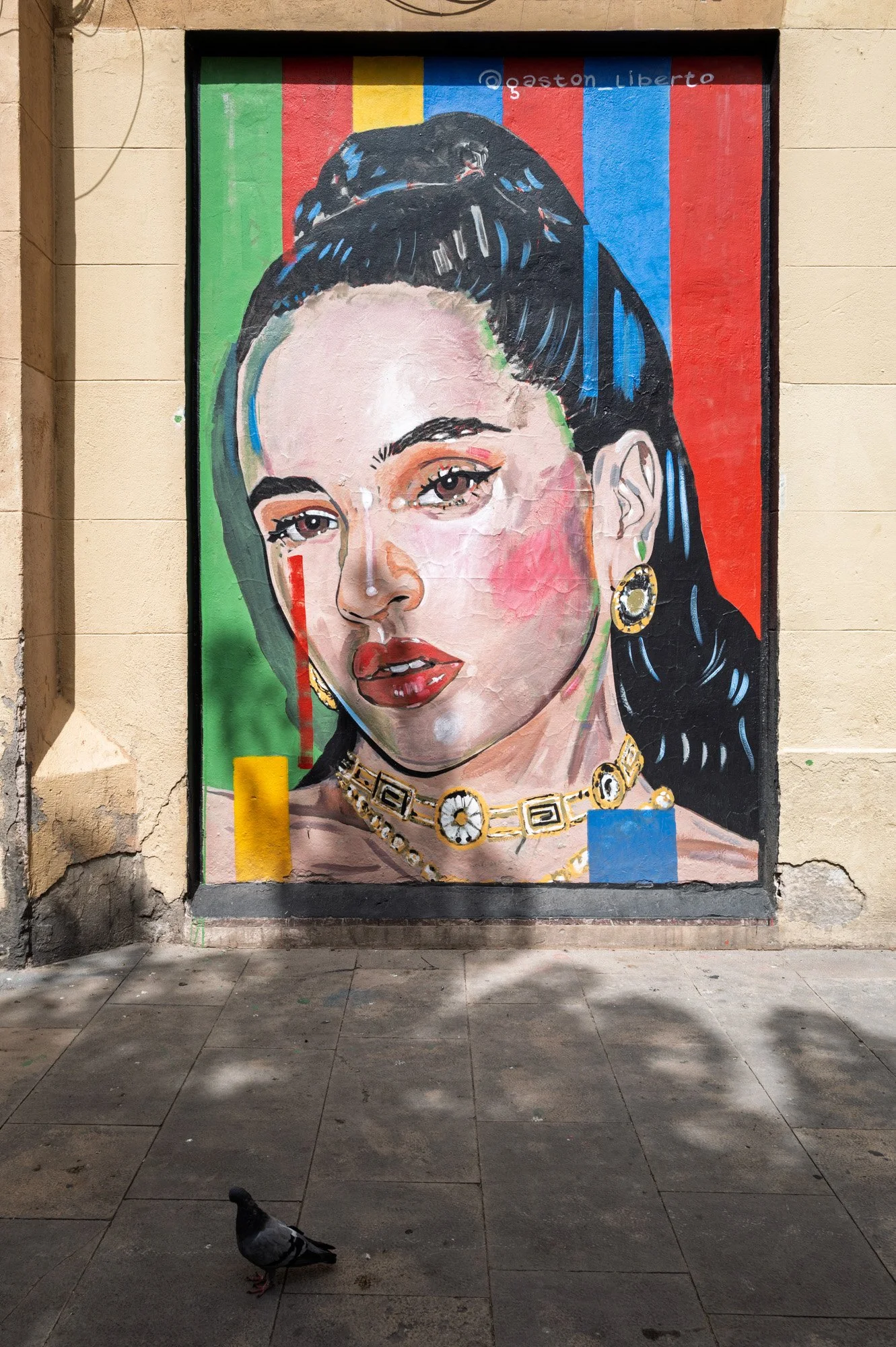
Rosalía, by @gaston_liberto
And on a restaurant shutter nearby, a looser, more comic hand has painted two cartoon regulars mid-meal, proof that not all of the neighbourhood's street art is trying to be profound. Between the three, El Born makes as good a case as anywhere in Barcelona that a mural can be a landmark in its own right, not just decoration on the way to one.
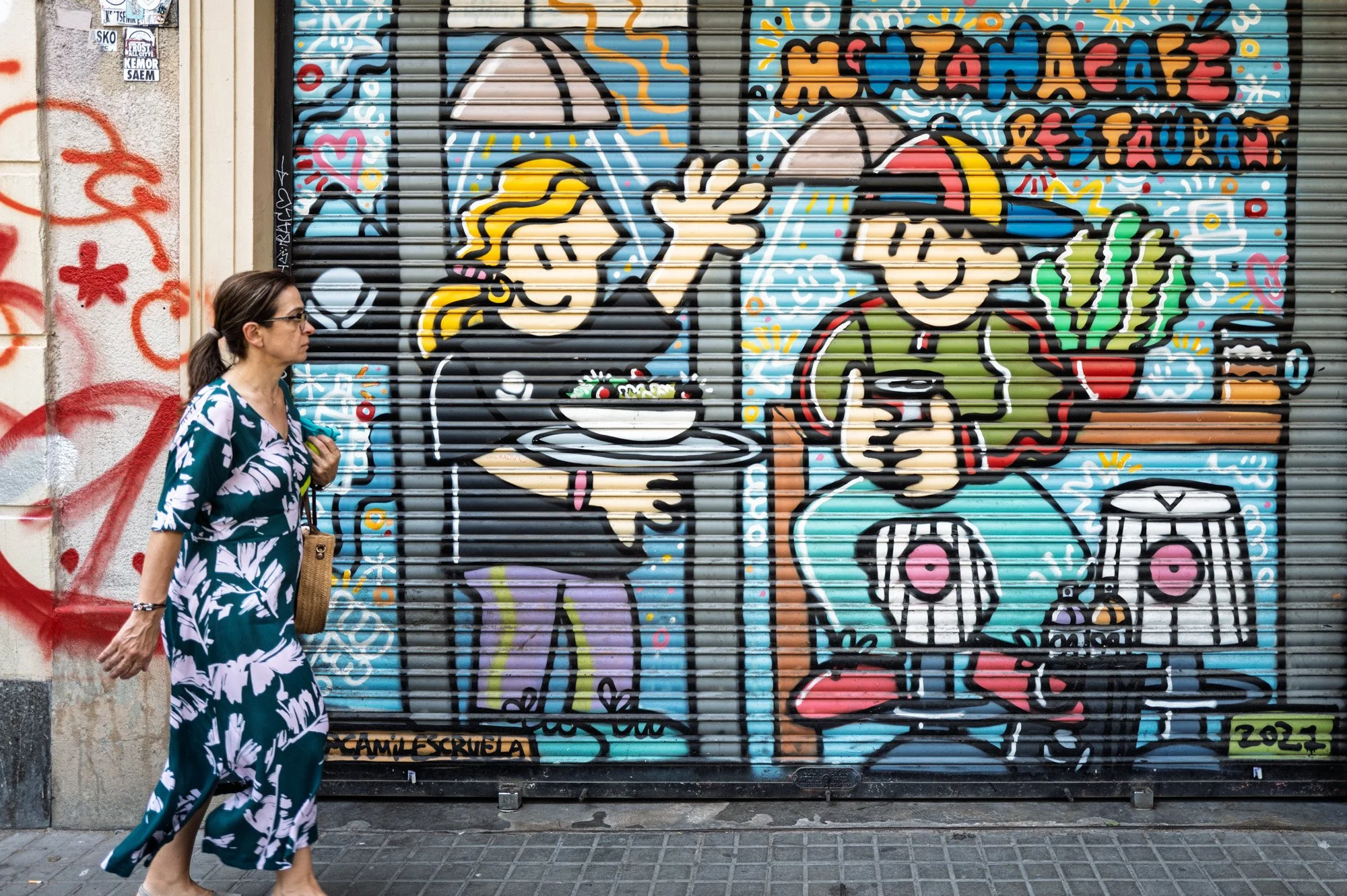
Montanacafé's shutter
I've photographed Barcelona in high summer before, and El Born keeps pulling me back for the same reason: nothing here is staged for the camera, which is exactly why the camera keeps finding something.
If you're in the city, give yourself an afternoon with no destination and let El Born's terraces, workshops and walls decide the route for you.
For the rest of the city, see my guide to the best street photography spots in Barcelona, neighbourhood by neighbourhood.
Photos: Leica Q3 and Sony a7R IV, shot handheld around El Born, Barcelona.
See more street photography from Barcelona in the portfolio.
Want one of these on your wall?
Every photo on this site can be printed — archival paper, signed and numbered. Browse prints →
Cosme Lapena is a Barcelona-based street and urban photographer and founder of bCLPhoto.
Exhibited at espai [b] since 2010 · Published in The Eye of Photography and 35mmc. Browse the portfolio or read more on the blog.