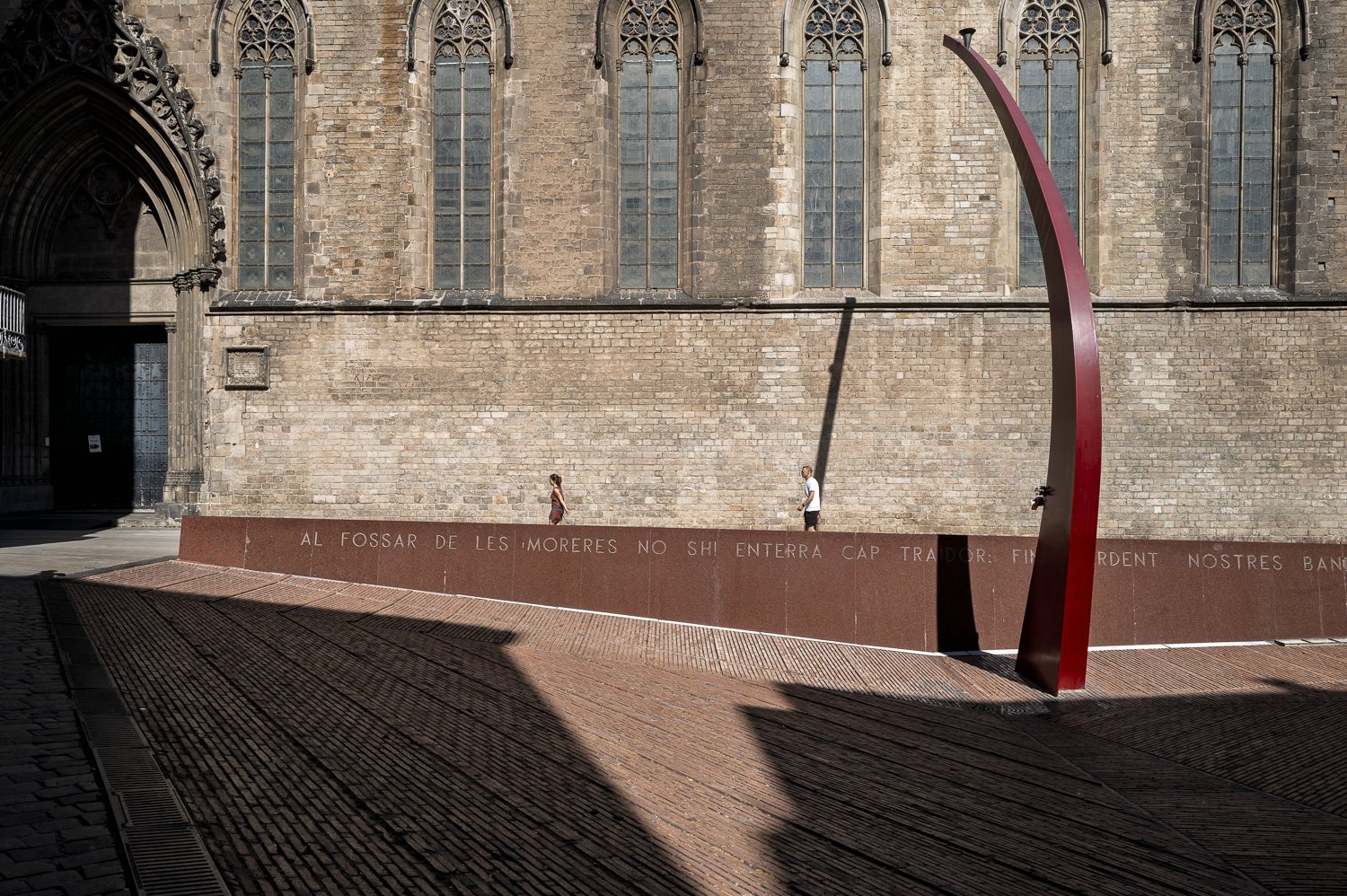
Fossar de les Moreres and the side wall of Santa Maria del Mar, El Born — Leica Q3
I bought my Leica Q3 three years ago, and since then it has been in my bag almost every time I have stepped out of the house. This Leica Q3 long-term review is not a lab test or an expert's verdict. It is what I have learned after hundreds of hours of street photography with one camera and one 28mm lens: what works, what doesn't, and why it is still the first thing I reach for.
Why I Never Leave Home Without It
The Leica Q3 weighs 743 g. Some photographers call it heavy. To me it is balanced. I doubt anyone could build a camera with everything this one does and make it much lighter. Honestly, I don't feel the weight, either in the hand or on the shoulder. Half the time it travels in "its" bag, a small Billingham with room for the camera and little else. The rest of the time it hangs from a strap around my wrist. I have walked three and four hours like that without my hand ever getting tired.
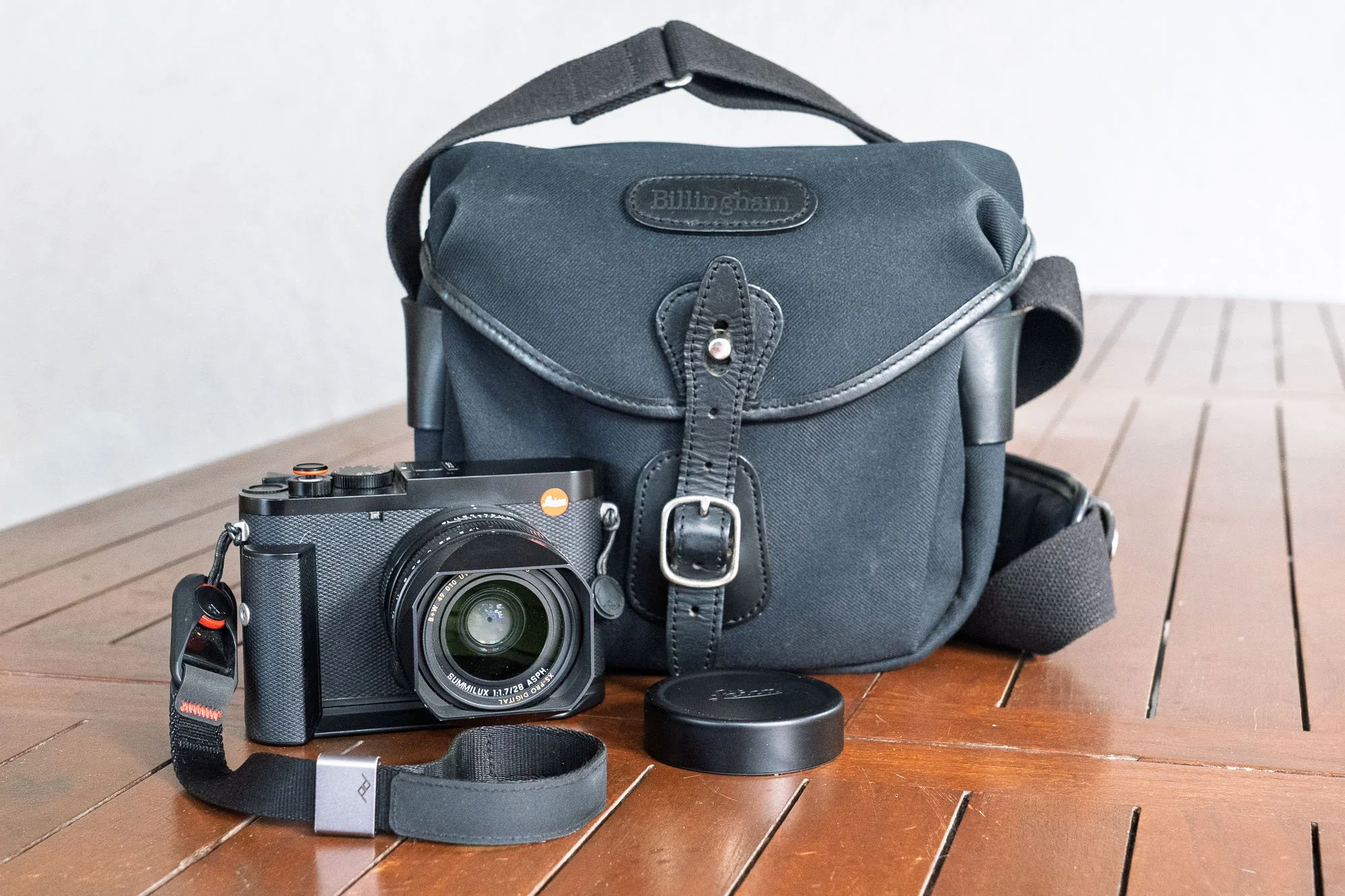
My Leica Q3 and its Billingham bag, photographed with the camera that now mostly stays at home — Sony a7R IV
That was precisely why I bought it. For years I carried bags full of lenses, and the heavier they got, the more often the camera stayed at home. Most of us who don't photograph for a living know that story: the best camera in the world is useless in a cupboard. The Q3 changed that. It comes with me every day, not only when I go out to photograph but when I'm off to the doctor, meeting friends or running errands. I know of no other compact camera that combines this portability with this image quality, and for an amateur who has spent years carrying too much weight, that alone can be the deciding factor.
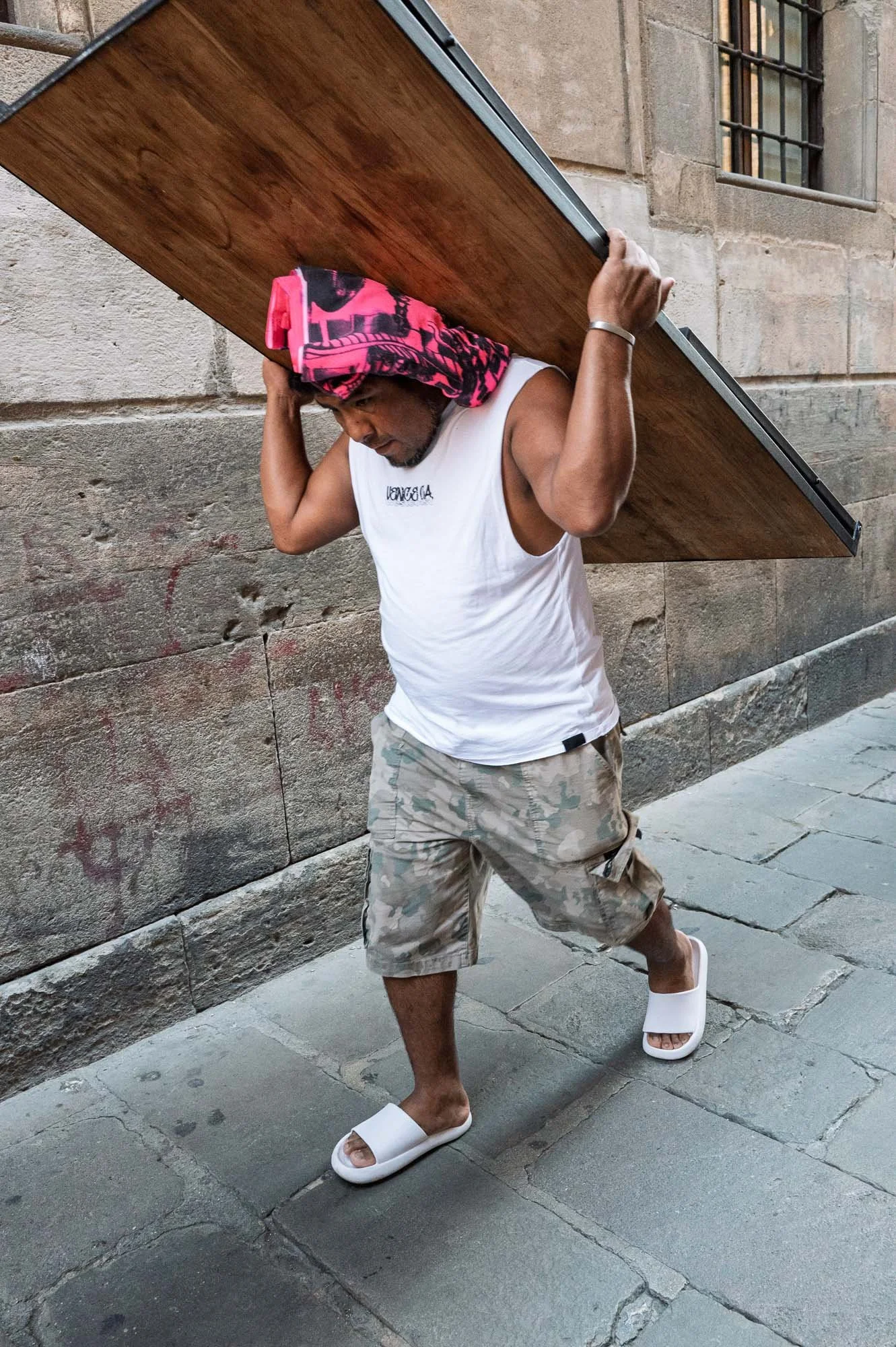
Carrying a tabletop through the old town, Barcelona — Leica Q3
One morning I took the train to Estació de França to photograph Santa Maria del Mar and the Fossar de les Moreres. The Q3 was in my hand before I'd left the platform, and by the time I reached Passeig del Born I had already made fifteen frames. I was composing another when shouting broke out a few metres away: a man had pinned a young man to the ground, and a woman stood over them, accusing him of trying to rob her. I didn't think. I stepped closer and made about thirty frames before the police arrived, less than two minutes later. It's an affliction, I know. I have never published those photographs, and I don't intend to. But that morning showed me exactly what this camera is for: it's always in my hand, and when something happens, I'm already there.
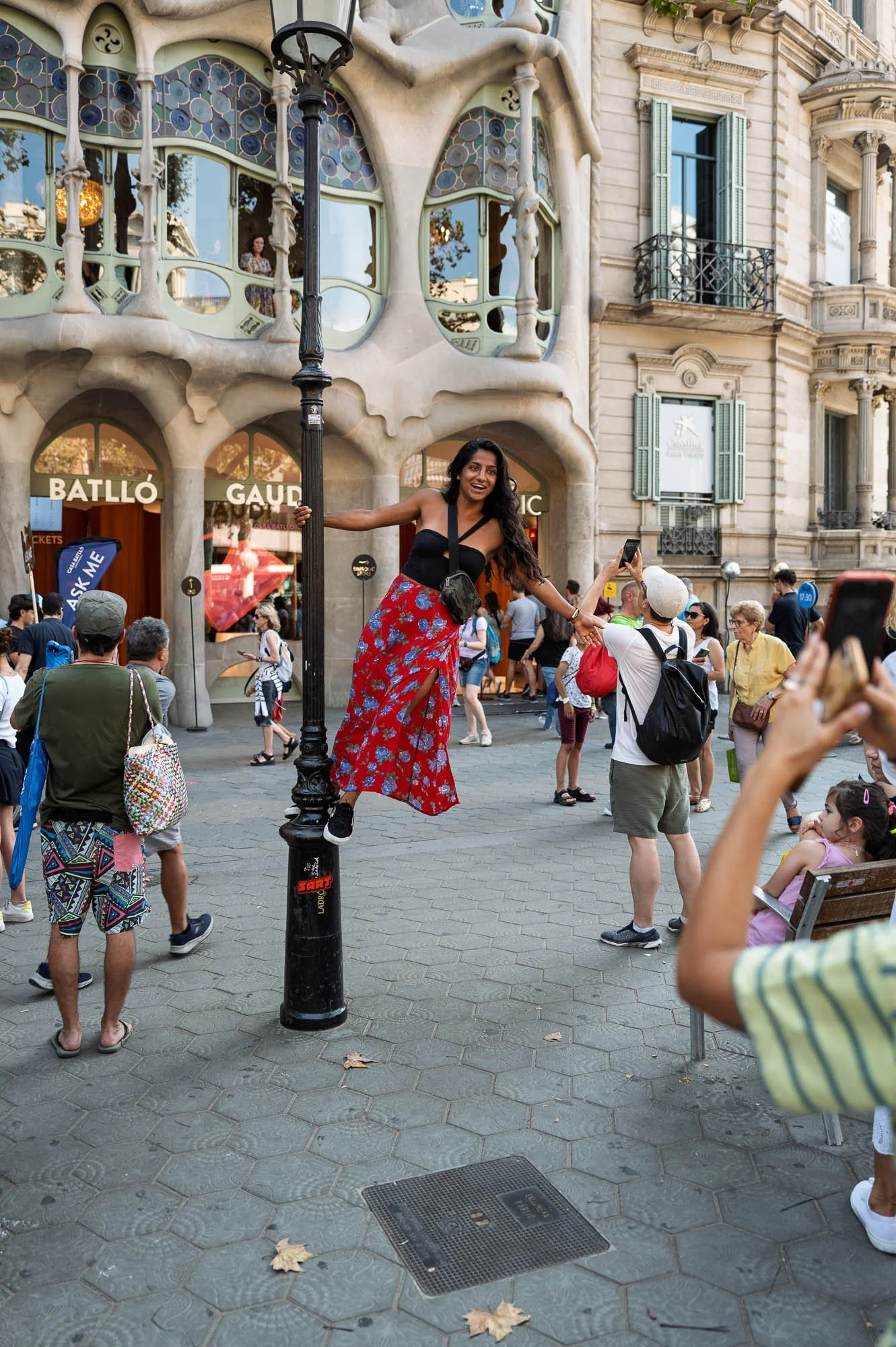
A tourist swings from a lamppost outside Casa Batlló, Passeig de Gràcia — Leica Q3
One accessory makes a real difference: a grip. I use Leica's official handgrip, but I wouldn't buy it again. It carries the wireless-charging contacts in its base, so you have to remove it every time you change the battery, and the wireless charging itself works only so-so. I charge in the camera over USB-C or with the official charger instead. If I were choosing today, I would go for the SmallRig 4568, which leaves the battery door free for quick swaps. It's very likely my next purchase.
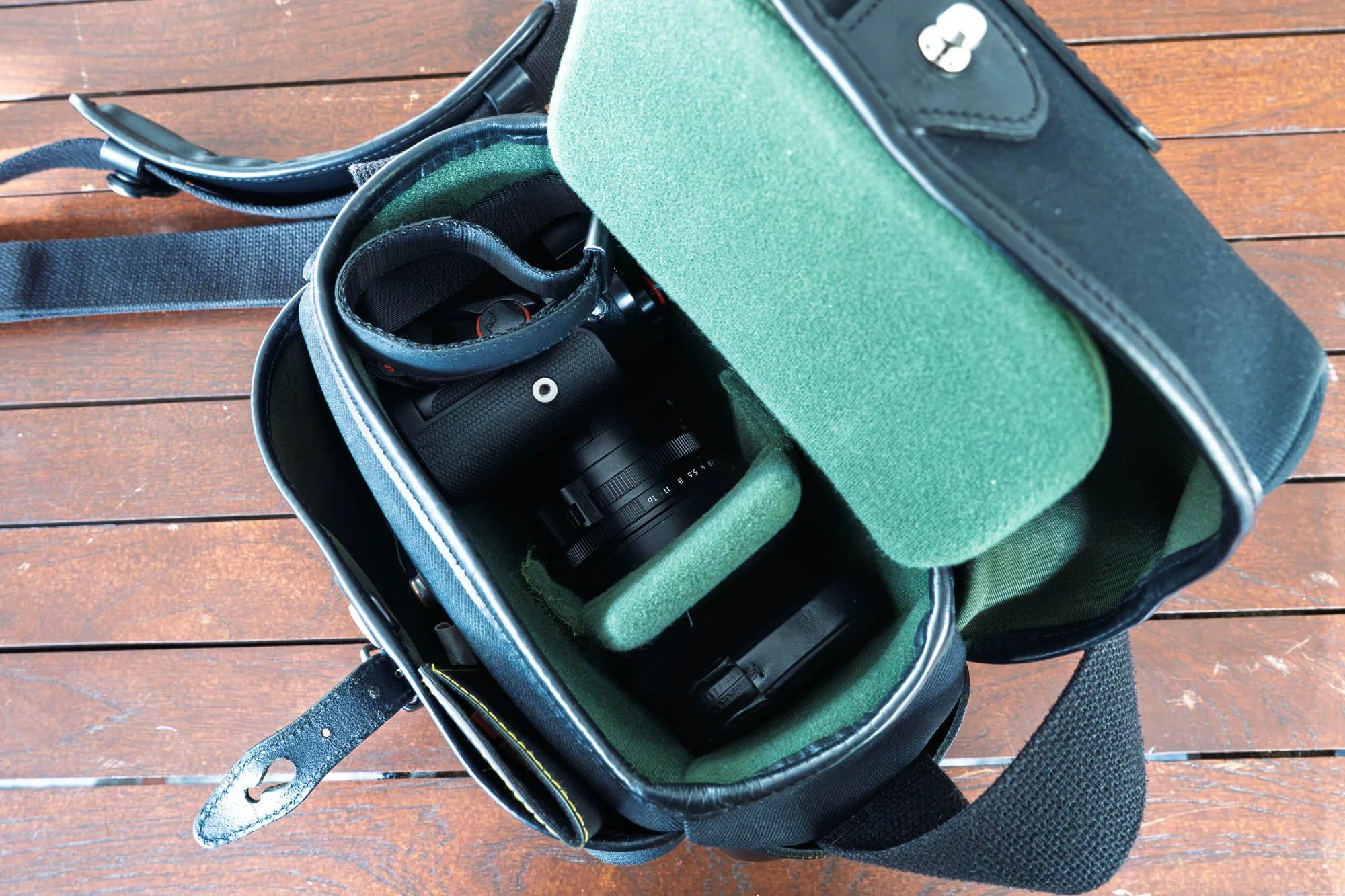
Where it lives: the Q3 inside the Billingham, with room for little else — Sony a7R IV
Living With the 28mm Lens
The built-in Summilux 28mm f/1.7 is an optical gem. It keeps the optical design of the earlier Q models, now with stabilisation, and its sharpness is something else. Geometric distortion in architecture is easy to correct in editing. A B+W UV filter protects the front element: on a camera that goes everywhere with me, it's cheap insurance.
The fixed 28mm is a philosophical choice, and it does not suit everyone. One lens is an obvious limitation, and there are moments when I would like another focal length. But if I could own only one lens, it would be a 28mm. A lot of world fits in that frame, and when you have no zoom you simply take a few steps closer. With this camera I can make 90–95% of the photographs I make: street, urban architecture, reflections. If I photographed birds or sport, I would not have bought it.
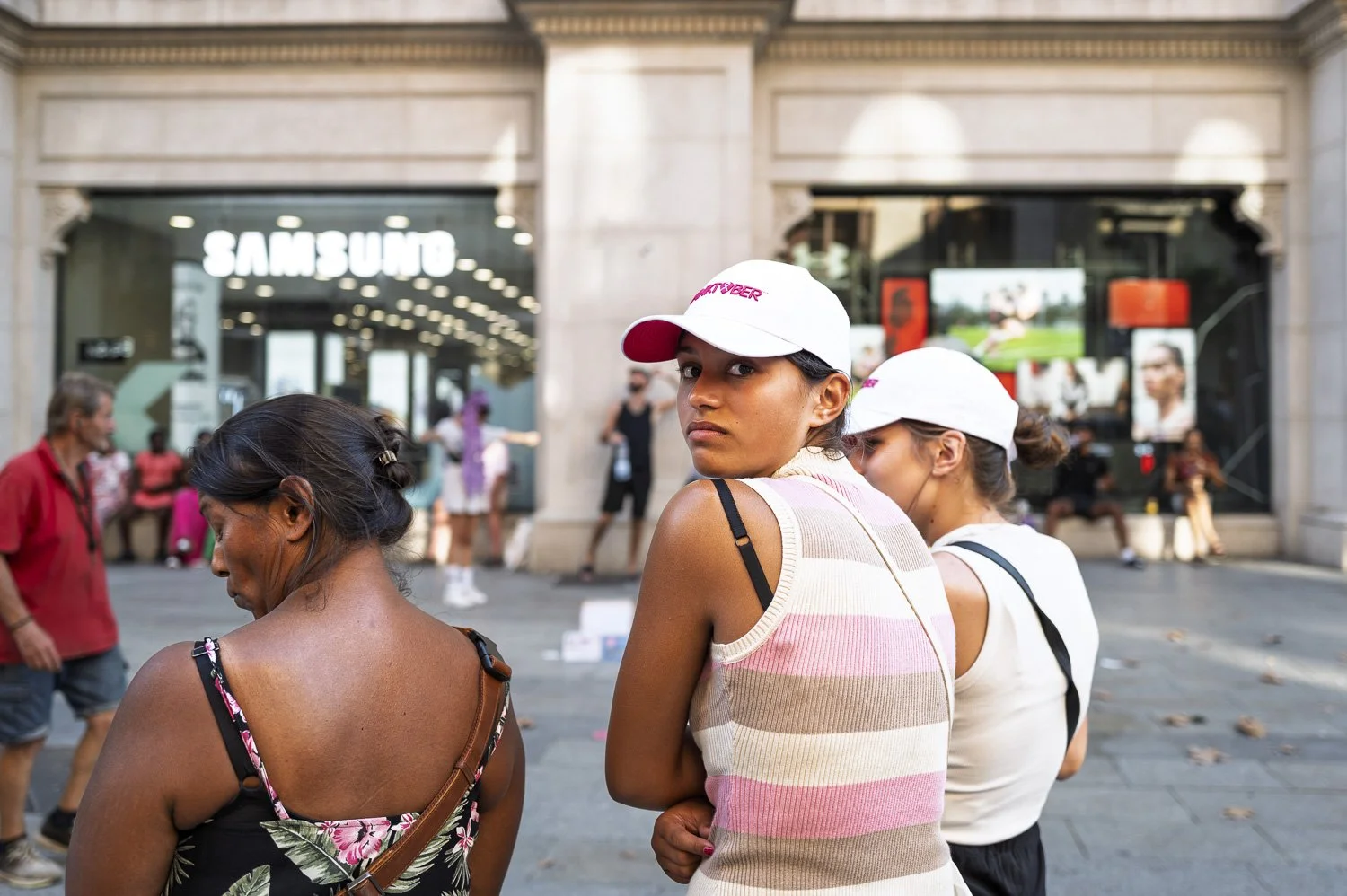
At 28mm you are close enough to be noticed. Barcelona — Leica Q3
The 60 MP sensor also softens the fixed-lens restriction. The Q3 offers in-camera crops equivalent to 35mm (39 MP), 50mm (19 MP), 75mm (8 MP) and 90mm (6 MP). In RAW the full 28mm frame is always preserved, so nothing is lost. I use the in-camera crops occasionally, but I usually leave cropping for editing, where the files have enough information to hold up in most situations. The three frames below are the same file.
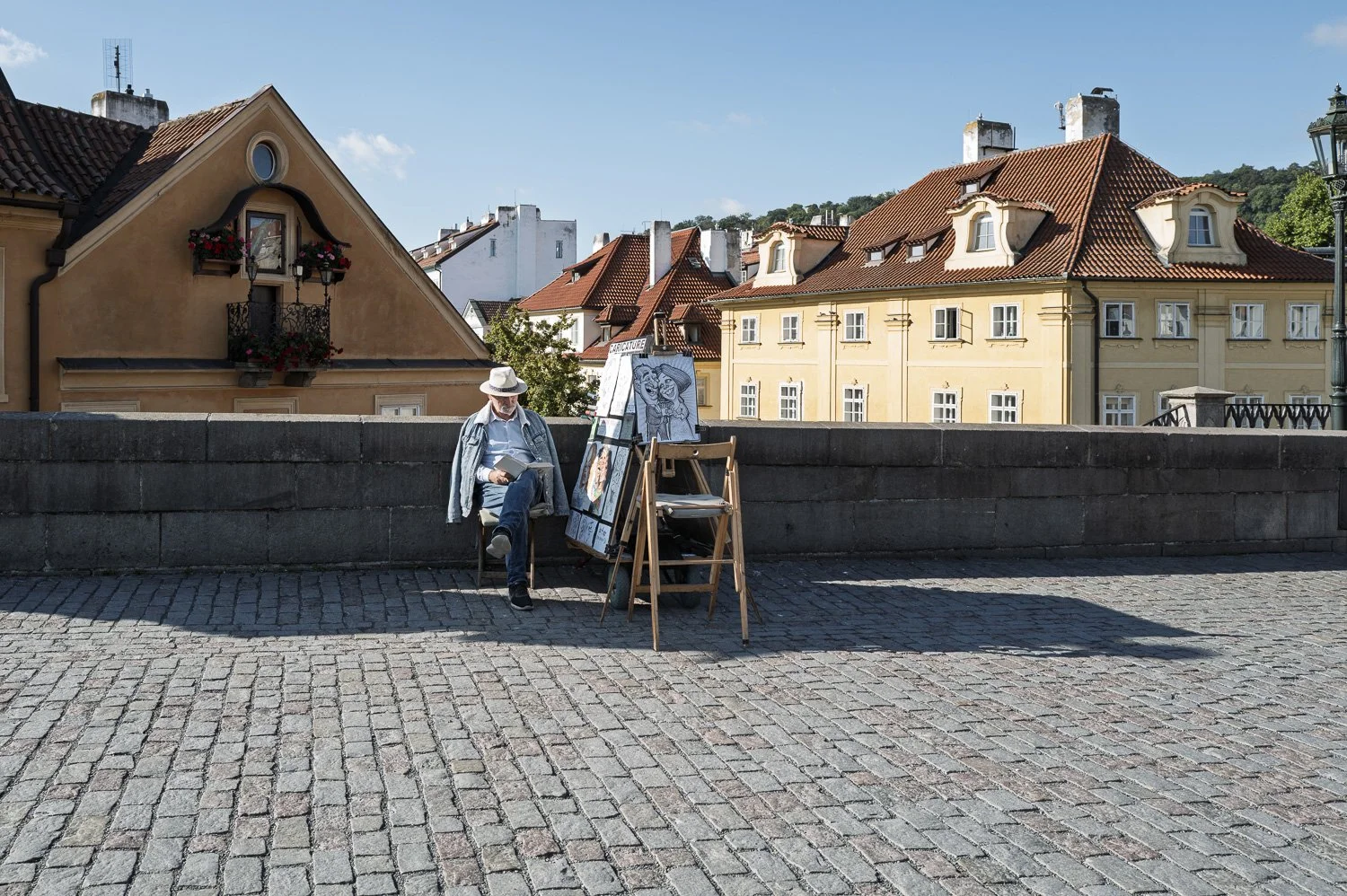
The full 28mm frame (60 MP). Charles Bridge, Prague — Leica Q3
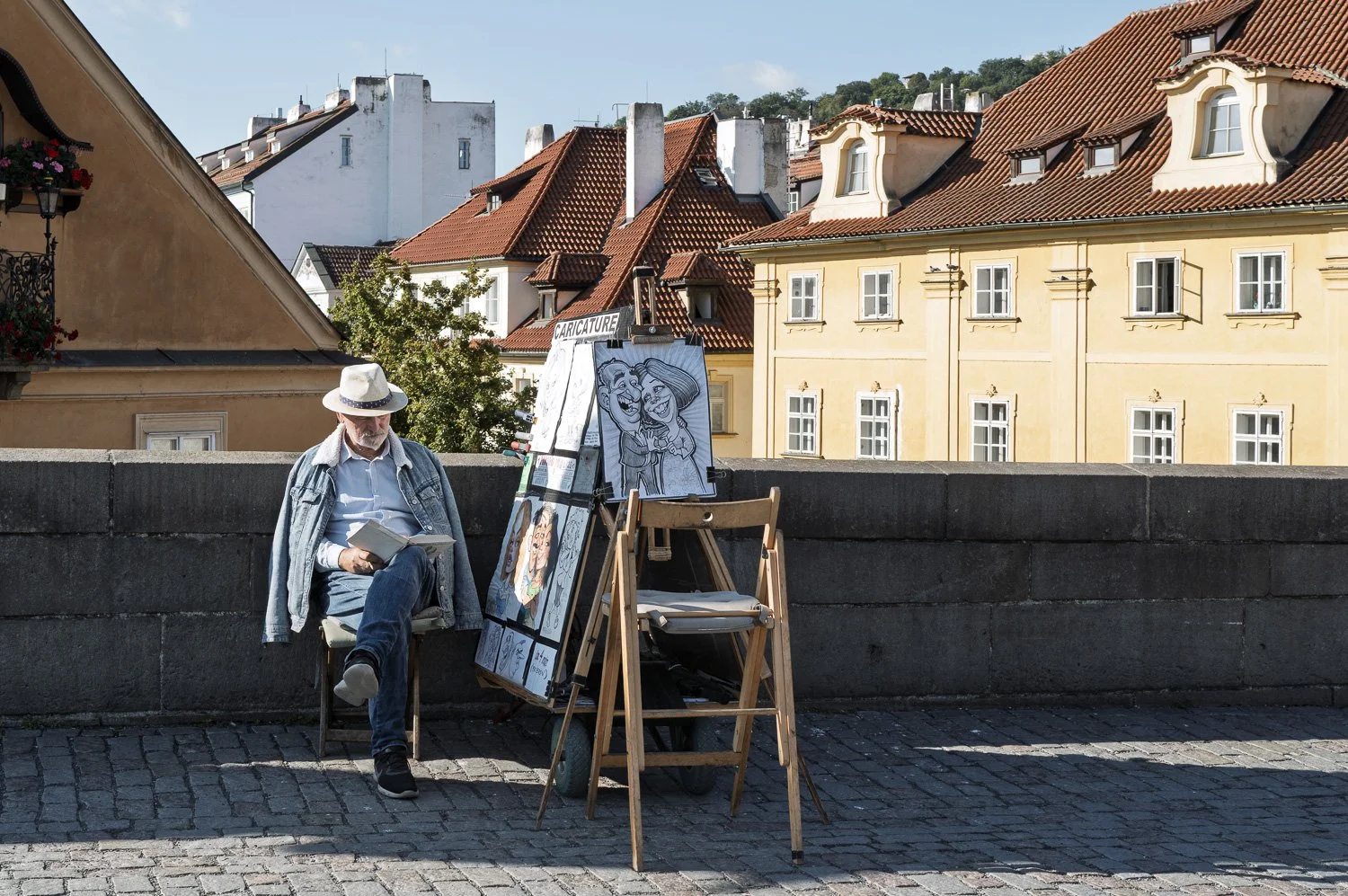
The same file cropped to 50mm equivalent (19 MP) — Leica Q3
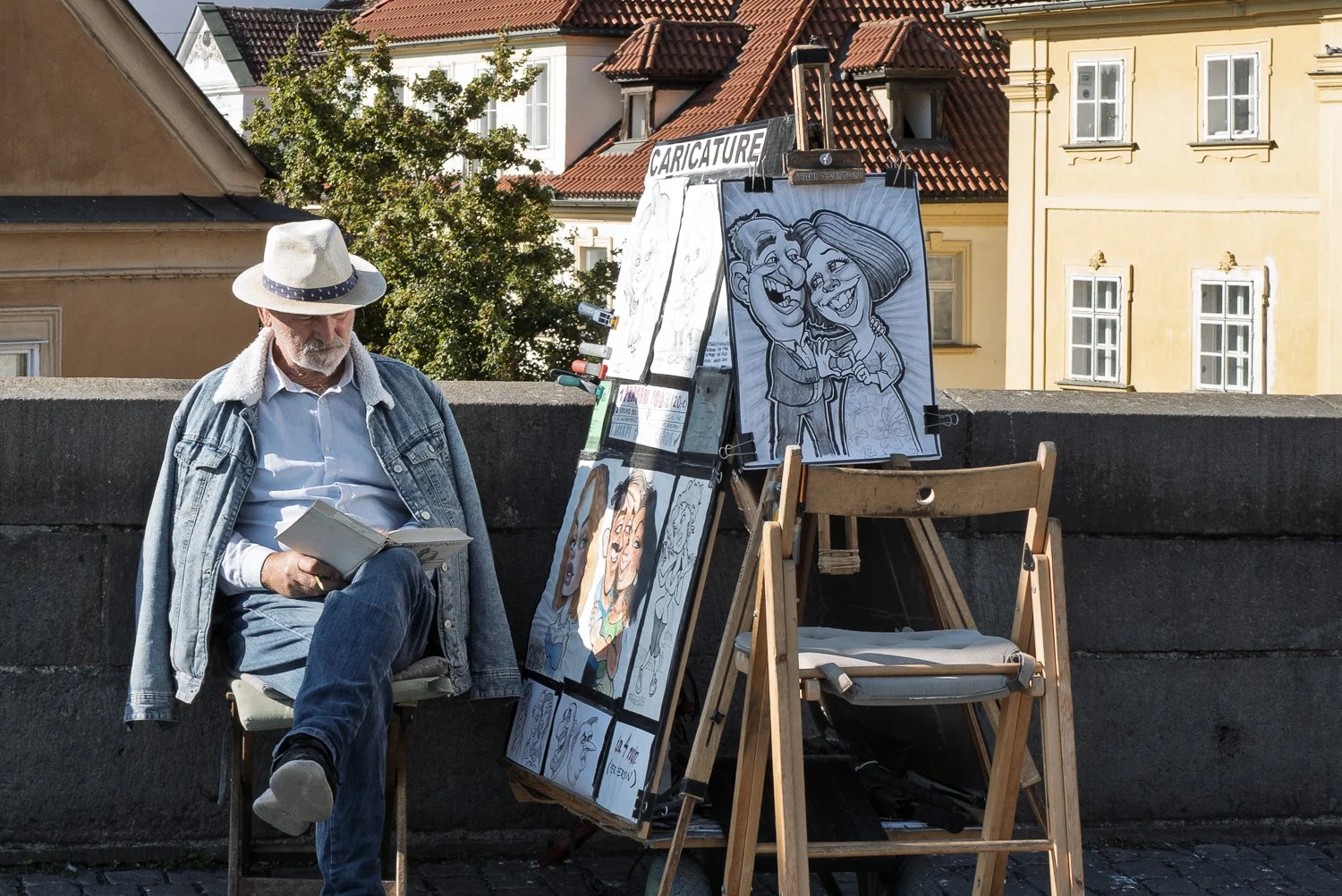
Cropped to 90mm equivalent (6 MP) — Leica Q3
When I really need something longer than 28mm, I take my Sony a7R IV. Its interchangeable lenses make it indispensable for that job. I wrote about shooting Barcelona with both cameras in Two Cameras, One City for 35mmc. Still, these days the Sony stays at home far more often than not. The rest of my kit is on the gear page.
Image Quality: What 60 Megapixels Give You
I always shoot RAW. When I open the files on the computer, they are consistently better than I expected when I pressed the shutter. The pair below is a single file from the Vltava at dusk, as shot and with the shadows lifted; the finished version appears in my Prague reflections post.
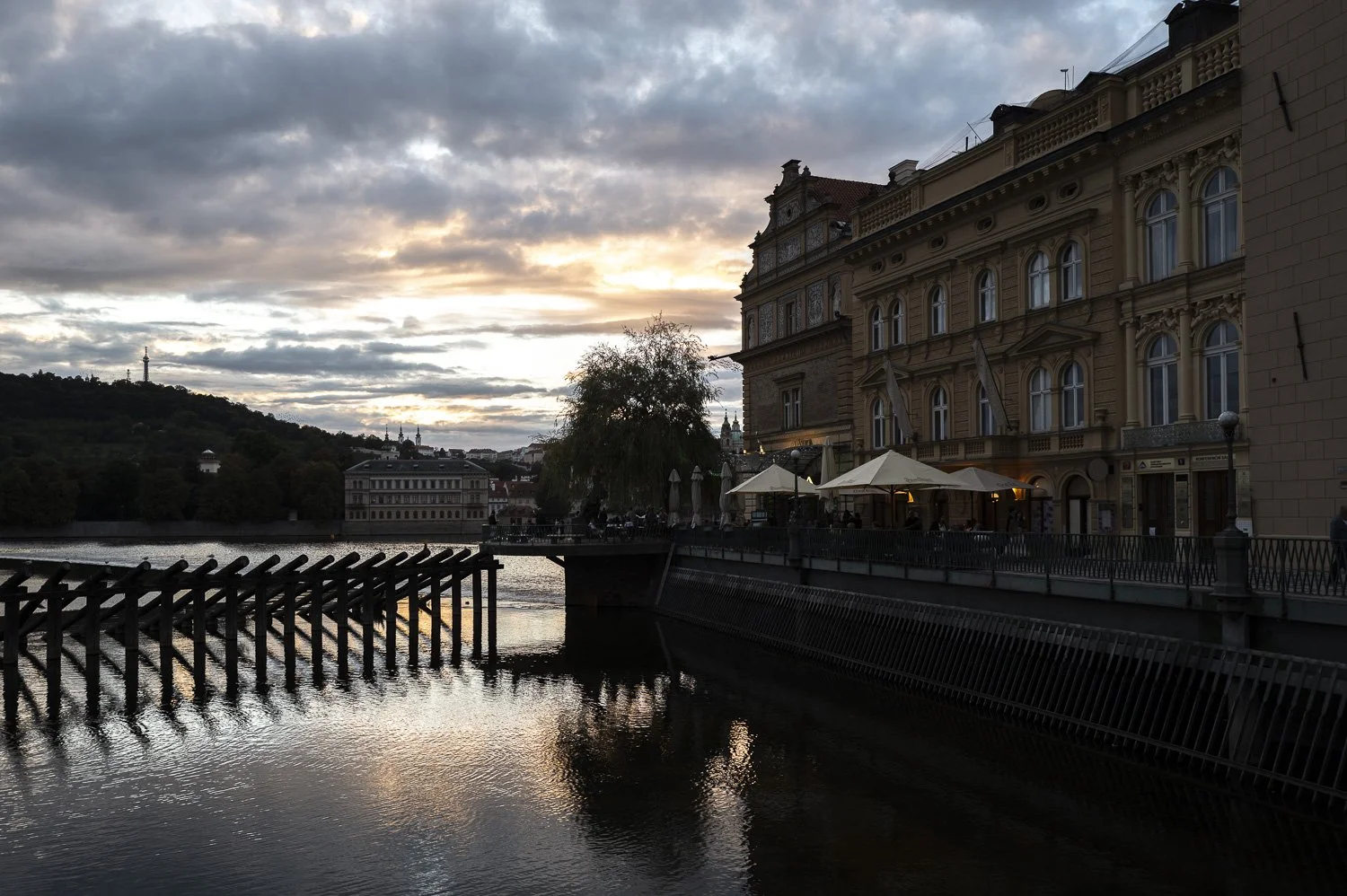
One RAW file, as shot. The Vltava at dusk, Prague — Leica Q3
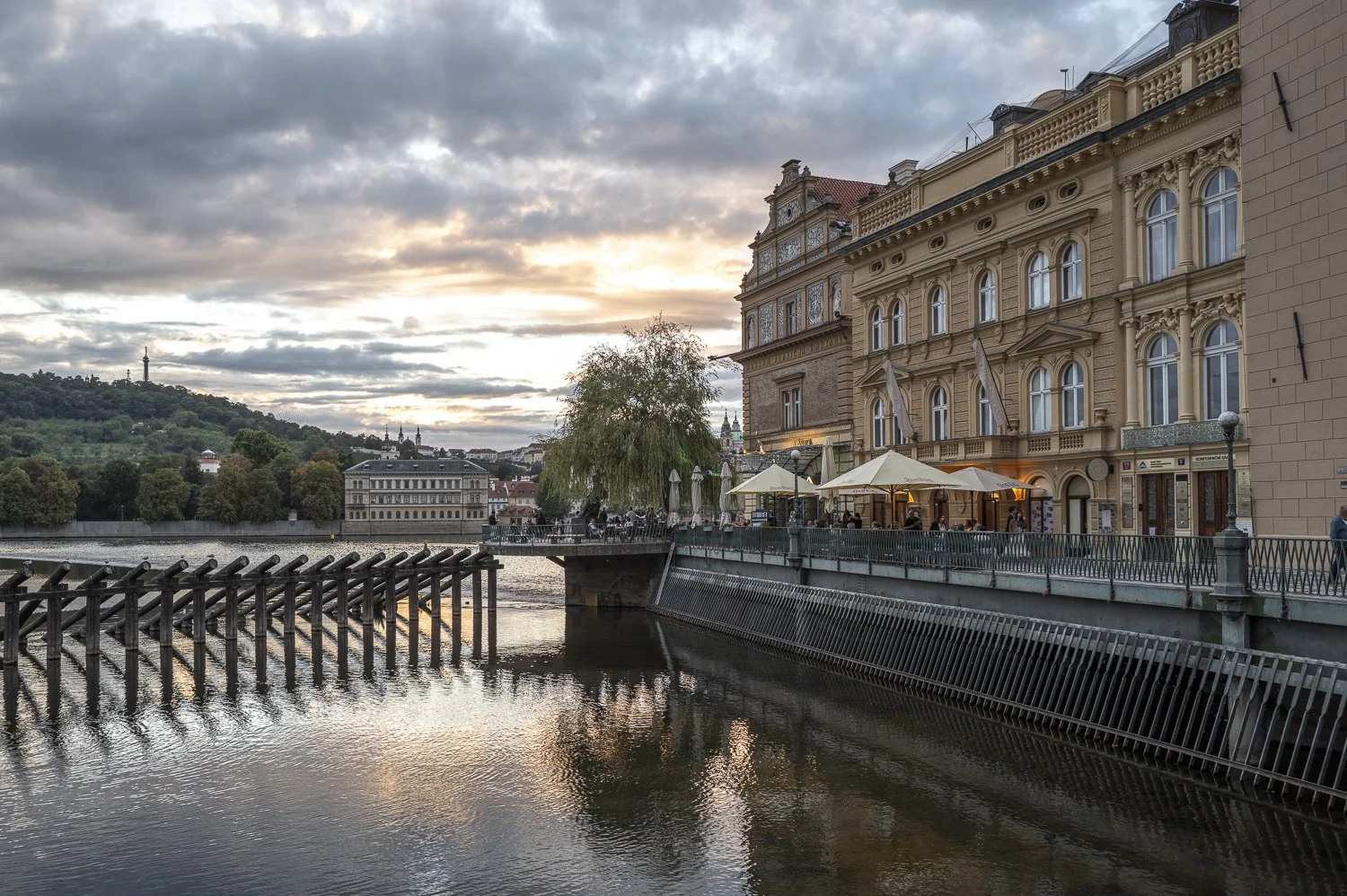
The same file with the shadows lifted — Leica Q3
There is a character to a Leica file that I find hard to put into words: the way the lens renders tone and transition, a look I can recognise in my own photographs. Some will call that subjective. For me it is the reason the camera exists.
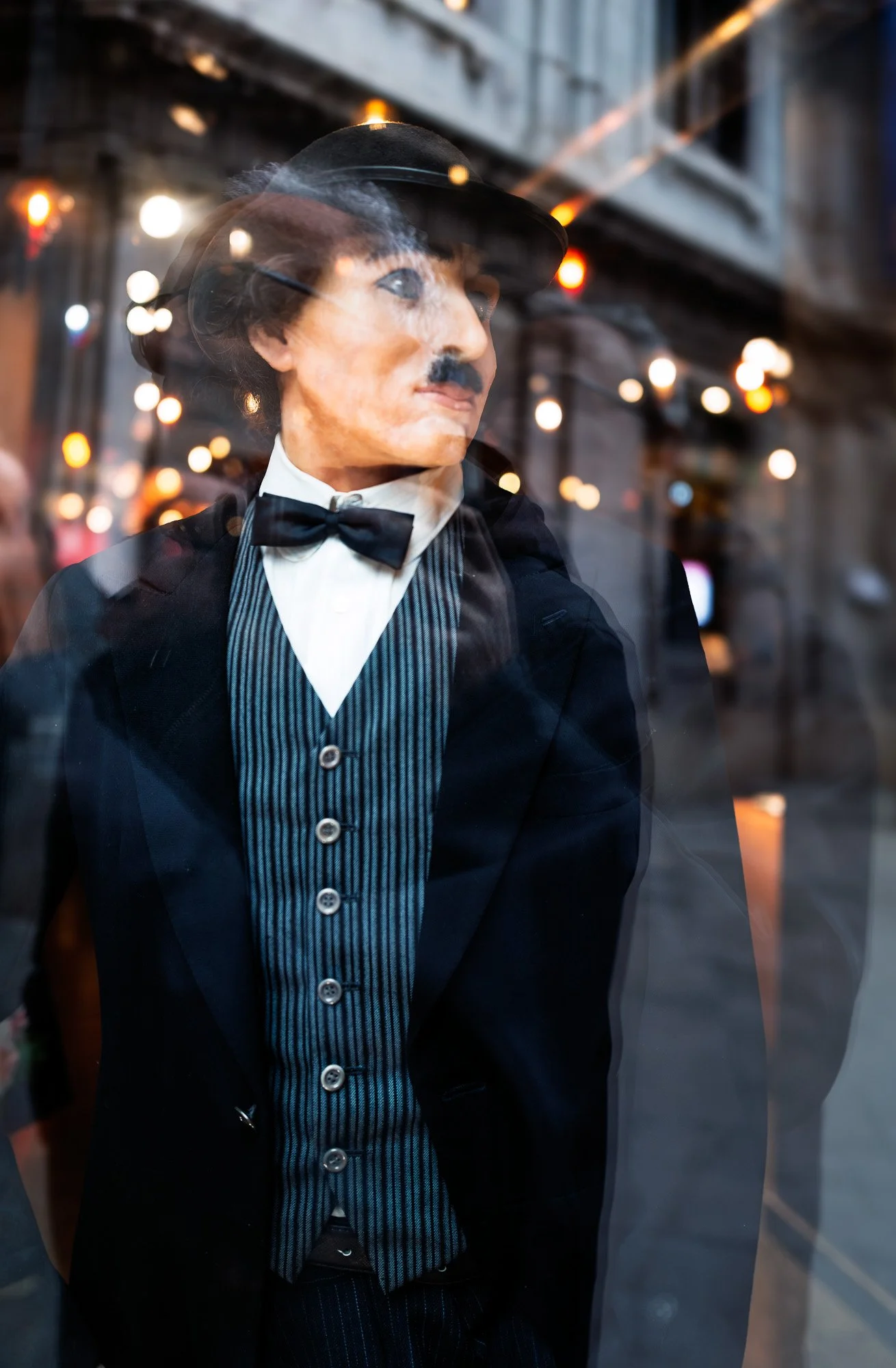
A Chaplin figure in a Gothic Quarter shop window. ISO 1000. More from that walk in my Gothic Quarter post — Leica Q3
I work in manual most of the time, often in shutter or aperture priority, with ISO always on auto. That combination lets me keep the shutter speed or depth of field each scene needs while the camera handles changing light. Noise stays well controlled up to around ISO 3,000–6,000. Above that, degradation becomes visible, although for street work at night a slightly grainy file is often more honest than a missed frame.
The night shot of Passeig de Lluís Companys below was taken at ISO 6400 and developed from RAW with no noise reduction and no AI denoise. What you see is what the sensor delivers.
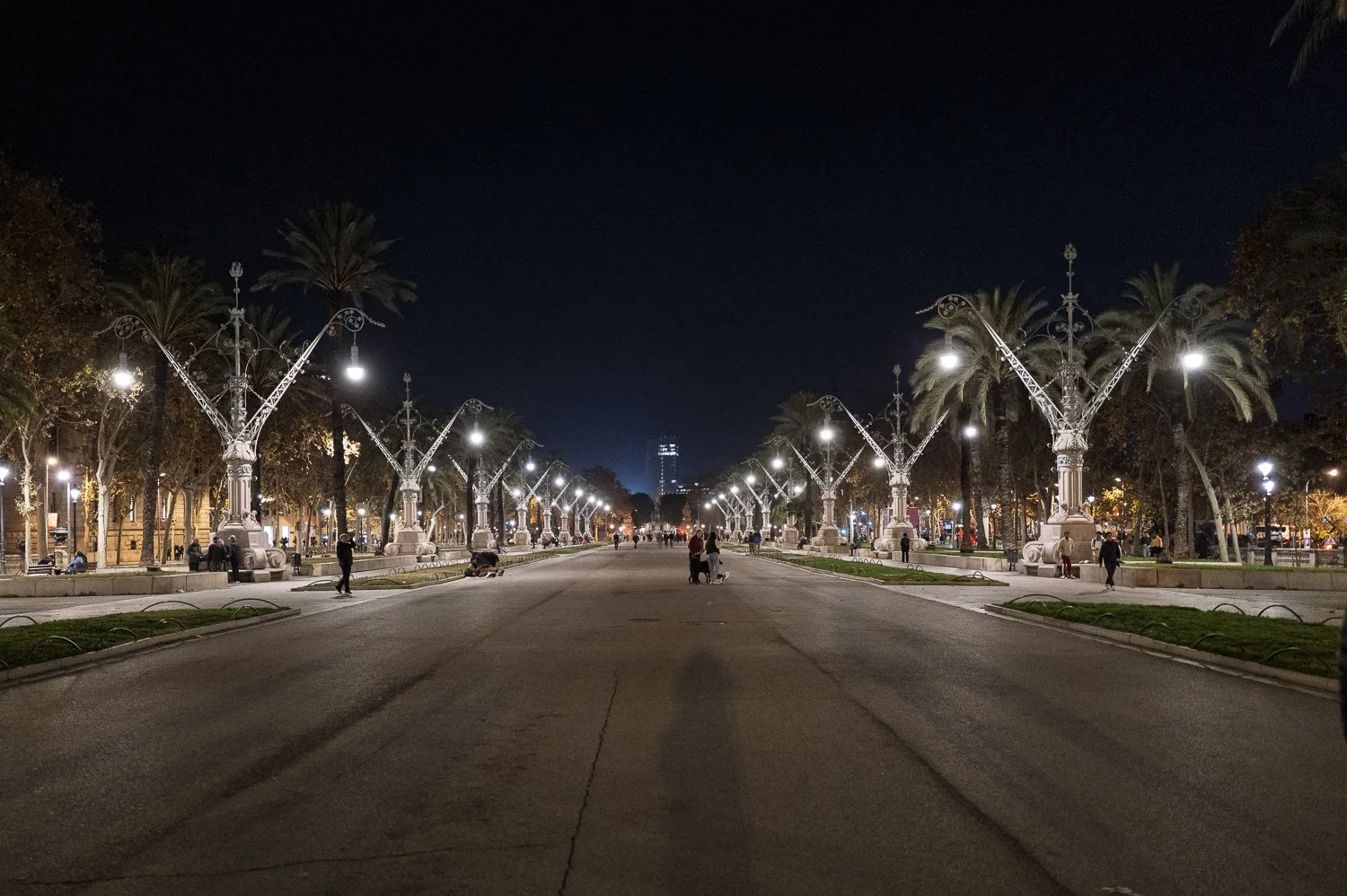
Passeig de Lluís Companys at ISO 6400, no noise reduction. That's my shadow in the middle of the road — Leica Q3
Autofocus and Speed on the Street
The Q3 introduced hybrid autofocus with phase detection, and it is a clear step up from the Q2. In good light it is fast and accurate. In low light, the f/1.7 aperture keeps it reliable, although in dark interiors it misses more often than some rivals at this price.
Tracking fast-moving subjects is its weakest point. The Q3 is not an action camera, and nobody buys it as one. But on the street, with people walking quickly past or close to the lens, the AF can hesitate. In those situations I increasingly switch to manual focus. The Q3's focus ring and its distance markings make that easy, and once you are used to it, pre-focusing becomes part of how you see.
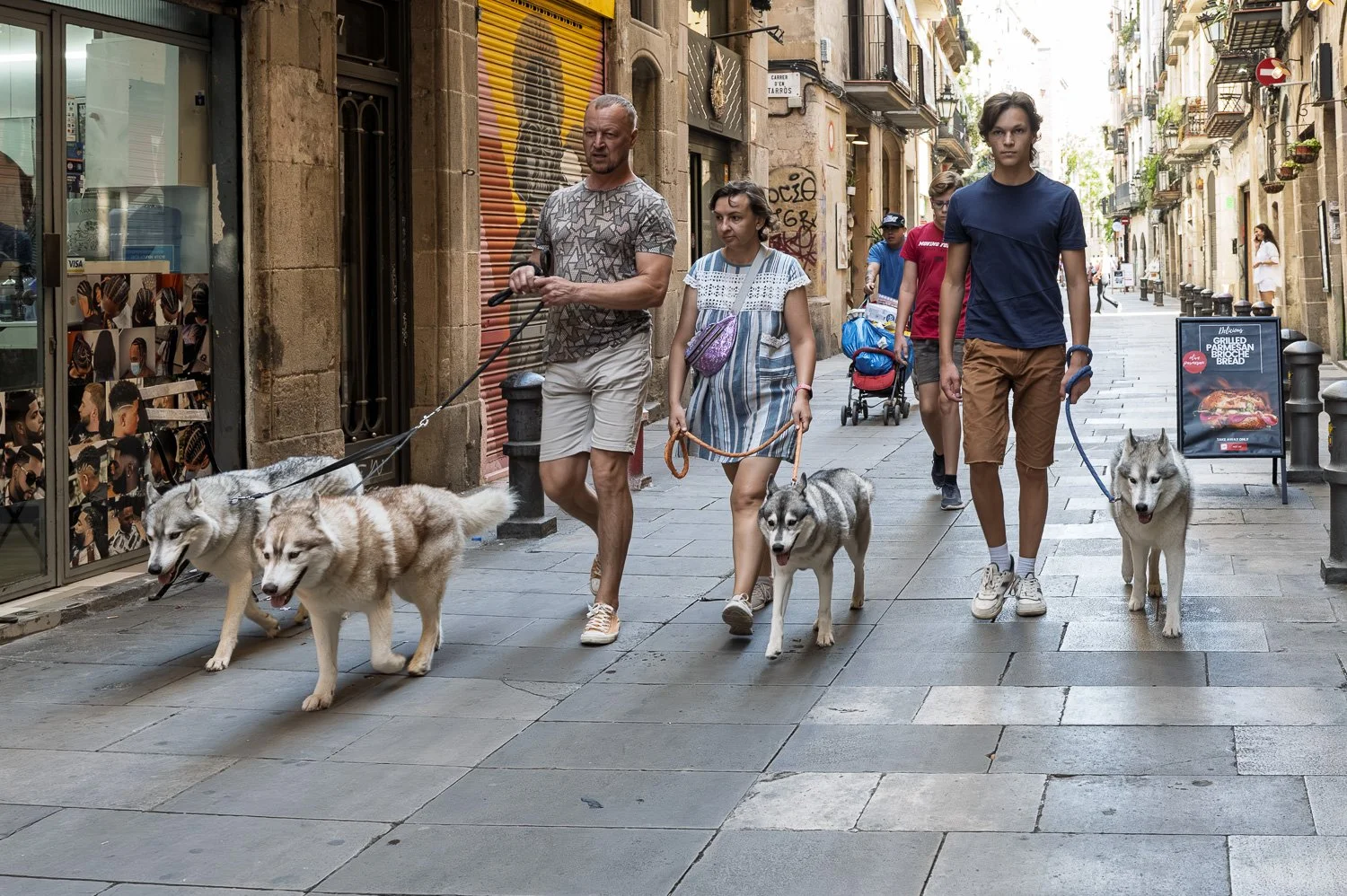
Four huskies, three walkers, all in focus. El Born, ISO 2000 — Leica Q3
Where the Leica Q3 Falls Short
After three years, its weaknesses are clear.
Price. The Q3 launched at €5,995 and costs more today. Few cameras with a single fixed lens cost this much. For me, having seen the results, the money was well spent. It is also worth remembering that the Q3 holds its value on the second-hand market far better than most cameras.
Video. The Q3 records 8K at 30p and 4K at 60p. I don't shoot video, so I can't judge it from experience. Those who do report real overheating in long sessions or on hot days. It is not a problem unique to the Q3, but at this price it is frustrating. For occasional clips it does the job. A video professional would not buy this camera to film.
Battery. A full charge gives me about 300 shots in normal conditions. That figure drops with heavy use of the touchscreen or Wi-Fi, and reportedly falls below 200 in winter cold. I always carry two spares, and that has always been enough for a full day.
On the positive side, the menu system is one of the simplest and clearest of any camera I have used, especially compared with other brands. Firmware updates have improved stabilisation, button customisation and autofocus. The Leica FOTOS app has become more stable. I use it for two things: adding GPS data to my photographs and sending JPEGs to my phone immediately when I want to share something quickly.
Who the Leica Q3 Is Really For
The Leica Q3 is a camera for a very specific photographer. It suits someone who values a simple shooting experience, superior optics and a recognisable image, and above all someone who wants a camera they will actually carry every day. For that photographer, the fixed 28mm is not a drawback. It is an advantage: no lens changes, and no second-guessing which lens a picture needs. You photograph with what you have. You adapt to the camera, and over time you develop small tricks to get every bit of versatility out of it.
If you want interchangeable lenses or unlimited video, there are better options, many of them cheaper. Among fixed-lens cameras I would look at the Fujifilm X100VI or the Ricoh GR IV. The Leica Q3 43 is another option, though more expensive. For interchangeable lenses, Sony, Nikon, Canon and Panasonic (very strong for video) all have excellent bodies. If you want to enter the Leica world with interchangeable lenses, the M and SL systems are superb, at a price.
After three years, the Q3 is the first camera, and I have owned many, with which I have developed what I can only call a kind of photographic symbiosis. A few days ago I spoke with someone who had owned a Q3 and sold it. I still can't understand it.
I have read other users write that they feel like better photographers when they go out with this camera, and that it makes them believe they will come home with better pictures. I couldn't agree more. Perhaps it is the camera; perhaps it is psychological, a confidence that sharpens whatever skills you already have. Whatever the reason, I make better photographs with the Leica Q3 than with any other camera I have owned.
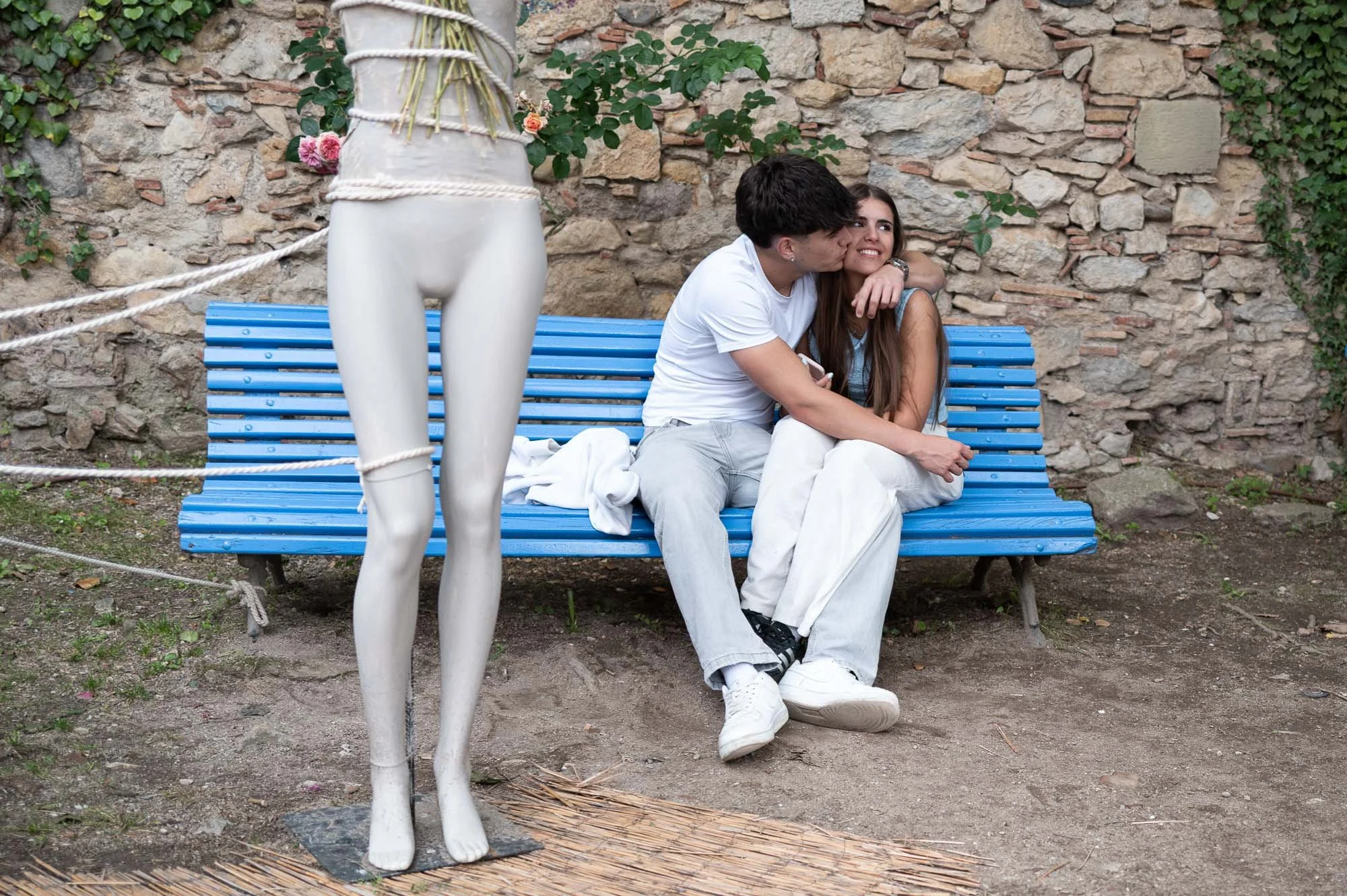
A couple, a bench and a roped mannequin. Girona — Leica Q3
If you shoot the street with one camera and one lens, I'd love to hear what yours is. See how the Q3 handles the city in my guide to Barcelona's best street photography spots.
Photos: Leica Q3 · 28mm · ISO up to 6400 · Barcelona, Girona and Prague, 2023–2026 · Camera portraits: Sony a7R IV
See more street photography and reflection photography in the portfolio.
Every photograph in this post is also available as a fine art print.
See more street photography in the portfolio. Every photograph in this post is also available as a fine art print.
Cosme Lapena is a Barcelona-based street and urban photographer and founder of bCLPhoto.
Exhibited at espai [b] since 2010 and PH21 Gallery · Published in The Eye of Photography and 35mmc.